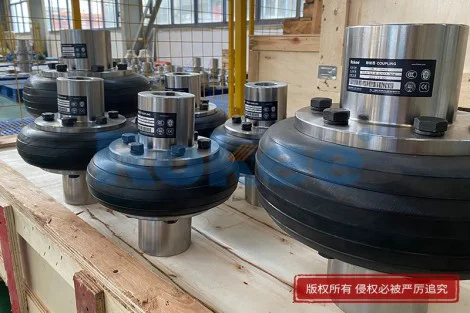
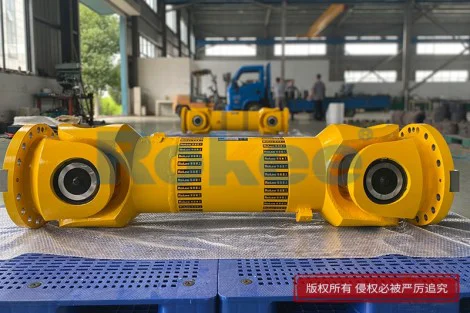
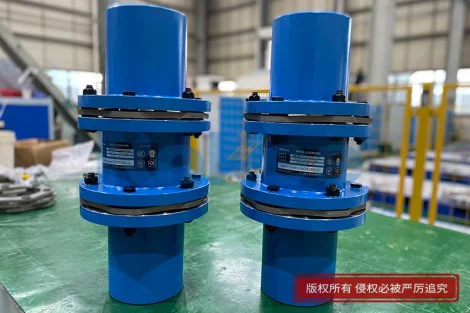
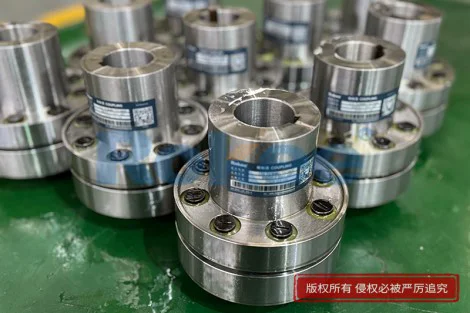
Barrel Coupling Specification

Barrel couplings are essential mechanical transmission components designed to connect driving and driven shafts in industrial mechanical systems, enabling stable torque transmission while accommodating common shaft installation deviations and operational displacements. Featuring a compact and optimized mechanical structure, these couplings rely on hardened steel barrel rollers as the core force-transmitting medium, cooperating with toothed hubs and outer sleeves to realize flexible and rigid integrated power transmission performance. Different from traditional coupling structures, barrel couplings balance high torque bearing capacity and excellent misalignment compensation capability, effectively mitigating axial, angular, and radial shaft misalignment generated during equipment installation and long-term operation. They also absorb mechanical vibration and impact loads in operation, reducing local stress concentration on shafting components and extending the overall service life of mechanical transmission systems. Widely adaptable to various heavy-duty, continuous-operation industrial equipment, their standardized structural design and customizable performance parameters make them a reliable choice for stable mechanical power transmission in complex working conditions, laying a solid foundation for efficient and safe equipment operation.
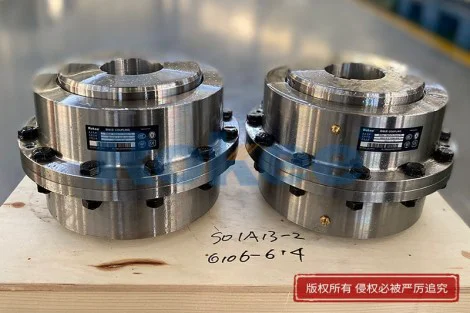
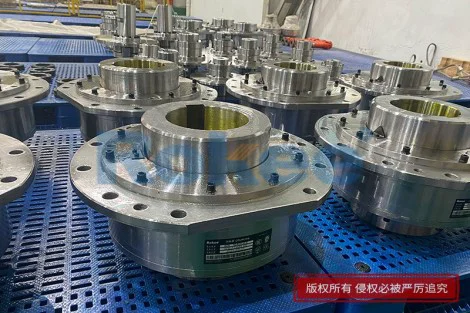
The core structural composition of barrel couplings follows a precise and practical mechanical design logic, with every component matched and coordinated to ensure efficient and stable power transmission. The main structural parts include toothed inner hubs, flanged outer sleeves, hardened steel barrel rollers, integrated sealing assemblies, and auxiliary fastening and limiting components. The inner hub is the key connecting part that fits closely with the equipment shaft, with precision-machined outer semicircular tooth grooves that form uniform accommodating spaces with the inner tooth grooves of the outer sleeve. Hardened steel barrel rollers are embedded in these tooth groove gaps, serving as the direct medium for torque transmission and flexible buffering. The outer sleeve adopts an integral flanged structure, which improves overall structural rigidity and facilitates rapid installation and positioning of the coupling. The sealing assembly composed of special rubber and metal retaining pieces is installed at both ends of the coupling, forming a fully enclosed internal space. This structural configuration not only ensures high-efficiency torque transmission but also realizes independent and coordinated operation of each functional part, avoiding structural interference during operation and laying a structural foundation for long-term stable operation of the coupling in various working environments.
Material selection is a core factor determining the mechanical performance, durability and environmental adaptability of barrel couplings, and different components adopt targeted high-performance materials according to their stress characteristics and functional requirements. The main load-bearing structures such as inner hubs and outer sleeves are mostly made of high-strength alloy steel, which undergoes professional heat treatment processes to achieve high tensile strength, hardness and structural stability. This material can withstand long-term high torque impact and mechanical extrusion, and maintain complete structural stability under variable temperature and alternating load conditions. The core transmission barrel rollers are made of high-hardness wear-resistant steel with strict quenching and tempering treatment, which effectively reduces friction and wear during rolling transmission and resists surface fatigue damage caused by frequent load changes. The sealing components adopt high-elasticity polymer composite materials, which have excellent aging resistance, oil resistance and deformation recovery capabilities. Auxiliary fastening parts are made of anti-rust and high-toughness metal materials to prevent loosening and corrosion during long-term operation. The scientific matching of various materials enables barrel couplings to maintain stable working performance in both conventional and harsh industrial environments.
The working principle of barrel couplings is based on the rolling friction transmission and flexible deformation compensation mechanism, realizing efficient power transmission and adaptive error correction in mechanical operation. When the equipment is running, the driving shaft drives the inner hub to rotate synchronously, and the semicircular tooth grooves on the hub push the embedded steel barrel rollers to roll circumferentially, which further drives the outer sleeve and the connected driven shaft to complete synchronous rotation and torque transmission. Different from the sliding friction of traditional couplings, the rolling transmission mode of barrel rollers greatly reduces internal friction resistance and mechanical loss, improving the overall transmission efficiency. When shaft misalignment occurs due to installation errors or equipment operation vibration, the steel barrel rollers can produce small adaptive rolling and displacement in the tooth groove gaps, flexibly compensating for axial deviation, angular deflection and radial offset between the two shafts. This flexible compensation mechanism avoids rigid stress transmission between shafts, eliminates excessive local pressure on shafting and bearings, and effectively suppresses vibration and noise generated by shaft misalignment. The whole working process is stable and continuous, with no transmission dead angle, ensuring the synchronization and accuracy of mechanical power output.
Barrel couplings possess prominent performance advantages in industrial transmission scenarios, making them superior to many traditional coupling types in comprehensive applicability. First of all, they have excellent torque bearing capacity and transmission stability, with the rigid matching structure of alloy steel components enabling them to bear heavy-duty torque and realize stable power transmission without slippage even under long-term continuous operation and instantaneous impact load. Secondly, the multi-directional misalignment compensation capability is a core advantage, which can adapt to various shaft position deviations generated in equipment operation, reduce equipment assembly precision requirements, and lower installation and debugging costs. In terms of vibration and noise reduction, the rolling buffer structure can effectively absorb mechanical vibration and impact energy, smooth operation fluctuations, and reduce equipment operation noise. In addition, the overall compact structural design saves installation space, and the integrated assembly form simplifies the overall structure of the transmission system. The components have strong interchangeability, with independent wear parts that can be replaced separately without overall disassembly of the transmission system, greatly reducing equipment maintenance downtime and operation cost. These comprehensive performance advantages make barrel couplings suitable for diversified industrial transmission needs.
The installation and debugging specifications of barrel couplings follow standardized operation logic, and standardized construction is the key to ensuring their optimal working performance and service life. Before installation, all components need to be inspected for surface integrity, checking for wear, deformation or damage of barrel rollers, tooth grooves and sealing parts, and cleaning residual impurities and rust on component surfaces to ensure a clean assembly environment. During the formal installation process, the inner hub is fixed on the driving and driven shafts through precise shaft hole matching, ensuring coaxial positioning accuracy within the allowable compensation range. The steel barrel rollers are arranged evenly in the tooth groove gaps to avoid offset and stacking, ensuring uniform stress on each transmission unit. The outer sleeve is sleeved outside the hub and locked by fastening parts, with the sealing assembly installed in place to ensure tight closure of the internal space. After installation, rotary debugging is required to check whether the coupling operates smoothly without jamming, abnormal noise or radial runout. Fine adjustment of shaft position and fastening tightness is carried out according to the operation state to ensure that the coupling can give full play to misalignment compensation and stable transmission performance in subsequent operation.
Daily maintenance and wear monitoring specifications are crucial to maintaining the long-term stable operation of barrel couplings and extending their service cycle. Daily maintenance mainly focuses on lubrication protection and sealing inspection, as the internal rolling friction pair requires stable lubricating media to reduce wear and prevent dry friction damage. It is necessary to regularly check the internal lubrication state, supplement or replace professional lubricants according to the operation cycle, and ensure uniform lubrication of all rolling contact surfaces. At the same time, the sealing structure should be inspected regularly to check for aging, deformation or damage of sealing parts, avoiding external dust, moisture and impurities from entering the interior to cause component wear and corrosion. In terms of wear monitoring, attention should be paid to the operation state of the coupling during equipment operation, including whether there is abnormal vibration, noise and torque transmission fluctuation. Regular disassembly and inspection of barrel rollers and tooth groove surfaces are required to observe wear degree, and worn parts should be replaced in a timely manner to avoid excessive wear affecting transmission accuracy and structural stability. Scientific and standardized maintenance can effectively reduce component fatigue loss, delay aging speed, and ensure the coupling maintains consistent transmission performance in long-term cyclic operation.
Barrel couplings have extremely wide application adaptability, covering multiple heavy-duty and continuous-operation industrial fields relying on stable mechanical transmission. They are widely used in mechanical transmission systems that require high torque transmission, stable operation and strong fault tolerance, including mining machinery, metallurgical equipment, lifting and transportation machinery, chemical industrial equipment and power transmission equipment. In heavy-duty mechanical scenarios with frequent start-stop and impact loads, their excellent impact resistance and vibration absorption performance can effectively protect shafting and key equipment components from damage. In long-term continuous operation equipment, their low wear and high stability characteristics reduce frequent equipment failures and shutdown maintenance. For mechanical systems with certain installation deviation and operation displacement, their flexible misalignment compensation capability can adapt to complex shaft operation states and ensure continuous and efficient power transmission. With the continuous upgrading of industrial mechanical equipment, barrel couplings are also continuously optimized in structural adaptability and performance matching, always meeting the increasingly stringent stable operation requirements of modern industrial transmission systems.