Application Analysis of SWC Cardan Shaft in PU Sandwich Panel Production Line
In the modern construction and building materials industry, polyurethane (PU) sandwich panels have become an indispensable core material due to their excellent thermal insulation, flame retardancy, structural stability, and environmental friendliness. Composed of two outer facing materials and a rigid PU foam core, these panels are widely used in external walls, roofs, cold storage facilities, prefabricated buildings, and industrial workshops, driving the continuous upgrading and innovation of their production technology. The PU sandwich panel production line is a complex integrated system that integrates multiple processes such as uncoiling of facing materials, roll forming, preheating, PU foaming, lamination, curing, and cutting. Each link requires precise, stable, and efficient power transmission to ensure the consistency of product quality and the smooth operation of the entire production process. Among the numerous components that make up the transmission system of the production line, the SWC cardan shaft, as a key power transmission component, plays an irreplaceable role. Its unique structural design, excellent transmission performance, and strong adaptability have effectively solved the technical difficulties of power transmission in the PU sandwich panel production line, significantly promoting the improvement of production efficiency and product quality, and becoming an essential core part of the modern PU sandwich panel production system.
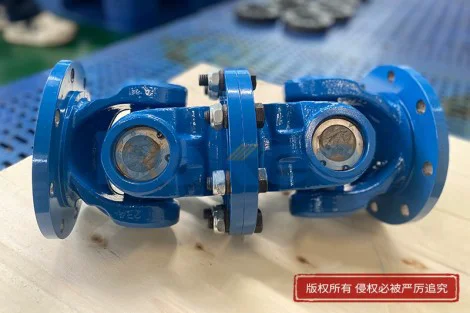
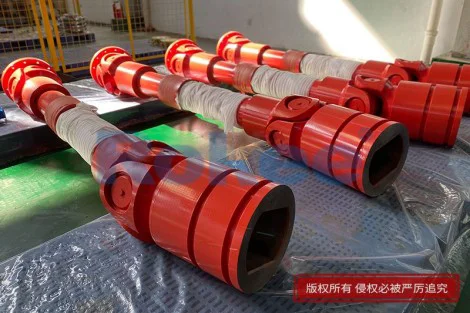
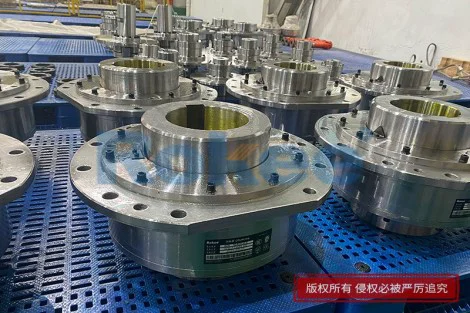
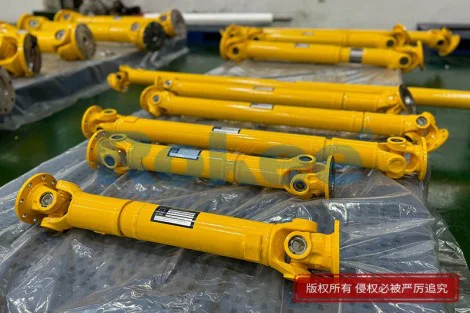
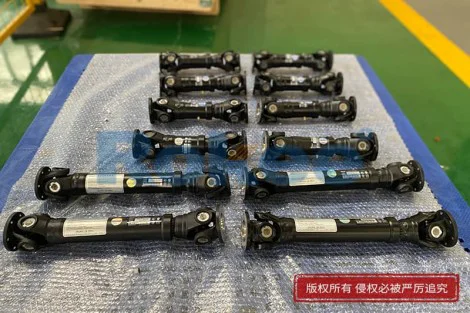
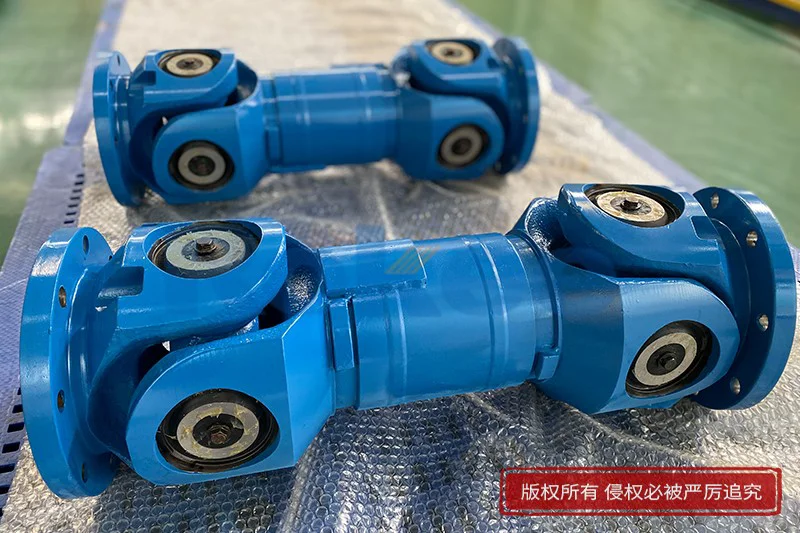
To fully understand the application value of the SWC cardan shaft in the PU sandwich panel production line, it is first necessary to clarify the structural characteristics and core performance advantages of the SWC cardan shaft. The SWC cardan shaft belongs to a mainstream type of cross-shaft universal coupling, which is mainly composed of an integral yoke, cross shaft assembly, needle roller bearings, and telescopic splines. Unlike traditional split-type couplings, it adopts an integrated design of the integral yoke and cross shaft assembly, which eliminates the weak links caused by bolt connection, greatly improving the structural rigidity and load-bearing capacity. The yoke is processed through precision forging and heat treatment processes, which enhances its compression resistance, impact resistance, and wear resistance, ensuring that it can maintain stable performance under long-term heavy-load operation. The cross shaft, as the core hub of power transmission, is made of low-alloy structural steel with surface carburizing treatment, which achieves a precise balance between surface hardness and core toughness, avoiding wear or deformation during high-torque transmission. The needle roller bearings matched with the cross shaft have the characteristics of small friction coefficient, high load-bearing capacity, and good rotation flexibility, which can ensure the smooth rotation of the cross shaft when the axis deflects, reducing power loss during transmission.
One of the most prominent advantages of the SWC cardan shaft is its excellent axis compensation performance. In the actual installation and operation of the PU sandwich panel production line, due to the limitations of the production process and the overall structure of the equipment, the installation positions of each subsystem (such as the uncoiling system, roll forming system, and cutting system) are often not on the same axis, resulting in angular deviations and axial displacements between the driving shaft and the driven shaft. The SWC cardan shaft can effectively compensate for these deviations through its unique structural design: a single universal joint can achieve an angular displacement compensation of 15°-25°, and when a double cross-shaft series design is adopted, the compensation angle can reach 40°-45°, which can fully adapt to the non-collinear axis transmission requirements of each subsystem of the production line. At the same time, the telescopic spline structure equipped in the SWC cardan shaft can flexibly adjust the axial length according to the distance between the equipment, not only compensating for installation errors but also coping with the dimensional changes caused by thermal expansion and contraction during the operation of the equipment, ensuring the stability and continuity of the power transmission system. In addition, the SWC cardan shaft has the characteristics of high transmission efficiency, low energy loss, compact structure, and easy maintenance, which can meet the long-term continuous operation needs of the PU sandwich panel production line and reduce the maintenance cost and downtime of the equipment.
The PU sandwich panel production line is a continuous and automated production system, and each production link has strict requirements on power transmission. The SWC cardan shaft is widely used in various key transmission links of the production line, playing a key role in ensuring the smooth operation of each link. The uncoiling system is the starting link of the production line, which is responsible for uncoiling the metal coil (common facing material) stably and evenly. The uncoiling machine is usually driven by a motor, and the power needs to be transmitted to the uncoiling roller through the transmission component. Due to the large volume and weight of the metal coil, the uncoiling process requires stable torque transmission and has certain requirements on the adaptability of the transmission component to load changes. The SWC cardan shaft is used to connect the motor and the uncoiling roller, which can not only transmit large torque stably but also compensate for the angular deviation caused by the installation of the uncoiling machine and the motor, ensuring that the metal coil is uncoiled at a uniform speed without deviation or jamming. During the uncoiling process, if the load changes suddenly (such as the uneven thickness of the metal coil), the SWC cardan shaft can buffer the impact load through its own structural characteristics, avoiding damage to the uncoiling equipment and the metal coil, and ensuring the stability of the subsequent processing links.
After uncoiling, the metal coil enters the roll forming system, which is responsible for processing the flat metal sheet into the desired shape (such as corrugated, flat, etc.) through the roll forming machine. The roll forming process requires the roll shafts to rotate at a uniform speed and transmit stable torque to ensure the consistency of the shape and size of the formed sheet. The SWC cardan shaft is used to connect the drive motor and the roll shafts of the forming machine, which can realize precise power transmission. Due to the multi-group roll shafts in the roll forming machine, the installation positions are often not on the same axis, and the SWC cardan shaft's excellent axis compensation performance can effectively solve the problem of non-collinear power transmission between the roll shafts, ensuring that each group of roll shafts rotates synchronously. At the same time, the roll forming process has high requirements on the stability of the transmission system. The SWC cardan shaft has the characteristics of low vibration and low noise during operation, which can avoid the impact of vibration on the forming precision of the sheet, ensuring that the formed facing material has a smooth surface and accurate size, laying a good foundation for the subsequent lamination and foaming links.
The preheating link is an important part of the PU sandwich panel production line, which is used to preheat the formed facing material to improve the bonding effect between the facing material and the PU foam core. The preheating equipment usually includes a preheating roller and a heating system, and the power of the preheating roller needs to be transmitted stably by the transmission component. The SWC cardan shaft is used in the transmission system of the preheating equipment, which can adapt to the high-temperature environment of the preheating link. The components of the SWC cardan shaft (such as the cross shaft and bearings) are treated with high-temperature resistant materials and processes, which can maintain stable performance under the high-temperature condition of 40-120℃ in the preheating link, avoiding the failure of the transmission component due to high temperature. At the same time, the SWC cardan shaft can compensate for the axial displacement caused by the thermal expansion of the preheating roller during operation, ensuring that the preheating roller rotates stably and the preheating temperature of the facing material is uniform, which is conducive to improving the bonding strength between the facing material and the PU foam core.
The foaming and lamination link is the core link of the PU sandwich panel production line, which directly determines the quality and performance of the final product. In this link, the high-pressure foaming machine sprays the uniformly mixed PU raw materials onto the bottom facing material, and then the upper facing material and the bottom facing material with PU raw materials enter the double-track laminating machine together for lamination and curing. The double-track laminating machine needs to maintain a stable pressure and temperature during operation, and the transmission system needs to transmit power stably to ensure that the laminating speed and pressure are uniform. The SWC cardan shaft is widely used in the transmission system of the double-track laminating machine, connecting the drive motor and the chain plate of the laminating machine. The chain plate of the laminating machine needs to carry the weight of the facing material and the PU foam core, and the load is large and unstable. The SWC cardan shaft has a strong load-bearing capacity, which can transmit large torque stably, ensuring that the chain plate runs at a uniform speed. At the same time, the double-track laminating machine has a long body, and the installation positions of the drive motor and the chain plate are prone to angular deviation. The SWC cardan shaft's axis compensation performance can effectively compensate for these deviations, avoiding uneven stress on the chain plate and ensuring the uniformity of the thickness and flatness of the laminated PU sandwich panel. In addition, the SWC cardan shaft has high transmission efficiency, which can reduce energy loss, making the operation of the double-track laminating machine more energy-saving and efficient.
After the foaming and lamination link, the PU sandwich panel enters the cooling and cutting link. The cooling link is used to cool and shape the cured PU sandwich panel to improve its structural stability. The cutting link is responsible for cutting the continuous PU sandwich panel into products of specified length according to the production requirements. The cutting machine usually adopts a sawing structure, and the power needs to be transmitted to the saw blade through the transmission component to ensure the smoothness and accuracy of the cutting. The SWC cardan shaft is used in the transmission system of the cutting machine, which can transmit power stably and accurately, ensuring that the saw blade rotates at a uniform speed and the cutting surface is smooth. During the cutting process, the load of the saw blade will change suddenly when it contacts the PU sandwich panel, and the SWC cardan shaft can buffer the impact load through its own structural characteristics, avoiding damage to the saw blade and the transmission component, and ensuring the cutting accuracy. At the same time, the SWC cardan shaft can compensate for the angular deviation caused by the installation of the saw blade and the drive motor, ensuring that the cutting direction is accurate and the length error of the cut product is within the allowable range.
In addition to the above key links, the SWC cardan shaft is also used in the transmission system of the auxiliary equipment of the PU sandwich panel production line, such as the conveying system and the palletizing system. The conveying system is responsible for conveying the semi-finished and finished products between each production link, and the power transmission needs to be stable and reliable. The SWC cardan shaft can adapt to the long-distance and non-collinear transmission requirements of the conveying system, ensuring that the conveying belt or conveying roller runs at a uniform speed, avoiding the accumulation or damage of the products during the conveying process. The palletizing system is used to stack the cut finished products automatically, which requires the transmission component to have good adaptability and stability. The SWC cardan shaft can connect the drive motor and the palletizing mechanism, realizing precise power transmission, ensuring that the palletizing action is smooth and accurate, improving the efficiency of the palletizing work and reducing manual operation intensity.
The stable operation of the SWC cardan shaft in the PU sandwich panel production line is not only related to its own structural performance but also closely related to correct installation, reasonable use, and regular maintenance. In the installation process of the SWC cardan shaft, it is necessary to do a good job in preparation work, including preparing measuring tools (such as laser aligners, dial gauges), fastening tools, cleaning materials, and lubricating materials, and checking the integrity of the components and the installation environment. The installation environment should ensure that the levelness error of the operation platform is not more than 0.1mm/m, the ambient temperature is controlled between 15-30℃, and the humidity is less than 60%, avoiding operation in an environment with excessive dust. During the installation, it is necessary to align the phase marks of the spline shaft and the spline sleeve to ensure that the coaxiality error of the two shafts is less than 0.1mm, and the bolts are tightened according to the cross method to ensure the firmness of the connection. After installation, static precision detection and dynamic operation debugging should be carried out to ensure that the radial runout and angular deviation of the shaft system meet the requirements, and the vibration value and temperature rise during operation are within the normal range.
In the process of use, it is necessary to pay attention to the operating status of the SWC cardan shaft, regularly check for abnormal noise, radial runout, and bolt loosening, and deal with potential faults in a timely manner. The lubrication of the SWC cardan shaft is very important. It is necessary to inject 2# industrial lithium-based grease into the bearing and spline pair regularly. The lubrication amount of the bearing should be 60% of the bearing cavity volume, and the spline pair should be sprayed with molybdenum disulfide spray to ensure the smoothness of the rotation and reduce wear. Under high-temperature working conditions, the lubrication cycle should be shortened, and high-temperature resistant lubricating materials should be selected. For the SWC cardan shaft stored for more than 6 months, lubricating oil should be refilled before use to ensure its normal operation.
Regular maintenance and overhaul are important measures to extend the service life of the SWC cardan shaft. The overhaul cycle is generally 6 to 12 months. During the overhaul, it is necessary to check the wear or indentation of the bearings and cross shafts. If the wear or indentation exceeds 0.25mm, it should be replaced in time. At the same time, the sealing performance of the SWC cardan shaft should be checked. If there is oil leakage, the oil seal should be replaced in time to avoid dust and impurities entering the internal components and causing damage. For the SWC cardan shaft used in harsh environments (such as high dust and high humidity), it is necessary to increase the frequency of cleaning and maintenance to ensure its stable performance.
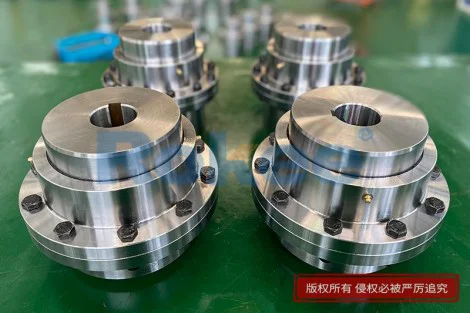
Compared with other types of transmission components (such as rigid couplings and flexible couplings), the SWC cardan shaft has obvious advantages in the PU sandwich panel production line. Rigid couplings have strict requirements on the coaxiality of the two shafts and cannot compensate for axis deviations, which is difficult to adapt to the installation characteristics of each subsystem of the PU sandwich panel production line. Flexible couplings have a certain axis compensation capacity but have low load-bearing capacity and poor impact resistance, which cannot meet the heavy-load transmission requirements of the production line. The SWC cardan shaft combines the advantages of high load-bearing capacity, excellent axis compensation performance, high transmission efficiency, and good stability, which can fully adapt to the complex working conditions of the PU sandwich panel production line, solve the technical difficulties of power transmission in each link, and ensure the smooth operation of the entire production line.
With the continuous development of the PU sandwich panel industry, the production line is developing towards higher automation, higher efficiency, and higher precision, which puts forward higher requirements on the performance of the transmission components. The SWC cardan shaft, as a key transmission component, is also constantly optimizing and upgrading. In the future, through the improvement of material technology and processing technology, the load-bearing capacity, wear resistance, and high-temperature resistance of the SWC cardan shaft will be further improved, and its axis compensation performance and transmission efficiency will be further optimized. At the same time, with the integration of intelligent technology, the SWC cardan shaft will be equipped with intelligent monitoring devices, which can monitor its operating status in real time, predict potential faults, and realize intelligent maintenance, further improving the reliability and stability of the transmission system of the PU sandwich panel production line.
In conclusion, the SWC cardan shaft plays an irreplaceable role in the PU sandwich panel production line. Its unique structural design and excellent performance effectively solve the problems of non-collinear axis transmission, load fluctuation, and high-temperature adaptation in each link of the production line, ensuring the stability of power transmission, improving production efficiency and product quality, and reducing equipment maintenance costs and downtime. Through correct installation, reasonable use, and regular maintenance, the SWC cardan shaft can give full play to its application value, providing a reliable guarantee for the continuous and stable operation of the PU sandwich panel production line. With the continuous upgrading of the PU sandwich panel production technology, the application prospect of the SWC cardan shaft will be broader, and it will continue to promote the high-quality development of the PU sandwich panel industry.