Tyre Coupling Manufacturer

In the complex landscape of industrial power transmission, tyre couplings stand out as essential components that bridge the gap between power sources and working machinery, ensuring smooth, efficient, and reliable operation across a wide range of industries. As a dedicated tyre coupling manufacturer, the focus is on designing, engineering, and producing high-performance tyre couplings that meet the diverse needs of modern industrial applications, from heavy-duty mining operations to precision manufacturing processes. The commitment to quality, innovation, and customer-centric solutions has made tyre couplings a preferred choice for businesses seeking to enhance the durability and efficiency of their transmission systems.
Tyre couplings are classified as flexible couplings, characterized by their unique structure that combines rigid metal components with elastic tyre elements. This design allows them to perform three core functions: transmitting torque from the driving shaft to the driven shaft, compensating for misalignments between the two shafts, and absorbing shocks and vibrations generated during operation. Unlike rigid couplings that require precise alignment and offer no vibration damping, tyre couplings leverage the elasticity of their tyre elements to adapt to minor misalignments, reduce mechanical wear, and extend the service life of connected equipment. This versatility makes them suitable for use in environments where machinery is subject to frequent starts and stops, variable loads, and harsh operating conditions.
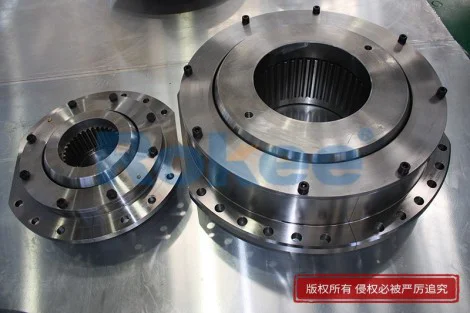
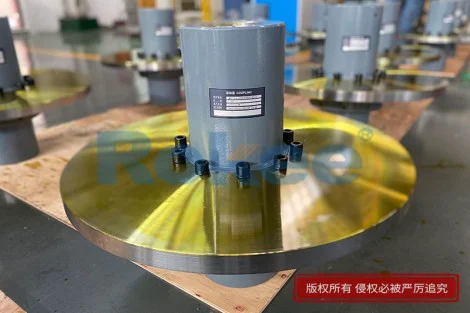
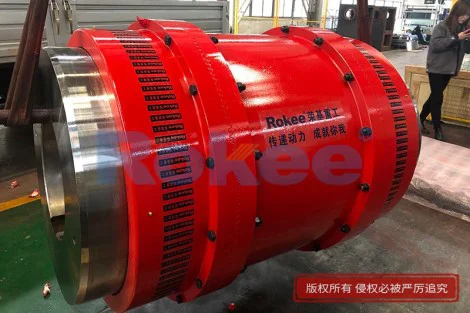
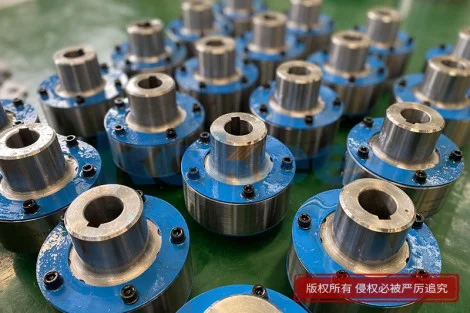
The core structure of a tyre coupling consists of three main components: half-couplings, elastic tyre bodies, and connecting fasteners. Half-couplings, typically made from high-strength steel or cast iron, serve as the rigid connection points between the coupling and the shafts of the driving and driven machinery. These components are precision-machined to ensure a tight fit with the shafts, with various shaft hole types available, including cylindrical, conical, and keyway designs, to accommodate different shaft end configurations. Surface treatments such as painting or galvanizing are applied to the half-couplings to enhance corrosion resistance, ensuring long-term performance in damp or dusty environments. Some models may also integrate brake wheels, either cast or welded integrally with the half-coupling, to meet the braking requirements of specific applications such as cranes and hoists.
The elastic tyre body is the heart of the tyre coupling, responsible for its flexible performance. Manufactured from high-quality rubber materials, often a blend of natural rubber and nitrile rubber, the tyre body is designed to withstand torsional shear deformation while maintaining its elasticity. This material selection ensures excellent vibration damping capabilities, allowing the coupling to absorb sudden shocks and reduce noise during operation. In some cases, the tyre body may be reinforced with nylon cords or fabric layers to enhance its tensile strength and durability, preventing premature wear or tearing under heavy loads. The tyre body is bonded to metal frames using vulcanization, a process that creates a strong, permanent bond between the rubber and metal, ensuring reliable torque transmission without slippage.
Connecting fasteners, including high-strength bolts, nuts, and pressure plates, are used to secure the tyre body to the half-couplings. Pressure plates, which can be annular or split-type, are clamped onto the metal frames of the tyre body, and bolts are tightened to create the friction necessary for torque transmission. The use of high-strength bolts ensures that the connection remains secure even under high torque and vibration, preventing loosening that could lead to equipment failure. These fasteners are designed to be easy to install and remove, facilitating maintenance and replacement of the tyre body when needed.
Tyre couplings are available in a variety of types to suit different application requirements, with the most common models including UL, LLA, and LLB series. Each type features distinct structural designs and performance characteristics that make them suitable for specific industrial scenarios. UL series tyre couplings adopt a closed tyre body design, where the tyre element is bonded to threaded metal connecting plates via vulcanization, then attached to the half-couplings with bolts. This design prioritizes lightweight construction and efficient shock absorption, making it ideal for applications requiring high levels of vibration damping, such as pumps, compressors, and small fans.
LLA series tyre couplings feature an open tyre body design, which allows for easy replacement of the elastic element without disassembling the entire coupling or disconnecting the shafts. The tyre body is secured to the half-couplings using internal pressure plates and bolts, and loosening these bolts allows for quick removal and replacement of the tyre body. This design is particularly advantageous in environments where maintenance downtime must be minimized, such as in mining, metallurgy, and construction machinery. LLA series couplings are also well-suited for applications with frequent starts and stops, variable loads, and high levels of dust or moisture.
LLB series tyre couplings are designed for heavy-duty applications, featuring a thicker, closed tyre body that provides higher torque capacity and structural strength. These couplings are commonly used in large-scale industrial equipment such as mine hoists, port cranes, and rolling mills, where they must transmit high torque while compensating for shaft misalignments. The closed design of the tyre body also offers superior protection against dust, water, and other contaminants, making it suitable for harsh operating environments. LLB series couplings cover a wide torque range, from 10 N·m to 20,000 N·m, and can operate within a temperature range of -20℃ to 80℃, ensuring versatility across various industrial settings.
As a tyre coupling manufacturer, the production process is guided by strict quality control standards to ensure that each product meets the highest performance and reliability requirements. The manufacturing process begins with the selection of high-quality raw materials, including premium steel for the half-couplings and high-grade rubber for the tyre bodies. Raw materials are thoroughly inspected to ensure they meet specified standards for strength, durability, and chemical resistance. Precision machining equipment is used to fabricate the half-couplings, with computer numerical control (CNC) machines ensuring tight tolerances and consistent quality across all components. The vulcanization process for the tyre bodies is carefully controlled to ensure optimal bonding between the rubber and metal frames, with temperature and pressure parameters adjusted to achieve the desired elasticity and strength.
Quality control is integrated into every stage of the production process, from raw material inspection to final product testing. Each component is inspected for dimensional accuracy, surface quality, and structural integrity before assembly. Assembled couplings undergo rigorous testing to verify their torque capacity, misalignment compensation, and vibration damping performance. Tests may include torque transmission tests, misalignment tests, and fatigue tests, ensuring that the couplings can withstand the demands of their intended applications. Any products that fail to meet the quality standards are rejected, ensuring that only high-performance, reliable tyre couplings reach the customer.
The versatility of tyre couplings makes them suitable for a wide range of industrial applications, spanning mining, metallurgy, construction, port handling, petrochemical, and many others. In the mining industry, tyre couplings are used in equipment such as crushers, conveyors, and hoists, where they must withstand heavy loads, high vibration, and dusty environments. Their ability to compensate for shaft misalignments and absorb shocks helps protect expensive mining equipment from damage, reducing maintenance costs and downtime. In the metallurgy industry, tyre couplings are employed in rolling mills, steelmaking furnaces, and continuous casting machines, operating under high temperatures and heavy loads to ensure smooth power transmission and stable equipment operation.
Port machinery, including cranes, conveyors, and loaders, also relies heavily on tyre couplings to handle the frequent starts and stops, variable loads, and outdoor operating conditions. The corrosion resistance of the half-couplings and the durability of the tyre bodies make them suitable for use in coastal environments, where saltwater and humidity can cause premature wear of other components. In the construction industry, tyre couplings are used in concrete mixers, cranes, and elevators, where their easy installation and maintenance, combined with reliable performance, make them an ideal choice for construction sites.
The petrochemical industry benefits from the use of tyre couplings in pumps, compressors, and mixers, where they must operate under high pressure, high temperature, and corrosive conditions. The chemical resistance of the rubber tyre bodies and the robust construction of the half-couplings ensure that the couplings can withstand the harsh environments of chemical processing plants. Additionally, tyre couplings are used in aerospace applications, where their high performance and reliability are critical for the safe operation of aircraft components.
One of the key advantages of working with a dedicated tyre coupling manufacturer is the ability to access custom solutions tailored to specific application requirements. While standard tyre couplings are suitable for most industrial applications, some machinery may require specialized designs to accommodate non-standard shaft diameters, unique torque requirements, or extreme operating conditions. Manufacturers can work closely with customers to understand their specific needs, conducting detailed analysis of the application environment, torque requirements, and shaft configurations to design custom tyre couplings that meet or exceed performance expectations. Customization options may include modifications to the tyre body material, half-coupling design, torque capacity, and misalignment compensation capabilities.
In addition to custom design services, tyre coupling manufacturers also provide comprehensive technical support and after-sales service to ensure that customers get the most out of their products. Technical experts can assist with the selection of the appropriate tyre coupling type and size, providing guidance on installation, alignment, and maintenance to optimize performance and extend service life. After-sales service may include troubleshooting support, replacement parts, and on-site maintenance assistance, ensuring that any issues are resolved quickly to minimize downtime.
The global market for tyre couplings is growing steadily, driven by increasing industrialization, the need for efficient power transmission systems, and the focus on reducing equipment downtime and maintenance costs. As industries continue to evolve, the demand for high-performance, reliable tyre couplings is expected to increase, particularly in emerging markets where industrial infrastructure is expanding. Tyre coupling manufacturers are responding to this demand by investing in research and development, exploring new materials and designs to enhance the performance and durability of their products. Innovations such as the use of advanced rubber compounds, lightweight materials, and improved vulcanization processes are helping to create tyre couplings that offer higher torque capacity, better vibration damping, and longer service life.
Another trend in the tyre coupling industry is the focus on energy efficiency. By reducing vibration and improving torque transmission efficiency, tyre couplings can help reduce energy consumption in industrial machinery, contributing to sustainability goals. Manufacturers are also exploring the use of environmentally friendly materials and production processes, minimizing the environmental impact of their operations.
In conclusion, tyre couplings are essential components in modern industrial power transmission systems, offering a unique combination of flexibility, reliability, and durability. As a tyre coupling manufacturer, the commitment to quality, innovation, and customer satisfaction is paramount, ensuring that each product is designed and manufactured to meet the diverse needs of industrial applications. From standard models to custom solutions, tyre couplings play a critical role in enhancing the performance and longevity of industrial machinery, helping businesses achieve greater efficiency, reduce maintenance costs, and improve operational reliability. With ongoing advancements in materials and design, the future of tyre couplings looks promising, with new innovations set to further expand their applications and capabilities across various industries.