Flexible Coupling Ensures Stable High-speed Operation Of PUR Sandwich Panel Production Line

In the modern manufacturing industry of energy-saving building materials, the continuous upgrading of production efficiency and product precision has put forward higher requirements for the operational stability of automated production lines. PUR sandwich panels, as core lightweight and thermal insulation building materials, are widely applied in industrial workshops, cold storage buildings, and prefabricated construction fields, and their market demand drives the continuous acceleration of production line operating speed. In the high-speed continuous production process of PUR sandwich panels, the coordinated operation of multiple mechanical units determines the overall production quality and operational continuity of the equipment. Slight transmission deviations, mechanical vibration, and instantaneous impact generated during equipment operation will be amplified exponentially under high-speed working conditions, leading to unstable equipment operation, inconsistent panel forming accuracy, and even frequent production line shutdowns. As a key transmission connecting component in the production line system, flexible coupling plays an irreplaceable core role in eliminating transmission interference, balancing mechanical operation states, and supporting long-term stable high-speed operation of PUR sandwich panel production lines, becoming an essential guarantee for efficient and high-quality production of sandwich panel products.
The operational characteristics of PUR sandwich panel production line determine the strict requirements for transmission system stability. A complete PUR sandwich panel production line integrates multiple functional units including material feeding, polyurethane foaming, continuous pressing, surface trimming, and finished product conveying. All functional units rely on mechanical transmission systems to realize synchronous linkage operation. In the traditional production line transmission design, rigid connection structures were mostly adopted to connect driving and driven shafts. Such structures require extremely high installation alignment accuracy and cannot tolerate any relative displacement or tiny deformation during long-term operation. However, in actual industrial production scenarios, it is impossible to achieve absolute precise alignment of equipment shafts due to factors such as mechanical installation errors, structural thermal deformation caused by long-time high-load operation, and subtle foundation settlement of production equipment. Under low-speed operation conditions, these tiny deviations will not cause obvious adverse effects on production, but when the production line is running at high speed to pursue mass production efficiency, continuous rigid friction and stress concentration generated by misalignment will trigger severe mechanical vibration, transmission lag, and periodic torque fluctuation. These abnormal mechanical states will directly affect the uniform foaming of PUR materials, the flatness of panel surface pressing, and the consistency of product dimensional accuracy, resulting in a large number of defective products and increased production cost loss.
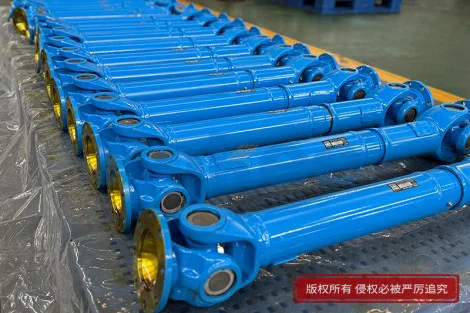
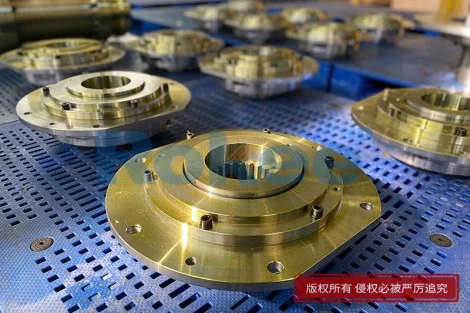
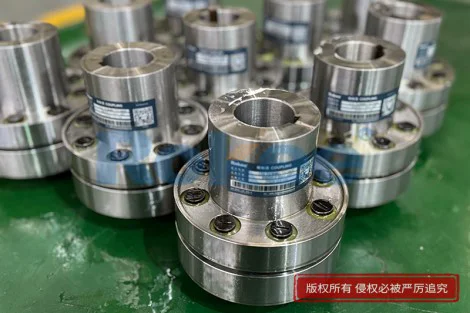
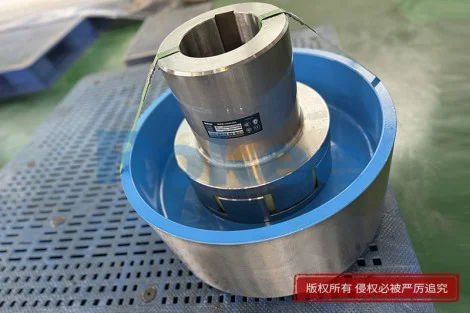
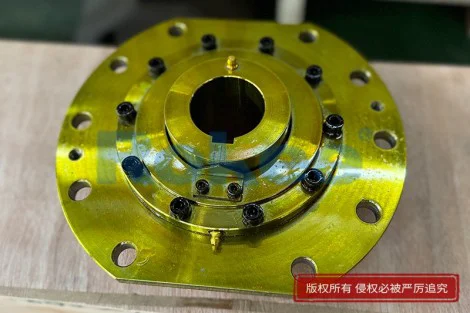
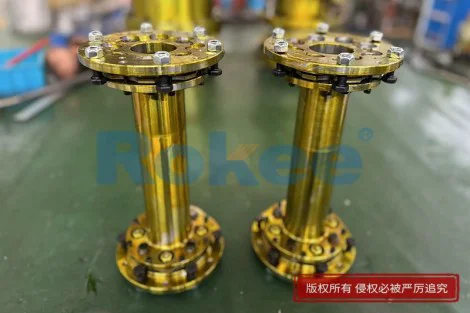
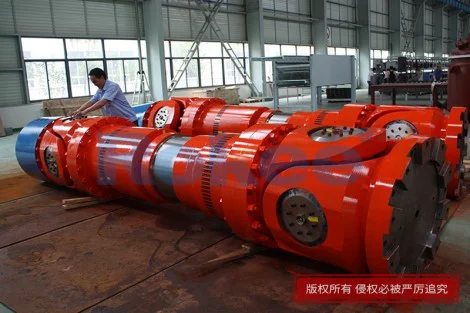
Different from rigid connecting structures, flexible coupling realizes stable torque transmission and dynamic error compensation through its unique elastic structural design and compliant deformation characteristics. The core working principle of flexible coupling lies in utilizing the elastic deformation of internal compliant components to absorb and offset axial, radial, and angular misalignment between transmission shafts, while effectively buffering instantaneous mechanical impact and isolating high-frequency vibration generated during equipment operation. In the high-speed operation scenario of PUR sandwich panel production lines, this flexible transmission characteristic perfectly solves the inherent defects of rigid transmission. When the production line operates continuously at high speed, the tiny axis deviations and structural deformations of each transmission unit generated by long-term operation will be adaptively compensated by the flexible coupling, avoiding rigid extrusion and friction between mechanical parts. This dynamic compensation mechanism ensures that the torque transmission between the driving motor, reduction gearbox, and each functional transmission shaft of the production line remains continuous and uniform, eliminating periodic torque jitter that affects production stability. Even in the process of frequent equipment start-up, shutdown, and load switching in batch production, the flexible coupling can absorb instantaneous impact load through elastic deformation, prevent sudden torque changes from causing structural damage to equipment and disorder of production rhythm, and maintain the smooth progress of high-speed continuous production.
The stable high-speed operation of PUR sandwich panel production lines is closely related to the precision continuity of each production link, and flexible coupling provides precise transmission guarantee for key production processes. In the PUR foaming and composite pressing stage, the synchronous operation accuracy of the upper and lower pressing rollers directly determines the bonding firmness and overall flatness of the sandwich panel core material and surface layer. Slight asynchronous operation of the pressing rollers will lead to uneven foaming density of polyurethane materials, local wrinkling of the panel surface, and deviation of product thickness. The flexible coupling installed in the pressing roller transmission system can always maintain consistent torque transmission efficiency under high-speed rotating conditions, ensure the synchronous rotation of paired pressing rollers, and avoid speed difference and position deviation in the pressing process. In the subsequent trimming and conveying links, high-speed stable transmission is the premise to ensure uniform trimming size and stable conveying speed. The vibration damping performance of flexible coupling effectively suppresses the high-frequency vibration of the transmission system during high-speed operation, avoids the offset of the trimming tool position and the jitter of the conveying platform, and enables each processed PUR sandwich panel to maintain consistent dimensional accuracy and surface quality.
Long-term high-speed operation of industrial equipment is often accompanied by mechanical fatigue loss and component wear, and the application of flexible coupling effectively extends the service life of PUR sandwich panel production line equipment and reduces operational failure risks. Rigid transmission structures will generate continuous additional mechanical stress at the connection parts when there is shaft misalignment, and the stress will accumulate continuously with the extension of high-speed operation time, leading to accelerated wear of bearings, transmission shafts, and gear components, and even structural cracking of key parts in severe cases. Flexible coupling can release the additional stress generated by transmission misalignment through elastic deformation, reduce the bearing load of key mechanical components, and slow down the fatigue wear of equipment parts. In addition, the vibration isolation and buffering performance of flexible coupling can reduce the high-frequency vibration transmitted between equipment units, avoid resonance phenomena in the production line transmission system, and prevent equipment failure and production line shutdown caused by resonance damage. For the continuous batch production mode of PUR sandwich panels, this stable protection effect greatly improves the overall operational reliability of the production line, reduces the frequency of equipment maintenance and downtime loss, and ensures the sustainability of high-speed production efficiency.
The structural adaptability of flexible coupling also enables it to adapt to the complex and changeable working environment of PUR sandwich panel production workshops, further consolidating the foundation of stable high-speed operation. In the actual production process, the workshop environment has uncertain factors such as temperature change, dust accumulation, and subtle equipment vibration interference. High-temperature environment will cause slight thermal expansion and deformation of metal components of the production line, and dust accumulation will increase the friction resistance of mechanical operation. Flexible coupling with optimized structural design has excellent environmental adaptability, its elastic components can maintain stable deformation performance and torque transmission capacity within a wide temperature range, and the compact structural layout can effectively avoid dust accumulation affecting transmission flexibility. Compared with traditional transmission components, high-performance flexible coupling can still maintain accurate dynamic compensation and stable transmission state under long-term high-speed and high-load working conditions, without frequent adjustment and calibration due to environmental changes, ensuring that the production line can maintain consistent high-precision and high-efficiency operation state in different production stages.
In the context of the continuous development of intelligent and automated building material manufacturing, PUR sandwich panel production lines are evolving towards higher operating speed, higher production precision and longer continuous operation cycle. The upgrading of production line operation standards puts forward more stringent requirements for transmission system stability, and the value of flexible coupling in industrial production is becoming increasingly prominent. It is no longer a simple auxiliary connecting component, but a key core component that restricts the overall operational performance of the production line. By solving multiple pain points in high-speed operation such as transmission misalignment, vibration interference, impact load and mechanical wear, flexible coupling effectively balances the relationship between production line operating speed and operational stability, breaks through the efficiency bottleneck of traditional production equipment restricted by unstable transmission, and realizes the dual improvement of production efficiency and product quality.
In practical industrial production applications, the reasonable matching and application of flexible coupling has become an important part of the optimization and upgrading of PUR sandwich panel production lines. Production line equipment optimization and maintenance personnel fully recognize that stable high-speed operation does not rely solely on the power performance of driving equipment, but more on the stable transmission guarantee of the entire mechanical system. The excellent dynamic compensation, vibration damping and impact resistance of flexible coupling make the entire production line transmission system operate in a low-loss, low-vibration and high-precision state for a long time. This stable operating state not only ensures the uniformity and consistency of PUR sandwich panel product quality, reduces the defective rate caused by equipment operation instability, but also greatly improves the effective operating time of the production line, realizes continuous and efficient batch production, and creates greater production benefits for building material manufacturing enterprises.
To sum up, flexible coupling is a crucial guarantee for the stable high-speed operation of PUR sandwich panel production lines. Its unique flexible transmission mechanism and excellent comprehensive mechanical performance effectively solve various unstable factors in the high-speed operation process of automated production lines, optimize the overall operating state of the production line transmission system, and provide solid technical support for high-efficiency and high-precision production of PUR sandwich panels. With the continuous progress of industrial manufacturing technology, the structural design and performance of flexible coupling will continue to be optimized, and its application in building material production equipment will be more in-depth, further promoting the intelligent, efficient and stable development of the entire PUR sandwich panel manufacturing industry, and meeting the growing market demand for high-performance energy-saving building materials.