Flexible Coupling Improves Transmission Accuracy Of PUR Sandwich Panel Production Line

The manufacturing of PUR sandwich panels demands extremely high precision in continuous automated production, as the dimensional consistency, surface flatness and structural uniformity of finished panels are directly determined by the stability and accuracy of the production line’s transmission system. In the long-term continuous operation of traditional PUR sandwich panel production lines, rigid transmission structures have long been a key factor restricting product quality improvement and production stability. Rigid connection parts require absolute coaxial alignment between driving and driven shafts, which can hardly adapt to minor axis offset, angular deviation and axial displacement caused by equipment installation errors, long-term operational vibration, thermal deformation of mechanical components and gradual structural wear. These unavoidable mechanical deviations will trigger unstable torque transmission, intermittent motion jitter and cumulative positioning errors, leading to inconsistent panel thickness, uneven foam filling density and irregular edge cutting of PUR sandwich panels, and ultimately reducing the overall qualification rate of products. As a core flexible transmission component, flexible couplings effectively solve the inherent defects of rigid transmission systems through unique elastic structural design and adaptive deformation characteristics, significantly improving the transmission accuracy, operational stability and long-term working reliability of PUR sandwich panel production lines, and providing a solid mechanical guarantee for high-precision and high-quality continuous production of sandwich panels.
The operational characteristics and process requirements of PUR sandwich panel production line determine the strict standards for transmission system accuracy. The entire production process of PUR sandwich panels includes continuous unwinding of metal base materials, surface pretreatment, precise polyurethane foam injection, high-pressure composite molding, constant-temperature curing, fixed-length cutting and finished product conveying. Each process link is closely linked and requires synchronous and stable transmission of the entire line. Even tiny transmission errors will be amplified in the continuous high-speed production process, resulting in batch product quality problems. For example, slight jitter in the transmission of the base material unwinding mechanism will cause uneven tension of the metal plate, leading to wavy deformation of the panel surface; minor positioning deviation in the molding and traction transmission link will lead to inconsistent overall thickness of the sandwich panel and asymmetric distribution of the internal foam layer; unstable speed output of the cutting transmission mechanism will cause irregular cutting lengths and burrs on panel edges. These precision defects, which are difficult to eliminate in rigid transmission systems, are mostly derived from the poor adaptability of rigid connecting structures to dynamic mechanical changes in equipment operation, and flexible couplings can fundamentally optimize this problem through structural flexibility and error compensation capabilities.
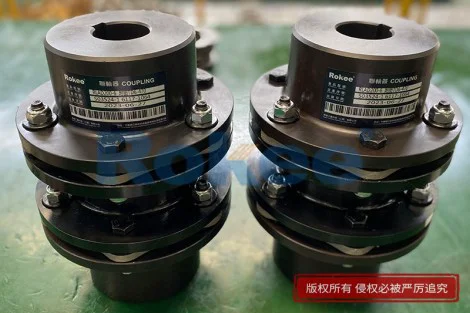
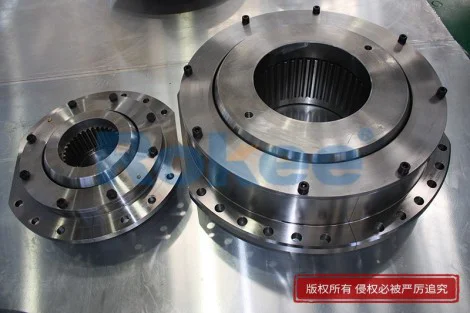
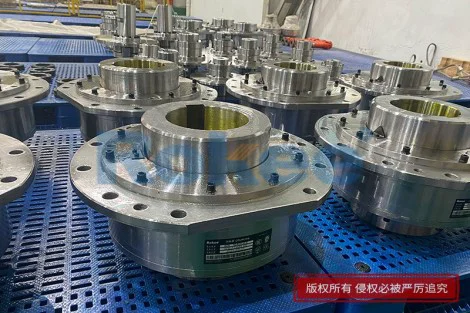
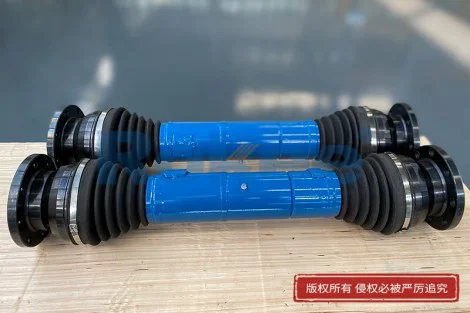
Different from rigid couplings that rely on hard contact and fixed limit to transmit torque, flexible couplings adopt elastic compliant structures, which can maintain efficient and stable torque and rotational speed transmission while tolerating multiple forms of shaft misalignment. In the actual operation of PUR sandwich panel production lines, shaft misalignment is an objective and persistent mechanical state rather than an occasional fault. Installation deviation will produce initial parallel and angular offset between the connected shafts of motors, reducers and traction rollers; long-term high-load continuous operation will cause slight wear of bearing components and micro-deformation of frame structures, further changing the coaxial state of the transmission shaft system; continuous heat generation during equipment operation and ambient temperature changes will induce thermal expansion and contraction of metal components, resulting in real-time axial and radial displacement of transmission shafts. Rigid structures will generate additional mechanical stress and transmission resistance under these misalignment states, leading to torsional deformation of transmission parts, fluctuating output speed and delayed torque response, which are the core causes of transmission accuracy attenuation. Flexible couplings absorb and offset these deviations through elastic deformation of internal structural components, convert rigid impact and vibration energy into elastic potential energy for gradual release, avoid concentrated stress on transmission parts, and ensure that the transmission system always maintains consistent motion output and torque transmission accuracy under dynamic operating conditions.
The accuracy optimization mechanism of flexible couplings in PUR sandwich panel production lines is mainly reflected in three core dimensions: misalignment compensation, vibration and impact damping, and motion synchronization maintenance. In terms of misalignment compensation, flexible couplings can adaptively compensate for axial displacement, radial parallel offset and angular deviation between driving and driven shafts within a certain range, eliminating the transmission accuracy loss caused by shaft misalignment. This compensation effect does not affect the basic transmission efficiency and torque stability, nor will it produce additional mechanical loss, enabling each transmission node of the production line to maintain precise power transmission even in non-ideal coaxial working conditions. For the traction and molding transmission links with the highest precision requirements in PUR sandwich panel production, this capability can effectively avoid positioning errors and speed fluctuations caused by shaft deviation, ensuring that the base material feeding speed, foam molding pressure matching and fixed-length conveying stroke remain highly consistent in each production cycle.
In terms of vibration and impact damping, flexible couplings can effectively suppress mechanical vibration and instantaneous impact generated during equipment start-stop, load switching and continuous operation. PUR sandwich panel production lines belong to continuous cyclic operation equipment, and frequent start-stop and dynamic load changes will inevitably produce instantaneous impact force in the transmission system. Rigid transmission structures directly transfer these impacts and vibrations to the entire shaft system and execution components, resulting in periodic motion jitter and positioning deviation, which seriously affect the flatness and dimensional accuracy of composite panels. The elastic elements of flexible couplings can buffer and absorb instantaneous impact force and high-frequency vibration, isolate vibration transmission between adjacent transmission components, maintain stable operation of traction rollers, molding platforms and cutting mechanisms, and avoid product quality defects caused by mechanical vibration such as uneven foam foaming and panel surface indentation.
In terms of motion synchronization maintenance, flexible couplings optimize the power transmission response speed and consistency of each unit of the production line. The entire PUR sandwich panel production line is composed of multiple independent transmission units, and the synchronous coordination of speed and stroke between unwinding, feeding, molding, curing and cutting units is the key to ensuring product consistency. Rigid transmission systems are prone to cumulative errors after long-term operation, resulting in asynchronous operation of each unit, material stretching or accumulation, and unqualified composite molding. Flexible couplings reduce transmission backlash and mechanical hysteresis through precise elastic structural matching, ensure that the torque and speed output of each transmission unit can respond synchronously and accurately to the control system instructions, eliminate cumulative transmission errors in continuous operation, and maintain long-term stable motion synchronization of the entire production line.
The practical application effect of flexible couplings in PUR sandwich panel production lines is fully reflected in the improvement of product precision indicators and production stability. After replacing rigid transmission connecting parts with high-performance flexible couplings, the positioning repeatability of key transmission links of the production line is significantly improved, the fluctuation range of feeding and traction speed is greatly reduced, and the dimensional error of panel thickness, length and flatness is effectively controlled within a smaller stable range. In the foam injection and composite molding stage, stable transmission ensures uniform material feeding speed and constant molding pressure, making the internal polyurethane foam structure of the sandwich panel more compact and uniform, avoiding hollowing, uneven density and local defects caused by unstable transmission. In the fixed-length cutting stage, the elimination of transmission jitter and positioning deviation makes the cutting size of finished panels more accurate, and the edge flatness and regularity are significantly improved, reducing the subsequent trimming workload and material waste.
In addition to improving transmission accuracy and product quality, flexible couplings also optimize the long-term operating performance and maintenance cost of PUR sandwich panel production lines. Rigid transmission structures are prone to fatigue damage, component wear and loose connection under long-term misalignment and impact load operation, requiring frequent inspection, adjustment and replacement of parts, which not only increases production and maintenance costs, but also causes frequent production line shutdowns and affects production efficiency. Flexible couplings reduce the wear and fatigue loss of transmission shafts, bearings and reducers through vibration damping and stress buffering effects, effectively extending the service life of the entire transmission system and key mechanical components. Their simple and compact structural design also brings convenient installation and later maintenance, without complex calibration and debugging procedures, which can effectively reduce equipment downtime and improve the continuous operation efficiency of the production line.
It is worth noting that the precision improvement effect of flexible couplings is closely related to the matching degree with the operating parameters of PUR sandwich panel production lines. In practical application, it is necessary to select flexible couplings with appropriate elastic performance, torque bearing capacity and deviation compensation range according to the production line’s operating speed, load range, transmission stroke and working environment. Reasonable type selection and installation layout can maximize the accuracy compensation and stability optimization capabilities of flexible couplings. For high-speed continuous production lines with high precision requirements, flexible couplings with low backlash and high precision elastic deformation characteristics can further reduce micro-transmission errors; for production lines with large load fluctuations and frequent start-stop operations, flexible couplings with strong impact resistance and fatigue resistance can maintain long-term stable transmission accuracy and avoid performance attenuation caused by component fatigue deformation.
With the continuous upgrading of the PUR sandwich panel manufacturing industry towards high precision, high efficiency and intelligent continuous production, the requirements for the operational stability and transmission accuracy of production equipment are becoming increasingly stringent. Traditional rigid transmission modes can no longer meet the high-standard production demand of high-end sandwich panels, and flexible transmission represented by flexible couplings has become an inevitable trend of equipment optimization and upgrading. By solving the mechanical pain points of shaft misalignment, vibration impact and cumulative error in traditional transmission systems, flexible couplings effectively improve the overall transmission performance of PUR sandwich panel production lines, realize precise control of each production link, stabilize product quality consistency, and create greater production value for automated sandwich panel manufacturing. In the future, with the continuous optimization of flexible coupling structural design and material performance, its application in precision composite material production equipment will be further deepened, providing more reliable mechanical support for the high-quality development of the PUR sandwich panel industry.