Flange Type Universal Shaft Coupling

Flange type universal shaft coupling is a core mechanical transmission component designed to connect separate shaft systems and deliver stable torque and rotational motion in complex industrial operating environments. Differing from conventional rigid and flexible couplings, this integrated structure combines the high-strength connection performance of flange structures with the flexible displacement compensation capability of universal joint mechanisms, enabling reliable power transmission even when connected shafts produce angular, axial, and radial misalignment during operation. It effectively solves the common transmission instability problems caused by equipment installation deviations, mechanical vibration, and operational position changes in mechanical systems. With excellent load-bearing capacity, structural stability, and environmental adaptability, this coupling has become an indispensable part of various mechanical power transmission systems, widely applied in heavy-duty transmission equipment, conveying machinery, and industrial production lines that require continuous and efficient power output.
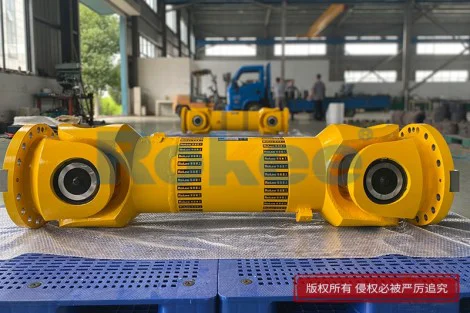
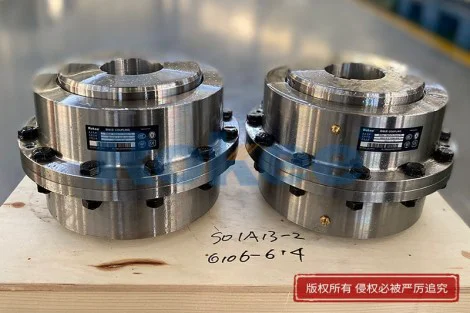
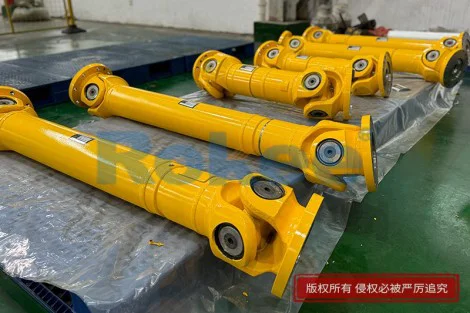
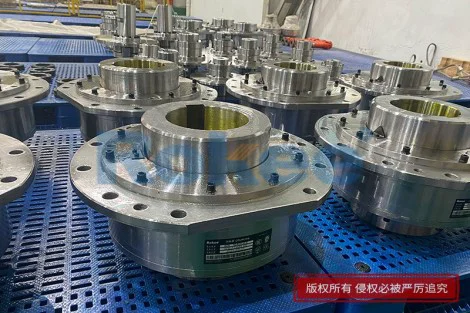
The overall structural design of flange type universal shaft coupling focuses on integrating rigidity and flexibility, with every core component precisely matched to achieve coordinated and efficient operation. The main components include flange discs, cross shaft assemblies, universal joint yokes, needle roller bearings, and professional sealing structures, all of which form a closed and stable transmission unit. The flange disc serves as the primary connection carrier, featuring flat and smooth mating surfaces and evenly distributed bolt holes to achieve tight and seamless docking between the driving and driven shafts. The cross shaft assembly acts as the core motion transmission unit, connecting two sets of universal joint yokes to form a flexible hinge structure that supports multi-angle rotational adjustment. Built-in needle roller bearings reduce friction resistance during high-speed rotation, ensuring smooth power output while minimizing mechanical wear. The external sealing structure effectively isolates internal moving parts from the external environment, blocking dust, moisture, and particulate impurities from entering the interior and preventing the leakage of internal lubricating grease, which lays a solid foundation for long-term stable operation of the equipment.
The working principle of flange type universal shaft coupling is based on the spatial geometric motion characteristics of cross shaft hinge mechanisms and the rigid locking performance of flange connection structures, realizing flexible and continuous torque transmission under misalignment conditions. In the actual working process, the rotational power and torque output by the driving equipment are first stably transmitted to the coupling through the fastened flange structure. When the driving and driven shafts have angular deviation or relative displacement, the cross shaft assembly can freely adjust the spatial angle through the cooperative movement of bearings and yokes, ensuring that rotational motion can be continuously transmitted without interruption. A single universal joint structure will produce periodic angular velocity changes during operation, while the optimized double-joint matching design of flange type universal shaft coupling effectively compensates for this velocity fluctuation, achieving constant-speed and stable power transmission. This unique working mechanism allows the coupling to adapt to dynamic position changes of equipment during operation, avoiding transmission jitter, torque loss, and component damage caused by shaft misalignment.
Material selection and processing technology determine the core performance and service life of flange type universal shaft coupling, and high-standard manufacturing processes endow the product with superior mechanical properties. Most of the main load-bearing components such as flange discs and cross shafts adopt high-strength alloy materials with excellent toughness and fatigue resistance, which can withstand long-term alternating load and high-torque impact without structural deformation or fracture. The surface of key components undergoes precision forging, heat treatment, and fine grinding processes to improve overall structural density, surface smoothness, and wear resistance. Needle roller bearings are made of high-hardness wear-resistant materials, which maintain low friction and high precision operation under high-speed and heavy-load conditions. All connecting parts are processed with high-precision matching sizes to ensure tight assembly and zero backlash transmission. In addition, the surface of the coupling is treated with anti-rust and anti-corrosion coatings, which enhances its adaptability to harsh working environments such as high humidity, dust pollution, and variable temperature changes, effectively delaying component aging and reducing equipment failure rates.
Flange type universal shaft coupling possesses multiple unique performance advantages that make it superior to traditional coupling products in complex industrial scenarios. First, it has outstanding misalignment compensation capability, which can simultaneously adapt to angular, axial, and radial displacements between shafts, fully adapting to installation errors and dynamic operational deviations of mechanical equipment. Second, it features ultra-high torque transmission efficiency, and the rigid flange connection structure ensures no power loss during torque transmission, realizing efficient and stable power output even under heavy-load working conditions. Third, the product has excellent vibration damping and buffering performance. The flexible hinge structure of the universal joint can absorb part of the mechanical vibration and impact force generated during equipment operation, reducing vibration transmission between shafts and lowering equipment operating noise. Moreover, the overall structural stability is strong, with compact layout and high structural rigidity, which can maintain long-term stable operation without frequent maintenance, greatly improving the continuous working capacity of mechanical systems and reducing equipment downtime caused by coupling failure.
This type of universal shaft coupling has a wide range of application scenarios, covering most mechanical transmission fields that require flexible power transmission and heavy-load operation. In heavy machinery industry, it is commonly used in engineering machinery, mining equipment, and metallurgical machinery to bear high-torque transmission tasks and adapt to the severe working conditions of frequent start-stop and impact load operation. In logistics and conveying equipment, it is applied to various long-distance conveying lines and automated transmission systems, solving the power transmission problem of equipment with large installation span and slight position deviation. In industrial processing equipment, it matches with transmission systems of pumps, fans, and precision processing machinery to ensure stable and accurate power output and improve processing precision and operational stability. In addition, it also plays an important role in agricultural machinery, transportation equipment, and general mechanical transmission systems, providing reliable transmission support for different types of mechanical equipment with its strong environmental adaptability and versatile performance.
Daily maintenance and scientific operation are crucial to extending the service life and maintaining stable performance of flange type universal shaft coupling. Regular inspection of the coupling’s connection state is required in daily use, focusing on checking the fastening degree of flange connecting bolts to prevent loose connection caused by long-term vibration, which may lead to transmission instability or component wear. It is necessary to regularly supplement and replace professional lubricating grease for internal bearings and cross shaft assemblies to ensure low-friction operation of moving parts and avoid dry friction damage and excessive wear. The sealing structure should be inspected regularly for aging, damage, or grease leakage, and damaged sealing parts need to be replaced in a timely manner to prevent external impurities from entering the interior and affecting transmission precision. Meanwhile, avoid long-term overload operation of the coupling in actual work, as excessive torque load will cause fatigue damage to structural components. Regular cleaning of surface dust and dirt can effectively prevent corrosion and aging of the equipment, ensuring that the coupling always maintains optimal transmission performance during long-term operation.
With the continuous upgrading of modern industrial mechanical systems towards high speed, high precision, and high load, the technical optimization and application prospects of flange type universal shaft coupling are becoming increasingly broad. The current product design is constantly evolving towards miniaturization, high precision, and high durability, with structural optimization further improving misalignment compensation accuracy and torque transmission efficiency, while reducing overall weight and operational noise to adapt to the development needs of precision intelligent equipment. Material innovation and advanced processing technology are also continuously applied to product manufacturing, further enhancing the product’s high-temperature resistance, wear resistance, and fatigue resistance, enabling it to adapt to more extreme industrial working environments. In the future, with the continuous development of automated and intelligent mechanical equipment, flange type universal shaft coupling will be further popularized in emerging industrial fields, providing more efficient, stable, and durable power transmission solutions for modern mechanical systems.