Curved Tooth Drum Coupling

Curved tooth drum coupling stands as a sophisticated and highly reliable mechanical transmission component widely adopted in modern industrial power transmission systems, serving as a critical connecting unit between rotating shafts of mechanical equipment. Unlike conventional straight tooth couplings and ordinary flexible coupling structures, this type of coupling features a uniquely optimized drum-shaped curved tooth profile, which fundamentally improves the meshing state of internal and external teeth during operation, balances mechanical stress distribution, and delivers exceptional comprehensive performance in torque transmission, misalignment compensation and operational stability. As a rigid-flexible integrated transmission part, it combines the high rigidity of rigid couplings for efficient torque transmission and the flexible adaptability of elastic couplings for shaft deviation adjustment, making it suitable for complex and harsh industrial operating conditions that impose strict requirements on load capacity, operational continuity and service stability.
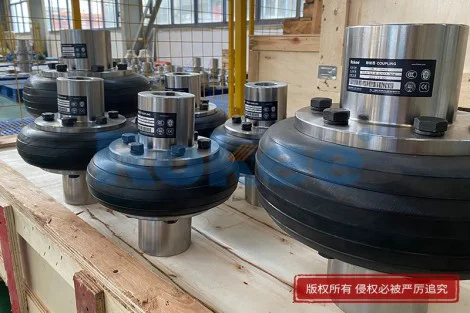
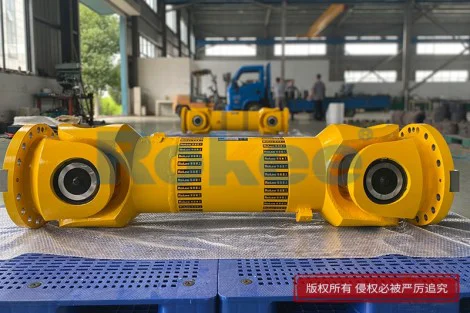
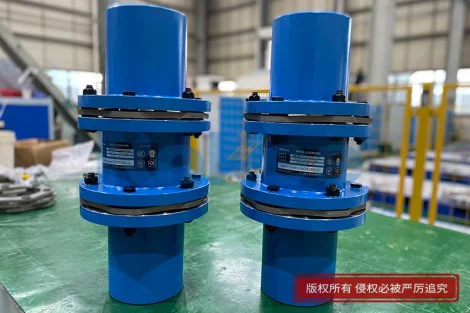
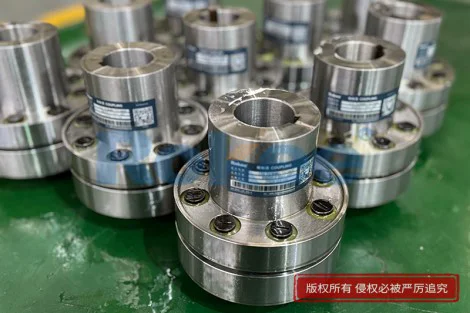
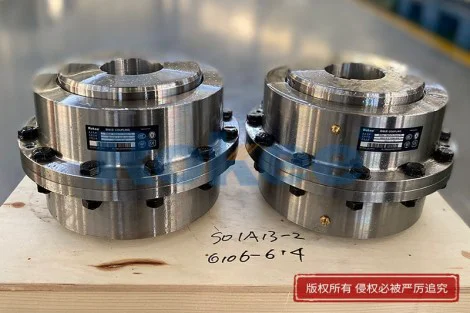
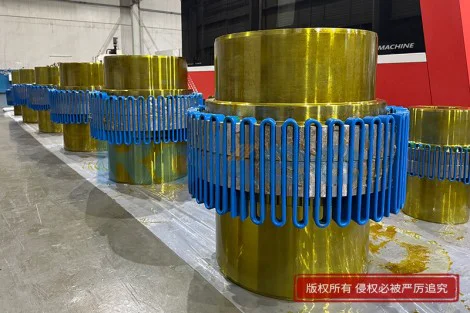
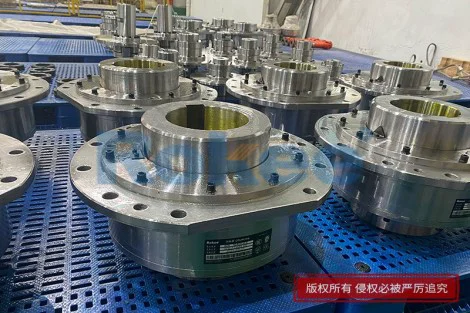
The core structural design of curved tooth coupling centers on the innovative curved tooth profile, which distinguishes it from traditional gear couplings in terms of tooth shape geometry and meshing mechanism. The external teeth of the coupling hub are processed into a smooth drum-shaped curved surface with an arc-shaped bulge, whose spherical center coincides with the central axis of the gear structure. This special geometric design expands the tooth side clearance compared with standard straight tooth structures and greatly increases the effective contact area between meshing teeth pairs during operation. The overall structure is mainly composed of toothed hubs with curved external teeth, outer sleeves with internal teeth, fastening bolts and sealing components, forming a compact and integrated assembly structure. All core load-bearing components are manufactured with high-precision machining processes and optimized material treatments, which endows the coupling with excellent structural rigidity and fatigue resistance. The modular structural design allows each component to be processed, manufactured and replaced independently, effectively reducing the difficulty of subsequent equipment maintenance and parts replacement, and improving the overall operational convenience of mechanical transmission systems.
The working mechanism of curved tooth drum coupling is based on positive locking mechanical meshing transmission and flexible displacement compensation, realizing synchronous power transmission and adaptive shaft deviation adjustment in the rotating process. In actual equipment operation, the driving shaft drives the toothed hub to rotate synchronously, and the curved external teeth on the hub mesh closely with the internal teeth of the outer sleeve to stably transmit torque and rotational power to the driven shaft. When relative displacement or deviation occurs between the two connected shafts due to equipment installation errors, mechanical vibration, thermal expansion and contraction or long-term operational wear, the unique curved tooth surface can adaptively adjust the meshing angle and contact position of the tooth pairs. This adaptive adjustment enables the coupling to effectively compensate for axial, radial and angular misalignment between shafts, avoiding the rigid extrusion and local stress concentration problems that are common in straight tooth couplings under offset conditions. The arc transition of the drum-shaped tooth surface eliminates sharp stress points at the tooth edge, ensuring uniform load distribution on the entire tooth surface during meshing, which guarantees continuous and stable torque transmission even with certain shaft misalignment.
The unique structural and mechanical design endows curved tooth drum coupling with unparalleled performance advantages over traditional transmission coupling products. First of all, it boasts an extremely high load-bearing capacity and torque transmission efficiency. The enlarged effective meshing contact area enables the coupling to disperse heavy loads evenly on each tooth pair, avoiding local overload and premature tooth wear, so it can operate stably under long-term heavy-load and high-torque working conditions. The overall structural rigidity ensures minimal torsional deformation during power transmission, maintaining high transmission accuracy and efficiency with no obvious power loss in the transmission process. Secondly, its excellent misalignment compensation capability is a core competitive advantage. The flexible meshing state brought by the curved tooth profile can absorb and adapt to multiple types of shaft deviations, effectively reducing the additional mechanical stress and friction loss caused by shaft misalignment, and greatly lowering the vibration and noise generated during equipment operation.
In terms of operational durability and stability, curved tooth coupling also shows outstanding comprehensive performance. The optimized tooth surface contact mode avoids the edge wear and tooth surface scratching defects that frequently occur in traditional straight tooth couplings under dynamic operation. Through professional surface hardening treatment of the tooth surface, the hardness and wear resistance of the meshing parts are significantly improved, which effectively resists abrasive wear and fatigue damage caused by long-term cyclic operation. Meanwhile, the matching sealing structure can isolate internal meshing parts from external dust, moisture and corrosive media, preventing lubricant deterioration and tooth surface corrosion, and creating a stable internal operating environment for long-term continuous operation. This enables the coupling to maintain stable mechanical performance for a long time in harsh working environments such as high dust, high humidity and variable temperature, greatly extending the overall service life of the transmission system.
Curved tooth drum coupling has extremely wide application scenarios, covering almost all industrial fields that require high-stability power transmission and heavy-load rotating operation. It performs excellently in low-speed and heavy-load mechanical equipment, such as mining machinery, metallurgical equipment, large-scale hoisting and conveying machinery. In these working scenarios, equipment needs to bear huge impact loads and alternating loads during operation, and the high load-bearing capacity and impact resistance of curved tooth drum coupling can fully adapt to such harsh operating conditions, ensuring safe and stable power output. In continuous production industrial lines such as chemical processing, cement manufacturing and paper-making equipment, the long-cycle stable operation capability of the coupling avoids frequent equipment shutdown and maintenance caused by coupling failure, effectively improving the continuous production efficiency of the entire production line and reducing production downtime losses.
In addition, this type of coupling also shows good adaptability in medium and high-speed rotating equipment and precision transmission systems. Its precise torque transmission characteristics and low vibration operation performance can meet the stability requirements of high-speed rotating equipment, while the effective misalignment compensation function can offset the tiny shaft deviations caused by high-speed operation vibration and equipment thermal deformation, ensuring the long-term precision operation of the transmission system. Whether it is fixed industrial equipment with stable operating conditions or mobile mechanical equipment with complex and variable working environments, curved tooth drum coupling can adjust its working state adaptively, providing reliable transmission guarantee for different types of mechanical systems.
Reasonable maintenance and daily operation management are key factors to give full play to the performance advantages of curved tooth drum coupling and extend its service life. Although the coupling has excellent wear resistance and structural stability, long-term cyclic operation will still cause normal lubricant consumption and slight wear of meshing parts. Regular inspection of the coupling’s operating state is required in daily use, including checking for abnormal vibration, abnormal noise and temperature rise during equipment operation, so as to timely judge whether the internal meshing state is normal. The sealing performance of the coupling should be inspected periodically to avoid lubricant leakage and external impurity invasion, which may affect the meshing accuracy and accelerate component wear. Regular replacement of professional matching lubricants is also essential. Appropriate lubrication can reduce the friction coefficient between meshing tooth surfaces, weaken friction wear, and also play a role in heat dissipation, vibration damping and buffer impact load.
In the process of equipment installation and commissioning, standardized operation is also crucial to the service performance of curved tooth drum coupling. Accurate shaft alignment can reduce the working compensation load of the coupling, avoid long-term over-compensation operation, and effectively delay the fatigue aging of components. Excessive shaft deviation will make the coupling bear continuous alternating stress beyond the design range, resulting in accelerated wear of tooth surface and even early failure of structural parts. Therefore, controlling the installation accuracy within a reasonable range and avoiding long-term overload operation can maximize the service life and operational stability of the coupling. Meanwhile, in the equipment maintenance process, the modular structure of the coupling simplifies the replacement and maintenance process of damaged parts, avoids the need for overall disassembly of large equipment, greatly improves maintenance efficiency and reduces equipment operation and maintenance costs.
From the perspective of industrial development, curved tooth drum coupling has become an indispensable core basic component in modern mechanical transmission systems by virtue of its superior comprehensive performance. Compared with elastic element couplings, it has higher structural rigidity, stronger load-bearing capacity and better high-temperature resistance, avoiding the aging and failure problems of elastic materials under long-term high-load operation. Compared with ordinary rigid couplings, it has flexible misalignment compensation capability, which can effectively buffer mechanical vibration and impact, and protect shafts, bearings and other core equipment components from additional stress damage. With the continuous upgrading of industrial machinery towards high efficiency, high stability and long-cycle operation, the market demand for high-performance transmission couplings is constantly improving, and curved tooth drum coupling is gradually becoming the preferred transmission connecting component for more industrial equipment due to its balanced performance in all aspects.
In conclusion, the unique curved drum tooth profile design, excellent mechanical properties, wide working condition adaptability and convenient maintenance characteristics make curved tooth drum coupling occupy an important position in the field of mechanical transmission. Its innovative structural design solves many common technical pain points of traditional coupling products, such as insufficient misalignment compensation ability, easy local stress concentration, poor wear resistance and short service life. In future industrial equipment development and mechanical system optimization, curved tooth drum coupling will continue to play an irreplaceable role, providing stable, efficient and durable power transmission support for various industrial mechanical equipment, and continuously contributing to the improvement of industrial equipment operation efficiency and operational stability.