Winch Drum Coupling
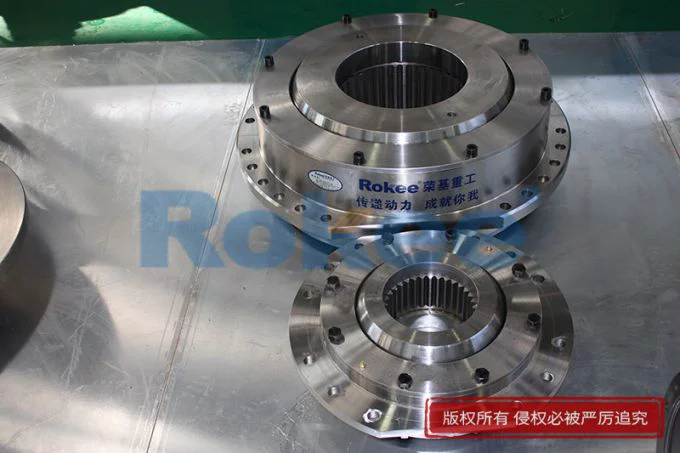
The winch drum coupling stands as an indispensable core component in the power transmission system of various lifting and winding mechanical equipment, undertaking the critical connecting and driving tasks between the reducer output shaft and the winch drum. As a specialized flexible transmission component tailored for heavy-load winding scenarios, it differs significantly from ordinary shaft couplings in structural design, load-bearing capacity and adaptive performance, focusing on solving the power transmission challenges under complex working conditions such as heavy torque, alternating load, shaft displacement deviation and frequent start-stop operation. Its core value lies in realizing efficient and stable torque transmission while integrating multiple auxiliary functions including displacement compensation, shock absorption and load bearing, which effectively guarantees the operational stability and service life of the entire winch mechanical system. In the whole transmission chain of winch equipment, the coupling acts as a key transmission bridge, converting the low-speed and high-torque power output by the reducer into the rotating power of the wire rope drum, so as to complete the winding and unwinding actions of the wire rope and realize the lifting, traction and positioning functions of heavy objects.
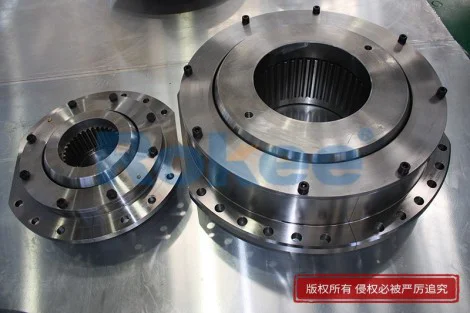
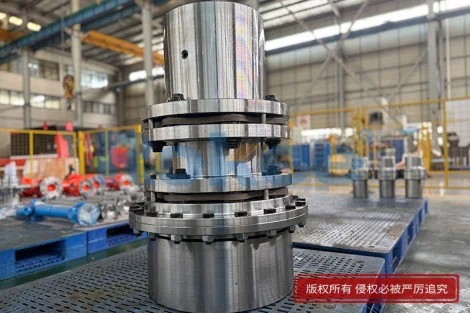
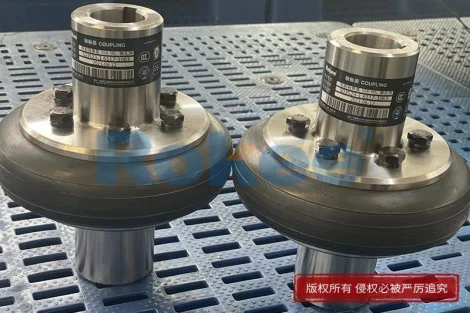
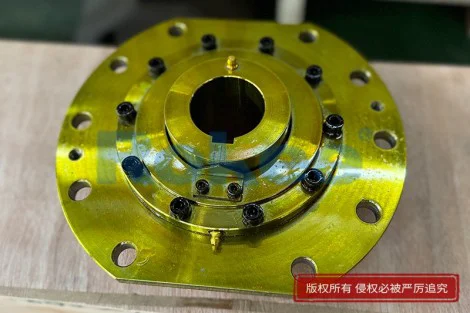
The basic structural composition of the winch drum coupling is refined and practical, with a compact integrated design that adapts to the narrow installation space of winch equipment. The core transmission structure consists of a drum-shaped outer gear sleeve and an inner gear ring, forming a precise meshing transmission pair that bears the main torque transmission load. Different from the straight tooth structure of traditional gear couplings, the outer teeth of the core transmission part adopt a smooth drum-shaped arc profile. The spherical center corresponding to the arc tooth surface is always concentrated on the central axis of the gear shaft. This unique structural design enables the tooth surface to maintain uniform contact stress during meshing operation, avoiding local stress concentration caused by angular deviation of the shaft system. In addition to the gear meshing pair, the complete coupling structure also includes spherical matching connecting parts, limit positioning components and auxiliary buffer structures. The spherical matching structure can cooperate with the gear tooth deformation to realize flexible adaptation of the shaft system, while the limit structures effectively restrict the excessive axial movement of the winch drum during operation, ensuring the axial positioning accuracy of the drum and preventing the wire rope from deviation and disordered winding during winding and unwinding. The overall structure abandons redundant accessories, realizing high integration of transmission, bearing and compensation functions, and laying a solid structural foundation for stable operation under long-term heavy load.
The working principle of the winch drum coupling is based on the flexible meshing transmission of drum-shaped gear pairs and the cooperative compensation of spherical positioning structures, forming a set of efficient and reliable power transmission logic. During the operation of winch equipment, the power output by the power device is adjusted in speed and amplified in torque through the reducer, and then stably transmitted to the outer gear sleeve of the coupling. Relying on the precise meshing of the drum-shaped outer teeth and the inner gear ring, the torque is efficiently transmitted to the inner connecting structure, and then drives the winch drum to rotate synchronously. In this process, the drum-shaped tooth profile can produce tiny elastic deformation under load, which can automatically adapt to the slight angular displacement, radial deviation and axial offset between the reducer shaft and the drum shaft caused by equipment assembly errors, mechanical wear or long-term vibration. When the shaft system has alignment deviation, the arc tooth surface can maintain a large-area uniform meshing state, avoiding the tooth surface jamming, eccentric wear and transmission stagnation problems that are prone to occur in traditional rigid transmission structures. At the same time, the spherical matching structure inside the coupling can assist in offsetting the assembly and operation deviation of the shaft system, further optimizing the force state of the transmission pair and ensuring continuous and lossless power transmission in various complex working states.
In actual industrial operation, winch equipment often faces harsh working conditions such as frequent start-stop, sudden load change and impact vibration. The winch drum coupling is designed with excellent dynamic load resistance to adapt to such working characteristics. At the moment of equipment start and stop, the mechanical system will generate instantaneous impact torque and vibration force. The elastic deformation capacity of the drum-shaped gear teeth and the buffer coordination of the internal structure can effectively absorb and dissipate these instantaneous impact loads, avoid the direct transmission of shock vibration to the reducer, motor and drum body, and protect the precision parts of the entire transmission system from impact damage. For the alternating load generated by frequent lifting and lowering of heavy objects and reciprocating winding operation, the coupling can balance the alternating stress through flexible transmission, reduce the fatigue wear of key components, and improve the overall operational stability of the equipment. Unlike ordinary couplings that only bear single torque transmission, the winch drum coupling also has strong radial load-bearing capacity. It can share part of the radial pressure generated by the self-weight of the drum and the tension of the wire rope, reduce the bearing load of the drum support bearing, and effectively extend the service life of the bearing components.
The excellent comprehensive performance of the winch drum coupling makes it widely applicable in multiple industrial fields involving winding and lifting operations. In engineering machinery, it is applied to various mobile and fixed winch equipment, providing stable power guarantee for material lifting and traction operations in construction, road and bridge engineering. In port and terminal logistics equipment, the coupling adapts to the high-frequency and high-strength continuous operation state of port winches, meeting the efficient and stable operation requirements of container traction and cargo handling equipment. In mining and metallurgical industries, it can cope with the heavy-load and dusty harsh working environment of underground and workshop operations, and maintain reliable transmission performance under long-term continuous working conditions. In addition, it also plays an important role in marine engineering equipment, hydraulic engineering machinery and special lifting equipment, adapting to the winding transmission requirements of different tonnage and different working intensities. Whether it is light-duty intermittent operation equipment or heavy-duty continuous operation equipment, the winch drum coupling can match the corresponding performance advantages, realizing stable power output of the winch system.
Compared with other traditional transmission connection components, the winch drum coupling has irreplaceable comprehensive advantages in structural performance and application adaptability. In terms of transmission efficiency, the precise meshing of drum-shaped gear teeth realizes almost lossless torque transmission, with higher transmission efficiency than flexible couplings such as belt and chain transmission, and no sliding deviation during operation. In terms of fault tolerance, its multi-directional displacement compensation capability can adapt to the shaft deviation generated by equipment aging, vibration and assembly errors, reducing the failure rate of transmission system caused by shaft misalignment, which is far superior to rigid couplings with zero compensation capability. In terms of structural stability, the integrated design of transmission and load bearing makes the overall structure more compact, with smaller rotation inertia and more stable operation, which can effectively reduce the vibration and noise of equipment during high-frequency operation. In terms of service life, the uniform stress distribution of the arc tooth surface avoids local excessive wear, and the overall wear resistance and fatigue resistance of the component are significantly improved, reducing the frequency of equipment maintenance and parts replacement. These performance advantages make it the preferred matching component for modern high-efficiency and high-stability winch equipment.
Daily maintenance and scientific use are key factors to ensure the long-term stable operation of the winch drum coupling and give full play to its performance advantages. In the daily operation process, regular visual inspection should be carried out to check whether there is abnormal vibration, noise and temperature rise during the operation of the coupling, so as to judge whether the internal meshing state is normal. It is necessary to regularly check the lubrication state of the gear meshing part. Good lubrication can reduce tooth surface friction and wear, avoid dry friction damage caused by insufficient lubricating oil, and also play a certain role in heat dissipation and vibration reduction. For the limit and positioning structures of the coupling, regular fastening inspection is required to prevent the loosening of connecting parts caused by long-term vibration, which leads to excessive axial displacement of the drum and affects the winding accuracy. In the process of equipment operation, overload use should be strictly avoided. Long-term overload torque will cause permanent deformation of the drum-shaped gear teeth, damage the flexible compensation performance, and even lead to tooth surface fracture and transmission failure. In addition, regular cleaning of the coupling surface is required to prevent dust, debris and corrosive substances from adhering to the meshing part, avoiding abrasive wear and chemical corrosion of the tooth surface.
With the continuous upgrading of industrial machinery towards high efficiency, intelligence and high reliability, the performance requirements for winch drum couplings are also constantly improving. Modern industrial scenarios put forward higher demands on the load-bearing capacity, compensation accuracy, wear resistance and service life of couplings, which promotes the continuous optimization of coupling structural design and manufacturing technology. The optimized drum tooth profile design further improves the uniform stress distribution effect, enhances the displacement compensation ability under complex deviation conditions, and adapts to more precise mechanical transmission requirements. The application of high-strength wear-resistant materials improves the overall mechanical properties of the coupling, enabling it to adapt to higher load and more harsh working environments. At the same time, the integrated functional design is gradually enriched, and some optimized structures integrate wear monitoring and limit protection functions, which can timely feed back the operating state of the coupling, facilitate personnel to carry out predictive maintenance, and reduce unexpected equipment shutdown failures.
As a key connecting component in the winch transmission system, the winch drum coupling may cause a series of equipment operation failures once its performance is abnormal or faulty. Common abnormal problems include excessive wear of gear tooth surface, decreased compensation performance, loose positioning structure and abnormal transmission noise. Excessive wear of the tooth surface will lead to reduced transmission accuracy, increased vibration during equipment operation, and even unstable torque output, affecting the accurate winding and positioning of the wire rope. The decrease of displacement compensation ability will make the shaft system deviation unable to be effectively adapted, resulting in increased local stress of the transmission pair, accelerating component fatigue damage, and inducing shaft system jamming in serious cases. The loosening of the limit structure will cause the axial displacement of the drum to be out of control, leading to wire rope deviation, stacking and even rope jumping, which brings hidden dangers to the safe operation of equipment. Timely discovery and elimination of these potential faults through daily maintenance and regular inspection can effectively ensure the safe and efficient operation of winch equipment and reduce the operating cost and failure loss of mechanical equipment.
In conclusion, the winch drum coupling, with its unique drum-shaped gear meshing structure, excellent flexible compensation performance and reliable heavy-load transmission capacity, forms a stable and efficient power transmission link for various winch and winding equipment. It not only undertakes the basic torque transmission function, but also solves many pain points in the operation of traditional transmission structures, such as poor misalignment adaptability, weak impact resistance and short service life. It plays an irreplaceable role in improving the operational stability, safety and service life of lifting and winding mechanical equipment. With the continuous development of industrial manufacturing technology, the structural design and performance of winch drum couplings will continue to be optimized and upgraded, adapting to the increasingly complex industrial working conditions and higher equipment operation standards, and providing more solid technical support for the stable operation of modern winding and lifting machinery in various fields.