Cardan Driveshaft For Rolling Mill
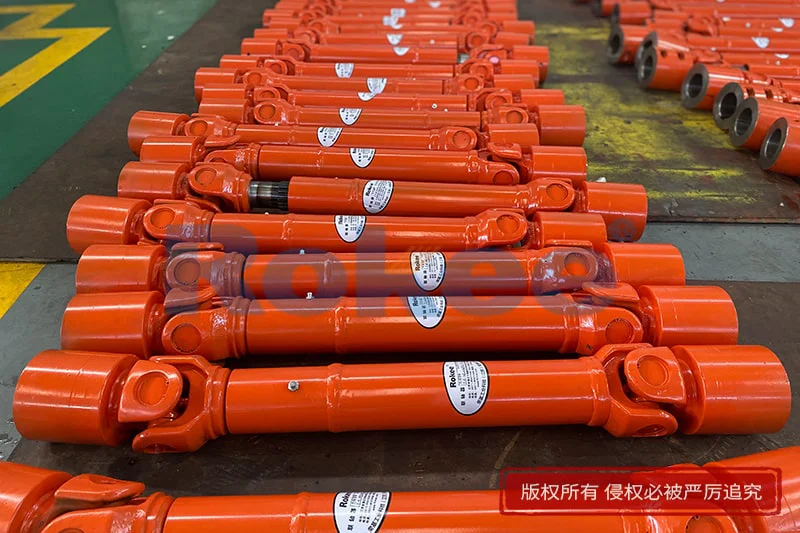
The cardan driveshaft stands as an indispensable core component of the power transmission system in modern rolling mill equipment, serving as a flexible and high-efficiency connection medium for industrial rolling operations. Specially engineered to adapt to the harsh working conditions of metallurgical rolling environments, this mechanical component primarily undertakes the task of transmitting stable torque and rotational power between driving devices and rolling rollers. Unlike rigid transmission shafts, it features unique multi-dimensional displacement compensation capabilities, effectively offsetting angular, axial and radial deviations generated during mill operation. These deviations mainly stem from thermal expansion of metal components, mechanical vibration, roller gap adjustment and long-term operational deformation. By maintaining continuous and stable power transmission under dynamic working conditions, the cardan driveshaft directly guarantees rolling precision, product surface quality and overall operational stability of the rolling mill. It also reduces equipment vibration and mechanical wear, extending the service life of the entire rolling production line and lowering daily operational and maintenance costs for industrial rolling systems.
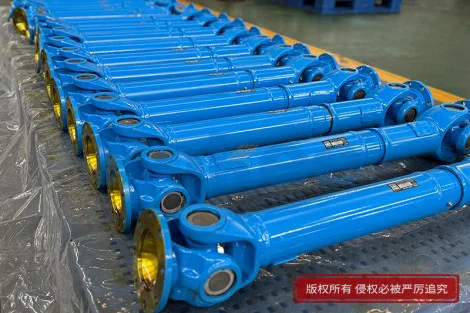
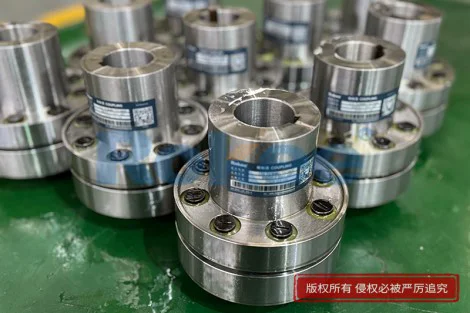
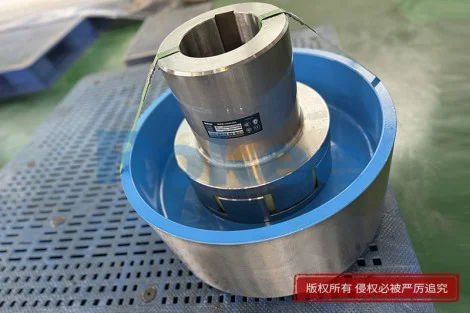
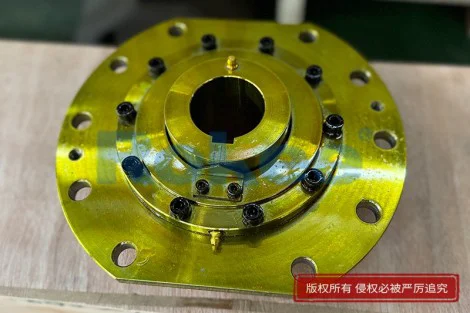
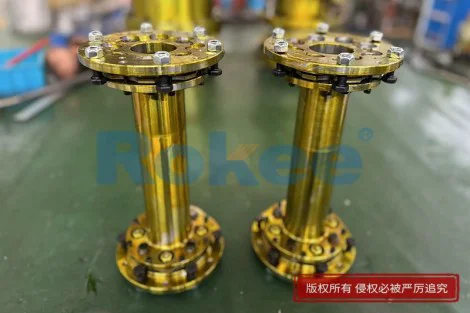
The structural design of rolling mill cardan driveshafts is precisely optimized for heavy-load and high-frequency rolling working scenarios, combining rugged mechanical structures with flexible transmission characteristics to meet the rigorous demands of metal rolling processes. The overall structure mainly consists of universal joint assemblies, intermediate shaft bodies, connecting flanges and precision bearing components, with each part coordinating closely to achieve efficient power transmission and displacement compensation. The universal joint is the core functional unit, adopting a cross-axis forging structure that enables flexible rotation in multiple directions, which is the key to realizing angular displacement compensation during mill operation. The intermediate shaft body is manufactured from high-strength alloy materials through integral forging and precision machining, featuring excellent torsional resistance and structural rigidity to withstand the huge instantaneous torque generated in rolling processes. Connecting flanges adopt high-precision butt joint design with uniform force distribution, ensuring stable connection with driving and driven equipment and avoiding loose connection caused by long-term vibration. All matching bearing parts undergo strict surface treatment and precision grinding, reducing friction resistance during operation and improving the smoothness of power transmission. This integrated structural design enables the driveshaft to adapt to complex dynamic working conditions and maintain reliable mechanical performance for a long time.
Material selection is a critical factor that determines the service performance and durability of rolling mill cardan driveshafts, with all core components adopting high-performance alloy materials tailored for heavy industrial machinery. The cross-axis and joint yoke, which bear the most concentrated friction and torque pressure, are made of high-strength chromium-molybdenum alloy steel, a material renowned for outstanding toughness, torsional strength and fatigue resistance. After integral forging, carburizing quenching and high-precision tempering treatments, the surface hardness of key components reaches an optimal level, effectively resisting surface wear, impact deformation and fatigue damage caused by long-term high-load operation. The intermediate shaft body uses refined alloy steel with uniform internal metallographic structure, which avoids structural deformation or fracture under continuous heavy torque transmission. Meanwhile, auxiliary parts such as sealing sleeves and buffer gaskets adopt wear-resistant and high-temperature resistant composite materials, adapting to the high-temperature environment generated by metal rolling and long-term mechanical friction. Scientific material matching and professional heat treatment processes enable the cardan driveshaft to maintain stable mechanical properties under extreme working conditions, greatly reducing the frequency of component failure and replacement in high-intensity rolling production.
The core working principle of the rolling mill cardan driveshaft revolves around the flexible coordination of universal joint structures, realizing uninterrupted power transmission while compensating for various positional deviations in the rolling system. In the actual rolling production process, the rolling mill will produce continuous tiny positional changes due to equipment operation vibration, metal rolling extrusion force and thermal deformation of mechanical parts. Rigid transmission structures cannot adapt to such dynamic deviations, which will cause uneven torque transmission, equipment vibration and even component damage. The cross-axis universal joint of the cardan driveshaft can freely adjust the rotation angle between the driving end and the driven end, automatically compensating for angular displacement differences caused by roller height adjustment and equipment deformation. At the same time, the telescopic structure matched with the intermediate shaft can adapt to axial distance changes generated by thermal expansion and cold contraction of the equipment. The coordinated operation of multiple compensation structures ensures that torque can be evenly and continuously transmitted to the rolling rollers regardless of minor positional changes of the transmission parts, maintaining the consistency of rolling speed and pressure, and laying a solid foundation for stable and high-quality metal rolling production.
Cardan driveshafts for rolling mills exhibit unparalleled application advantages compared with traditional rigid transmission shafts and ordinary coupling shafts in metallurgical rolling scenarios. First of all, it has superior heavy-load transmission capacity, which can withstand the instantaneous impact torque generated by thick plate rolling and high-speed rolling, avoiding power interruption or component damage caused by overload. Secondly, its multi-dimensional displacement compensation capability is far superior to ordinary transmission parts, which can effectively eliminate transmission jitter and torque loss caused by equipment displacement deviation, ensuring the uniformity of rolling force in each production cycle. In addition, the integrated structural design of the cardan driveshaft simplifies the assembly structure of the rolling mill transmission system, reduces the number of intermediate transmission components, and lowers the failure rate of the entire transmission link. It also has excellent vibration damping performance, which can absorb part of the mechanical vibration generated during rolling, reduce the vibration amplitude of the rolling mill fuselage, and effectively improve the flatness and surface finish of rolled metal products. Moreover, the highly adaptable design enables it to be applied to various types of rolling mills, including plate rolling, strip rolling and profile rolling equipment, with wide industrial applicability.
Long-term stable operation of rolling mill cardan driveshafts relies on standardized daily maintenance and scientific fault prevention measures, which are essential to extend equipment service life and ensure continuous production efficiency. In daily production operation, regular lubrication maintenance is the most critical link, and high-performance industrial lubricants need to be regularly injected into universal joint bearings and rotating friction parts to reduce metal friction and wear, prevent dry friction damage and abnormal noise. Operators need to regularly check the connection tightness of flange bolts to avoid bolt loosening caused by long-term mechanical vibration, which may lead to unstable transmission and equipment deviation. It is also necessary to regularly observe the operating state of the driveshaft, including checking for abnormal vibration, rotation jitter and surface fatigue cracks during equipment operation. For the sealing structure of the driveshaft, regular inspection and replacement are required to prevent dust, iron filings and high-temperature oxide impurities in the rolling environment from entering the internal structure and causing component abrasion. Timely cleaning of surface dirt and regular performance detection can effectively avoid most common faults, reduce unplanned downtime of rolling equipment, and ensure the continuity and stability of industrial rolling production.
With the continuous upgrading of modern metallurgical rolling industry towards high precision, high efficiency and intelligent production, the manufacturing technology and structural performance of rolling mill cardan driveshafts are also constantly optimized and innovated. Traditional cardan driveshafts are gradually upgraded in structural design, adopting integrated forging technology and optimized arc transition structure to further reduce stress concentration of key components and improve fatigue resistance and impact resistance. Advanced precision machining technology is widely used in production and processing, improving the assembly accuracy of matching parts, minimizing transmission clearance, and further enhancing the stability and precision of power transmission. In terms of performance optimization, new wear-resistant and high-temperature resistant alloy materials are continuously applied, enabling the driveshaft to adapt to higher-intensity and longer-cycle rolling production. At the same time, the lightweight structural design is realized on the premise of ensuring structural rigidity, reducing the overall inertia of the transmission system, improving the response speed of rolling equipment, and meeting the production requirements of high-speed and high-precision metal rolling. These technological innovations continuously improve the comprehensive performance of cardan driveshafts, making them more adaptable to the iterative upgrading of modern rolling mill equipment.
As a key transmission component supporting the operation of rolling mill equipment, the cardan driveshaft plays an irreplaceable role in improving the production efficiency and product quality of the metallurgical rolling industry. Its unique flexible transmission and multi-dimensional compensation performance solves many pain points of rigid transmission in traditional rolling production, effectively stabilizes the operating state of rolling equipment, reduces mechanical failure rates and production costs, and improves the yield of high-precision rolled products. With the continuous development of the metallurgical industry and the increasing demand for high-quality metal materials, the performance requirements for rolling mill transmission components will continue to rise. In the future, cardan driveshafts will further develop in the direction of higher precision, stronger durability and more intelligent adaptability, continuously optimizing structural design and material performance to adapt to more complex and efficient rolling production scenarios. It will continue to provide reliable mechanical transmission support for the stable operation and technological upgrading of modern rolling mills, and promote the high-quality development of the entire metallurgical rolling industry chain.