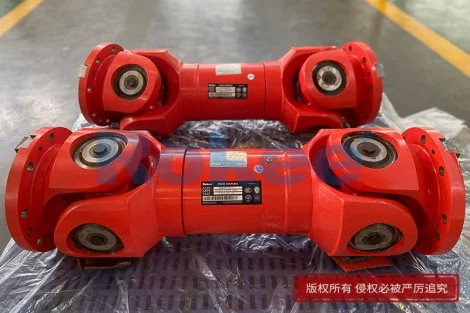
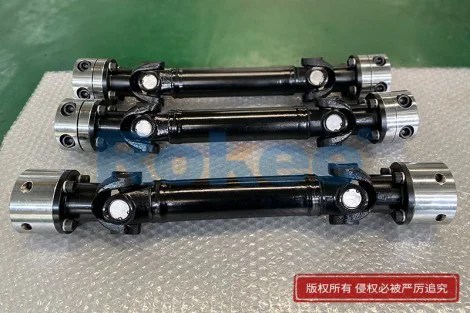
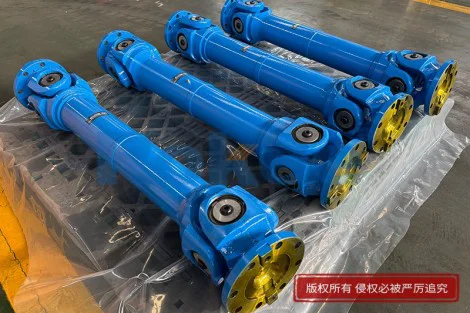
Barrel Coupling For Gearbox

Barrel couplings serve as indispensable mechanical transmission components specially optimized for gearbox system connection and power transmission, widely deployed in heavy-duty mechanical operation scenarios that require stable torque output and flexible shaft connection. Designed with a unique curved tooth and roller matching structure, this type of coupling effectively bridges the driving and driven shafts of gearboxes, solving common mechanical problems including shaft misalignment, operational vibration, and instantaneous impact load during equipment operation. Unlike traditional rigid couplings that lack adaptive adjustment capability and flexible couplings with limited torque bearing capacity, barrel couplings balance structural rigidity and mechanical flexibility perfectly, enabling them to withstand high torque pressure while compensating for axial, radial and angular deviations generated during gearbox operation. They play a vital role in protecting gearbox internal structures, reducing mechanical wear, improving transmission efficiency, and extending the overall service life of transmission systems, becoming a core matching part for medium and heavy-duty gearbox supporting equipment in various industrial fields.
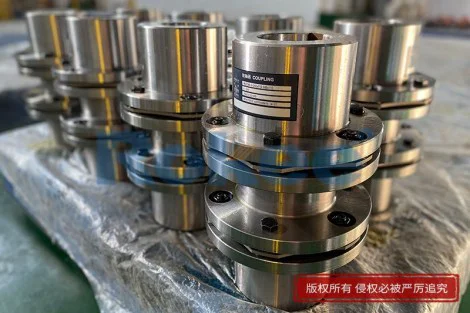
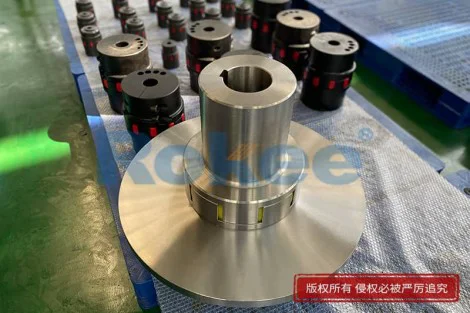
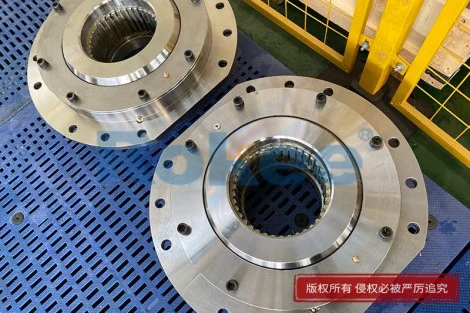
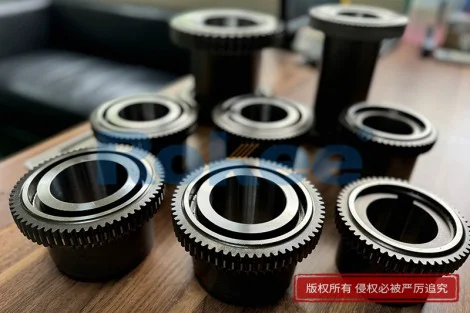
The structural design of barrel couplings for gearbox applications follows rigorous mechanical transmission principles, adopting a compact and integrated assembly structure composed of core components including toothed hubs, cylindrical hardened steel barrel rollers, inner gear sleeves, sealing assemblies and fastening parts. The outer side of the toothed hub fixed on the gearbox shaft adopts a special semicircular tooth profile, which forms a uniform matching gap with the inner curved tooth groove of the outer sleeve, and the precision-machined steel barrel rollers are embedded in the tooth gap meshing area as the key force-transmitting medium. This innovative structural design abandons the rigid direct meshing mode of traditional gear couplings, using the rolling contact of barrel rollers to complete torque transmission, which effectively disperses concentrated stress generated during high-load operation. The overall compact structural layout adapts to the limited installation space of most gearbox matching equipment, avoiding redundant structural occupation while ensuring structural stability. Meanwhile, the integrated sealing structure wraps the internal meshing and rolling components completely, laying a solid foundation for stable long-term operation of the coupling in complex working environments.
One of the most prominent performance advantages of gearbox-matched barrel couplings is their excellent misalignment compensation capability, which addresses the core pain points of shaft connection errors in gearbox operation. During the assembly and long-term operation of gearbox equipment, inevitable installation deviations, equipment aging deformation and operational vibration will cause different degrees of axial displacement, radial offset and angular deflection between the gearbox output shaft and the load connecting shaft. Ordinary couplings are prone to local stress concentration, tooth surface wear and even shaft deformation under such misalignment conditions, which seriously affects the gearbox transmission accuracy. Barrel couplings rely on the flexible rolling fit between barrel rollers and curved tooth grooves, which can automatically adapt to various slight shaft misalignments without generating additional mechanical stress. This adaptive compensation performance eliminates rigid extrusion friction between shafts, ensures the coaxiality stability of the transmission system, and effectively maintains the high-precision transmission state of the gearbox for a long time.
Barrel couplings exhibit outstanding high torque bearing and impact resistance, making them highly suitable for heavy-duty continuous operation scenarios of industrial gearboxes. Industrial gearboxes often need to bear instantaneous load impact and long-term high-load operation during equipment start-up, shutdown and variable-speed adjustment processes, which puts forward extremely high requirements on the load resistance of connecting components. The special curved tooth matching structure of barrel couplings increases the contact area of force transmission, and the high-hardness steel barrel rollers have strong compression resistance and wear resistance, which can evenly bear and transmit high torque without local structural damage or deformation. When the gearbox generates instantaneous impact load due to sudden load changes, the rolling gap inside the coupling can absorb and buffer part of the impact force, avoiding the direct transmission of impact vibration to the gearbox internal gear set and bearing components. This excellent load-bearing and buffering performance greatly reduces the failure rate of gearbox transmission systems and improves the stability of equipment operation under variable load conditions.
Lubrication and sealing performance are key factors determining the service life and operational stability of barrel couplings for gearbox use, and the optimized structural design endows these couplings with reliable sealing and lubrication maintenance conditions. The internal meshing and rolling parts of barrel couplings rely on lubricating grease to reduce friction and avoid dry wear, and the integrated sealing components can effectively isolate external dust, moisture and corrosive impurities from entering the internal working area. In long-term outdoor and harsh industrial working environments, good sealing performance prevents lubricant deterioration and leakage, maintaining a stable lubrication state between barrel rollers and tooth grooves all the time. Reasonable structural gap design reserves sufficient lubrication space, enabling the lubricant to form a uniform protective oil film on the contact surface of moving parts. This continuous and stable lubrication effect not only reduces friction resistance and improves gearbox transmission efficiency, but also avoids abrasive wear caused by impurity accumulation, greatly extending the service cycle of coupling components and reducing the frequency of equipment maintenance and replacement.
Barrel couplings have extremely wide application adaptability in gearbox supporting scenarios, covering multiple industrial fields with different working condition characteristics. In material handling and lifting equipment, they are used for the connection between gearbox output shafts and winding drums, adapting to frequent start-stop and variable-load operation characteristics. In heavy machinery processing and engineering equipment, they match with high-power gearboxes to complete stable power output for heavy-load operation. Different from precision couplings that are only suitable for stable and clean working environments, barrel couplings can maintain stable working performance in harsh environments with dust, humidity and variable temperature. Their flexible installation form and compact structure can adapt to various gearbox installation layouts, whether it is horizontal fixed installation or vertical suspended installation. This strong environmental adaptability and scenario compatibility make barrel couplings the preferred matching component for most industrial gearbox transmission systems, realizing efficient and reliable power connection in diversified mechanical operation modes.
The installation and operation standardization of barrel couplings directly affects the matching effect and service life of gearbox systems, and standardized operation specifications can maximize the mechanical performance of the couplings. During the installation process, the coaxiality of the gearbox shaft and the load shaft needs to be calibrated accurately to avoid excessive initial misalignment exceeding the coupling’s compensation range. The fastening parts should be locked evenly and symmetrically to ensure uniform stress on the overall structure and prevent partial loosening during operation. After installation, appropriate lubricant should be filled according to the structural capacity to ensure full coverage of internal moving parts. In daily operation, regular inspection of sealing integrity and fastening state is required to eliminate hidden dangers such as lubricant leakage and structural loosening. Regular cleaning and maintenance of the coupling’s external structure can avoid long-term accumulation of impurities affecting operational flexibility. Scientific installation and maintenance methods can keep the barrel coupling in the best working state, ensuring long-term stable and efficient operation of the gearbox transmission system.
With the continuous upgrading of industrial mechanical equipment, the performance optimization of barrel couplings for gearbox applications is also advancing towards higher precision, stronger durability and lower maintenance consumption. Modern industrial gearboxes are developing in the direction of high power, high speed and miniaturization, which puts forward higher requirements for the comprehensive performance of supporting couplings. The iterative optimization of barrel coupling structures focuses on improving misalignment compensation accuracy and impact resistance, while further optimizing the internal friction structure to reduce transmission energy consumption. The improvement of material processing technology enhances the hardness, wear resistance and corrosion resistance of coupling components, enabling them to adapt to more extreme working conditions. At the same time, the integrated lightweight design realizes the miniaturization of the coupling structure while ensuring load-bearing performance, which is more compatible with compact gearbox equipment layouts. This continuous technical optimization makes barrel couplings always adapt to the development needs of modern gearbox transmission systems, providing more reliable core support for the stable operation of industrial mechanical equipment.