SWP Cardan Driveshaft Adaptation for Light Load Transmission in PUF Sandwich Panel Making Equipment

In the realm of modern industrial manufacturing, the production of PUF (Polyurethane Foam) sandwich panels has become increasingly vital due to their excellent thermal insulation, structural stability, and lightweight properties, making them widely used in construction, cold storage, and industrial packaging sectors. The PUF sandwich panel making equipment is a complex integrated system that involves a series of continuous processes, including uncoiling of facing materials, roll forming, preheating, PUF foaming, lamination, curing, and cutting. Each of these processes requires precise and stable power transmission to ensure the consistency of product quality and the efficiency of the entire production line. Among the various components that constitute the transmission system of such equipment, the SWP cardan driveshaft stands out as a critical element, especially in light load transmission scenarios, where its unique structural design and excellent adaptability play an indispensable role in bridging the power source and the functional components of the equipment.
Light load transmission in PUF sandwich panel making equipment is characterized by low torque requirements, high operational stability, and the need to accommodate small to moderate angular misalignments between the driving and driven shafts. Unlike heavy-duty industrial applications that demand robust transmission components to handle high torque and extreme operating conditions, light load transmission in PUF sandwich panel production focuses more on precision, smoothness, and adaptability to the dynamic changes of the equipment during operation. The SWP cardan driveshaft, with its specialized design tailored for light load scenarios, is well-suited to meet these requirements, as it can transmit rotational power efficiently while compensating for angular and axial deviations, thereby ensuring the coordinated operation of all subsystems in the PUF sandwich panel making equipment.
To understand the adaptation of SWP cardan driveshafts in light load transmission for PUF sandwich panel making equipment, it is first necessary to clarify the working characteristics of the equipment and the core challenges faced by its transmission system. A modern PUF sandwich panel making line is a continuous and automated production system that integrates mechanical, electrical, hydraulic, and chemical reaction technologies. It requires the coordinated operation of multiple subsystems, such as the uncoiling system, roll forming system, foaming system, double-belt lamination system, cutting system, and conveying system. Each subsystem is driven by a separate power source, and the power needs to be transmitted to various executing components accurately and stably to ensure that the entire production line operates in a synchronized manner. The transmission system of the production line is faced with several key challenges in light load scenarios: first, the installation and layout of each subsystem are often not on the same axis due to the limitations of the production process and the overall structure of the equipment, resulting in small to moderate angular deviations between the driving shaft and the driven shaft; second, during the long-term continuous operation of the production line, the equipment will generate slight vibration and thermal expansion, leading to minor changes in the relative position of the shafts, which requires the transmission component to have a certain compensation capacity; third, the production process of PUF sandwich panels requires stable and uniform power transmission, especially in the foaming and lamination links, where even slight fluctuations in transmission speed or torque will affect the density of the PUF foam core and the bonding effect between the core and the facing materials, thereby reducing product quality; fourth, the production line needs to adapt to different specifications of PUF sandwich panels, which involves adjusting the speed and torque of each subsystem, requiring the transmission component to have good flexibility and adaptability.
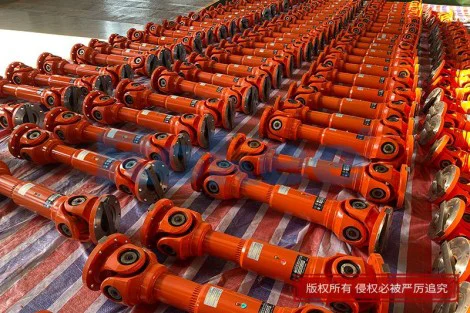
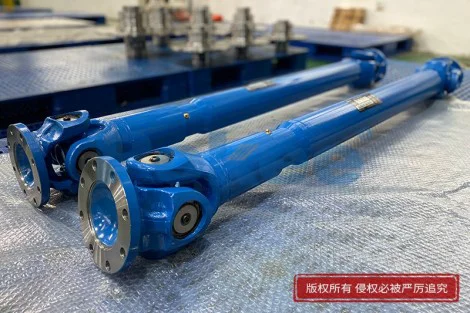
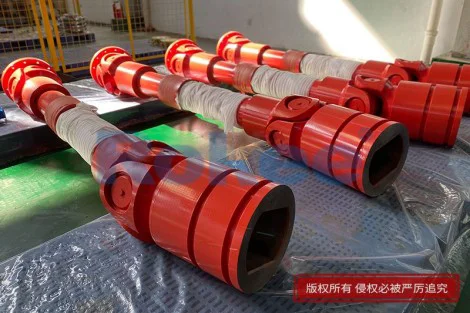
The SWP cardan driveshaft, also known as the SWP universal joint driveshaft, is a mechanical component specifically designed for transmitting rotational power between non-coaxial shafts. Its core structure consists of two universal joints (cardan joints) connected by a central shaft, with flange yokes at both ends to connect the driving and driven components. The universal joints, composed of cross shafts and needle roller bearings, allow the driveshaft to bend and flex within a certain angular range, thereby accommodating angular misalignments between the shafts. For light load transmission in PUF sandwich panel making equipment, the SWP cardan driveshaft is optimized in terms of structure, material, and dimensional design to meet the specific requirements of the application scenario. Compared with heavy-duty cardan driveshafts, the SWP cardan driveshaft for light load transmission is lighter in weight, more compact in structure, and has lower torque capacity, but it offers higher precision, smoother operation, and better adaptability to small angular deviations, which are exactly the key requirements of the PUF sandwich panel making equipment.
One of the key aspects of SWP cardan driveshaft adaptation in light load transmission is the structural optimization to ensure smooth and stable power transmission. The universal joints of the SWP cardan driveshaft are precision-engineered to minimize friction and wear during operation, which is crucial for light load scenarios where even minor frictional losses can affect transmission efficiency and stability. The cross shafts of the universal joints are made of high-strength alloy steel, which undergoes heat treatment to enhance its hardness and wear resistance, ensuring long-term reliable operation under continuous light load conditions. The needle roller bearings installed at the intersections of the cross shafts and the yokes are designed to reduce rotational friction, allowing the driveshaft to rotate smoothly even at varying angular positions. Additionally, the central shaft of the SWP cardan driveshaft is designed to be lightweight yet rigid, using seamless steel pipes or forged alloy steel to balance weight and structural strength. This lightweight design not only reduces the overall load on the equipment but also improves the responsiveness of the transmission system, making it easier to adjust the speed and torque according to the production needs of PUF sandwich panels.
Another important adaptation measure is the selection of appropriate materials and surface treatments to enhance the durability and adaptability of the SWP cardan driveshaft in the operating environment of PUF sandwich panel making equipment. The operating environment of such equipment is often accompanied by dust, slight moisture, and temperature fluctuations, which can affect the service life of the transmission components. To address this, the surface of the SWP cardan driveshaft is treated with anti-corrosion and anti-wear coatings, such as zinc plating or powder coating, to prevent rust and wear caused by dust and moisture. The materials used for the universal joints and central shaft are carefully selected to have good corrosion resistance and fatigue resistance, ensuring that the driveshaft can withstand long-term continuous operation without premature failure. For example, the cross shafts and yokes are often made of chrome-molybdenum alloy steel, which has excellent fatigue strength and corrosion resistance, making it suitable for the light load, continuous operation scenarios of PUF sandwich panel production.
The adaptation of SWP cardan driveshafts also involves the optimization of dimensional parameters to match the specific requirements of light load transmission in PUF sandwich panel making equipment. The length of the central shaft, the size of the universal joints, and the diameter of the flange yokes are all designed according to the spatial layout of the equipment and the torque requirements of each subsystem. In light load scenarios, the torque transmitted by the driveshaft is relatively low, so the diameter of the central shaft and the size of the universal joints can be reduced to achieve a more compact structure, which is beneficial for installing the driveshaft in the limited space of the PUF sandwich panel making equipment. For example, in the uncoiling system and conveying system of the equipment, where the torque requirement is low but the need for angular compensation is high, the SWP cardan driveshaft is designed with a shorter central shaft and smaller universal joints to ensure that it can fit into the narrow space between the components while providing sufficient angular compensation. Additionally, the length of the driveshaft can be adjusted according to the distance between the driving and driven shafts, and spline connections are sometimes used to allow for slight axial displacement, further enhancing the adaptability of the driveshaft to the dynamic changes of the equipment.
The performance of the SWP cardan driveshaft in light load transmission is also closely related to the lubrication system. Proper lubrication is essential to reduce friction between the moving components of the driveshaft, prevent wear, and ensure smooth operation. For light load transmission in PUF sandwich panel making equipment, the SWP cardan driveshaft is equipped with a reliable lubrication system, including oil nozzles and sealing devices. The lubricating oil used is selected according to the operating conditions of the equipment, usually a high-temperature, anti-wear lubricating grease that can maintain its performance even under the slight temperature fluctuations caused by the PUF foaming process. The sealing devices, such as oil seals and dust covers, are designed to prevent the leakage of lubricating oil and the entry of dust and moisture, ensuring that the internal components of the driveshaft remain lubricated and clean. Regular lubrication and maintenance of the SWP cardan driveshaft can significantly extend its service life and ensure consistent transmission performance, which is crucial for the continuous operation of the PUF sandwich panel making equipment.
In practical applications, the adaptation of SWP cardan driveshafts in light load transmission for PUF sandwich panel making equipment has been proven to be effective in improving the stability and efficiency of the production line. For example, in the roll forming system, the SWP cardan driveshaft transmits power from the motor to the roll forming rollers, which requires precise and stable speed transmission to ensure that the facing materials are formed into the desired shape with uniform thickness. The angular compensation capability of the SWP cardan driveshaft allows for slight misalignments between the motor shaft and the roll forming roller shaft, which may occur due to installation errors or thermal expansion, thereby avoiding uneven forming of the facing materials. In the foaming and lamination system, the SWP cardan driveshaft drives the conveying belts and lamination rollers, where stable power transmission is critical to ensure that the PUF foam is evenly distributed between the two facing materials and that the lamination pressure is consistent. The smooth operation of the SWP cardan driveshaft prevents speed fluctuations, which could lead to uneven foam density or poor bonding between the core and the facing materials.
Furthermore, the adaptability of the SWP cardan driveshaft to different operating conditions makes it suitable for the flexible production needs of PUF sandwich panels. As the production line needs to switch between different panel specifications, the speed and torque of each subsystem need to be adjusted accordingly. The SWP cardan driveshaft, with its good flexibility and adaptability, can smoothly adjust to the changes in speed and torque, ensuring that the transmission system remains stable during the adjustment process. This flexibility also reduces the downtime required for equipment adjustment, thereby improving the overall production efficiency of the PUF sandwich panel making line.
Despite the excellent adaptability of the SWP cardan driveshaft in light load transmission, there are still some key considerations to ensure its optimal performance in PUF sandwich panel making equipment. First, the selection of the SWP cardan driveshaft must be based on the specific torque and speed requirements of the equipment subsystem. It is crucial to calculate the maximum torque and operating speed of the transmission system to ensure that the selected driveshaft can handle the light load without overloading or premature wear. Second, the installation of the driveshaft must be carried out with precision to minimize angular misalignments beyond the designed range, which could affect transmission stability and increase wear. Third, regular inspection and maintenance are essential to check for signs of wear, corrosion, or lubrication failure, and to take timely measures to repair or replace the driveshaft if necessary. This includes checking the tightness of the flange connections, the condition of the universal joints, and the level of lubricating oil, as well as cleaning the driveshaft to remove dust and debris.
In conclusion, the adaptation of SWP cardan driveshafts in light load transmission for PUF sandwich panel making equipment is a critical factor in ensuring the stability, precision, and efficiency of the production line. Through structural optimization, material selection, dimensional adjustment, and reliable lubrication, the SWP cardan driveshaft is able to meet the specific requirements of light load transmission, including accommodating angular misalignments, ensuring smooth power transmission, and adapting to the dynamic changes of the equipment. Its lightweight, compact design and excellent adaptability make it an indispensable component in the transmission system of PUF sandwich panel making equipment, contributing to the consistent quality of the products and the overall efficiency of the production process. As the demand for PUF sandwich panels continues to grow, the further optimization and adaptation of SWP cardan driveshafts will play an even more important role in promoting the development of the PUF sandwich panel manufacturing industry, ensuring that the production equipment can operate more reliably and efficiently in light load transmission scenarios.