Flexible Coupling Solves Transmission Deviation Of PUR Sandwich Panel Production Line
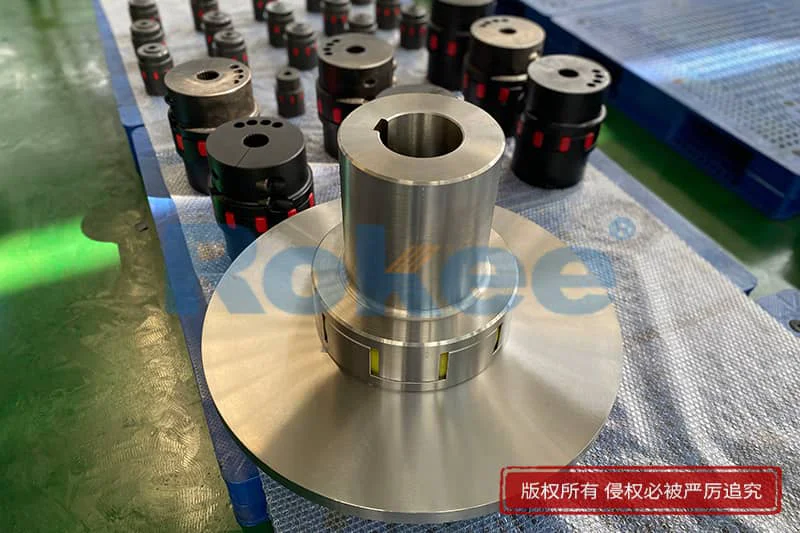
The continuous and stable operation of the transmission system is the core guarantee for the efficient production of PUR sandwich panel production lines. PUR sandwich panels, as high-performance composite building materials, require precise and consistent processing parameters throughout continuous molding, laminating, cutting and conveying processes. Any subtle transmission deviation in the production line will directly affect the flatness, dimensional accuracy and overall structural uniformity of finished panels, and even trigger continuous production defects and equipment operation failures in long-term batch production. In actual industrial production scenarios, traditional rigid transmission connection structures are difficult to adapt to the complex dynamic operating environment of PUR sandwich panel production lines, and are prone to multi-dimensional transmission deviations during long-cycle continuous operation, which has become a key factor restricting production stability and product yield improvement. The application of flexible coupling technology fundamentally solves the transmission deviation problem of the production line through unique structural adaptability and elastic compensation characteristics, realizing stable, accurate and low-loss power transmission for the entire production line.
Transmission deviation in PUR sandwich panel production line is caused by the superposition of multiple mechanical and environmental factors, and the deviation forms are diverse and present progressive deterioration characteristics with the extension of operation time. In the equipment installation stage, inevitable manual installation errors and assembly tolerances will lead to slight coaxiality errors between the driving shaft and driven shaft of each transmission unit, including angular deviation, radial parallel offset and axial spacing displacement. These tiny initial deviations are difficult to eliminate completely through precise debugging, and will not cause obvious abnormalities in short-term trial operation. However, the PUR sandwich panel production line usually operates continuously for a long time, and the mechanical vibration generated by high-speed operation of rolling, pressing and conveying equipment will continuously amplify the initial shaft misalignment. At the same time, the thermomechanical effect cannot be ignored in the production process. The heating and curing link of PUR materials will generate continuous ambient temperature changes, causing thermal expansion and slight deformation of metal transmission shafts, brackets and connecting components, further changing the relative position of paired transmission shafts and aggravating transmission deviation.
In addition, long-term cyclic load operation will lead to subtle wear and fatigue deformation of transmission bearings, fixed parts and connecting structures. The accumulated wear error will destroy the stable coaxial operation state of the transmission system, resulting in periodic jitter and speed fluctuation in the transmission process. These abnormal transmission states will directly act on the processing and conveying links of PUR sandwich panels. Unstable transmission speed will cause inconsistent material feeding speed of polyurethane raw materials and surface color steel plates, leading to uneven foaming density of the sandwich layer and inconsistent bonding thickness between layers. Transmission jitter and shaft offset will also cause lateral deviation in the panel conveying process, resulting in dimensional errors in fixed-length cutting and irregular edge trimming, greatly reducing the qualification rate of finished products. More importantly, uncompensated transmission deviation will generate continuous additional mechanical stress on the transmission shaft system. Long-term stress concentration will accelerate component fatigue aging, cause frequent wear of bearings and shaft parts, and even lead to shaft sticking, transmission pause and other equipment failures, resulting in unplanned production shutdowns and increased production and maintenance costs.
Traditional production lines mostly adopt rigid connection structures to realize power transmission between shafts, which can only maintain accurate and stable transmission under ideal coaxial operating conditions. Rigid couplings rely on completely rigid mechanical connection to lock the relative position of the driving and driven shafts, with almost no deformation and displacement allowance. This structural feature makes it completely unable to adapt to the dynamic shaft position changes caused by installation errors, thermal deformation, vibration and component wear in the operation of PUR sandwich panel production lines. When transmission deviation occurs, the rigid connection mode cannot offset the deviation, but will directly convert the displacement deviation into huge additional torsion and shear stress, which acts on the shaft body, bearings and equipment frame. In order to resist the deviation stress, the internal friction of the transmission system increases sharply, resulting in increased transmission resistance, reduced power transmission efficiency and obvious energy consumption growth. In the actual production of PUR sandwich panels, the rigid transmission structure can only delay the exposure of deviation problems through regular shutdown debugging and component replacement, which cannot fundamentally eliminate transmission deviation, and frequent equipment maintenance will seriously affect the continuity and efficiency of industrial production.
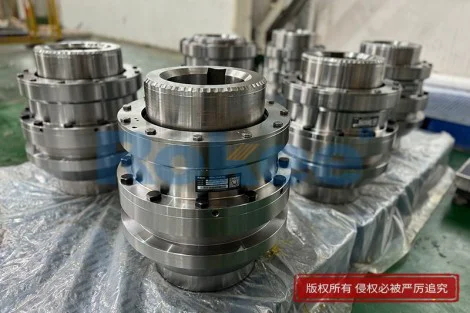
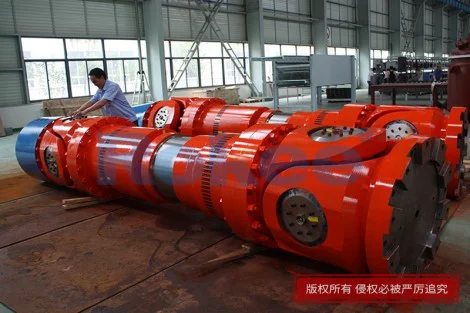
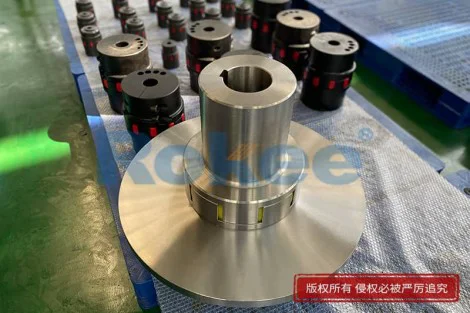
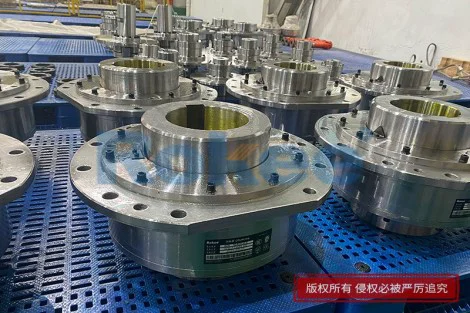
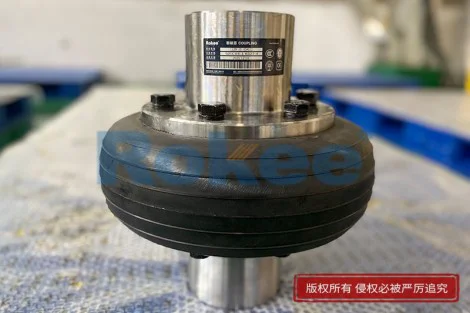
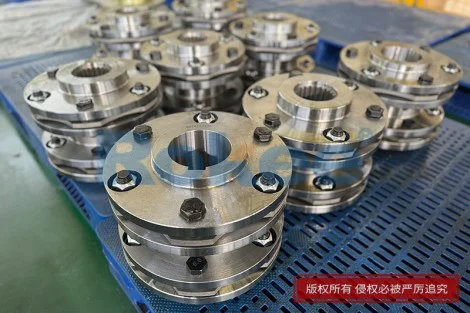
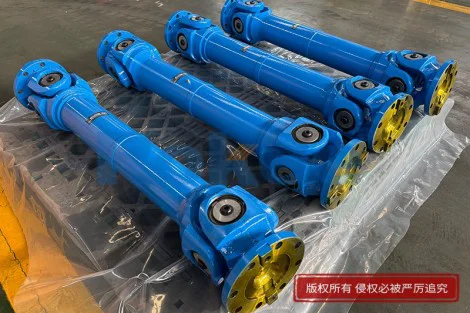
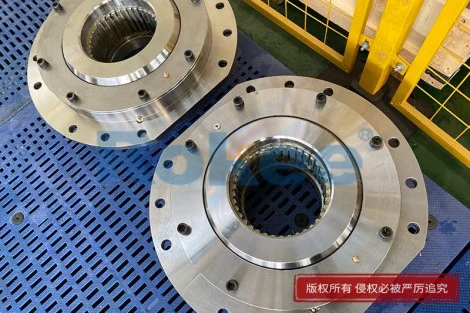
Different from rigid transmission structures, flexible couplings take elastic deformation and adaptive mechanical adjustment as the core working mechanism, which can effectively compensate multi-dimensional transmission deviations in the operation of PUR sandwich panel production lines without affecting the normal transmission of torque and rotational speed. The internal flexible structural elements of flexible couplings can produce reversible micro-deformation according to the actual deviation direction and offset degree of the transmission shaft during operation. When angular deviation, radial offset or axial displacement occurs between the driving shaft and driven shaft, the flexible parts can automatically absorb and offset the position deviation through subtle bending, twisting and stretching deformation, avoiding rigid collision and forced friction between shaft components. This adaptive compensation mode does not generate additional transmission resistance and mechanical stress, and can always maintain stable power transmission synchronization between the front and rear transmission units of the production line, ensuring consistent rotational speed and torque output of each processing link.
In the overall transmission system layout of PUR sandwich panel line, flexible couplings are mainly installed in key transmission links such as power input shafts of rolling equipment, conveying roller group connecting shafts, and power output ends of driving motors. These links are the most prone to transmission deviation and the most sensitive to operating stability. The application of flexible couplings forms a flexible buffer and deviation compensation mechanism for the entire transmission chain. For the tiny coaxial deviation generated by initial installation, the flexible structure can realize automatic adaptation without manual correction; for the dynamic deviation caused by thermal deformation and mechanical vibration during continuous production, the real-time elastic adjustment of flexible couplings can eliminate the deviation interference in the first place; for the accumulated displacement error caused by long-term component wear, the multi-dimensional compensation allowance of flexible couplings can effectively delay the deterioration of deviation problems, greatly reducing the frequency of equipment debugging and maintenance.
The technical advantages of flexible couplings in solving transmission deviation are fully reflected in the improvement of production line operation stability and product processing accuracy. After adopting flexible coupling transmission structure, the rotational speed fluctuation and periodic jitter of each transmission unit of the PUR sandwich panel production line are basically eliminated, realizing constant-speed and constant-torque continuous transmission. The stable feeding and conveying state ensures that the polyurethane foaming reaction proceeds in a uniform and stable state, making the internal foaming pore structure of the sandwich panel uniform and dense, and the overall thickness and flatness of the panel consistent. At the same time, the elimination of transmission deviation avoids lateral displacement and speed difference in the panel conveying process, ensuring high-precision fixed-length cutting and neat edge processing, effectively improving the dimensional accuracy and appearance quality of finished products. In terms of equipment operation protection, flexible couplings can isolate and absorb most of the vibration and impact load generated by transmission deviation, reduce the fatigue stress of key components such as transmission shafts and bearings, slow down component wear and aging, and significantly extend the service life of transmission system equipment.
From the perspective of long-term production operation, flexible coupling technology optimizes the overall operating state of the PUR sandwich panel production line and brings comprehensive economic benefits to industrial production. The fundamental solution to transmission deviation greatly reduces the defective rate of sandwich panel products caused by unstable transmission, improves the finished product yield and material utilization rate, and reduces the waste of polyurethane raw materials and color steel plate materials. The stable and low-stress transmission environment realizes energy-saving operation of the production line, reduces invalid energy consumption caused by increased friction and transmission resistance, and improves the energy utilization efficiency of equipment. In addition, the adaptive deviation compensation capability of flexible couplings reduces the dependence on frequent manual debugging and regular replacement of wearing parts, greatly reduces equipment maintenance workload and maintenance cost, and avoids production interruption caused by equipment failure and debugging, ensuring the high-efficiency and continuous operation of the production line.
In the field of continuous composite material processing production, the operating stability of the transmission system determines the upper limit of production efficiency and product quality. PUR sandwich panel production has the characteristics of continuous processing, one-step molding and high-precision processing, which puts forward extremely high requirements for the synchronization and stability of the transmission system. Flexible coupling, as an efficient and reliable transmission deviation solving technology, makes up for the inherent defects of traditional rigid transmission structures, realizes adaptive compensation of multi-dimensional transmission deviations in complex operating environments, and builds a stable and efficient transmission foundation for PUR sandwich panel production lines. With the continuous upgrading of industrial production precision and automation level, the application value of flexible coupling technology in sandwich panel production equipment will be further highlighted. It not only solves the core mechanical problem of transmission deviation in production operation, but also provides a reliable technical guarantee for the high-quality, high-efficiency and low-consumption sustainable production of PUR sandwich panel industry, and has important popularization and application significance in the field of similar continuous composite plate production equipment.