Cardan Coupling Helps PUF Sandwich Panel Production Machinery Achieve Continuous Stable Operation

In the modern manufacturing industry, the production of PUF (Polyurethane Foam) sandwich panels has become an integral part of the construction and industrial sectors, thanks to their excellent thermal insulation, soundproofing, and structural performance. These panels are widely used in various applications, from industrial warehouses and cold storage facilities to residential and commercial buildings, due to their lightweight, durability, and energy-saving characteristics. However, the production process of PUF sandwich panels is highly complex, involving multiple sequential operations such as uncoiling of face materials, roll forming, preheating, PU foam mixing and injection, lamination, curing, and cutting. Each of these steps requires precise coordination and stable power transmission to ensure the consistency of product quality and the efficiency of the entire production line. Among the numerous components that constitute the PUF sandwich panel production machinery, the cardan coupling, also known as the universal joint coupling, plays a crucial role in ensuring continuous and stable operation. Its unique structural design and excellent transmission performance address the key challenges faced by the transmission system of the production machinery, making it an indispensable core component in the entire production process.
To understand the critical role of the cardan coupling in PUF sandwich panel production machinery, it is first necessary to clarify the working characteristics of the production line and the core challenges encountered by its transmission system. A modern PUF sandwich panel production line is a highly integrated and automated system that combines mechanical, electrical, hydraulic, and chemical reaction technologies. It requires the coordinated operation of multiple subsystems, including the uncoiling system, roll forming system, foaming system, double-belt lamination system, cutting system, and conveying system. Each subsystem is driven by an independent power source, and the power needs to be accurately and stably transmitted to various executive components to ensure that the entire production line operates in a synchronized manner. The transmission system of the production machinery faces several key challenges: first, due to the limitations of the production process and the overall structure of the equipment, the installation and layout of each subsystem are often not on the same axis, resulting in angular deviations between the driving shaft and the driven shaft; second, during long-term continuous operation, the equipment will generate vibration and thermal expansion, leading to changes in the relative position of the shafts, which requires the transmission component to have a certain compensation capacity; third, the production process of PUF sandwich panels requires stable and uniform power transmission, especially in the foaming and lamination links, where even slight fluctuations in transmission speed or torque will affect the density of the PU foam core and the bonding effect between the core and the face materials, thereby reducing product quality; fourth, the production line needs to adapt to different specifications of PUF sandwich panels, which involves adjusting the speed and torque of each subsystem, requiring the transmission component to have good flexibility and adaptability. It is in this context that the cardan coupling stands out with its unique structural advantages and excellent performance, effectively solving these challenges and ensuring the continuous and stable operation of the production machinery.
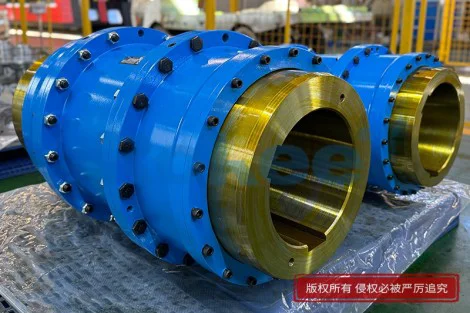
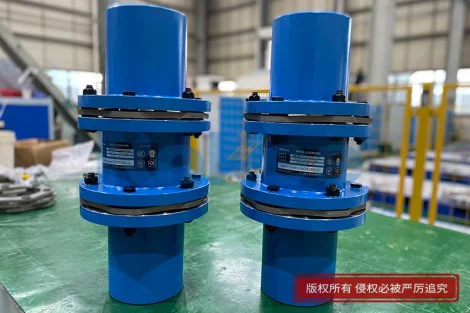
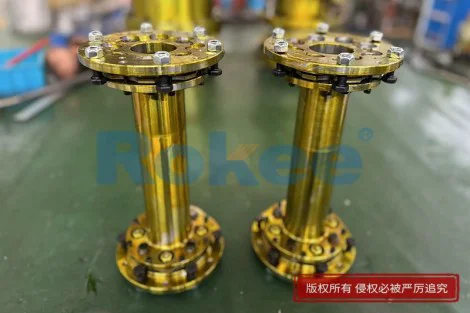
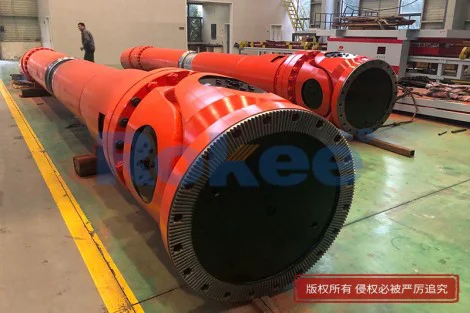
The cardan coupling is a mechanical transmission device designed to transmit torque and rotational motion between two shafts that are not perfectly aligned. Its core structure consists of two fork-shaped joints and a cross shaft, with bearings installed at the connection points to ensure smooth rotation. This simple yet sophisticated structural design gives the cardan coupling several key characteristics that are highly suitable for the working environment of PUF sandwich panel production machinery. One of the most prominent advantages is its strong angle compensation capability. Unlike rigid couplings that require precise coaxial alignment of the driving and driven shafts, the cardan coupling can compensate for angular deviations between the two shafts within a certain range, usually between 5° and 45°, depending on the specific structural type. This is particularly important for PUF sandwich panel production machinery, as the various subsystems such as the uncoiling machine, roll forming machine, and lamination machine are often installed in different positions due to the layout constraints of the production line, resulting in inevitable angular deviations between their respective shafts. The cardan coupling can effectively absorb these deviations, ensuring that the power is transmitted smoothly and efficiently without causing additional stress on the shafts or other components, thereby reducing the risk of mechanical failure.
In addition to angle compensation, the cardan coupling also has excellent axial and radial displacement compensation capabilities. During the long-term continuous operation of PUF sandwich panel production machinery, factors such as mechanical vibration, thermal expansion, and material wear will cause slight axial or radial displacements between the shafts. If these displacements are not effectively compensated, they will lead to increased friction, noise, and even damage to the transmission components. The cardan coupling, through its articulated structure, can flexibly adapt to these displacements, maintaining stable power transmission. For example, in the roll forming process, the roll forming machine needs to adjust the distance between the rollers according to the thickness of the face material, which may cause slight axial displacement of the driving shaft. The cardan coupling can compensate for this displacement in real time, ensuring that the rollers rotate at a constant speed and the face material is formed uniformly. Similarly, in the foaming system, the high-pressure foaming machine generates a certain amount of vibration during operation, which may cause radial displacement of the shaft. The cardan coupling can absorb this vibration and displacement, preventing it from being transmitted to other components and ensuring the stability of the foaming process.
High load-bearing capacity and transmission efficiency are another two key advantages of the cardan coupling that make it suitable for PUF sandwich panel production machinery. The production of PUF sandwich panels involves heavy-duty operations, such as the uncoiling of large rolls of face materials (which can weigh up to several tons) and the lamination of panels under a certain pressure. These operations require the transmission system to transmit large torques stably. The cardan coupling, with its robust structural design and high-quality materials, can withstand large loads and transmit torque efficiently. Compared with other types of couplings with the same rotation diameter, the cardan coupling can transmit greater torque, making it particularly suitable for heavy-duty low-speed scenarios in PUF sandwich panel production. At the same time, the cardan coupling has high transmission efficiency, usually between 98% and 99.8%, which means that most of the power generated by the motor is transmitted to the executive components, reducing energy loss and improving the overall energy efficiency of the production line. This is of great significance for reducing production costs and achieving energy conservation and environmental protection in the long run.
Smooth operation and low noise are also important characteristics of the cardan coupling that contribute to the stable operation of PUF sandwich panel production machinery. The production process of PUF sandwich panels requires a relatively stable working environment, as excessive vibration and noise can affect the precision of the production process and the quality of the final product. The cardan coupling, with its precise bearing design and smooth rotational performance, can minimize vibration and noise during operation. The cross shaft and bearings work together to ensure that the rotation is smooth and uniform, without obvious fluctuations or jitters. This not only improves the stability of the production line but also reduces the wear and tear of other components, extending the service life of the entire production machinery. In addition, the cardan coupling is easy to assemble and maintain, which reduces the downtime of the production line due to maintenance and further ensures continuous operation.
To further illustrate the role of the cardan coupling in PUF sandwich panel production machinery, it is necessary to analyze its specific application in each key link of the production process. The uncoiling system is the first link in the production of PUF sandwich panels, which is responsible for uncoiling the large rolls of face materials (such as steel coils or aluminum coils) and feeding them into the next process. The uncoiling machine needs to maintain a stable speed during operation to ensure that the face material is fed uniformly, avoiding wrinkles or breaks. The cardan coupling is used to connect the motor and the uncoiling shaft, transmitting the torque from the motor to the uncoiling shaft. Due to the large weight of the face material rolls, the uncoiling shaft may have slight angular deviations or axial displacements during operation. The cardan coupling can compensate for these deviations, ensuring that the uncoiling speed is stable and uniform, laying a solid foundation for the subsequent roll forming process.
The roll forming system is a key link that determines the shape and dimensional accuracy of the face materials of PUF sandwich panels. The roll forming machine uses multiple sets of rollers to gradually form the flat face material into the required shape (such as corrugated or trapezoidal). Each set of rollers is driven by a separate motor, and the speed of each roller must be strictly synchronized to ensure that the face material is formed smoothly without deformation. The cardan coupling is used to connect the motor and the roller shaft, ensuring that the power is transmitted stably and the speed of each roller is synchronized. In addition, when the roll forming machine needs to adjust the distance between the rollers to adapt to different thicknesses of face materials, the cardan coupling can compensate for the slight displacement caused by the adjustment, maintaining the stability of the transmission system. This is crucial for ensuring the dimensional accuracy of the face materials, as any speed inconsistency or deformation during the roll forming process will affect the subsequent lamination and foaming processes, leading to quality defects in the final product.
The foaming system is the core link in the production of PUF sandwich panels, which is responsible for mixing the PU raw materials (polyether and isocyanate) in a certain proportion and injecting the mixture into the gap between the two face materials to form the foam core. The foaming process requires precise control of the mixing ratio, injection speed, and temperature, and any instability in the transmission system will affect the uniformity of the foam core. The cardan coupling is used in the high-pressure foaming machine to connect the motor and the mixing head, ensuring that the mixing head rotates at a constant speed and the raw materials are mixed uniformly. In addition, the foaming machine generates a certain amount of pressure and vibration during operation, which may cause angular deviations or displacements between the motor shaft and the mixing head shaft. The cardan coupling can absorb these vibrations and compensate for the deviations, ensuring that the injection speed and mixing ratio are stable, thereby improving the density uniformity and structural strength of the foam core. Poor mixing or unstable injection speed will lead to foam overflow, insufficient filling, or uneven foam density, which will seriously affect the thermal insulation performance and structural stability of the PUF sandwich panels.
The lamination and curing system is another key link that determines the bonding quality of PUF sandwich panels. After the foam is injected between the two face materials, the panels need to be pressed and cured under a certain pressure and temperature to ensure that the foam core is firmly bonded to the face materials. The double-belt lamination machine is usually used in this link, which uses two endless belts to press the panels and convey them to the curing oven. The lamination machine requires stable speed and uniform pressure to ensure that the panels are pressed evenly and the bonding is firm. The cardan coupling is used to connect the motor and the conveyor belt shaft, transmitting the torque to the conveyor belt and ensuring that the conveyor belt runs at a constant speed. The angle compensation and displacement compensation capabilities of the cardan coupling ensure that the conveyor belt runs smoothly, without deviation or jitter, and the pressure applied to the panels is uniform. This is crucial for avoiding delamination between the foam core and the face materials, which is a common quality defect in PUF sandwich panel production. In addition, the cardan coupling can also adapt to the temperature changes in the curing oven, compensating for the thermal expansion of the shafts, and maintaining the stability of the transmission system.
The cutting system is the final link in the production of PUF sandwich panels, which is responsible for cutting the continuous panels into the required length according to customer requirements. The cutting machine needs to have high cutting accuracy and stable operation to ensure that the length of the panels is consistent and the cutting surface is flat. The cardan coupling is used to connect the motor and the cutting blade shaft, ensuring that the cutting blade rotates at a constant speed and the cutting process is smooth. Any fluctuation in the rotation speed of the cutting blade will lead to uneven cutting surfaces or incorrect lengths, affecting the quality of the final product. The cardan coupling, with its stable transmission performance, ensures that the cutting blade rotates uniformly, improving the cutting accuracy and efficiency. In addition, when the cutting machine needs to adjust the cutting speed according to the production speed of the line, the cardan coupling can adapt to the speed change smoothly, maintaining the synchronization between the cutting machine and the rest of the production line.
In addition to its application in the key links of the production process, the cardan coupling also plays an important role in improving the overall reliability and service life of PUF sandwich panel production machinery. The continuous operation of the production line requires the transmission system to have high reliability and durability, as any failure of the transmission component will lead to the shutdown of the entire production line, resulting in significant economic losses. The cardan coupling has a simple structure, strong durability, and low maintenance requirements, which can operate stably for a long time under harsh working conditions (such as high temperature, high pressure, and vibration). Its robust design and high-quality materials (such as high-strength steel and wear-resistant bearings) ensure that it can withstand the test of long-term heavy-duty operation, reducing the frequency of failures and maintenance. In addition, the cardan coupling is easy to disassemble and maintain, which can reduce the maintenance time and cost, further improving the operational efficiency of the production line.
It is worth noting that the selection and installation of the cardan coupling also have a significant impact on its performance and the stable operation of the PUF sandwich panel production machinery. When selecting a cardan coupling, it is necessary to consider the specific working conditions of the production machinery, such as the torque required, the angle deviation between the shafts, the operating speed, and the working environment. Different types of cardan couplings (such as cross-axis cardan couplings, ball cage cardan couplings, and double cardan couplings) have different characteristics and application scenarios. For example, cross-axis cardan couplings are suitable for heavy-duty low-speed scenarios, while ball cage cardan couplings are suitable for high-speed and high-precision scenarios. Double cardan couplings can eliminate the speed fluctuation of single cardan couplings, making them suitable for long-distance transmission. Therefore, selecting the appropriate type of cardan coupling according to the actual needs of the production line is crucial to ensuring its performance and stability.
In terms of installation, the cardan coupling needs to be installed correctly to ensure its normal operation. The installation process should ensure that the alignment of the shafts is within the allowable range of the cardan coupling, and the connection between the coupling and the shafts is firm. In addition, the bearings of the cardan coupling should be lubricated regularly to reduce friction and wear, extending its service life. Regular inspection and maintenance of the cardan coupling, such as checking for wear, loose connections, and lubrication conditions, can also help detect potential problems in advance and avoid failures that may affect the operation of the production line.
With the continuous development of the PUF sandwich panel industry, the demand for high-efficiency, high-quality, and continuous production is increasing. The cardan coupling, as a key component in the transmission system of PUF sandwich panel production machinery, will play an increasingly important role. Its unique structural design and excellent performance not only solve the key challenges faced by the transmission system but also help improve the production efficiency, product quality, and reliability of the production line. In the future, with the advancement of mechanical manufacturing technology, the cardan coupling will continue to be optimized and improved, such as the use of new materials to improve its load-bearing capacity and durability, and the integration of intelligent technologies to realize real-time monitoring and fault early warning. This will further enhance the role of the cardan coupling in PUF sandwich panel production machinery, helping the industry achieve more sustainable and efficient development.
In conclusion, the cardan coupling is an indispensable core component in PUF sandwich panel production machinery, whose angle compensation, displacement compensation, high load-bearing capacity, high transmission efficiency, and smooth operation characteristics effectively address the key challenges faced by the transmission system of the production line. Its application in each key link of the production process, from uncoiling and roll forming to foaming, lamination, and cutting, ensures the continuous and stable operation of the production machinery, improves the production efficiency and product quality, and reduces the production costs and maintenance costs. With the continuous development of the industry, the cardan coupling will continue to play a crucial role in promoting the upgrading and development of the PUF sandwich panel production industry, helping manufacturers achieve more efficient, stable, and sustainable production.