Characteristics Of Diaphragm Couplings For Transmission Parts Of Mineral Wool Sandwich Panel Production Line

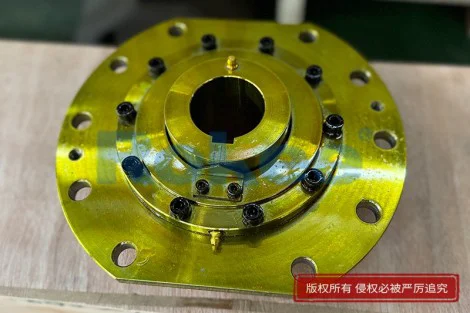
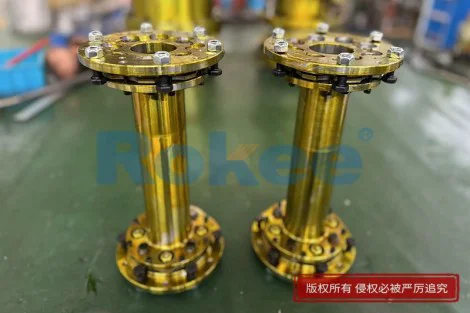
The mineral wool sandwich panel production line is a continuous and automated industrial system that integrates raw material feeding, wool spreading, glue coating, pressing, curing, cutting and finished product conveying. The stable operation of the entire production line relies heavily on the precise and reliable transmission performance of various mechanical transmission components, among which diaphragm couplings serve as core connecting parts for driving and driven shafts of key equipment. Different from traditional gear couplings and sleeve couplings, diaphragm couplings adopt metal elastic diaphragm deformation to complete torque transmission and displacement compensation, and their unique structural and mechanical characteristics are highly compatible with the high-load, continuous-operation and multi-interference working environment of mineral wool sandwich panel production lines. Understanding the inherent characteristics of diaphragm couplings is essential for optimizing the transmission system stability, reducing equipment failure rates and extending the service life of production line equipment.
The fundamental working principle of diaphragm couplings endows them with unique transmission advantages suitable for industrial continuous production. This type of coupling mainly relies on the elastic micro-deformation of metal diaphragms to transmit torque between the driving shaft and the driven shaft. During the operation of the mineral wool sandwich panel production line, the power generated by motors and reducers is transmitted to the production execution equipment through the diaphragm group. The rigid structure of the diaphragm ensures synchronous rotation of the two connected shafts without rotational hysteresis or angle deviation, while the flexible deformation area of the diaphragm can adapt to various minor displacements generated during equipment operation. Unlike flexible couplings that rely on rubber or plastic buffer parts, the all-metal structural design of diaphragm couplings avoids aging, deformation and failure of non-metal materials under long-term industrial operation conditions, which lays a solid foundation for long-term stable transmission of the production line.
Excellent multi-dimensional misalignment compensation is one of the most core characteristics of diaphragm couplings, which solves the common shaft connection deviation problems in mineral wool sandwich panel production line. In the actual installation and long-term operation of production line equipment, it is impossible to achieve absolute coaxiality between the driving shaft and the driven shaft. Installation errors, foundation settlement of equipment supports, thermal expansion and contraction of metal components during continuous high-load operation, and slight mechanical vibration will cause axial, radial and angular misalignment between connected shafts. Diaphragm couplings can effectively absorb and compensate for these three types of misalignment through the elastic deformation of diaphragms. Axial displacement usually comes from the thermal expansion of transmission shafts and equipment shell parts during long-time running; the diaphragm can produce gentle axial bending deformation to offset the distance change between shafts without generating additional axial stress on the shaft system. Radial displacement caused by equipment vibration and installation eccentricity is balanced by the synergistic deformation of multiple groups of diaphragms, avoiding rigid friction and torque loss caused by shaft eccentricity. Angular misalignment formed by the inclination of the shaft axis can also be adaptively adjusted through the micro-torsion deformation of diaphragms, ensuring that the torque transmission process remains smooth and uniform. This multi-directional compensation capability fundamentally avoids the additional bending stress and shear stress concentration at the shaft connection position, which is crucial for protecting the precision transmission structure of the production line.
Zero-backlash and high-torsional stiffness transmission characteristics make diaphragm couplings meet the precision operation requirements of mineral wool sandwich panel production processes. The production of mineral wool sandwich panels has strict requirements on the synchronization and accuracy of each process link. From the uniform spreading of mineral wool raw materials to the constant-pressure pressing of composite plates and the fixed-length cutting of finished products, any transmission angle deviation or speed fluctuation will lead to uneven product thickness, inconsistent bonding strength and dimensional errors of finished panels. Diaphragm couplings realize rigid torque transmission through integral or linkage metal diaphragm structures, with no elastic sliding or rotation gap in the torque transmission process. The high torsional stiffness of the diaphragm material ensures that the rotation speed and torque output of the driving end can be completely and synchronously transmitted to the driven end, maintaining highly consistent operating parameters of front and rear process equipment. Even in the state of instantaneous load fluctuation during production start-up, shutdown and load switching, the coupling will not produce rotational hysteresis or angle deviation, which effectively guarantees the dimensional accuracy and production consistency of mineral wool sandwich panels in batch production.
Strong vibration damping and impact resistance characteristics adapt to the complex load fluctuation environment of mineral wool production lines. The operation of mineral wool sandwich panel production equipment is accompanied by intermittent load changes and mechanical impact. For example, the feeding mechanism will generate instantaneous impact load when conveying bulk mineral wool raw materials, and the cutting equipment will produce sudden load changes during the reciprocating cutting process. Traditional rigid couplings will directly transmit these impacts and vibrations to the entire transmission system, resulting in increased equipment vibration, accelerated wear of bearings and shafts, and even loose connection of equipment parts. Diaphragm couplings can absorb instantaneous impact energy and vibration amplitude through the micro-elastic deformation of metal diaphragms. When the transmission system is subjected to sudden load impact, the diaphragm undergoes reversible elastic deformation to buffer the impact force, reduce the vibration conduction between the driving and driven equipment, and stabilize the operating state of the entire transmission system. This vibration damping effect not only reduces the operating noise of the production line, but also avoids fatigue damage of core transmission components caused by long-term vibration and impact, effectively improving the overall operational stability of the equipment.
Maintenance-free and long-service-life structural characteristics reduce the operating cost of mineral wool sandwich panel production lines. Industrial continuous production equipment puts forward high requirements for the durability and reliability of transmission parts, and frequent maintenance and replacement of coupling parts will directly affect production efficiency and increase operating costs. Diaphragm couplings adopt an all-metal integrated structure without any sliding friction pairs and non-metal wearing parts inside. Different from gear couplings that need regular lubrication and rubber couplings that need regular replacement of buffer parts, diaphragm couplings do not require grease lubrication, sealing maintenance and regular part replacement in the whole service cycle. The metal diaphragm has excellent fatigue resistance and structural stability, and can maintain stable mechanical performance under long-term continuous rotation, high-load operation and frequent load fluctuation. In the harsh production environment of mineral wool processing, where there are fine mineral wool dust and slight industrial humidity, the integral metal structure can effectively resist dust erosion and mild corrosion, avoiding structural failure caused by environmental factors. This maintenance-free feature greatly reduces the daily maintenance workload of production line equipment, avoids production shutdown losses caused by coupling failure and maintenance, and significantly improves the continuous operation efficiency of the production line.
High temperature resistance and stable environmental adaptability are important characteristics that make diaphragm couplings suitable for mineral wool sandwich panel production scenarios. The curing and composite pressing processes of mineral wool sandwich panels need to be carried out in a certain high-temperature environment, and the long-term operation of heating equipment will cause the ambient temperature of the production area to rise. Many traditional flexible couplings will have performance degradation in high-temperature environments: non-metal parts are prone to aging, softening and deformation, resulting in reduced transmission accuracy and failure of buffer compensation function. In contrast, the metal diaphragm materials used in diaphragm couplings have stable high-temperature mechanical properties, and their elastic deformation performance, torsional stiffness and structural strength will not change significantly within the conventional operating temperature range of the production line. They can continuously and stably complete torque transmission and displacement compensation operations in high-temperature production areas. At the same time, the compact and closed structural design of diaphragm couplings can prevent fine mineral wool dust from entering the internal connection structure, avoid dust accumulation from affecting the flexible deformation of diaphragms and the torque transmission effect, and maintain long-term stable working performance in the dusty industrial environment unique to mineral wool production.
Compact structural design and high power density characteristics optimize the space layout of the production line transmission system. The mechanical structure of mineral wool sandwich panel production line is compact and intensive, with various process equipment arranged closely, and the installation space reserved for transmission connecting parts is limited. Diaphragm couplings adopt a modular integrated design, with simple and compact overall structure, small axial and radial installation size, and high power transmission density. Under the same torque transmission demand, the volume and weight of diaphragm couplings are far smaller than those of traditional gear couplings and chain couplings. The compact structural feature enables it to adapt to the narrow installation space of the production line, facilitates the integrated layout of multi-group transmission equipment, and will not cause structural interference with surrounding process components. In addition, the standardized modular structure is convenient for equipment assembly and later disassembly and inspection, which improves the convenience of production line equipment installation and maintenance on the premise of ensuring transmission performance.
Good fatigue resistance and stable dynamic mechanical properties ensure the long-term reliable operation of high-frequency cyclic transmission. The mineral wool sandwich panel production line belongs to high-frequency continuous operation equipment, and the transmission system needs to maintain long-term cyclic rotation and repeated load bearing. Long-term cyclic alternating load is easy to cause fatigue damage to transmission parts, leading to structural deformation and performance attenuation. The metal diaphragm of diaphragm couplings is processed through precise forming and heat treatment processes, with uniform internal stress distribution and excellent fatigue resistance. It can withstand millions of times of cyclic elastic deformation without fatigue fracture or permanent deformation, and can maintain stable transmission accuracy and compensation performance in long-term high-frequency operation. For the continuous production mode of mineral wool panels that runs for a long time without frequent shutdowns, this fatigue resistance characteristic effectively avoids sudden failure of transmission parts during peak production periods, ensures the continuity and stability of the production process, and reduces the hidden dangers of equipment shutdown caused by coupling fatigue failure.
In practical application of mineral wool sandwich panel production lines, the comprehensive performance advantages of diaphragm couplings are far more prominent than traditional transmission coupling parts. The integration of precision transmission, displacement compensation, vibration damping and long-life maintenance-free performance makes it perfectly match the high-efficiency, continuous and stable production requirements of mineral wool panel processing. In the transmission links of core equipment such as feeding rollers, pressing machines, curing transmission tables and cutting systems of the production line, diaphragm couplings can always maintain stable operating state, effectively solve various transmission problems caused by equipment installation errors, environmental changes and load fluctuations, and provide reliable transmission guarantee for the standardized and batch production of mineral wool sandwich panels. With the continuous improvement of automation and precision of mineral wool sandwich panel production lines, the unique structural and mechanical characteristics of diaphragm couplings will make them more widely used in industrial transmission systems, becoming an indispensable core component to improve the overall operating performance of the production line.