Tyre Coupling Production

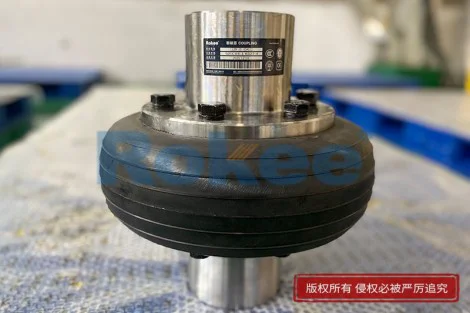
Tyre coupling production is a sophisticated manufacturing process that combines precision engineering, advanced material science, and strict quality control to create flexible coupling components widely used in mechanical transmission systems. As a key part of connecting driving shafts and driven shafts, tyre couplings play a crucial role in transmitting torque, compensating for axial, radial, and angular displacements, absorbing shock and vibration, and ensuring the stable and efficient operation of various industrial equipment. The production process of tyre couplings involves multiple stages, each requiring meticulous operation and strict adherence to technical standards to meet the diverse and harsh working conditions of modern industry.
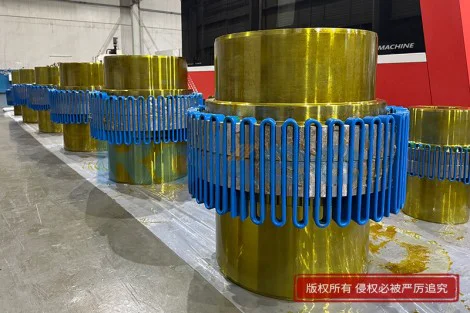
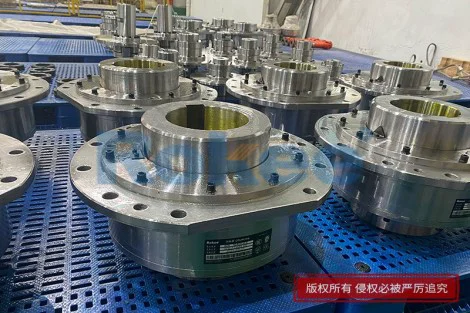
The foundation of tyre coupling production lies in the selection of high-quality raw materials, as the performance and service life of the final product are directly determined by the quality of the materials used. The main components of a tyre coupling include two metal hubs and an elastic tyre body, each requiring specific material properties to fulfill their respective functions. The metal hubs, which are responsible for connecting the coupling to the shafts and transmitting torque, are typically made of high-strength cast iron or steel. These materials are chosen for their excellent mechanical properties, including high tensile strength, wear resistance, and impact resistance, which enable them to withstand the high torques and dynamic loads encountered in industrial applications. The metal blanks for the hubs are usually produced through casting or forging processes, where molten metal is poured into precision molds or shaped under high pressure to form the basic structure of the hub. After casting or forging, the blanks undergo a series of machining processes to achieve the required dimensions, surface finish, and precision.
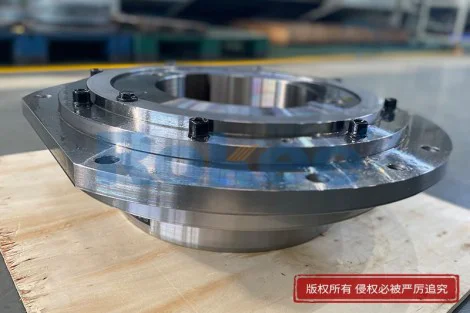
The machining of metal hubs is a critical stage in tyre coupling production, as any deviation in dimensions or surface quality can affect the assembly and performance of the coupling. The process typically starts with turning, where the blank is mounted on a lathe and rotated at high speed while cutting tools remove excess material to form the outer diameter, inner hole, and end faces of the hub. The inner hole, which fits onto the shaft, must be machined with high precision to ensure a tight and secure fit, preventing slippage during operation. Following turning, milling is often used to create keyways or other features on the hub, which allow for the transmission of torque between the hub and the shaft. Drilling is also performed to create bolt holes that will be used to connect the hub to the elastic tyre body. Throughout the machining process, precision measuring tools such as calipers, micrometers, and coordinate measuring machines are used to inspect the dimensions and geometry of the hub, ensuring that they meet the specified technical requirements. Any components that do not meet the standards are rejected or reworked to avoid affecting the overall quality of the coupling.
The elastic tyre body is the core component of the tyre coupling, responsible for absorbing shock, compensating for displacements, and providing the necessary flexibility. The material used for the tyre body is typically a special blend of rubber or polyurethane, chosen for its high elasticity, fatigue resistance, and resistance to environmental factors such as oil, heat, and ozone. Common rubber materials used include chloroprene rubber (CR) and nitrile butadiene rubber (NBR), each with unique properties that make them suitable for different applications. Chloroprene rubber offers excellent weather resistance, ozone resistance, and flame retardancy, making it ideal for outdoor or general industrial environments with moderate oil exposure. Nitrile butadiene rubber, on the other hand, has superior oil resistance, particularly against mineral oils and fuels, making it suitable for indoor applications with heavy oil contamination. Polyurethane is another popular material for tyre bodies, offering high tensile strength, abrasion resistance, and good elastic properties, making it suitable for high-load applications.
The production of the elastic tyre body involves a series of processes, starting with the formulation and mixing of the rubber or polyurethane compound. The raw rubber is first processed to soften it, then mixed with various additives such as vulcanizing agents, accelerators, fillers, and antioxidants to enhance its properties. The mixing process is carried out in a banbury mixer or open mill, where the rubber and additives are combined at a specific temperature and pressure to ensure uniform distribution. The type and proportion of additives are carefully controlled to achieve the desired elasticity, hardness, and durability of the tyre body. Once the compound is mixed, it is shaped into the desired tire-like form through extrusion or molding. For rubber tyre bodies, the shaping process is often followed by vulcanization, a heat treatment process that cross-links the rubber molecules, enhancing its strength, elasticity, and resistance to heat and chemicals. Vulcanization is typically carried out in a press or autoclave at a specific temperature and pressure for a predetermined period, ensuring that the tyre body achieves the required mechanical properties.
After the metal hubs and elastic tyre body are produced, the next stage in tyre coupling production is assembly. The assembly process involves connecting the two metal hubs to the tyre body using high-strength bolts. The tyre body is positioned between the two hubs, and the bolts are inserted through the bolt holes in the hubs and the tyre body, then tightened to the specified torque. It is crucial to ensure that the bolts are tightened evenly and to the correct torque, as this ensures a secure connection between the components and prevents slippage or separation during operation. In some cases, the tyre body is bonded to the metal hubs using a special adhesive during the vulcanization process, creating a permanent and strong bond that enhances the overall strength and reliability of the coupling. During assembly, the alignment of the hubs and tyre body is also checked to ensure that the coupling is balanced and that there are no misalignments that could cause vibration or premature wear.
Quality control is an integral part of tyre coupling production, running through every stage of the manufacturing process to ensure that the final product meets the required performance and safety standards. Raw materials are inspected upon arrival to verify their chemical composition and mechanical properties, ensuring that they meet the specified requirements. During the machining of metal hubs, regular inspections are carried out to check dimensions, surface finish, and geometry, using precision measuring tools. The elastic tyre body is tested for hardness, tensile strength, elongation at break, and fatigue resistance, ensuring that it can withstand the stresses and environmental conditions of its intended application. After assembly, the entire coupling is subjected to a series of tests, including torque testing, balance testing, and vibration testing. Torque testing is used to verify the coupling's ability to transmit the specified torque without failure, while balance testing ensures that the coupling rotates smoothly without causing excessive vibration. Vibration testing is performed to evaluate the coupling's shock absorption and damping capabilities, ensuring that it can effectively reduce vibration in the transmission system.
In addition to the core production processes, tyre coupling production also involves considerations for customization to meet the specific needs of different applications. Industrial equipment varies widely in terms of torque requirements, shaft sizes, working environments, and installation space, so tyre couplings must be customized to fit these unique requirements. Customization may involve adjusting the size and shape of the metal hubs, selecting different materials for the tyre body, or modifying the bolt configuration to match the specific shaft and equipment requirements. For example, in applications with high oil contamination, the tyre body may be made of nitrile butadiene rubber to enhance oil resistance, while in outdoor applications, chloroprene rubber may be used for its weather resistance. The ability to customize tyre couplings ensures that they can be used in a wide range of industrial applications, from small pumps and fans to large mining machinery and metallurgical equipment.
The application of tyre couplings spans a wide range of industries, including mining, metallurgy, port machinery, construction, petrochemical, and power generation. In mining machinery, such as crushers, conveyors, and hoists, tyre couplings are used to connect the motor to the equipment, absorbing the shock and vibration generated during operation and compensating for any misalignments between the shafts. In metallurgical equipment, such as rolling mills and continuous casting machines, tyre couplings withstand high temperatures, heavy loads, and high dust levels, ensuring the stable operation of the equipment. In port machinery, such as cranes and loaders, tyre couplings handle frequent start-stop cycles and varying loads, providing reliable torque transmission and shock absorption. In the construction industry, tyre couplings are used in concrete mixers, cranes, and elevators, where their easy installation and high reliability make them an ideal choice.
The production of tyre couplings is also influenced by advancements in manufacturing technology and material science. In recent years, the use of computer-aided design (CAD) and computer-aided manufacturing (CAM) systems has improved the precision and efficiency of tyre coupling production. CAD systems allow engineers to design the coupling components with high accuracy, simulating their performance under different working conditions to optimize the design. CAM systems automate the machining processes, reducing human error and improving the consistency of the final product. Additionally, advancements in rubber and polyurethane materials have led to the development of tyre bodies with enhanced performance, such as improved fatigue resistance, higher temperature tolerance, and better oil resistance. These advancements have expanded the range of applications for tyre couplings and improved their reliability and service life.
Another important aspect of tyre coupling production is the consideration of environmental factors and sustainability. Manufacturers are increasingly adopting eco-friendly materials and processes to reduce their environmental impact. For example, the use of renewable materials in the production of rubber compounds, the recycling of waste rubber, and the reduction of energy consumption during the manufacturing process are all important steps towards sustainable production. Additionally, the long service life of tyre couplings reduces the need for frequent replacement, minimizing waste and reducing the environmental footprint of industrial equipment.
Proper maintenance and installation of tyre couplings are also crucial to ensuring their optimal performance and long service life, and these considerations are often integrated into the production process through the provision of installation and maintenance guidelines. Manufacturers provide detailed instructions on how to install the coupling correctly, including proper alignment, torque specifications for bolts, and inspection procedures. They also provide guidance on regular maintenance, such as checking for signs of wear or damage, replacing worn components, and ensuring that the coupling is kept clean and free from debris. By following these guidelines, users can maximize the performance and service life of the tyre coupling, reducing downtime and maintenance costs.
In conclusion, tyre coupling production is a complex and precise process that involves the selection of high-quality materials, advanced machining and manufacturing techniques, strict quality control, and customization to meet the specific needs of different applications. The resulting tyre couplings are essential components in modern mechanical transmission systems, providing reliable torque transmission, shock absorption, and displacement compensation. As industrial technology continues to advance, the production of tyre couplings will continue to evolve, incorporating new materials, technologies, and sustainable practices to meet the ever-changing demands of the industry. Whether used in mining, metallurgy, port machinery, or any other industrial application, tyre couplings play a vital role in ensuring the stable, efficient, and safe operation of equipment, making them an indispensable part of modern industrial production.