Universal Shaft Coupling for PUF Sandwich Panel Manufacturing Machine High Temperature Resistance for Complex Conditions

In the realm of modern industrial manufacturing, PUF sandwich panel manufacturing machines play a pivotal role in producing high-performance building materials that offer excellent thermal insulation, structural stability, and energy efficiency. These machines operate in a series of interconnected processes, from raw material feeding and mixing to panel forming, pressing, and cutting, each requiring precise coordination of mechanical components to ensure consistent product quality. Among these critical components, the universal shaft coupling stands out as an indispensable element, responsible for transmitting torque and rotational motion between misaligned shafts, accommodating angular deviations, and maintaining operational stability even under the most demanding working conditions. What makes this component particularly vital for PUF sandwich panel production is its ability to withstand high temperatures and adapt to the complex, dynamic environments inherent in the manufacturing process, where fluctuations in temperature, mechanical stress, and operational load are common occurrences.
PUF sandwich panel manufacturing involves a unique set of challenges that place significant demands on the mechanical components used in the machinery. The production process typically involves the use of polyurethane foam (PUF), which requires heating to specific temperatures for foaming and curing. This heating process generates a high-temperature environment around the machinery, especially in the areas where the foam is mixed, applied, and cured. Additionally, the machines themselves consist of multiple sections with shafts that are often not perfectly aligned due to manufacturing tolerances, installation variations, and thermal expansion during operation. These misalignments can occur in the form of angular offset, axial displacement, or radial deviation, and any failure to accommodate these variations can lead to inefficient power transmission, increased wear and tear on components, and even unexpected downtime that disrupts production schedules. The universal shaft coupling is specifically designed to address these challenges, serving as a flexible bridge between misaligned shafts while ensuring reliable torque transmission, even in the high-temperature conditions that define PUF sandwich panel manufacturing.
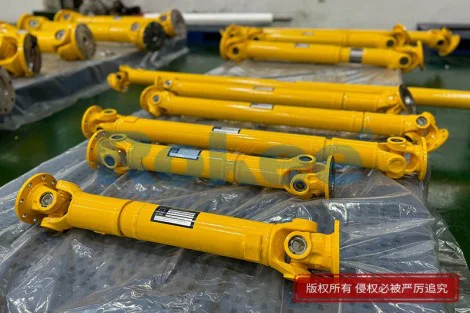
The fundamental function of a universal shaft coupling in PUF sandwich panel manufacturing machines is to connect two rotating shafts that are not collinear, allowing them to rotate together while transmitting torque efficiently. Unlike rigid couplings, which require precise alignment and can easily fail under misalignment or thermal stress, universal shaft couplings are engineered with a flexible structure that can compensate for angular, axial, and radial misalignments. This flexibility is achieved through a combination of core components, including cross shafts, yokes, bearings, and telescopic sleeves, each working in tandem to absorb misalignments and distribute mechanical stress evenly across the coupling. In the context of PUF sandwich panel production, this flexibility is critical because the machinery’s shafts are often subjected to thermal expansion as the temperature rises during the foam curing process. As the shafts expand or contract, the universal coupling adjusts to these changes, preventing the buildup of excessive stress that could lead to shaft bending, component damage, or loss of power transmission efficiency.
High temperature resistance is one of the most essential characteristics of a universal shaft coupling used in PUF sandwich panel manufacturing machine. The foaming and curing of polyurethane foam require temperatures that typically range between 120°C and 180°C, and in some cases, even higher depending on the specific formulation of the foam and the desired properties of the final panel. This sustained exposure to high temperatures can have a detrimental effect on standard mechanical components, causing materials to degrade, lubricants to break down, and structural integrity to weaken over time. To address this, universal shaft couplings designed for this application are constructed using high-temperature resistant materials and advanced manufacturing processes that ensure they can operate reliably in these harsh conditions without compromising performance or longevity.
The selection of materials is a key factor in achieving high temperature resistance in universal shaft couplings for PUF sandwich panel manufacturing machines. Traditional couplings often use standard carbon steel, which can lose strength and become brittle when exposed to sustained high temperatures. In contrast, couplings designed for high-temperature applications are typically made from high-strength alloy steels, such as 42CrMo or 304 stainless steel, which offer superior heat resistance, corrosion resistance, and mechanical strength even at elevated temperatures. These alloy steels undergo specialized heat treatment processes, such as quenching and tempering, to enhance their hardness, toughness, and resistance to thermal fatigue. Additionally, the bearings and other moving components within the coupling are often made from heat-resistant materials, such as ceramic or high-temperature alloy bearings, which can withstand the extreme temperatures without seizing or wearing prematurely. The use of these advanced materials ensures that the coupling remains stable and functional even after prolonged exposure to the high temperatures encountered in PUF sandwich panel production.
Another critical aspect of high temperature resistance in universal shaft couplings is the design of the lubrication system. Lubricants play a vital role in reducing friction between moving components, preventing wear, and dissipating heat. However, standard lubricants can break down at high temperatures, losing their viscosity and lubricating properties, which can lead to increased friction, component wear, and eventual failure. To address this, universal shaft couplings for PUF sandwich panel manufacturing machines are equipped with high-temperature lubrication systems that use specialized lubricants, such as molybdenum disulfide-based greases or synthetic oils, which are formulated to maintain their lubricating properties at temperatures up to 250°C or higher. These lubricants also have excellent thermal stability, ensuring that they do not oxidize or degrade over time, even under sustained high-temperature exposure. Additionally, the coupling design often includes sealed bearing systems, such as triple maze seals or fluororubber lip seals, which prevent the entry of dust, foam particles, and other contaminants that could compromise the lubrication system and cause premature wear.
In addition to high temperature resistance, universal shaft couplings for PUF sandwich panel manufacturing machines must also adapt to the complex and dynamic working conditions that are inherent in the production process. These conditions include varying operational loads, frequent start-stop cycles, vibration, and the presence of dust, foam residues, and other contaminants. The coupling must be able to withstand these challenges while maintaining consistent performance and reliability. One of the key design features that enables this adaptability is the angular compensation capability of the coupling. Most universal shaft couplings can accommodate angular misalignments between 5° and 45°, depending on the design, which allows them to adapt to the misalignments caused by thermal expansion, installation errors, and mechanical stress. This angular compensation ensures that torque is transmitted smoothly and efficiently, even when the shafts are not perfectly aligned, reducing the risk of vibration and component wear.
Vibration is a common issue in PUF sandwich panel manufacturing machines, as the rotating components and the foaming process can generate significant vibration that can affect the performance of the machinery and the quality of the final product. Universal shaft couplings are designed to absorb and dampen these vibrations, thanks to their flexible structure and the use of vibration-damping materials. The cross shaft and bearing assembly, for example, acts as a buffer, absorbing the impact of vibration and preventing it from being transmitted to other components of the machine. This vibration-damping capability not only protects the coupling itself but also extends the lifespan of other critical components, such as motors, gearboxes, and shafts, reducing maintenance costs and improving overall machine reliability. Additionally, the compact design of most universal shaft couplings allows them to fit into tight spaces within the machinery, making them suitable for the complex layouts of PUF sandwich panel manufacturing machines, where space is often limited.
The reliability and durability of universal shaft couplings are essential for ensuring uninterrupted production in PUF sandwich panel manufacturing. Downtime caused by coupling failure can result in significant losses, as it disrupts the entire production line and delays the delivery of finished products. To enhance reliability, universal shaft couplings are designed with robust construction and high-quality components that can withstand the rigors of continuous operation. The cross shaft, which is the core component of the coupling, is typically forged from high-strength alloy steel to ensure maximum strength and durability, while the yokes are precision-machined to ensure a tight fit with the shafts and the cross shaft. Additionally, the bearings are selected for their high load-carrying capacity and resistance to wear, ensuring that they can withstand the continuous rotational motion and the high temperatures encountered in the production process.
Another factor that contributes to the reliability of universal shaft couplings in PUF sandwich panel manufacturing is their ability to handle varying operational loads. The production process often involves changes in load, such as when the machine switches from feeding raw materials to pressing the panels, which can place additional stress on the coupling. Universal shaft couplings are designed to accommodate these load variations, with a high torque capacity that allows them to transmit the required power even during peak load conditions. The use of high-strength materials and robust design ensures that the coupling does not fail under sudden load spikes, which can occur when the foam cures unevenly or when there is a blockage in the production line. Additionally, the telescopic sleeve design, which is often incorporated into the coupling, allows for axial displacement, accommodating the changes in shaft length caused by thermal expansion and load variations.
Maintenance is an important consideration for ensuring the long-term performance of universal shaft couplings in PUF sandwich panel manufacturing machines. While these couplings are designed to be durable and reliable, regular maintenance is necessary to prevent premature wear and failure. The high-temperature environment and the presence of contaminants can accelerate wear on the coupling components, so regular inspection and lubrication are essential. Maintenance tasks typically include checking the lubrication level and condition, inspecting the bearings for wear or damage, checking the cross shaft for signs of fatigue or corrosion, and ensuring that all fasteners are tight. Additionally, the seals should be inspected regularly to ensure that they are functioning properly and preventing the entry of contaminants. By following a regular maintenance schedule, operators can identify potential issues early, before they develop into major problems that could cause downtime.
The performance of the universal shaft coupling directly impacts the quality of the PUF sandwich panels produced. A reliable and efficient coupling ensures that the machinery operates smoothly, with consistent torque transmission and minimal vibration, which translates to consistent panel thickness, density, and thermal insulation properties. If the coupling fails or performs poorly, it can lead to uneven panel formation, inconsistent foam curing, and even damage to the panels, resulting in wasted materials and increased production costs. For example, if the coupling cannot accommodate misalignments or withstand high temperatures, it may cause the shafts to vibrate excessively, leading to uneven pressing of the panels and variations in thickness. This can compromise the structural integrity and thermal insulation performance of the panels, making them unsuitable for their intended application.
In recent years, advancements in materials science and manufacturing technology have led to the development of more advanced universal shaft couplings that offer even better performance in high-temperature and complex conditions. These advancements include the use of new high-temperature alloys that offer superior strength and corrosion resistance, the development of improved lubrication systems that require less maintenance, and the integration of advanced monitoring technologies that allow operators to track the performance of the coupling in real time. For example, some modern couplings are equipped with sensors that monitor temperature, vibration, and torque, providing real-time data that can be used to identify potential issues before they cause failure. This predictive maintenance capability helps to reduce downtime and improve the overall efficiency of the production process.
The adaptability of universal shaft couplings to different types of PUF sandwich panel manufacturing machines is another key advantage. These machines come in various sizes and configurations, depending on the production capacity and the specific type of panels being produced. Universal shaft couplings can be customized to meet the specific requirements of different machines, including different torque capacities, angular compensation ranges, and size specifications. This customization ensures that the coupling is perfectly suited to the machine’s operational needs, maximizing performance and reliability. Whether the machine is a small-scale production line for residential panels or a large-scale industrial machine for commercial applications, there is a universal shaft coupling designed to meet its specific requirements.
In conclusion, the universal shaft coupling is a critical component in PUF sandwich panel manufacturing machines, playing a vital role in ensuring reliable torque transmission, accommodating misalignments, and withstanding the high temperatures and complex conditions inherent in the production process. Its high temperature resistance, achieved through the use of advanced materials and specialized lubrication systems, allows it to operate reliably in the harsh environment of PUF foam curing, while its flexibility and adaptability ensure that it can handle the dynamic operational conditions, including misalignments, vibration, and varying loads. The reliability and durability of the universal shaft coupling directly impact the efficiency of the production process and the quality of the final product, making it an indispensable element in modern PUF sandwich panel manufacturing. As manufacturing technology continues to advance, the design and performance of universal shaft couplings will continue to improve, further enhancing the efficiency and reliability of PUF sandwich panel production, and supporting the development of more sustainable and energy-efficient building materials.