Cardan Driveshaft for PUF Sandwich Panel Line Extend Equipment Service Life

In the realm of modern industrial production, the PUF sandwich panel line stands as a critical assembly for manufacturing high-performance building materials, widely used in construction, cold storage, and industrial workshops due to its excellent thermal insulation, structural strength, and lightweight properties. The smooth and continuous operation of this production line directly determines the efficiency of manufacturing and the quality of the final products. Among the numerous mechanical components that constitute the PUF sandwich panel line, the cardan driveshaft, also commonly referred to as the universal joint driveshaft, plays an indispensable role in power transmission. It serves as the vital link connecting different sections of the production line, such as the uncoiling system, roll forming unit, foaming station, lamination mechanism, and cutting equipment, ensuring that power is transmitted stably and efficiently even when there are angular deviations or positional offsets between the driving and driven shafts. However, many production facilities often overlook the importance of the cardan driveshaft in extending the overall service life of the PUF sandwich panel line. In fact, proper selection, installation, operation, and maintenance of the cardan driveshaft can significantly reduce equipment downtime, minimize wear and tear on related components, and ultimately extend the service life of the entire production line, bringing long-term economic benefits to enterprises.
To understand how the cardan driveshaft contributes to extending the service life of the PUF sandwich panel line, it is first necessary to clarify the working characteristics of the PUF sandwich panel production process and the core functions of the cardan driveshaft within this system. The PUF sandwich panel production line is a complex integrated system that involves multiple sequential processes, including the uncoiling of facing materials (such as steel sheets or aluminum sheets), roll forming to shape the facing materials into the desired profile, preheating to ensure optimal bonding conditions, PUF (polyurethane foam) foaming and filling between the two facing layers, lamination to bond the facing materials and foam core tightly, curing to stabilize the structure, and finally cutting to the required length. Each of these processes requires a stable and consistent power supply to ensure the synchronization and accuracy of operations. The challenge lies in the fact that the various subsystems of the production line are often not installed on the same axis due to spatial constraints and process requirements, resulting in angular misalignment, parallel offset, or axial displacement between the driving shaft (connected to the motor) and the driven shafts (connected to each functional unit). Rigid driveshafts, which require precise coaxial alignment, are unable to adapt to such misalignments and would quickly suffer from excessive wear, vibration, or even breakage, leading to production interruptions. In contrast, the cardan driveshaft, with its unique articulated structure consisting of universal joints and a central shaft, can effectively compensate for angular misalignment (typically within a range of 5° to 45° depending on the design), parallel offset, and axial movement, ensuring smooth power transmission even under dynamic operating conditions.
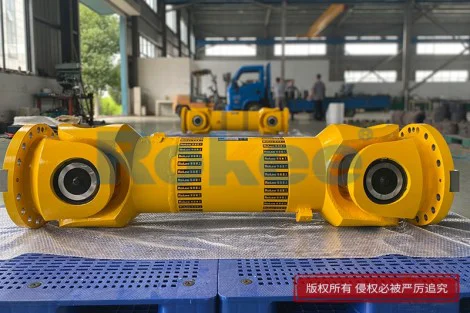
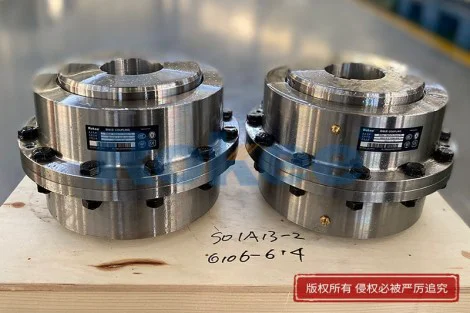
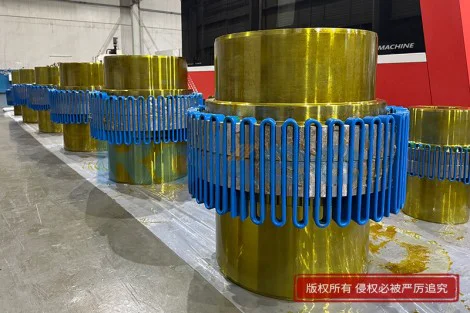
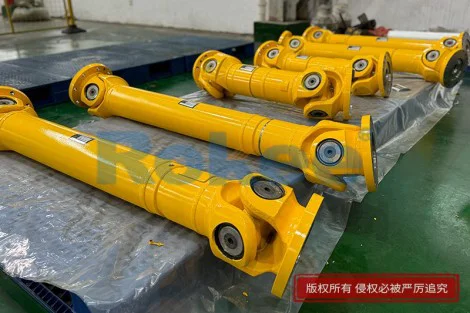
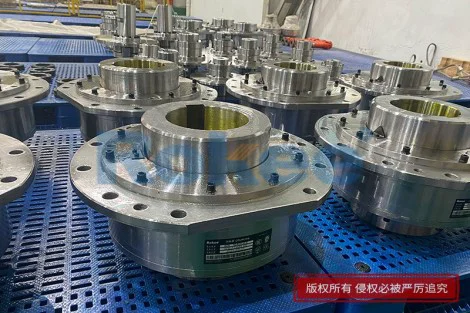
The key structural components of the cardan driveshaft that enable its reliable performance in the PUF sandwich panel line include the universal joints (cross shafts or ball cage structures), the central shaft, spline connections, and sealing elements. The universal joints are the core of the cardan driveshaft, allowing for rotational movement at varying angles between the driving and driven shafts. Cross shaft universal joints, composed of two fork-shaped yokes and a cross shaft with needle bearings, are commonly used in heavy-duty industrial applications such as PUF sandwich panel lines due to their high load-bearing capacity and durability. Ball cage universal joints, on the other hand, offer smoother transmission at higher speeds but are more commonly used in precision applications where vibration needs to be minimized. The central shaft, typically made of heat-treated alloy steel, is designed to withstand high torque and bending forces, ensuring that power is transmitted without deformation or failure. Spline connections between the central shaft and the universal joints allow for axial compensation, accommodating changes in the distance between the driving and driven shafts caused by thermal expansion or structural deflection during operation. Sealing elements, such as oil seals and dust covers, prevent contaminants such as dust, moisture, and foam residues from entering the universal joints and spline connections, which would otherwise cause premature wear and corrosion.
One of the primary ways in which the cardan driveshaft extends the service life of the PUF sandwich panel line is by reducing vibration and stress on the entire transmission system. Vibration is a major cause of premature wear and failure in industrial equipment, as it leads to increased friction between moving parts, loosening of fasteners, and fatigue damage to structural components. In the PUF sandwich panel line, any vibration in the transmission system can affect the accuracy of roll forming, the uniformity of foam filling, and the quality of lamination, leading to defective products and increased wear on equipment such as bearings, gears, and motors. The cardan driveshaft’s ability to compensate for misalignments ensures that power is transmitted smoothly, minimizing vibration and reducing the stress on connected components. Unlike rigid driveshafts, which transfer vibration directly from the motor to the driven units, the cardan driveshaft’s flexible structure absorbs and dampens vibrations, protecting the entire production line from the harmful effects of excessive vibration. This not only extends the service life of the cardan driveshaft itself but also reduces the wear and tear on other critical components, such as motors, gearboxes, and bearings, thereby extending the overall service life of the production line.
Another crucial factor in the cardan driveshaft’s role in extending equipment service life is its ability to handle variable loads and operating conditions. The PUF sandwich panel line often operates under varying load conditions, such as when changing the thickness or width of the panels, adjusting the foaming density, or starting and stopping the line. These variable loads can cause sudden torque spikes, which can damage rigid transmission components. The cardan driveshaft, with its robust design and flexible structure, can absorb these torque spikes and distribute the load evenly across its components, preventing localized stress concentrations that would lead to premature failure. For example, during the start-up of the production line, the motor generates a sudden surge in torque, which the cardan driveshaft can accommodate through its universal joints and spline connections, reducing the impact on the motor and other connected equipment. Similarly, when the production line is adjusted to produce different panel specifications, the cardan driveshaft can adapt to changes in torque and speed, ensuring stable operation without putting excessive strain on the system. This ability to handle variable loads and operating conditions makes the cardan driveshaft a reliable component that helps to prevent unexpected breakdowns and extend the service life of the entire production line.
Proper selection of the cardan driveshaft is also essential to ensuring its ability to extend the service life of the PUF sandwich panel line. The selection process must take into account several key factors, including the torque requirements of the production line, the maximum angular misalignment between the driving and driven shafts, the operating speed, and the environmental conditions. Choosing a cardan driveshaft that is undersized for the application will result in excessive stress, premature wear, and frequent failures, while an oversized driveshaft will increase costs and may not fit within the spatial constraints of the production line. The torque capacity of the cardan driveshaft must be sufficient to handle both the nominal operating torque and the peak torque spikes that occur during start-up and operation. Additionally, the maximum allowable angular misalignment of the driveshaft must match the actual misalignment in the production line; exceeding this limit will lead to increased wear on the universal joints and reduced service life. The operating speed is also a critical factor, as higher speeds require driveshafts with better dynamic balance to minimize vibration. Environmental conditions, such as temperature, humidity, and the presence of dust or corrosive substances, should also be considered when selecting the material and sealing elements of the cardan driveshaft. For example, in production environments with high humidity or corrosive foam residues, the cardan driveshaft should be made of corrosion-resistant materials and equipped with high-quality sealing elements to prevent rust and contamination.
Even with the correct selection, improper installation of the cardan driveshaft can significantly reduce its service life and that of the entire PUF sandwich panel line. Installation errors, such as incorrect alignment, improper torque on fasteners, or damage to sealing elements, can lead to excessive vibration, premature wear, and even catastrophic failure. During installation, it is crucial to ensure that the cardan driveshaft is aligned correctly with both the driving and driven shafts, within the allowable angular misalignment range. Laser alignment tools can be used to achieve precise alignment, ensuring that the shafts are parallel and concentric to the greatest extent possible. Fasteners, such as bolts and nuts, must be tightened to the specified torque to prevent loosening during operation, which can cause vibration and damage to the universal joints and spline connections. It is also important to inspect the sealing elements during installation to ensure they are intact and properly seated, preventing the entry of contaminants. Additionally, the cardan driveshaft should be installed with sufficient clearance to accommodate axial movement caused by thermal expansion, as insufficient clearance can lead to binding and excessive stress.
Regular maintenance is perhaps the most important factor in ensuring that the cardan driveshaft continues to extend the service life of the PUF sandwich panel line. Like all mechanical components, the cardan driveshaft is subject to wear and tear over time, and regular maintenance can prevent minor issues from developing into major failures. The maintenance schedule for the cardan driveshaft should include regular inspections, lubrication, and replacement of worn components. Inspections should be conducted at regular intervals to check for signs of wear, such as excessive play in the universal joints, wear on the spline connections, damage to the sealing elements, or cracks in the central shaft. Any signs of wear should be addressed immediately to prevent further damage. Lubrication is critical to reducing friction between the moving parts of the cardan driveshaft, such as the universal joint bearings and spline connections. The type of lubricant used should be appropriate for the operating conditions, such as high-temperature lithium-based extreme pressure (EP) grease, which provides excellent protection against wear and corrosion. Lubrication should be performed at regular intervals, typically every 200 to 500 operating hours, depending on the application, and the old lubricant should be completely flushed out to remove contaminants. The lubrication process should ensure that all moving parts are adequately lubricated, with excess lubricant being expelled to prevent the accumulation of dirt and debris. In addition to regular inspections and lubrication, worn components such as universal joints, bearings, and seals should be replaced promptly to maintain the performance of the cardan driveshaft.
Common issues that can affect the service life of the cardan driveshaft in PUF sandwich panel lines include excessive misalignment, insufficient lubrication, contamination, and overload. Excessive misalignment, whether angular or parallel, is one of the most common causes of premature failure, as it leads to uneven load distribution on the universal joints, increased friction, and heat generation. This can be prevented through proper installation and regular alignment checks, especially after any adjustments or maintenance to the production line. Insufficient lubrication is another major cause of premature wear, as it results in dry friction between moving parts, leading to increased wear and tear on the universal joints and spline connections. To avoid this, it is essential to follow the recommended lubrication schedule and use the correct type of lubricant. Contamination, such as dust, moisture, or foam residues, can cause corrosion and wear on the cardan driveshaft components, particularly the universal joints and spline connections. This can be prevented by ensuring that the sealing elements are intact and by regularly cleaning the driveshaft to remove any accumulated debris. Overload, caused by operating the production line beyond its designed capacity or by sudden torque spikes, can lead to bending or breaking of the central shaft or universal joints. This can be prevented by ensuring that the cardan driveshaft is properly sized for the application and by avoiding sudden starts and stops whenever possible.
In addition to the direct benefits of reducing downtime and extending equipment service life, a well-maintained cardan driveshaft also contributes to improving the overall efficiency and productivity of the PUF sandwich panel line. By ensuring stable and efficient power transmission, the cardan driveshaft helps to maintain consistent production speeds and product quality, reducing the number of defective products and the need for rework. This not only increases productivity but also reduces production costs, as less time and resources are spent on repairs and rework. Furthermore, a reliable cardan driveshaft reduces the risk of unexpected breakdowns, which can lead to costly production delays and lost revenue. In industrial environments where downtime can cost thousands of dollars per hour, the ability of the cardan driveshaft to prevent such breakdowns is invaluable.
It is also important to note that the service life of the cardan driveshaft is closely linked to the overall maintenance of the PUF sandwich panel line. A well-maintained production line, with properly aligned components, clean operating conditions, and regular maintenance of all mechanical parts, will reduce the stress on the cardan driveshaft and extend its service life. Conversely, a poorly maintained production line, with misaligned components, contaminated operating conditions, and neglected maintenance, will place excessive stress on the cardan driveshaft, leading to premature failure. Therefore, enterprises should adopt a comprehensive maintenance strategy that includes regular inspections and maintenance of all components of the production line, including the cardan driveshaft, to ensure the long-term reliability and efficiency of the equipment.
In conclusion, the cardan driveshaft is a critical component of the PUF sandwich panel line, playing a vital role in ensuring stable and efficient power transmission, reducing vibration and stress on the system, and handling variable loads and operating conditions. By selecting the correct cardan driveshaft, installing it properly, and performing regular maintenance, enterprises can significantly extend the service life of the PUF sandwich panel line, reduce downtime and maintenance costs, and improve overall productivity and product quality. The cardan driveshaft may be a relatively small component compared to the entire production line, but its impact on the reliability and longevity of the equipment is profound. Investing time and resources in the proper selection, installation, and maintenance of the cardan driveshaft is a cost-effective way to ensure the long-term success of PUF sandwich panel manufacturing operations.