Hoist Drum Coupling

As an indispensable core component in the power transmission system of hoisting and material handling equipment, the hoist drum coupling undertakes the critical task of connecting the reducer output shaft and the wire rope drum, serving as the key transmission medium that converts mechanical power into the rotational motion required for lifting operations. Unlike ordinary transmission couplings that only focus on simple torque transmission, this specialized coupling is designed to adapt to the complex and variable working conditions of hoisting machinery, integrating multiple functional advantages such as torque transmission, load bearing, misalignment compensation and operational stability control, which directly determines the operating efficiency, safety and service life of the entire hoisting mechanism. In the whole mechanical transmission chain of hoisting equipment, the motor provides original power, the reducer adjusts torque and speed to meet lifting requirements, and the hoist drum coupling stably transmits the optimized power to the drum, driving the wire rope to complete winding and unwinding movements, so as to realize the lifting, lowering and horizontal handling of heavy loads. Its structural design and working performance play a decisive role in avoiding transmission failure, reducing mechanical vibration and ensuring continuous and stable operation of equipment.
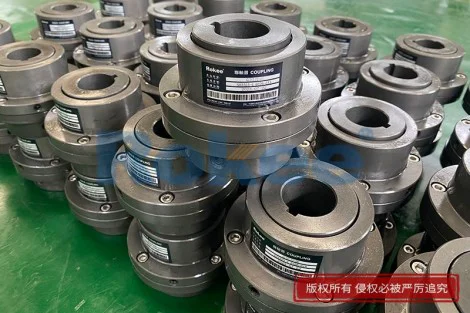
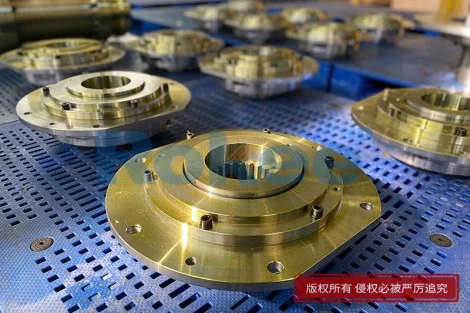
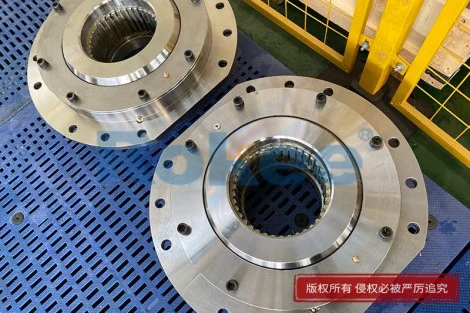
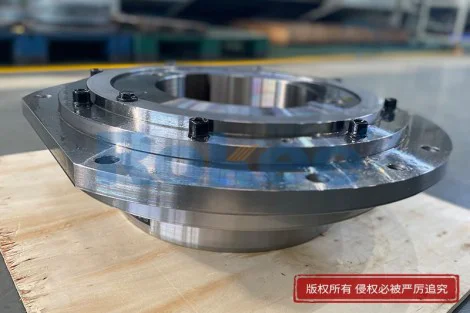
The basic structural composition of the hoist drum coupling is derived from the optimized design of flexible transmission components, abandoning the overly rigid connection mode of traditional couplings and adopting a composite structure combining drum-shaped tooth meshing or spherical roller transmission with sealing and fastening components. The core transmission part is composed of an outer tooth sleeve with smooth drum-shaped arc teeth and an inner gear ring flange, forming a precise meshing pair that bears the main torque transmission load. The drum-shaped arc design of the outer teeth is the core structural innovation of this coupling. The spherical center corresponding to the arc tooth surface always coincides with the central axis of the gear shaft, which enables the tooth surface to maintain uniform contact stress during operation and avoid local stress concentration caused by rigid contact. In addition to the meshing transmission pair, the complete coupling system also includes fastening bolts, limit baffles, elastic buffer parts and closed sealing structures. All components cooperate with each other to form an integrated transmission unit that can adapt to dynamic loads. The overall structure is compact and does not occupy excessive axial installation space, which is very suitable for the limited installation space of hoisting equipment drum mechanisms. At the same time, the integrated structural design effectively simplifies the assembly process, reduces the number of external connecting parts, and improves the overall structural rigidity and operational synchronization of the transmission system.
The working principle of the hoist drum coupling follows the basic laws of mechanical power transmission and flexible compensation. In the actual operation of the equipment, the driving shaft connected with the reducer rotates synchronously with the outer tooth sleeve of the coupling, and the drum-shaped outer teeth mesh with the inner teeth of the inner gear ring flange in a continuous and uniform manner. Through the meshing friction and mechanical occlusion between tooth surfaces, the rotational torque and speed are stably transmitted to the inner gear ring flange, and then the torque is efficiently transmitted to the hoist drum through the flange connection structure, driving the drum to rotate steadily to complete wire rope winding and unwinding. Different from ordinary gear couplings with linear tooth profiles, the drum-shaped tooth structure can produce flexible displacement feedback during operation. When the driving shaft and the driven drum shaft have tiny position deviations caused by equipment assembly errors, component wear or dynamic load shaking, the arc tooth surface can automatically adapt to radial, axial and angular misalignment changes. This flexible compensation function eliminates the rigid extrusion and friction between transmission parts, avoids additional bending stress and shear stress generated by misalignment operation, and ensures that the power transmission process is always kept smooth and stable without obvious power loss.
In actual working scenarios, hoisting equipment often faces frequent start-stop operations, sudden load changes and intermittent impact loads, which puts forward higher requirements on the impact resistance and fatigue resistance of transmission components. The hoist drum coupling is well adapted to such harsh working characteristics. When the equipment starts or stops suddenly, the elastic coordination between its internal meshing structures and buffer parts can effectively absorb the instantaneous impact torque generated by power switching, avoid the rigid impact of torque on the reducer, drum and wire rope, and reduce the vibration and jitter of the entire equipment frame. During the continuous lifting operation, the coupling can bear continuous and alternating radial loads generated by heavy objects, maintain stable meshing state of internal transmission pairs under long-term dynamic load conditions, and will not produce tooth surface slipping or transmission lag due to load fluctuation. This excellent load-bearing capacity and impact resistance make it the preferred transmission component for heavy-duty hoisting mechanisms, effectively solving the problem of easy damage and short service life of traditional rigid couplings under frequent variable load conditions.
The functional advantages of hoist drum couplings are fully reflected in the practical operation and maintenance of hoisting equipment. First of all, its efficient and loss-free torque transmission performance ensures that the power output by the reducer can be maximally transmitted to the drum, avoiding power waste caused by transmission resistance and improving the overall operating efficiency of the equipment. Secondly, the precise misalignment compensation function can effectively offset the position deviation caused by equipment installation errors, long-term operation wear and mechanical deformation, ensure the coaxiality of the transmission shaft system, reduce the eccentric wear of bearings, shafts and other matching parts, and greatly extend the service life of the entire transmission system. In addition, the coupling has a reliable axial limit function, which can effectively restrict the axial displacement of the hoist drum during operation, prevent the drum from shifting left and right due to load shaking, avoid the disorderly winding and abrasion of the wire rope, and reduce the failure rate of rope skipping and rope pressing in the hoisting mechanism. The closed sealing structure equipped with the coupling can effectively block external dust, moisture and particulate impurities from entering the internal meshing area, prevent tooth surface abrasion, corrosion and lubricant deterioration, and maintain the long-term stable working state of the internal transmission pair.
The application scope of hoist drum couplings covers almost all types of mechanical hoisting mechanisms, and shows excellent adaptability in different working environments and load conditions. In conventional industrial hoisting equipment, it is widely used in the drum transmission system of various lifting machinery, realizing stable power transmission for daily heavy object handling and lifting operations. In continuous-duty hoisting scenarios such as port cargo handling and workshop frequent loading and unloading, the coupling can adapt to long-term uninterrupted operation and high-frequency start-stop working modes, maintain stable transmission performance under continuous alternating loads, and ensure the continuity and efficiency of industrial production. For outdoor and harsh working environments with dust, humidity and temperature changes, its good sealing performance and structural stability can resist the influence of external environmental factors, reduce component aging and failure caused by environmental erosion, and improve the environmental adaptability of hoisting equipment. Whether it is light-load intermittent operation or heavy-load continuous operation, the coupling can adjust its stress state through internal flexible structural characteristics, always maintain efficient and stable transmission, and meet the diversified operation requirements of different hoisting equipment.
Daily maintenance and reasonable use are key factors to ensure the long-term stable performance of hoist drum couplings and extend their service life. In the routine operation and maintenance of equipment, regular inspection of the coupling's operating state is essential. It is necessary to regularly observe whether there is abnormal vibration, noise and local heating during the operation of the coupling. Once there is irregular vibration or sharp friction noise, it indicates that the internal meshing pair may be worn, misaligned or lack of lubrication, and timely inspection and adjustment are required. Lubrication maintenance is the core of coupling daily maintenance. Good lubrication can reduce the friction coefficient of the meshing tooth surface, reduce wear loss, and play a role in heat dissipation and buffer impact. It is necessary to select matching lubricating media according to the operating characteristics of the equipment, and regularly replenish and replace lubricants to avoid dry friction operation caused by lubricant failure. At the same time, the sealing performance of the coupling should be checked regularly to ensure that the sealing elements are intact and free of aging and damage, so as to prevent external impurities from entering the interior and polluting the lubricating system and wearing the transmission parts.
In addition to daily maintenance, standardized installation and commissioning are also important prerequisites for giving full play to the performance of the hoist drum coupling. During the installation process, the coaxiality of the reducer shaft and the drum shaft must be strictly calibrated to reduce the initial misalignment error, so that the coupling can work in the optimal stress state and avoid excessive local load caused by installation deviation. The fastening bolts of the coupling need to be tightened evenly according to the assembly requirements to ensure stable connection between components and prevent bolt loosening caused by long-term vibration, which leads to transmission failure. After installation, no-load trial operation and load test operation must be carried out to check the stability of torque transmission and the flexibility of misalignment compensation, adjust the abnormal parts in time, and ensure that the coupling can adapt to the formal working load. In the long-term use process, regular disassembly and inspection should be carried out according to the equipment operation cycle to check the wear degree of the drum-shaped tooth surface, spherical roller and buffer parts, replace the severely worn components in time, and avoid hidden safety hazards caused by component aging and wear.
With the continuous upgrading of industrial mechanical equipment towards high efficiency, stability and intelligence, the performance optimization of hoist drum couplings is also constantly advancing. Modern optimized hoist drum couplings adopt more precise tooth surface processing technology and high-strength wear-resistant materials, which further improve the torque bearing capacity, wear resistance and fatigue resistance of the products. The optimized tooth surface arc design makes the meshing contact area more uniform, the stress distribution more reasonable, and the misalignment compensation range more accurate, which can adapt to higher frequency and higher load hoisting operation requirements. At the same time, the structural design is more lightweight and integrated, which not only ensures structural rigidity and load-bearing capacity, but also reduces the overall self-weight of the coupling, reduces the additional load of the transmission system, and improves the energy-saving effect of equipment operation. Some optimized structures also add wear monitoring and early warning functions, which can feed back the internal wear state of the coupling in real time, help maintenance personnel accurately judge the component aging degree, realize predictive maintenance, and avoid sudden equipment failure.
In the entire field of hoisting machinery transmission, the hoist drum coupling is a small but vital component, whose performance is related to the operational safety and working efficiency of the entire equipment. It solves many pain points in the traditional drum transmission system, such as poor misalignment adaptability, weak impact resistance, easy wear and short service life, and provides a stable and reliable transmission guarantee for hoisting equipment through flexible transmission, precise compensation and efficient load-bearing characteristics. In industrial production and material handling scenarios that rely heavily on hoisting machinery, the stable operation of hoist drum couplings effectively reduces equipment failure rates, lowers later maintenance costs, improves the continuity of production operations, and creates stable operational benefits for industrial production. With the continuous development of mechanical manufacturing technology, the structural design and performance of hoist drum couplings will continue to be innovated and improved, adapting to the increasingly stringent operating requirements of modern high-efficiency and high-precision hoisting equipment, and providing more solid technical support for the safe and stable operation of industrial hoisting machinery.