Barrel Coupling For Hoist

Barrel couplings serve as indispensable transmission components for hoist systems, undertaking the core task of stable torque transmission between driving and driven shafts in lifting machinery. Designed specifically to adapt to the harsh and variable operating conditions of hoist equipment, this coupling type effectively addresses common mechanical challenges in lifting operations, including shaft misalignment, frequent start-stop cycles, and alternating load impacts. Its unique spherical barrel contact structure differentiates it from traditional coupling designs, enabling flexible compensation for minor axial, radial, and angular deviations generated during hoist installation and long-term operation. By optimizing force distribution and reducing mechanical friction, barrel couplings significantly enhance the operational stability of hoist systems, minimize transmission vibration and noise, and extend the service life of core mechanical parts. As a key guarantee for the safe and efficient operation of industrial lifting equipment, it is widely applied in various heavy-duty hoist scenarios that require continuous and reliable power transmission.
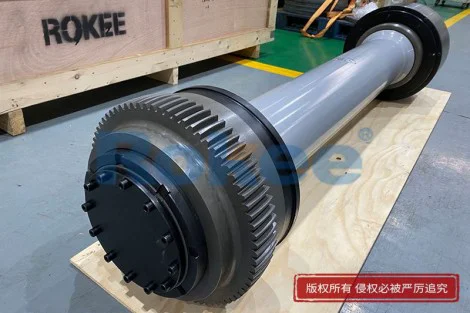
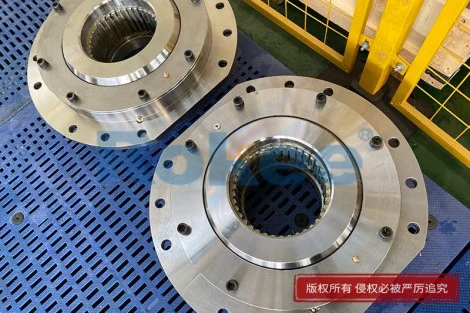
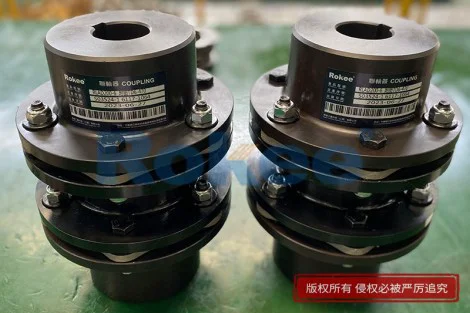
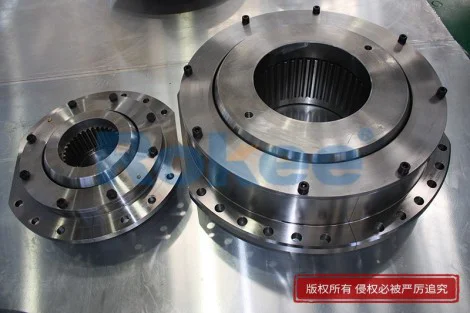
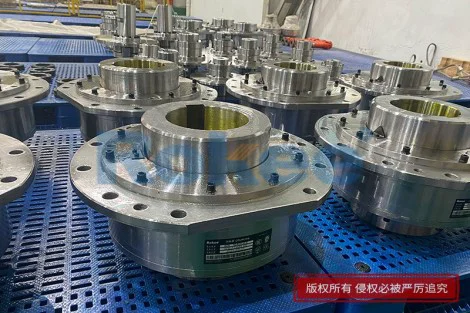
The structural design of barrel couplings for hoist systems is highly targeted at heavy-load lifting working conditions, featuring a compact and robust integrated assembly structure with multiple core functional components cooperating synergistically. The main components include a precision-machined inner hub, an outer sleeve with semicircular tooth grooves, and a set of hardened spherical barrel rolling elements embedded between the hub and sleeve. The inner hub is tightly matched with the driving shaft of the hoist, while the outer sleeve connects stably with the driven shaft and winding drum, forming a complete power transmission loop. Different from conventional gear couplings that rely on linear tooth meshing, the spherical barrels adopt a full-surface contact mode during operation, which disperses concentrated mechanical stress effectively and avoids local fatigue damage caused by long-term heavy load impact. Additionally, the coupling is equipped with professional sealing and lubrication auxiliary structures, including closed sealing rings and reserved lubrication holes. The sealing structure prevents external dust, debris and moisture from entering the internal transmission gap, while the lubrication system maintains smooth rolling of internal components, reducing wear and friction loss in continuous hoist operation. All structural parts are processed with high-strength materials and precision finishing, ensuring structural rigidity and deformation resistance under long-term alternating loads.
The working principle of barrel couplings in hoist operation centers on flexible torque transmission and automatic misalignment compensation, which adapts to the dynamic operating characteristics of lifting equipment. When the hoist starts to operate, the driving motor and reducer drive the inner hub to rotate synchronously, and the rotational torque is stably transmitted to the outer sleeve through the uniformly arranged spherical barrel rolling elements. These spherical barrels act as floating transmission media, rolling flexibly in the semicircular grooves of the hub and sleeve rather than rigid meshing or fixed connection. This special transmission mode allows the coupling to automatically adapt to various shaft deviations inevitably generated in hoist system operation, including installation errors, thermal expansion and contraction of components after long-time operation, and slight shaft displacement caused by equipment foundation vibration. In the frequent start-stop, forward and reverse switching processes of hoists, the floating barrel structure can buffer instantaneous torque impact, avoid rigid collision between transmission components, and reduce peak load on the entire transmission system. While ensuring efficient and uninterrupted power transmission, this working mechanism effectively reduces mechanical vibration and operation noise, realizing smooth and stable lifting and lowering actions of hoist loads.
Barrel couplings exhibit prominent performance advantages in hoist system applications, making them superior to many traditional coupling types for lifting machinery. First of all, its excellent misalignment compensation capability is the core advantage for hoist working conditions. The flexible floating structure can simultaneously compensate axial, radial and angular deviations within a reasonable range, eliminating additional mechanical stress caused by shaft misalignment and avoiding abnormal wear and vibration of hoist transmission parts. Secondly, the full-surface contact transmission mode of spherical barrels realizes uniform load distribution, greatly improving the coupling’s heavy-load resistance and fatigue resistance. It can stably withstand long-term alternating loads and instantaneous impact loads during hoist lifting, effectively preventing component deformation and failure. In addition, the coupling has low transmission resistance and high power transmission efficiency. The smooth rolling of internal barrels reduces mechanical friction loss, ensuring that most of the power output by the driving device is accurately transmitted to the hoist winding drum, improving the overall working efficiency of lifting equipment. Meanwhile, the integrated sealing and lubrication design endows the coupling with good environmental adaptability, enabling stable operation in complex working environments such as dust and humidity common in industrial lifting sites.
In practical hoist system matching and application, barrel couplings have strong adaptability to different types of lifting equipment and working scenarios. They are compatible with various conventional hoist transmission structures, including electric hoists, industrial winches and heavy-duty lifting winders, and can be perfectly matched with different power-level driving devices and winding drum components. In light and medium-load hoist scenarios such as workshop material handling and small equipment lifting, the compact structural design of barrel couplings saves installation space while maintaining stable transmission performance. In heavy-load and high-frequency operation scenarios such as port cargo lifting and factory heavy equipment handling, their high-strength load-bearing capacity and anti-fatigue performance can fully meet the requirements of long-term continuous operation. Moreover, the structural universality of barrel couplings facilitates flexible installation and debugging. During hoist equipment assembly and later maintenance, the integrated modular structure simplifies the disassembly and assembly process, avoids complex debugging procedures, and reduces the difficulty of equipment assembly and daily maintenance. This wide application adaptability makes barrel couplings a universal and reliable transmission accessory for modern hoist systems.
Daily maintenance and wear monitoring of barrel couplings are crucial to maintaining the long-term stable operation of hoist systems, with standardized operation effectively extending the service life of components and avoiding equipment failures. The core of daily maintenance lies in regular lubrication management. Long-term rolling friction of internal barrel components will consume lubricating grease, and insufficient lubrication will lead to increased component wear, transmission jitter and noise. It is necessary to regularly supplement and replace professional lubricating grease according to equipment operation frequency, ensuring full lubrication of all contact surfaces. Meanwhile, the sealing structure should be inspected regularly to check for aging, deformation or damage of sealing rings, preventing lubricant leakage and external pollutants from entering the interior to cause component abrasion. In addition, regular visual and operational monitoring is required during equipment daily inspection. Operators need to observe whether there is abnormal vibration, noise or jitter during hoist operation, and check for loose fastening parts of the coupling. Timely adjustment and fastening of loose components can avoid aggravated equipment vibration and abnormal load. Regular cleaning of the coupling surface and surrounding dust and debris also helps maintain good heat dissipation and operating environment.
The fault tolerance and safety protection performance of barrel couplings provide reliable guarantee for the safe operation of hoist systems in complex working conditions. In the actual operation of lifting equipment, unexpected working conditions such as overload instant impact, accidental load jitter and slight shaft displacement often occur, and the flexible structure of barrel couplings can effectively buffer and absorb these abnormal mechanical impacts. When the hoist bears instantaneous overload torque, the floating spherical barrel structure can appropriately release local stress, avoid rigid damage to key transmission components such as motors, reducers and winding drums, and play a good mechanical overload protection role. Different from rigid couplings that are prone to sudden fracture and failure under impact load, barrel couplings have gradual wear characteristics. Minor component wear will not cause sudden transmission failure, allowing equipment maintenance personnel to discover potential risks through daily inspection and carry out maintenance in advance. This passive safety protection performance effectively reduces the probability of sudden equipment failure and accidental shutdown. At the same time, the stable transmission performance of the coupling avoids load shaking and lifting jitter caused by unstable power transmission, ensuring stable lifting of materials and reducing safety risks in hoist operation.
With the continuous upgrading of modern industrial lifting equipment, the application value and technical optimization space of barrel couplings for hoists are constantly expanding. Modern hoist systems are developing towards high frequency operation, heavy load and high precision stable lifting, which puts forward higher requirements for the stability, durability and precision of supporting transmission components. Barrel couplings, with their unique flexible transmission and multi-dimensional compensation performance, can well adapt to the development trend of high-performance hoist equipment. Continuous optimization of material technology and structural design further improves the wear resistance, high temperature resistance and deformation resistance of barrel couplings, enabling them to adapt to more extreme industrial lifting working environments. In addition, the efficient transmission and low failure rate characteristics of barrel couplings help reduce the overall operation and maintenance cost of hoist equipment, improve the continuous operation efficiency of production lines, and create higher economic benefits for industrial production. As a core basic transmission component of lifting machinery, barrel couplings will continue to be optimized and upgraded with the progress of mechanical manufacturing technology, providing more reliable technical support for the safe and efficient operation of various hoist systems.