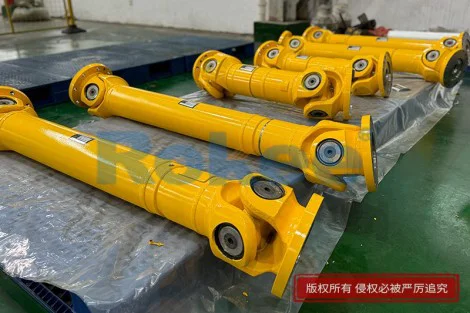
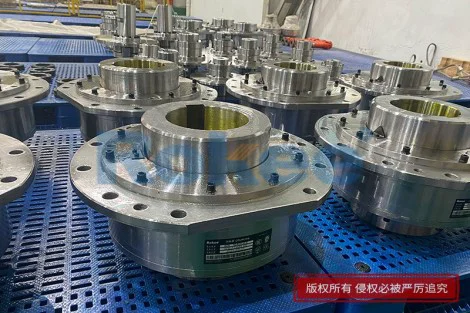
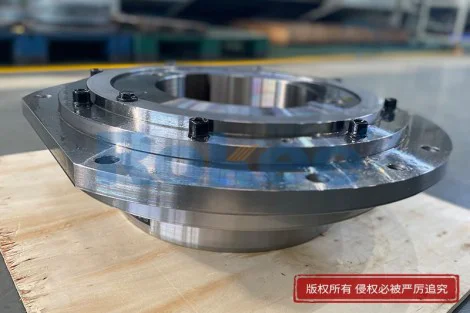
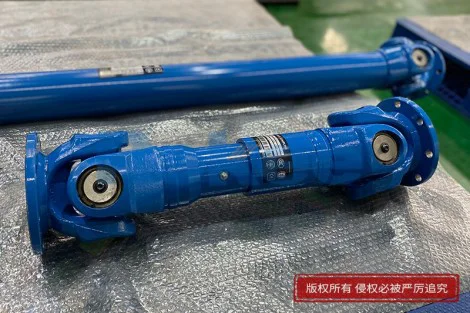
Barrel Type Coupling

In the complex and interconnected mechanical transmission systems that underpin modern industrial operations, the stability, efficiency, and durability of power transmission components directly determine the overall performance and service life of mechanical equipment. Among various mechanical transmission accessories, the barrel type coupling has emerged as a highly reliable and versatile connecting component, widely adopted in heavy-duty mechanical transmission scenarios that require stable torque output, strong impact resistance, and adaptive misalignment compensation. Unlike traditional rigid couplings that lack deformation tolerance and flexible couplings with limited load-bearing capacity, the barrel type coupling integrates the advantages of rigid power transmission and flexible adaptive adjustment, achieving an optimal balance between high rigidity torque transmission and automatic shaft deviation compensation, making it an indispensable core component in medium and heavy mechanical transmission systems.
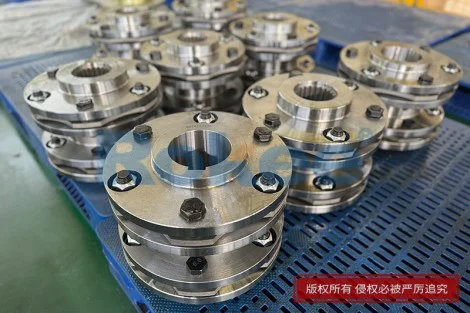
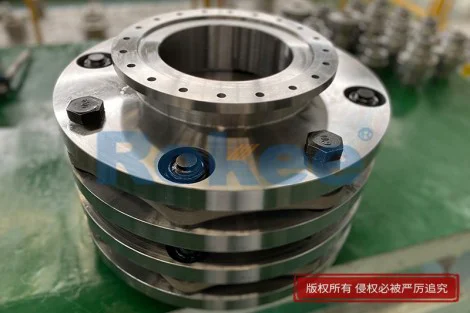
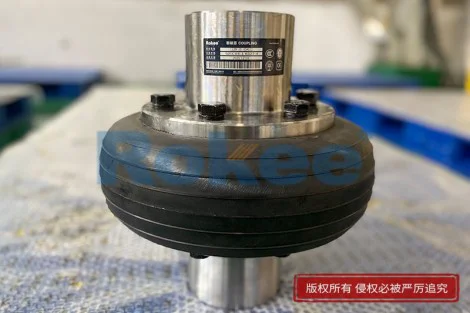
The basic structural composition of the barrel coupling is sophisticated and practical, with every part designed to serve efficient power transmission and stable operational adaptation. The core structure mainly consists of an outer sleeve with evenly distributed semicircular tooth grooves on the inner wall, a matching inner hub with curved external teeth, and multiple hardened cylindrical barrel rollers arranged between the tooth grooves and the hub teeth. These cylindrical barrels act as the key force-transmitting medium, filling the gap formed by the meshing structure of the inner and outer tooth surfaces. To ensure long-term stable operation of the internal structure, the coupling is equipped with specialized sealing covers and high-performance sealing components, which form a fully enclosed internal working space. This enclosed structure effectively isolates external dust, moisture, corrosive particles, and other pollutants, while locking internal lubricating grease to maintain continuous and effective lubrication of the meshing and rolling parts. Auxiliary elastic limiting parts are also installed inside the coupling to assist in positioning the internal components, avoid axial displacement during high-speed operation, and further enhance the overall operational stability of the equipment.
The working principle of the barrel type coupling is based on the organic combination of mechanical meshing transmission and flexible rolling adjustment, realizing efficient and stable power transmission between the driving shaft and the driven shaft. When the equipment is in operation, the rotational torque of the driving shaft is transmitted to the outer sleeve or inner hub of the coupling, and the torque is uniformly transferred to the matched meshing parts through the cylindrical barrel rollers. Different from the line contact or point contact transmission mode of traditional couplings, the barrel type coupling adopts a surface contact transmission structure formed by the fitting of curved tooth surfaces and cylindrical rollers. This structural feature enables the contact area of each force-bearing part to be maximized during torque transmission, making the stress distribution on all meshing surfaces uniform and balanced without local stress concentration or excessive partial pressure. In the process of power transmission, the barrel rollers produce a composite motion of rolling and slight sliding between the inner hub teeth and the outer sleeve tooth grooves. This unique motion mode not only ensures the high efficiency of torque transmission but also provides a certain buffer space for instantaneous load fluctuations, effectively absorbing the vibration and impact generated during equipment startup, shutdown, and load switching.
One of the most prominent core performances of the barrel type coupling is its excellent self-aligning and misalignment compensation capability, which solves the common operational problems caused by shaft position deviation in mechanical transmission systems. In actual equipment assembly and long-term operation, it is nearly impossible to maintain absolute coaxiality between the driving shaft and the driven shaft. Tiny installation deviations inevitably occur during manual assembly and equipment debugging. Moreover, long-term operational vibration, foundation settlement of mechanical equipment, thermal expansion and contraction of metal components under variable operating temperatures, and mechanical deformation caused by long-term heavy-load operation will all lead to axial, radial, and angular misalignment between the two connected shafts. These deviations, if not compensated in time, will generate additional alternating mechanical stress on the shaft system, bearings, and transmission components, accelerating component wear, inducing equipment vibration and noise, and even causing fatigue fracture of key parts in severe cases. The barrel type coupling relies on the flexible adaptive adjustment space formed by its internal curved tooth structure and movable barrel rollers, which can automatically adapt to various slight shaft misalignments during operation. It can effectively offset the additional mechanical stress caused by shaft deviation, protect the shaft system and supporting bearing components from abnormal load impacts, and greatly reduce the failure rate and wear loss of the transmission system.
In terms of load-bearing performance, the barrel type coupling exhibits outstanding heavy-load resistance and impact resistance, far exceeding many traditional coupling products in comprehensive bearing capacity. Benefiting from the optimized curved tooth surface design and uniform surface contact force-bearing mode, the coupling can stably transmit large torque for a long time under continuous heavy-load operating conditions. Its special structural layout enables each barrel roller and meshing tooth surface to bear loads evenly, avoiding the problem of individual parts bearing excessive pressure and premature damage. More importantly, this coupling structure can effectively withstand instantaneous impact loads, reverse loads, and inertial impact forces generated during equipment startup and sudden load changes. In frequent start-stop, forward-reverse switching, and variable-load operation scenarios, the internal rolling buffer structure can absorb most of the instantaneous impact force, prevent rigid collision between transmission parts, and maintain the continuity and stability of power transmission. This superior load-bearing and anti-impact performance makes it uniquely suitable for harsh industrial working conditions with complex load changes and severe operational vibration.
The overall structural design of the barrel type coupling embodies high integration and compactness, bringing multiple practical advantages for equipment installation and overall layout. The integrated internal transmission structure eliminates redundant intermediate transmission links, simplifies the overall composition of the mechanical transmission system, and effectively reduces the overall volume and weight of the equipment. The compact structural form not only saves installation space but also improves the structural rigidity of the transmission unit, avoiding operational instability caused by excessive structural clearance. In addition, the standardized and serialized structural design of the barrel type coupling enables it to match various conventional shaft diameters and transmission specifications, with strong universality and compatibility. It can be flexibly adapted to different types of mechanical equipment without complicated structural modification, greatly improving the convenience of equipment design and supporting application.
Sealing and lubrication performance is another key advantage of the barrel type coupling, laying a solid foundation for its long-term stable operation in harsh working environments. The fully enclosed sealing system composed of precision-matched sealing covers and special sealing accessories has excellent dust-proof, waterproof, and anti-corrosion capabilities. It can effectively block fine dust, industrial debris, humid air, and corrosive media in the external working environment from entering the internal transmission area, preventing abrasion and corrosion of precision meshing parts and rolling components. Meanwhile, the closed structure can stably store high-performance lubricating grease inside the coupling, avoiding lubricant loss and failure caused by external airflow and vibration. Long-term stable lubrication can reduce the friction coefficient between rolling and meshing parts, lower frictional wear and operating temperature, and inhibit the generation of fatigue cracks on the surface of mechanical parts. This reliable sealing and lubrication system greatly extends the service life of the coupling and reduces the frequency of equipment maintenance and part replacement.
In terms of installation, debugging, and daily maintenance, the barrel type coupling has obvious practical advantages, meeting the efficient operation and low-cost maintenance needs of modern industrial equipment. The overall structural assembly logic is simple and intuitive, with high structural adaptability during installation, allowing for convenient alignment and fine adjustment of shaft position. Compared with precision couplings that require extremely high installation accuracy, it has lower requirements for assembly precision and can still maintain stable working performance within the allowable deviation range. The disassembly and assembly process is convenient and fast, without the need for complex professional tools and complicated operation steps, which greatly improves the efficiency of equipment installation, overhaul, and component replacement. In daily operation, the fully enclosed structure can effectively reduce the impact of external environmental factors on internal parts, resulting in low daily wear and stable performance. Regular simple lubrication inspection and sealing condition check can ensure the long-term normal operation of the coupling, greatly reducing the time cost and labor cost of equipment maintenance.
The excellent comprehensive performance of the barrel type coupling makes it widely applied in multiple heavy industrial fields and mechanical equipment scenarios. In material handling and conveying equipment, it is used in large conveyors, hoists, and lifting machinery, adapting to the long-term stable power transmission needs of heavy material conveying and frequent start-stop operation. In heavy manufacturing and processing equipment, it matches large reducers, fans, pumps, and mechanical transmission devices of processing equipment, ensuring stable torque output and reducing equipment vibration during high-power operation. In mining, metallurgy, and thermal power industries with harsh working conditions, the coupling can resist severe vibration, dust pollution, and variable load impacts, maintaining continuous and reliable operation of equipment under extreme working conditions. In addition, it also plays an important role in marine machinery, engineering machinery, and large automation production lines, providing stable and efficient power transmission guarantee for various medium and heavy mechanical systems.
In actual industrial operation practice, the service performance and service life of the barrel type coupling are closely related to reasonable model selection, standardized installation, and scientific daily maintenance. Reasonable model selection needs to comprehensively consider the equipment’s operating power, torque range, operating speed, load characteristics, and working environment, to avoid performance degradation and premature wear caused by model mismatch. Standardized installation and debugging ensure the coaxiality deviation of the connected shafts is within the allowable range, giving full play to the coupling’s self-compensation performance. Daily maintenance focuses on regular inspection of the sealing integrity to prevent lubricant leakage and pollutant infiltration, and regular replenishment or replacement of professional lubricating grease to ensure the internal friction parts are always in a good lubrication state. Timely elimination of abnormal vibration and noise during equipment operation can also effectively avoid accelerated wear of coupling parts caused by abnormal operating conditions.
With the continuous upgrading of modern industrial equipment towards high power, high precision, and high stability, the performance requirements for mechanical transmission components are constantly improving, which also promotes the continuous optimization and innovation of barrel type coupling technology. Modern optimized barrel type couplings adopt more precise curved tooth surface processing technology and higher-strength alloy materials, further improving structural rigidity, load-bearing capacity, and wear resistance. The upgraded sealing structure adapts to more extreme high-temperature, low-temperature, and corrosive working environments, expanding the application scope of the product. At the same time, the lightweight and integrated structural optimization design further reduces the equipment’s self-weight while ensuring high load-bearing performance, improving the overall operating efficiency of mechanical equipment. In the future, with the development of intelligent manufacturing and high-end mechanical equipment, the barrel type coupling will continue to iterate in terms of structural optimization, material upgrading, and adaptive performance, providing more reliable and efficient transmission support for modern industrial mechanical systems.
As a mature and high-performance mechanical transmission component, the barrel type coupling perfectly balances structural rigidity, flexible compensation, load-bearing stability, and environmental adaptability. Its unique working mechanism and structural advantages enable it to solve many common pain points in the operation of traditional transmission components, such as poor misalignment adaptability, insufficient impact resistance, easy wear and short service life. Whether in conventional stable operating scenarios or harsh and complex industrial working conditions, it can maintain efficient and stable power transmission performance, reduce equipment operating failure rates, and lower overall operation and maintenance costs. With its excellent comprehensive performance and wide application adaptability, the barrel type coupling has always been an important basic component in the field of mechanical transmission, and will continue to play an irreplaceable role in the development and upgrading of modern industrial machinery.