Tyre Coupling Factory Direct

Tyre coupling factory direct supply represents a streamlined way for industrial buyers to source reliable flexible transmission components, removing multiple intermediate links that often add unnecessary costs and delays to procurement cycles. At its core, a tyre coupling is an elastomeric shaft connector built around a reinforced rubber tyre element clamped between two precision-machined metal hubs, designed to transfer rotational torque from one shaft to another while addressing common alignment challenges found in mechanical systems. Unlike rigid couplings that demand near-perfect shaft alignment and transmit every vibration directly between connected machines, this flexible design absorbs sudden load spikes and smooths out torsional fluctuations generated during startup, stop cycles, or fluctuating operating conditions. Factory direct sourcing means buyers communicate directly with the production team, allowing detailed discussion about application demands, dimensional preferences, and material adjustments rather than relying on resellers who may lack deep knowledge of the product’s manufacturing limits and functional boundaries. Many industrial operators overlook how alignment drift naturally develops over time due to foundation settling, bearing wear, thermal expansion, and routine equipment servicing; tyre couplings are engineered to tolerate combined angular, parallel, and axial misalignment simultaneously, easing installation pressure and reducing mechanical stress on bearings, seals, and gearboxes. The rubber tyre body acts as a vibration isolator, cutting noise levels within drive assemblies and extending service life for expensive rotating equipment. With factory direct channels, clients gain clearer visibility into lead times, production scheduling, and customisation possibilities, which proves invaluable for project planning and inventory management for ongoing plant operations.
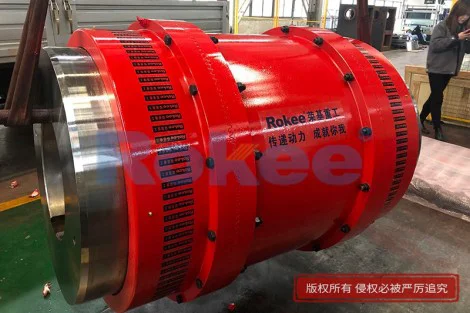
The basic construction of a tyre coupling starts with two metallic hubs, each fitted onto the end of a separate rotating shaft, and a reinforced rubber tyre sandwiched and fastened between these hubs using high-strength bolt sets. The tyre itself is not simple plain rubber; it is reinforced with woven cord layers embedded within the elastomer matrix to maintain structural integrity under repeated torque cycles, stretching and rebounding without permanent deformation during normal operation. This integrated tyre element is the heart of the coupling, responsible for shock absorption, vibration damping, and misalignment compensation. When torque passes from the driving hub to the tyre body and onward to the driven hub, the elastic material flexes gently rather than resisting movement stiffly, creating a cushioned power transfer. Some designs feature a split tyre construction, enabling replacement of the elastomeric element without fully disconnecting or repositioning the two connected machines. This structural simplicity is one of the most distinguishing traits of tyre couplings compared to other flexible coupling styles that use multiple small elastomer blocks, complex spring stacks, or meshing gear teeth. Factory production teams carefully balance the relationship between rubber hardness, reinforcement density, and overall torque capacity, tuning each build to match expected load profiles. Because the whole assembly operates without grease or oil baths, there is no risk of lubricant leakage contaminating surrounding products or work areas, making the unit suitable for environments where oil spills must be avoided.
Raw material selection forms the foundation of consistent performance for every tyre coupling produced in direct factory supply lines, as poor material choices quickly lead to premature cracking, tearing, or accelerated ageing of the rubber tyre element. Manufacturers evaluate elastomer compounds based on exposure risks present in typical working environments, including contact with oils, chemical vapours, dust, moisture, and temperature variation. For settings with frequent oil splashes, formulations with enhanced oil resistance are selected, while general-purpose rubber blends serve cleaner indoor installations. The cord reinforcement inside the tyre must resist fatigue from millions of flex cycles, maintaining tensile strength even under repeated shock loads. Metal hub materials are chosen according to torque magnitude and operational environment, balancing machinability, rigidity, and resistance to surface corrosion. Every incoming batch of raw material undergoes basic inspection before entering production workflows, verifying physical properties and eliminating defective stock before machining or moulding begins. In factory direct arrangements, buyers can share detailed information about site conditions, so the production team can select appropriate material combinations tailored specifically for their operating environment, rather than settling for generic off-the-shelf products that may not match the actual working hazards. This close communication helps avoid common failure modes such as rubber hardening, surface cracking, swelling from chemical exposure, or hub corrosion that would shorten service life and trigger unplanned downtime.
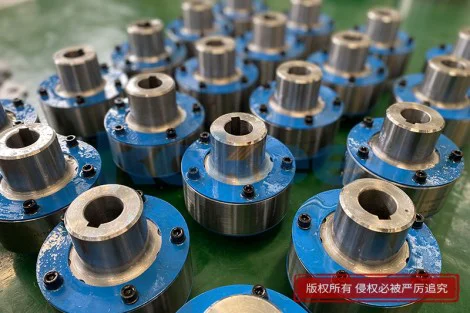
The manufacturing workflow for factory-direct tyre couplings combines precision metal machining and specialised rubber vulcanisation processes, carried out sequentially under continuous monitoring. Metal blanks for hubs go through turning, boring, and drilling to achieve accurate bore dimensions, keyway slots, and bolt hole positions, with surface finishing applied as required to resist rust and abrasion. Meanwhile, rubber tyre elements are formed by placing compounded elastomer and reinforcing cords inside moulds, where controlled heat and pressure trigger vulcanisation, locking the rubber and reinforcement into a stable, unified tyre shape. Once the metal components and rubber tyre bodies are ready, preliminary assembly checks confirm proper fit before final bolting. Finished assemblies then move to balancing processes, which minimise residual unbalance that would create vibration once installed on rotating machinery. Throughout each production stage, quality checks verify dimensions, surface integrity, bolt fit, and visual condition of the rubber element, catching flaws before finished goods leave the workshop. Factory direct buyers can request production progress updates and clarify technical questions directly with manufacturing specialists, rather than waiting for information to filter through middlemen. This hands-on oversight reduces the chance of misunderstandings around custom requirements and ensures that the finished coupling matches the agreed specifications, supporting predictable performance once fitted to the customer’s equipment.
One of the most practical benefits of tyre couplings, amplified through factory direct supply, is simplified installation and minimal ongoing maintenance compared to many alternative transmission couplings. During installation, technicians do not need ultra-precise shaft alignment to achieve reliable operation, as the tyre element absorbs moderate offset naturally. For split tyre versions, the rubber element can be fitted radially from the side without sliding one machine axially away from its foundation, drastically cutting installation time and labour work. Once operational under standard conditions, tyre couplings require no lubrication, eliminating periodic grease replenishment and oil change routines that add maintenance labour and consumable expenses. Routine inspections only require quick visual checks for surface cracks, rubber hardening, tears, or loose fasteners. When the tyre element eventually reaches the end of its usable life, replacement is straightforward and does not demand re-machining of hubs or extensive realignment of connected equipment. Factory direct supply allows spare tyre elements and full coupling assemblies to be ordered in advance as inventory, helping facilities prepare for planned maintenance windows and reduce emergency sourcing delays. Plants operating continuous production schedules value this low-maintenance characteristic, as any reduction in planned service time directly improves equipment availability and operational continuity.
Tyre couplings serve a broad spectrum of rotating machinery applications, and factory direct sourcing supports custom sizing and feature adjustments to suit these varied use cases. Pump sets, motor drives, conveyor systems, fans, blowers, and compressors frequently use tyre couplings to link drive motors to working equipment, especially where shock loads, frequent starting cycles, or foundation movement are expected. Material processing machinery with fluctuating loads also benefits from the coupling’s shock-dampening effect, which protects expensive rotors and bearings from sudden torque spikes. In dusty, humid, or lightly corrosive environments, the sealed elastomeric tyre resists debris ingress better than couplings with exposed moving parts. Factory engineers can adjust bore sizes, keyway specifications, and overall outer dimensions to fit existing equipment footprints or new machine designs, supporting both replacement retrofit projects and original equipment builds. Buyers can also request modified tyre compounds for special environments, such as environments prone to static buildup or extended exposure to heat. Direct interaction with the factory removes limits often imposed by reseller catalogues that only carry a narrow range of standard sizes, allowing customers to find solutions for less common shaft diameters or torque requirements without compromise.
Comparing tyre couplings to other flexible coupling designs reveals distinct trade-offs that factory technical teams can explain clearly during direct consultations, helping buyers make informed selection decisions. Gear couplings transmit high torque within compact dimensions but require regular lubrication and demand tighter alignment, with little ability to absorb heavy shock loads. Jaw couplings rely on small elastomer inserts that can wear quickly under repeated impact loads, and their misalignment tolerance is more limited than tyre-style units. Disc couplings offer good high-speed performance but are sensitive to excessive parallel misalignment and can suffer fatigue failure under frequent shock loading. Tyre couplings accept larger combined misalignment and deliver superior damping, though their physical size tends to be greater for the same torque rating. In direct factory conversations, specialists can review the machine’s operating speed, load behaviour, alignment potential, and environmental exposure to evaluate whether a tyre coupling is the best fit, or recommend alternative coupling types if application parameters fall outside the tyre coupling’s functional sweet spot. This honest technical guidance helps customers avoid costly mismatches between coupling selection and real-world operating demands, a benefit often absent when purchasing from resellers focused purely on order fulfilment.
Factory direct procurement of tyre couplings improves supply chain reliability and offers greater flexibility for bulk orders, project batches, and repeat replacement stock. When orders are placed directly with the production facility, production schedules can be prioritised according to project timelines, and lead times are more transparent, without extra delays introduced by warehousing and redistribution through multiple traders. Buyers can adjust order quantities to match project phases, arranging staggered shipments to align with equipment installation milestones instead of receiving all units at once and managing large stockpiles. The factory team can also package and mark items according to customer requirements, simplifying receiving, inspection, and inventory tracking at the buyer’s facility. For long-term operating sites with recurring replacement needs, direct supply supports consistent repeat orders, preserving the same material formulations and machining tolerances across multiple production runs. This consistency matters because changing suppliers or receiving batches from different stock sources can introduce unexpected variations in component fit and service life. Direct communication also simplifies handling of questions after delivery; if installation teams observe unusual behaviour or have technical queries, they can discuss the situation with the manufacturing team rather than passing messages through layers of intermediaries.
Understanding the operational limits of tyre couplings helps users avoid misuse, and factory direct technical support provides guidance to keep equipment running safely and predictably. While the rubber tyre excels at absorbing shock and misalignment, it is not designed to operate continuously far beyond recommended load or speed ranges. Excessive misalignment beyond the coupling’s capacity will accelerate flex fatigue, causing the tyre to crack prematurely. Prolonged exposure to incompatible solvents, extreme heat, or powerful UV radiation can degrade the elastomer, reducing elasticity and strength over time. Operators should monitor unusual vibration or noise, as these signs may indicate rising misalignment, loose bolts, or tyre degradation. The factory can provide guidance on inspection frequency and warning signs to watch for, helping maintenance teams schedule replacements before failure occurs. Some tyre coupling designs include a passive fail-safe feature: if the rubber tyre element fully ruptures, the metal hubs can temporarily engage one another to transmit limited torque, allowing for controlled shutdown rather than immediate catastrophic separation of shafts. This safety characteristic is valuable for systems where sudden disconnection would create process hazards. Working directly with the manufacturer ensures users fully grasp these operating boundaries and safety attributes, supporting responsible long-term equipment management.
The future of tire coupling factory direct supply continues to evolve as manufacturing techniques advance and industrial operators seek more resilient, low-maintenance transmission solutions. Production facilities keep refining rubber compounding and vulcanisation controls to improve tyre element fatigue resistance and environmental stability, while modern machining equipment maintains tighter dimensional consistency across large batch production. As more industrial projects prioritise reduced maintenance overhead, vibration control, and simplified equipment retrofits, tyre couplings remain a popular flexible transmission choice for many drive arrangements. Factory direct models fit neatly into this trend by cutting supply chain complexity, giving end users direct access to manufacturing expertise and customisation capability without inflated transaction costs. This model encourages long-term collaborative relationships between production teams and equipment operators, where feedback from real-world field performance informs incremental product refinements. Whether for new machinery builds or replacement retrofits across multiple plant locations, tyre couplings supplied directly from the factory deliver a dependable combination of shock absorption, misalignment compensation, and simple maintenance, supporting stable power transmission and protecting valuable rotating machinery for years of continuous service.