Customized Tyre Coupling

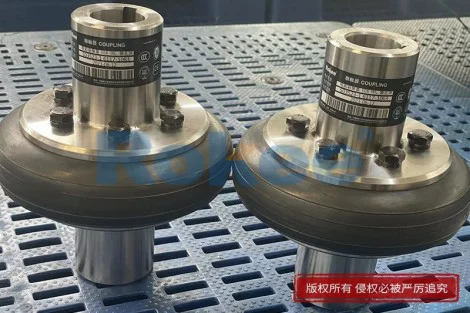
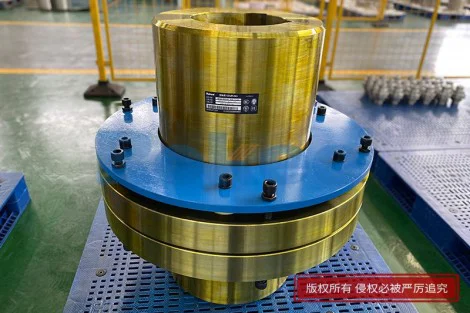
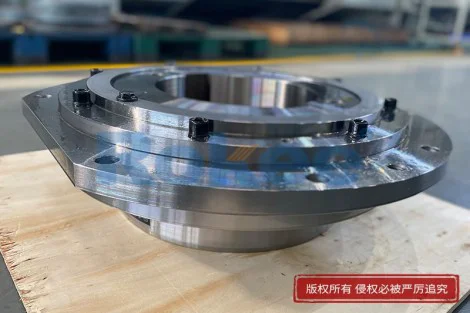
Customized tyre coupling represents a refined branch of flexible shaft transmission components, engineered to bridge two rotating shafts while accommodating operational irregularities that rigid couplings cannot withstand. At its core, this mechanical assembly consists of two metal hub flanges and a tyre-shaped elastomeric element secured between them with fasteners, forming a continuous power transmission path. Unlike standardized off-the-shelf coupling options built around fixed dimensions and material formulas, customized tyre coupling starts from the unique operating context of each mechanical system. Many industrial systems encounter shaft misalignment, fluctuating load impacts, continuous vibration, or harsh ambient conditions that generic couplings struggle to handle reliably. Customization begins with capturing key operating parameters, including peak and continuous torque, rotational speed, shaft geometry, and environmental factors such as temperature swings, chemical exposure, and dust accumulation. Designers evaluate how these variables interact during machine startup, steady-state running, and sudden load spikes, ensuring the finished coupling does not become the weakest point in the power train. The elastomeric tyre body, the heart of the assembly, transfers torque through controlled elastic deformation rather than hard metal contact. This fundamental trait gives the coupling the capacity to absorb sudden impact loads and dissipate torsional vibration, protecting bearings, gearboxes, and connected equipment from premature fatigue damage. Every custom iteration fine-tunes the balance between torsional stiffness and flexibility; too stiff and vibration isolation suffers, while overly soft construction risks excessive deflection and heat buildup under sustained heavy loads. This careful balancing act distinguishes tailored tyre couplings from universal alternatives, delivering a transmission solution calibrated specifically for the intended machine rather than forcing the machine to adapt to prefabricated hardware.
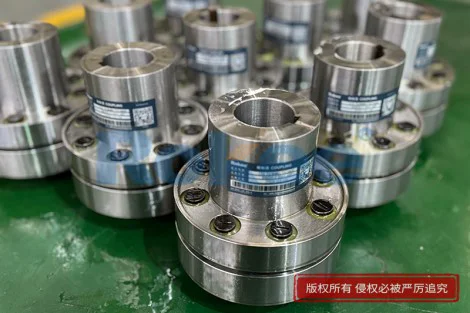
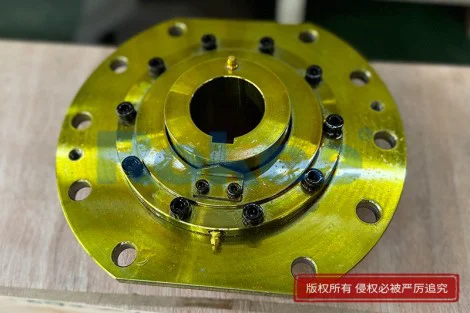
The structural design of customized tire coupling offers multiple dimensions of misalignment compensation, a primary reason it is widely selected for machinery with unavoidable shaft offset. The elastomeric tyre element can simultaneously accommodate parallel offset, angular tilt, and axial displacement between the driving and driven shafts. In many industrial installations, perfect shaft alignment is difficult to achieve and even harder to maintain after prolonged operation. Thermal expansion, foundation settlement, bearing wear, and routine maintenance reassembly all gradually shift shaft positions. Standard couplings often have narrow tolerance windows, requiring frequent realignment work and triggering unexpected shutdowns once misalignment exceeds small limits. Customized tyre coupling can be adjusted during design to permit larger allowable displacement ranges according to field conditions. Engineers modify the tyre’s wall thickness, reinforcing fabric layers embedded within the elastomer, and overall profile to control deformation behavior. The metal hubs are also customizable in terms of bore size, keyway form, taper bushing interface, and mounting flange layout to match existing shaft ends without costly modification to connected equipment. Some designs adopt a split tyre structure for simplified replacement, allowing maintenance teams to swap the elastic element without fully detaching the coupled machinery. This feature is particularly valuable in confined installation spaces where disassembly of motors and driven equipment creates lengthy downtime. Even bolt patterns can be reworked to fit legacy equipment built with non-standard mounting geometries, making customized tyre coupling an effective retrofit choice for older machinery that no longer has matching original spare transmission parts.
Material selection forms the foundation of reliable performance for customized tyre coupling, and customization gives engineers broad freedom to match elastomer and metal materials to operating environments. The tyre element can be produced from different elastomer compounds depending on exposure risks. Basic rubber formulations work well in clean, moderate-temperature environments with minimal chemical contact, while specialized compounds resist degradation from oils, greases, ozone, or ultraviolet radiation. Reinforcing textile layers inside the tyre body boost tensile strength and resist tearing under repeated cyclic torque loads, preventing early failure caused by flex fatigue. Metal hub materials are also selected according to load magnitude and corrosion risks. Higher strength alloys are used for applications transmitting large torque, while alternative materials or surface treatments can be applied when moisture or corrosive vapors are present. Surface treatments on metal components improve wear resistance and prevent oxidation, extending service life in humid or dusty settings. Each material choice carries tradeoffs. High temperature resistant elastomers may have different flexibility characteristics compared to general-purpose rubber, and harder metal alloys can increase machining complexity. The design process must weigh these tradeoffs to meet service life targets without unnecessary over-engineering. Material testing during development simulates repeated flexing, thermal cycling, and exposure to site contaminants to verify that the chosen combination maintains elastic properties and structural integrity over thousands of operating hours. This level of targeted material tuning is rarely available with standard catalogue couplings, making customization essential when equipment operates outside mild working conditions.
The working principle of customized tyre coupling relies on elastic shear and tension within the tyre-shaped element to transfer rotational force while absorbing mechanical disturbances. When the driving hub rotates, torque passes through fasteners into the tyre body, which deforms elastically and transmits rotation to the second hub and the driven shaft. Unlike gear or chain couplings that transmit torque through sliding or meshing metal surfaces, power transfer occurs without direct metal-to-metal contact across the joint. This mechanism inherently dampens torsional oscillation and sudden shock loads generated during startup, emergency stops, or intermittent heavy loading. In systems with reciprocating motion or cyclic load fluctuations, these shock impulses travel along the shaft line and can create resonant vibration that accelerates wear across multiple components. The tailored tyre coupling acts as a vibration buffer, absorbing energy peaks and smoothing torque delivery. Customization directly shapes this damping performance. Adjusting elastomer hardness and reinforcement layers changes torsional natural frequency, allowing designers to avoid resonance with the machine’s operating speed range. Resonance avoidance is critical, as sustained resonant vibration can rapidly degrade transmission components and damage surrounding structures. The deformation pattern of the tyre element is modeled during design to ensure stress remains evenly distributed across the elastomer. Uniform stress distribution reduces localized high-stress zones that would initiate cracks or separation between rubber and reinforcement fabric. By refining this deformation characteristic, customized tyre coupling maintains stable performance even under variable load cycles that would shorten the lifespan of standard flexible couplings.
Installation and alignment requirements for customized tyre coupling are simplified compared with many high-precision coupling types, though proper handling remains vital to realize its full service potential. While the custom tyre design tolerates greater misalignment, it does not eliminate the need for careful initial alignment. Excessive misalignment beyond the design limit creates concentrated stress in the elastomer, accelerating heat generation and fatigue failure. The customization process can anticipate anticipated installation challenges. For example, when the coupling is intended for locations where field alignment tools are limited, designers may specify more generous allowable misalignment values within safe operational boundaries. The custom-machined hubs arrive ready to fit the target shafts, with keyways and bore dimensions matching the actual shaft geometry, eliminating on-site machining in most cases. Assembly procedures are also adapted to the specific design. Some variants use simple through-bolt clamping arrangements that are intuitive for maintenance crews, while split tyre elements allow element replacement without removing the hubs from the shafts. During commissioning, technicians check fastener torque to ensure even clamping pressure on the tyre flange; uneven bolt tension creates uneven loading and premature element wear. After installation, routine visual inspection can reveal surface cracking, bulging, or separation of the elastomer, warning of developing problems before catastrophic failure occurs. No continuous lubrication is required for the tyre coupling, removing the need for grease replenishment and reducing maintenance schedules. This lubrication-free characteristic lowers operational complexity and avoids contamination risks in sensitive processing environments, a benefit often emphasized when selecting customized solutions for food processing, water treatment, and ventilation systems.
A wide spectrum of industrial systems can benefit from customized tyre coupling, spanning equipment with fluctuating loads, frequent start-stop cycles, or limited shaft alignment capability. Pump systems represent one common application, especially centrifugal pumps connected to electric motors, where pressure pulsations and minor shaft misalignment persist during continuous operation. Fans and blowers also rely on this coupling type to isolate vibration transmitted between drive motors and fan rotors, protecting building structures and reducing noise levels. Compressors with cyclic loading create sharp torque spikes at each compression cycle, and the tailored tyre element absorbs these shocks before they reach the motor or gearbox. Conveyor drives, particularly those handling bulk materials, face sudden load changes as material surges or jolts occur, making shock absorption a key requirement. Many older production lines have non-standard shaft dimensions and mounting patterns, and customized tyre coupling offers a practical retrofit path without redesigning entire drive assemblies. Mobile industrial equipment, subject to vibration and frame flexing during operation, also benefits from the multi-directional flexibility of tyre couplings. In each scenario, the custom design adapts to unique constraints: limited axial space between shafts, exposure to abrasive dust, or low-noise operational requirements. By aligning coupling geometry, torque capacity, elastomer formulation, and mounting style to the machine’s actual working profile, the customized tyre coupling resolves problems that generic couplings cannot address effectively. This versatility explains its growing use across diverse mechanical transmission applications where reliability and vibration control are priorities.
Dynamic performance analysis forms a critical phase within the development workflow for customized tyre coupling. Before physical production, engineering teams model the coupling’s torsional response across the full operating speed and load range. Simulation tools predict torsional natural frequencies, stress distribution inside the elastomer, heat buildup under continuous cyclic loads, and displacement behavior under combined misalignment. These digital models help identify potential resonant conditions, excessive element deflection, or stress concentrations before cutting material for prototype manufacturing. Input data includes machine inertia values of both driving and driven sides, expected load spectra, startup and shutdown profiles, and thermal operating limits. The model is refined iteratively by adjusting tyre thickness, elastomer hardness, reinforcement layout, and hub geometry. Once simulation results meet performance targets, prototype units are fabricated for bench testing. Laboratory testing subjects prototypes to cyclic torque, misalignment cycling, thermal exposure, and accelerated fatigue runs to validate real-world behavior. Measured data is compared against simulation predictions to fine-tune the design further. This iterative design and testing cycle is unique to custom development; standard catalogue couplings skip this application-specific analysis and are validated only against general operating envelopes. Through this analytical process, customized tyre coupling avoids two common pitfalls: under-sizing that leads to premature failure, and over-sizing that increases component mass, cost, and torsional stiffness unnecessarily. The end product achieves a targeted balance of load capacity, flexibility, damping, and compact form matching the machine system dynamics.
Operational monitoring and service life management for customized tyre coupling rely on understanding its tailored performance limits, which differ from off-the-shelf products. While visual inspection remains the primary routine check method, more advanced monitoring can track vibration patterns and operating temperature changes. A rise in vibration amplitude or localized heating at the coupling assembly often signals excessive misalignment, elastomer degradation, or bolt loosening. Since each customized tyre coupling has unique design limits, maintenance guidance must reference the specific design parameters rather than generic coupling service guidelines. The elastomeric tyre element is the consumable component, subject to gradual aging from heat, repeated flexing, ozone, and chemical exposure. As the elastomer ages, its flexibility decreases, cracking may develop on exposed surfaces, and damping performance declines. Replacement timing depends heavily on operating conditions. Systems running continuously at high temperature or with frequent shock loads experience faster element aging than lightly loaded, clean, low-temperature installations. Operators should maintain records of running hours, load events, and inspection findings to predict element replacement before failure. If the tyre element ruptures in service, power transmission stops, though many designs prevent metal hubs from colliding by retaining partial connection, reducing secondary damage risk. Regular maintenance reviews also help identify operational changes that exceed the original design envelope, such as increased peak torque after process modifications, which may require a revised custom coupling design.
The economic value of customized tyre coupling is often underestimated, as evaluation should account for total system performance rather than only component procurement considerations. Although custom development requires engineering work and prototype validation, the investment frequently reduces broader operational expenses. By damping shock and vibration, the coupling protects expensive connected equipment including motors, gearboxes, bearings, and rotors, extending their usable life and lowering replacement costs. Reduced vibration also lessens foundation stress and structural fatigue, lowering building maintenance needs. The ability to accommodate misalignment reduces frequency of downtime caused by alignment corrections. Lubrication-free construction cuts routine maintenance labor and consumable costs. Properly engineered custom designs also lower the risk of unplanned outages, where sudden coupling failure can halt production and generate substantial losses. In contrast, using an ill-suited standard coupling may appear less costly initially, but early failures and accelerated wear on adjacent machinery create higher cumulative expenditure. Customization also supports compact system layouts when space is restricted, avoiding costly rework to accommodate larger standard coupling assemblies. When equipment undergoes process upgrades that change torque or speed requirements, a redesigned tyre coupling can adapt the existing shaft connection without replacing entire drive trains. Over the full lifecycle of the machinery, these benefits combine to deliver stable operation and reduce the overall cost of ownership, justifying the engineering effort invested in tailored coupling development.
Looking forward, customized tyre coupling continues to evolve as industrial machinery demands higher efficiency, wider operating envelopes, and more resilient power transmission solutions. Advances in elastomer compounding deliver improved resistance to heat, chemical attack, and flex fatigue, expanding the range of environments where tyre couplings can operate reliably. More precise simulation methods allow engineers to refine dynamic behavior with greater accuracy, reducing prototype iterations and shortening development timelines. Manufacturing techniques also offer tighter dimensional control for custom hub machining and tyre molding, improving consistency in finished custom units. Meanwhile, industrial equipment trends toward variable speed operation and fluctuating load profiles, increasing the need for transmission components tuned to avoid resonance and absorb dynamic disturbances. Customized tyre coupling remains well suited for these trends because its elastic nature and adaptable geometry can be matched to complex variable-speed systems. As machinery designs grow more compact and power density increases, the role of vibration isolation and shock protection becomes even more important, placing greater emphasis on application-specific coupling design. Even with these technological improvements, the core concept remains unchanged: transferring torque through an elastic tyre-shaped element, customized to fit the unique mechanical and environmental demands of each power transmission system. This enduring principle ensures customized tyre coupling will continue serving as a practical, versatile solution across industrial power transmission for many years ahead.