Flexible Gear Coupling

Flexible gear coupling is a core mechanical transmission component widely adopted in modern industrial mechanical systems, dedicated to transmitting torque and rotational power between two adjacent shafts while accommodating various mechanical deviations during equipment operation. Unlike rigid couplings that pursue absolute positional fixation and rigid power transmission, this coupling integrates gear meshing transmission and flexible compensation functions, perfectly balancing high torque transmission capacity and adaptive deformation performance. Its unique structural design allows it to offset angular deviation, parallel offset and axial displacement between shafts caused by installation errors, equipment vibration, thermal expansion and long-term operational wear. With outstanding load-bearing capacity, stable high-speed operation performance and excellent vibration damping effect, it has become a preferred transmission part for heavy-duty, high-speed and continuous operating mechanical equipment. It effectively reduces mechanical operation friction and structural stress, lowers equipment failure rate, and extends the overall service life of mechanical transmission systems, laying a solid foundation for efficient and stable operation of various industrial mechanical devices.
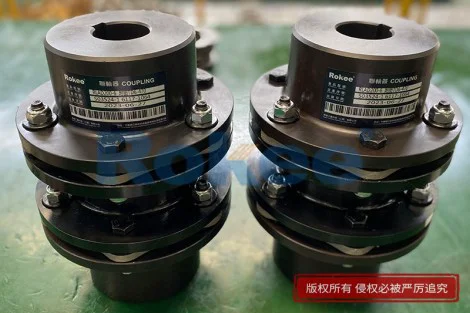
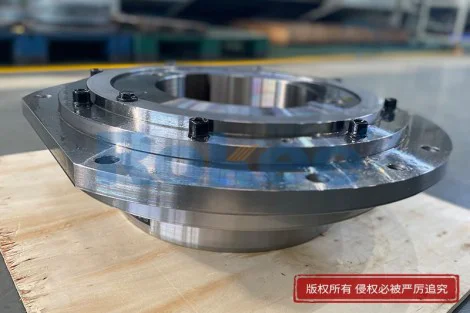
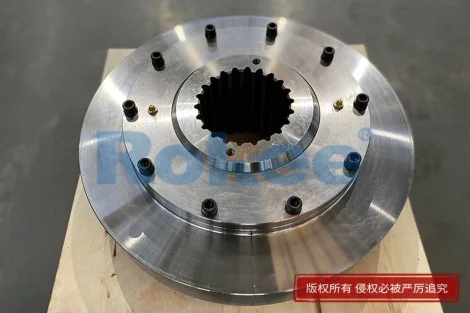
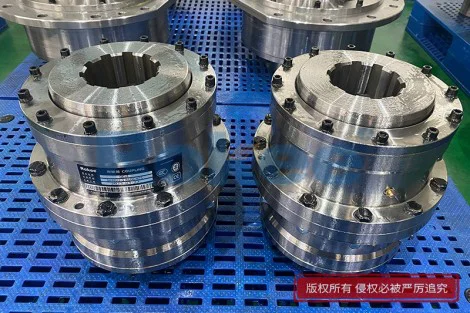
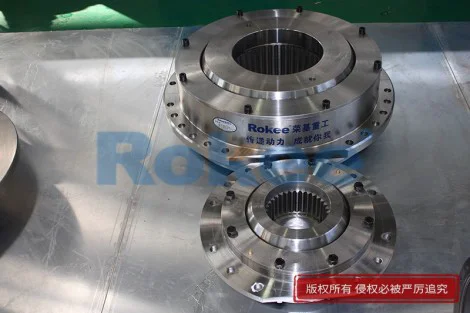
The basic structural composition of flexible gear coupling follows optimized mechanical design logic, forming a compact and efficient transmission structure with two external gear hubs and a single internal gear sleeve as the core components. The two external gear hubs are respectively installed on the driving shaft and driven shaft of mechanical equipment, undertaking the basic connection and force-bearing functions. The tooth profile of external gear hubs is specially processed into a crowned spherical structure, which is the key to realizing flexible compensation. The middle internal gear sleeve meshes with the external gears on both sides, forming a closed torque transmission loop. In addition to the core gear components, the coupling is also equipped with auxiliary sealing and lubrication accessories, which maintain the internal working environment stability. The overall structure features high integration and compact layout, avoiding the bulky volume of traditional transmission components. This reasonable structural collocation enables the coupling to bear large instantaneous impact loads and continuous cyclic loads, while retaining sufficient flexible deformation space. Each component cooperates precisely, ensuring no power loss during torque transmission and realizing long-term stable mechanical transmission under complex working conditions.
The working principle of flexible gear coupling is based on the flexible meshing motion between internal and external gears, realizing efficient power transmission and automatic deviation compensation. When the mechanical equipment starts to operate, the driving shaft drives the connected external gear hub to rotate, and the torque is transmitted to the internal gear sleeve through gear meshing, which further drives the other external gear hub and the driven shaft to rotate synchronously, completing the whole power transmission process. The crowned tooth design enables the external gear teeth to produce tiny sliding and swinging displacement in the tooth grooves of the internal gear sleeve during operation. This flexible meshing state can automatically adapt to various misalignment problems between shafts, avoiding additional mechanical stress caused by shaft position deviation. In the process of high-speed operation or load fluctuation, the relative sliding between gear teeth can buffer instantaneous impact force and absorb part of mechanical vibration. Different from elastic couplings that rely on elastic element deformation, its flexibility comes from the mechanical movement gap of gear meshing, which not only ensures high torsional rigidity during torque transmission, but also achieves durable flexible compensation performance without easy aging and failure.
Flexible gear coupling possesses unparalleled performance advantages compared with other types of transmission couplings in industrial application scenarios. First of all, it has extremely high torque transmission efficiency and strong load-bearing capacity, which can stably transmit large torque in heavy-duty mechanical systems and adapt to long-term continuous high-load operation. Secondly, its comprehensive deviation compensation ability is prominent, which can simultaneously cope with angular, parallel and axial misalignment of shafts, covering various positional deviations generated in equipment installation and operation. In terms of operation stability, the gear meshing structure has high motion accuracy, realizing backlash-free stable transmission and avoiding rotational jitter and power loss. Meanwhile, it has excellent vibration damping and impact resistance, which can effectively weaken mechanical vibration and impact load generated during equipment start-stop and load switching, protecting shafts, bearings and other precision components from damage. In addition, the whole coupling has strong environmental adaptability, can work normally in high-temperature, dusty and humid industrial environments, and has low operation noise, providing quiet and stable power transmission support for mechanical systems.
Industrial application scenarios of flexible gear coupling cover almost all fields that require high-stability and high-load mechanical power transmission. In heavy machinery industry, it is widely used in mining machinery, metallurgical equipment and engineering machinery, providing reliable torque transmission for large-scale operating equipment that bears heavy load and frequent impact. In fluid power equipment, it matches with various large pumps, fans and compressors, solving the shaft misalignment problem caused by long-term vibration of rotating equipment and ensuring the continuous and stable operation of fluid transmission systems. In power transmission equipment, it serves generator sets and transmission machinery, maintaining synchronous and efficient power transmission under high-speed operating conditions. In addition, it is also applied in chemical machinery, textile machinery and transportation equipment, adapting to the continuous operation requirements of different industrial equipment. Whether it is high-speed light-load operation or low-speed heavy-load working state, the coupling can adjust its working state adaptively, fully meeting the diversified power transmission needs of modern industrial production.
Lubrication and sealing maintenance is the key link to ensure the long-term stable operation and extend the service life of flexible gear coupling. The internal gear meshing operation of the coupling relies on lubricating media to reduce friction and wear, and good lubrication state can avoid dry friction damage between gear teeth. Reasonable lubrication can also form a protective oil film on the gear surface, isolating air and dust, preventing gear surface oxidation and corrosion, and reducing the abrasion degree of tooth profile. The sealing structure of the coupling can effectively lock the internal lubricating grease, prevent leakage caused by high-speed rotation, and block external dust, impurities and humid gas from entering the meshing area. In daily use, regular lubrication replacement and sealing component inspection are required to avoid lubrication failure and sealing aging. Scientific maintenance can keep the gear meshing state stable, maintain the original transmission accuracy and flexible compensation performance of the coupling, avoid abnormal noise, vibration and transmission failure caused by poor lubrication or sealing failure, and greatly reduce the frequency of equipment maintenance and replacement cost.
The service life and operational stability of flexible gear coupling are affected by multiple working and installation factors. The installation accuracy of the coupling is the primary influencing factor, excessive shaft misalignment caused by irregular installation will increase the friction and stress of gear meshing, accelerating tooth surface wear and structural fatigue. The operating load state also plays a decisive role, long-term overload operation and frequent instantaneous impact load will exceed the bearing limit of the coupling, leading to early deformation and damage of gear components. In addition, the operating environment has an obvious impact on its service life, long-term operation in high-temperature, corrosive and dusty environments will accelerate the aging of sealing parts and the corrosion of gear structures. Scientific installation calibration, reasonable load matching and regular daily maintenance can effectively avoid premature failure of the coupling. With standardized use and maintenance, the coupling can maintain stable transmission performance for a long time, reduce equipment downtime caused by coupling failure, and improve the overall operational efficiency and economic benefits of industrial mechanical systems.
With the continuous upgrading of modern industrial mechanical equipment towards high speed, high precision and heavy load, the optimization and development of flexible gear coupling technology are also advancing steadily. At present, the iterative optimization of flexible gear coupling mainly focuses on structural optimization, material upgrading and performance improvement. The optimized tooth profile design further improves the deviation compensation range and transmission stability, reduces gear meshing wear, and enhances the overall operation durability. The application of high-strength wear-resistant materials improves the load-bearing capacity and environmental adaptability of the coupling, enabling it to adapt to more harsh industrial working conditions. Meanwhile, the integrated and miniaturized structural design makes the coupling more adaptable to compact mechanical equipment layout while maintaining excellent performance. In the future, with the development of intelligent manufacturing and high-end mechanical equipment, flexible gear coupling will further realize high-precision transmission, low energy consumption and long-life operation, and will be more widely used in emerging industrial fields, continuing to provide core guarantee for the efficient and stable operation of modern mechanical transmission systems.