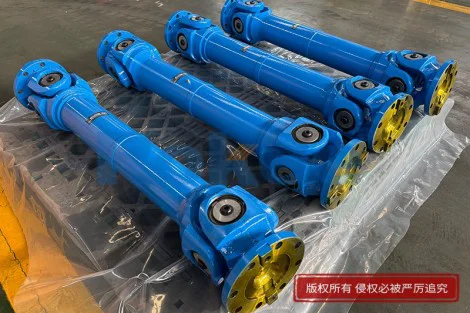
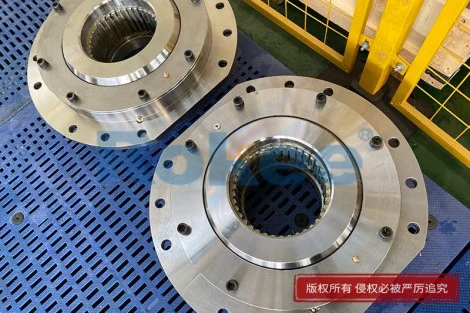
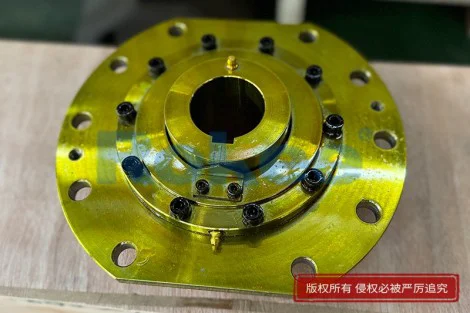
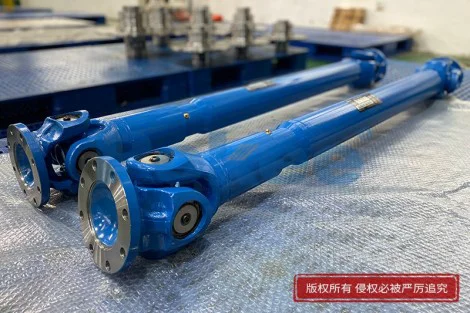
Cardan Driveshaft for PUF Sandwich Panel Making Machine Custom Specifications On Demand

In the realm of industrial manufacturing, the production of PUF sandwich panels relies heavily on the seamless coordination of various mechanical components, each playing a pivotal role in ensuring efficiency, stability, and product quality. Among these components, the cardan driveshaft stands out as a critical element, responsible for transmitting torque and rotational motion between misaligned shafts within the PUF sandwich panel making machine. Unlike standard off-the-shelf driveshafts, custom-specified cardan driveshafts are increasingly in demand, as they are tailored to meet the unique operational requirements of different PUF sandwich panel production lines, addressing challenges such as varying shaft alignments, load capacities, and environmental conditions.
To understand the role of custom cardan driveshafts in PUF sandwich panel manufacturing, it is first essential to grasp the operational characteristics of the machines themselves. PUF sandwich panel making machines are complex, continuous production systems that integrate multiple subsystems, including uncoiling, roll forming, foaming, lamination, and cutting. Each subsystem operates with distinct power requirements and is often positioned in configurations that result in misaligned shafts—either angular, radial, or axial misalignment. This misalignment arises from factors such as equipment layout constraints, thermal expansion during operation, and the need to accommodate different panel thicknesses and widths. A standard cardan driveshaft, designed for generic applications, may fail to compensate for these specific misalignments effectively, leading to inefficient power transmission, increased vibration, premature component wear, and ultimately, compromised product quality. Custom cardan driveshafts, by contrast, are engineered to address these unique challenges, ensuring that power is transmitted smoothly and reliably across all subsystems, regardless of alignment variations.
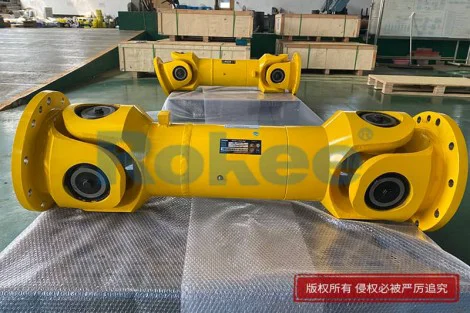
The core function of a cardan driveshaft, whether standard or custom, is to transmit torque and rotational motion between two shafts that are not perfectly aligned. This capability is made possible by its unique structural design, which typically consists of two yoke-shaped end fittings connected by a central cross-shaped member, known as a spider. The yokes are attached to the driving and driven shafts, while the spider, fitted with bearings at each arm, allows for angular movement between the yokes. This articulated structure enables the driveshaft to compensate for angular deviations ranging from 5° to 45°, as well as minor radial and axial displacements, ensuring continuous and consistent power transmission even when the shafts are misaligned. For PUF sandwich panel making machines, this flexibility is particularly crucial, as the machines operate continuously for extended periods, and any disruption in power transmission can lead to production delays, material waste, and inconsistent panel quality—such as uneven foam density, poor bonding between the core and facing materials, or irregular panel dimensions.
Customization of cardan driveshafts for PUF sandwich panel making machine begins with a thorough assessment of the specific operational requirements of the production line. This assessment involves evaluating several key factors, including torque requirements, shaft misalignment angles, operating speed, environmental conditions, and the physical constraints of the machine layout. Torque is one of the most critical parameters, as it determines the size, material, and structural design of the driveshaft. PUF sandwich panel making machines vary in size and production capacity, with larger machines requiring driveshafts capable of transmitting higher torque to power heavy-duty components such as roll forming rollers and conveyor systems. The torque requirement is calculated based on the power of the motor, the speed of rotation, and the dynamic loads encountered during operation—including startup shocks and varying loads from different production phases, such as foaming and lamination. Custom driveshafts are engineered to handle these specific torque demands, ensuring that they do not fail under stress and can maintain stable performance over long operational cycles.
Another key customization factor is the misalignment compensation capability of the driveshaft. As mentioned earlier, PUF sandwich panel making machines often have shafts that are misaligned due to equipment layout and operational factors. The custom driveshaft must be designed to accommodate the exact angular, radial, and axial misalignments present in the specific machine. This may involve adjusting the length of the driveshaft, the type of universal joints (such as cross-axis or ball cage designs), and the inclusion of telescopic sections to compensate for axial displacement. For example, machines with significant angular misalignment between shafts may require cardan driveshafts with larger universal joint angles, while those with varying axial distances between shafts may benefit from telescopic driveshafts that can adjust in length to accommodate thermal expansion or dynamic movement. By tailoring the misalignment compensation capabilities to the machine’s specific needs, custom driveshafts minimize vibration, reduce wear on connected components, and ensure smooth power transmission.
Operating speed is also a critical consideration in customizing cardan driveshafts for PUF sandwich panel making machines. These machines operate at varying speeds depending on the production rate and the type of PUF sandwich panel being manufactured. High-speed operation places additional stress on the driveshaft, requiring careful design to prevent vibration, resonance, and premature failure. Custom driveshafts are balanced to meet specific dynamic balance standards, such as G6.3 or G2.5, depending on the operating speed. Dynamic balancing involves adding or removing weight from the driveshaft to ensure that it rotates evenly, minimizing centrifugal forces that can cause vibration. This is particularly important for high-speed production lines, where even minor imbalances can lead to excessive vibration, which not only affects the driveshaft itself but also propagates to other components of the machine, leading to increased wear and reduced product quality. Additionally, the material and structural design of the driveshaft are optimized to handle high rotational speeds, with considerations such as the diameter of the shaft tubing, the thickness of the walls, and the strength of the universal joints.
Material selection is a fundamental aspect of custom cardan driveshaft customization, as it directly impacts the driveshaft’s strength, durability, and resistance to environmental factors. PUF sandwich panel making machines may operate in diverse environments, ranging from clean, controlled factory settings to more harsh conditions with dust, moisture, or temperature fluctuations. The choice of material must therefore be tailored to the specific environment and operational demands. Common materials used for custom cardan driveshafts include alloy steels, carbon steels, and sometimes lightweight materials such as aluminum or composites for applications where weight reduction is a priority. Alloy steels, such as 40Cr or 20CrMnTi, are often preferred for their high tensile strength, fatigue resistance, and ability to withstand heavy loads and high temperatures. These materials can be further treated with surface treatments such as heat treatment, galvanization, or coating to enhance their corrosion resistance and extend their service life. For example, driveshafts operating in dusty or humid environments may be coated with a protective layer to prevent rust and wear, while those in high-temperature areas may undergo heat treatment to improve their thermal stability.
The design of the universal joints is another important customization element. The type of universal joint used in the cardan driveshaft depends on the specific requirements of the PUF sandwich panel making machine. Cross-axis universal joints, composed of two fork-shaped joints and a cross shaft with needle or sliding bearings, are ideal for heavy-duty, low-speed applications due to their high load-bearing capacity. However, they may be prone to vibration at high speeds, making them less suitable for high-speed production lines. Ball cage universal joints, on the other hand, offer smoother operation at higher speeds and better compensation for angular misalignment, making them a preferred choice for machines with high rotational speeds. Custom driveshafts may also incorporate maintenance-free universal joints, which are pre-lubricated and sealed to reduce the need for regular maintenance, a valuable feature for continuous production lines where downtime is costly. The size and design of the universal joints are also customized to match the torque and speed requirements of the machine, ensuring that they can transmit power efficiently without failure.
In addition to these technical factors, custom cardan driveshafts for PUF sandwich panel making machines may also be tailored to meet specific physical constraints, such as space limitations within the machine. Some production lines have limited space for the driveshaft, requiring a compact design that does not compromise performance. Custom driveshafts can be designed with shorter overall lengths, smaller diameters, or specialized yoke designs to fit within these constraints. For example, a machine with limited vertical space may require a driveshaft with a lower profile, while one with limited horizontal space may benefit from a more compact universal joint design. The connection method between the driveshaft and the machine’s shafts is also customizable, with options such as spline connections, flange connections, or keyed joints, depending on the machine’s existing design and the need for secure, slip-free power transmission.
The benefits of custom cardan driveshafts for PUF sandwich panel making machines are numerous and far-reaching. One of the most significant benefits is improved operational efficiency. By tailoring the driveshaft to the machine’s specific requirements, power transmission is optimized, reducing energy loss and ensuring that each subsystem operates at its optimal performance level. This leads to faster production rates, reduced material waste, and lower energy consumption, ultimately improving the overall profitability of the production line. Custom driveshafts also enhance the reliability and durability of the machine, as they are designed to handle the exact loads and misalignments encountered during operation, reducing the risk of premature failure and unplanned downtime. This is particularly important in continuous production environments, where downtime can result in significant financial losses.
Another key benefit is improved product quality. The smooth, consistent power transmission provided by custom cardan driveshafts ensures that all subsystems of the PUF sandwich panel making machine operate in synchronization. This is critical for maintaining uniform panel thickness, consistent foam density, and strong bonding between the core and facing materials. For example, in the foaming process, even slight fluctuations in rotational speed or torque can lead to uneven foam distribution, resulting in panels with varying density and strength. Custom driveshafts minimize these fluctuations, ensuring that the foaming process is consistent, leading to high-quality panels that meet industry standards. Additionally, the reduced vibration caused by custom driveshafts helps to prevent damage to the machine’s components, such as bearings and gears, further contributing to consistent performance and product quality.
Custom cardan driveshafts also offer greater flexibility and adaptability, allowing PUF sandwich panel manufacturers to adjust their production lines to meet changing market demands. As the demand for different panel sizes, thicknesses, and configurations increases, manufacturers may need to modify their machines to accommodate these changes. Custom driveshafts can be easily adjusted or replaced to match the new operational requirements, without the need for extensive modifications to the entire machine. This flexibility allows manufacturers to remain competitive in a dynamic market, adapting quickly to new customer needs and industry trends. Additionally, custom driveshafts can be designed to accommodate future upgrades to the machine, such as increased power or speed, ensuring that the driveshaft does not become a limiting factor in future production expansions.
Maintenance considerations are also addressed through custom cardan driveshaft design. Custom driveshafts can be engineered with features that reduce maintenance requirements, such as sealed universal joints, grease fittings for easy lubrication, and durable materials that resist wear and corrosion. This reduces the frequency of maintenance checks and replacements, minimizing downtime and lowering maintenance costs. For example, driveshafts with maintenance-free universal joints eliminate the need for regular lubrication, while those with corrosion-resistant coatings require less frequent cleaning and inspection. This is particularly beneficial for manufacturers operating in remote locations or those with limited maintenance resources, as it allows them to focus on production rather than extensive equipment upkeep.
When requesting custom cardan driveshafts for PUF sandwich panel making machines, it is essential for manufacturers to provide detailed specifications to the driveshaft supplier. This includes information such as the torque requirement, operating speed, misalignment angles, shaft diameters, connection type, material preferences, and physical constraints. Providing accurate and detailed specifications ensures that the custom driveshaft is designed to meet the exact needs of the machine, avoiding costly modifications or replacements later on. It is also recommended that manufacturers work closely with the supplier’s engineering team to discuss their specific requirements, as the team can provide valuable insights and recommendations to optimize the driveshaft design for maximum performance and durability.
In conclusion, custom cardan driveshafts play a vital role in the efficient and reliable operation of PUF sandwich panel making machines. By tailoring the driveshaft to the specific operational requirements of the production line—including torque, misalignment, speed, material, and physical constraints—manufacturers can achieve improved operational efficiency, enhanced product quality, greater reliability, and reduced maintenance costs. As the PUF sandwich panel industry continues to grow and evolve, the demand for custom cardan driveshafts is likely to increase, as manufacturers seek to optimize their production processes and remain competitive in the market. Whether for a new production line or an upgrade to an existing machine, custom cardan driveshafts offer a tailored solution that addresses the unique challenges of PUF sandwich panel manufacturing, ensuring that the machine operates at its full potential for years to come.