Flexible Shaft Tyre Coupling

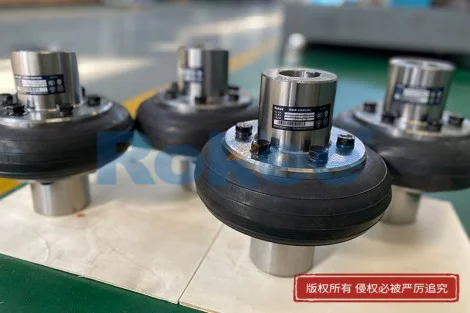
Flexible shaft tyre coupling is a widely adopted elastic transmission component in modern mechanical drive systems, renowned for its exceptional flexibility, reliable torque transmission and superior vibration damping performance. Structurally, it mainly consists of a reinforced elastic tyre body and two metal clamping flanges, featuring a simple and compact integrated design that eliminates complex transmission structures and auxiliary accessories. As a core connecting part between driving and driven shafts, it undertakes the key task of stably transmitting rotational torque while effectively compensating for various shaft misalignments generated during equipment installation and operation, including parallel, angular and axial deviations. Different from rigid couplings and other flexible coupling types, this tyre-style coupling relies on the elastic deformation of rubber materials to buffer mechanical impact and isolate vibration, which can significantly reduce mechanical wear and operational noise. It adapts to diverse variable-load and frequent start-stop working conditions, providing stable and safe transmission guarantee for various industrial mechanical equipment and extending the overall service life of mechanical systems.
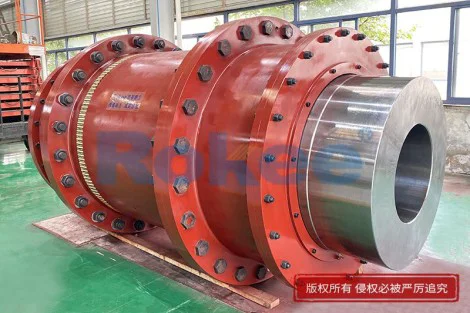
The structural composition of flexible shaft tyre coupling defines its unique mechanical performance and operational stability, with every component designed to adapt to complex industrial working conditions. The core functional part is the high-elasticity rubber tyre element, which is internally reinforced with multi-layer cord fabrics to enhance structural toughness and tensile strength, avoiding permanent deformation under long-term torque load and frequent elastic stretching. The rubber material is specially processed to balance soft elasticity and structural rigidity, ensuring sufficient deformation space for misalignment compensation while maintaining stable torque transmission efficiency. The two matching metal flanges are precisely machined with smooth clamping surfaces, which can tightly fix the rubber tyre body on both sides without loosening or displacement during high-speed operation. There are no gaps or rigid contact points in the overall assembly structure, realizing fully elastic power transmission. This integrated structural design not only simplifies the assembly and disassembly process but also avoids the failure risks caused by loose parts or component wear. Moreover, the streamlined outer structure reduces wind resistance during high-speed rotation, enabling the coupling to operate stably in high-speed drive systems without generating additional mechanical vibration or noise interference.
The working principle of flexible shaft tyre coupling is based on the elastic deformation characteristics of polymer rubber materials and friction transmission mechanism, realizing efficient and stable mechanical power transmission. When the driving shaft rotates, the torque is transmitted to the rubber tyre body through the metal flange, and the elastic tyre element drives the other flange and the driven shaft to rotate synchronously through uniform elastic deformation. In this process, the flexible tyre body can produce multi-directional micro-deformation according to the actual operating state of the equipment. When installation errors or mechanical vibration cause parallel offset, angular deflection or axial displacement between the two shafts, the rubber tyre can automatically adjust its deformation angle and range to offset the misalignment deviation, ensuring consistent coaxial rotation of the driving and driven ends. In terms of vibration and impact buffering, the rubber material can absorb the instantaneous impact force generated by equipment start-stop, load mutation and mechanical collision, convert mechanical vibration energy into tiny elastic potential energy and dissipate it slowly. This working mode fundamentally avoids rigid impact and torque fluctuation in the transmission process, ensuring continuous and stable power output of mechanical equipment under variable working conditions.
Flexible shaft tyre coupling possesses incomparable performance advantages over traditional coupling products, making it a preferred transmission component in most industrial scenarios. Its most prominent feature is the excellent misalignment compensation capability, which can adapt to large-range multi-dimensional shaft deviations that ordinary gear couplings and sleeve couplings cannot tolerate, effectively solving the transmission failure problem caused by installation errors and equipment operational displacement. In terms of damping and noise reduction, the high-elasticity rubber structure can isolate most torsional vibration and mechanical noise generated during equipment operation, greatly optimizing the operating environment of mechanical systems and reducing vibration fatigue damage of shaft parts. Additionally, this coupling has strong impact resistance and fatigue resistance, and the reinforced rubber tyre body can withstand frequent load changes and instantaneous impact loads without structural damage. It also features zero backlash transmission, ensuring accurate torque output without rotation delay, which is crucial for equipment requiring precise transmission synchronization. Another practical advantage is its maintenance-free performance in daily operation, requiring no lubrication, polishing or regular calibration, which greatly reduces the daily maintenance workload and operational cost of mechanical equipment.
The material characteristics of flexible shaft tyre coupling determine its excellent environmental adaptability and long-term operational reliability. The elastic tyre element is made of high-quality synthetic rubber composite materials, which are specially formulated to have good aging resistance, wear resistance and temperature adaptability. This material can maintain stable elastic performance for a long time in dry, dusty and mildly humid industrial environments, and will not easily harden, crack or deform due to environmental changes. The internal cord reinforcement layer effectively enhances the structural strength of the rubber tyre, improving its tensile and tear resistance, so it can keep intact structural performance even under long-term high-load operation. The metal flange parts adopt high-strength metal materials with anti-rust and anti-corrosion treatment on the surface, which can resist oxidation and chemical corrosion in conventional industrial environments and avoid flange deformation and rust failure. The perfect combination of flexible rubber body and rigid metal parts enables the coupling to integrate the flexibility of elastic components and the stability of metal components. It can not only buffer vibration and compensate misalignment like flexible parts but also ensure sufficient structural rigidity and torque transmission stability like rigid parts, adapting to long-term continuous industrial operation requirements.
Flexible shaft tyre coupling has extremely wide application coverage, serving as a key connecting component in multiple industrial mechanical equipment fields. In general mechanical manufacturing, it is widely used in supporting transmission systems of fans, water pumps, compressors and generators, effectively solving the vibration and misalignment problems of conventional rotating equipment and ensuring stable long-term operation of general machinery. In heavy industry fields such as metallurgy and mining, it is applied to heavy-load equipment including rolling mills, crushers, grinding mills and large conveyors, adapting to harsh working conditions of heavy load, frequent impact and high dust. Its excellent impact resistance can protect the core transmission shafts and bearings of heavy equipment from damage caused by instantaneous load impact. In marine and petrochemical industries, the coupling is used in fluid transmission and power propulsion equipment, with good environmental adaptability to cope with humid and slightly corrosive working environments. In addition, it is also applicable to auxiliary power transmission systems of engineering machinery and transportation equipment, providing stable and efficient elastic transmission support for various mechanical scenarios with complex working conditions and variable loads.
In terms of installation and daily maintenance, flexible shaft tyre coupling has obvious practical advantages, meeting the efficient and low-cost operation needs of industrial production. The overall structure is simple and modular, with fewer matching parts, resulting in low installation difficulty and short construction cycle. During installation, workers only need to fix the two flanges on the driving and driven shafts respectively and clamp the intermediate rubber tyre body, without complex debugging and precision calibration procedures. The allowable misalignment range during installation is large, which can tolerate minor installation errors and reduce the technical requirements for construction personnel. In daily use, the coupling almost does not need routine maintenance, eliminating the need for regular lubrication, oil replacement and gap adjustment required by other coupling types. When the rubber tyre element reaches the service life and ages or wears, users can directly replace the single elastic component without disassembling the overall transmission system or replacing the entire coupling equipment. This independent replacement mode greatly reduces maintenance time and spare part costs, improves the operational efficiency of mechanical equipment, and avoids long-term production shutdown losses caused by component maintenance.
With the continuous upgrading of modern industrial mechanical equipment towards high speed, high load and high stability, the application value and development potential of flexible shaft tyre coupling are constantly highlighted. Traditional rigid and semi-flexible couplings are gradually unable to meet the transmission requirements of new intelligent and high-efficiency mechanical equipment due to their limited misalignment compensation capability and poor damping effect. In contrast, flexible shaft tyre coupling, with its balanced performance of flexibility, stability and durability, can perfectly adapt to the development trend of modern mechanical transmission systems. Its excellent vibration isolation performance helps reduce the fatigue loss of mechanical components, extend the overall service cycle of equipment, and improve the operational accuracy and stability of mechanical systems. In the future, with the continuous innovation of rubber composite materials and structural optimization design, the comprehensive performance of flexible shaft tyre coupling will be further improved, with stronger environmental adaptability and higher load resistance. It will continue to be an indispensable basic transmission component in industrial mechanical systems, providing reliable technical support for the efficient, stable and low-consumption operation of various industrial equipment.