Standard Tyre Coupling

Standard tyre couplings are widely adopted flexible transmission components in modern mechanical systems, serving as a key connecting structure to transmit torque between rotating shafts while resolving common operational problems in industrial equipment. Composed of elastic rubber tyre elements and matched metal connecting parts, these couplings feature a simple and robust structural design that distinguishes them from traditional rigid and ordinary flexible couplings. Their core advantages lie in excellent deformation adaptability, superior vibration damping, and reliable impact resistance, which enable them to effectively compensate for angular, parallel, and axial misalignments between connected shafts during equipment operation. Without the need for complex lubrication systems and frequent maintenance, standard tyre couplings can stably operate in diverse harsh working environments, including dusty, humid, and high-vibration scenarios. They play an irreplaceable role in protecting mechanical equipment, reducing operating noise, extending component service life, and ensuring the stable and efficient operation of various transmission devices across general industrial machinery fields.
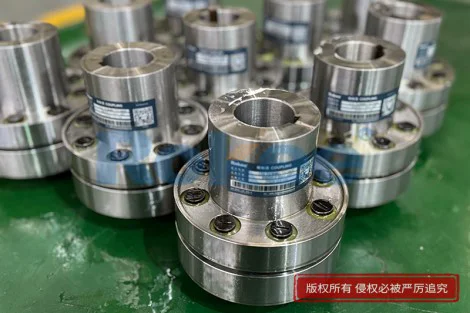
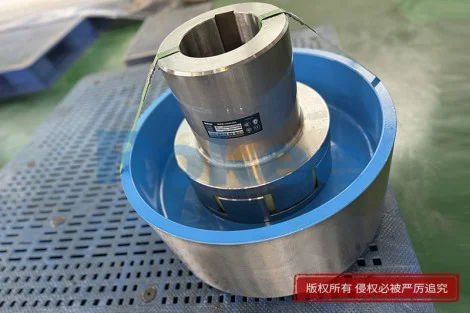
The structural composition of standard tyre couplings follows a mature and practical design logic, focusing on the integration of elastic rubber components and rigid metal accessories to balance transmission stability and deformation flexibility. The core functional part is the vulcanized rubber tyre element, which is processed through precise industrial vulcanization technology to form an integral elastic structure with uniform thickness and stable mechanical properties. This rubber tyre is the key carrier for torque transmission and deformation compensation, featuring low torsional rigidity and high elastic resilience to adapt to complex shaft displacement changes. Matched with the rubber tyre are two metal hub components fixed on the driving and driven shafts respectively, which clamp the rubber tyre tightly through fasteners to form a complete transmission assembly. Unlike traditional couplings with intricate tooth structures or spring combinations, the overall structure of standard tyre couplings is extremely streamlined, with fewer wearing parts and no fragile precision components. This simplified structure not only reduces potential failure points during operation but also makes the assembly and disassembly process more convenient, allowing operators to complete component inspection and replacement without disassembling the connected equipment, which greatly improves the efficiency of daily equipment maintenance.
The working principle of standard tyre couplings is based on the elastic deformation characteristics of rubber materials, realizing efficient and stable torque transmission while achieving multi-dimensional misalignment compensation. During the operation of mechanical equipment, the driving shaft drives the metal hub on one side to rotate, and the torque is transmitted to the rubber tyre element through the fastening connection between the hub and the tyre. Relying on the friction and bonding force between the rubber tyre and the metal structure, the torque is further transferred to the other side hub and the driven shaft, thereby completing the power transmission of the entire mechanical system. When the connected shafts produce misalignment due to equipment installation errors, operational vibration or component wear, the elastic rubber tyre can produce gentle torsional, bending and stretching deformation to adapt to the displacement deviation. This flexible deformation mode avoids the rigid force extrusion and friction between shafts that occurs with rigid couplings. In addition, the rubber material can effectively absorb the instantaneous impact load generated by equipment start-stop, sudden load change and alternating operation, buffer the torsional oscillation of the transmission system, and eliminate the resonance phenomenon that easily occurs in high-speed operation, ensuring the continuity and stability of power output.
Standard tyre couplings possess outstanding comprehensive mechanical properties, making them adaptable to complex and changeable industrial operating conditions. Their most prominent performance advantage is excellent misalignment tolerance, which is far superior to many other types of flexible couplings. They can simultaneously accommodate angular deflection, parallel offset and axial displacement between shafts, and maintain stable transmission performance without additional adjustment within the allowable deformation range. The unique large-volume rubber structure endows the couplings with exceptional vibration damping and noise reduction capabilities, which can effectively isolate mechanical vibration between the driving and driven ends, reduce vibration transmission in the entire equipment frame, and lower operating noise. Meanwhile, these couplings have good impact resistance and fatigue resistance, able to withstand frequent start-stop operations and intermittent impact loads for a long time without structural damage or performance attenuation. The rubber material also has reliable electrical insulation properties, which can cut off the current conduction between the two connected shafts, avoid electrical corrosion and bearing damage caused by shaft current, and further optimize the operating safety of mechanical equipment.
In terms of daily operation and maintenance, standard tyre couplings have significant cost and efficiency advantages, meeting the low-maintenance operation requirements of modern industrial equipment. One of the most notable features is zero lubrication demand, which completely differs from gear couplings and chain couplings that require regular oil injection and grease maintenance. The elastic rubber element relies on its own material friction and elasticity to work, eliminating the need for any lubricating media, thus avoiding equipment failures caused by lubricant deterioration, leakage or insufficient filling. The overall structure has strong wear resistance and aging resistance, and the vulcanized rubber tyre can maintain stable physical properties under long-term mechanical operation and conventional environmental changes, with a long service cycle. When local aging or wear occurs after long-term use, the independent tyre element can be replaced separately without replacing the entire coupling assembly, which greatly reduces spare parts costs. Moreover, the simple assembly structure enables maintenance personnel to complete inspection, maintenance and replacement work in a short time, reducing equipment downtime and improving the continuous operation efficiency of production lines.
Standard tyre couplings are widely applicable to various types of general industrial mechanical equipment, covering most conventional power transmission scenarios. They are commonly used in fluid power equipment such as water pumps and fans, where frequent rotation and slight shaft misalignment often occur, and the damping and compensation performance of tyre couplings can effectively protect pump bodies and fan blades from vibration damage. In compression and power generation equipment including compressors and small generator sets, the couplings can buffer the torque fluctuation generated by engine operation and ensure stable power output. They also perform well in engineering machinery and transportation auxiliary equipment, adapting to the vibration and impact generated by variable load operation. In addition, these couplings are suitable for working environments with dust, humidity and slight corrosion, as the integrated rubber structure can effectively isolate dust and moisture, prevent internal metal component rusting, and maintain stable transmission performance in harsh working conditions. Their strong environmental adaptability makes them a universal choice for conventional mechanical transmission systems.
Compared with other mainstream flexible couplings, standard tyre couplings show unique comprehensive competitiveness in performance and practicality. Different from jaw couplings that have limited misalignment tolerance and are prone to elastic element fatigue, tyre couplings have larger deformation allowance and longer fatigue life, suitable for long-term variable-load operation. Unlike diaphragm couplings that have complex structures and high manufacturing and maintenance costs, standard tyre couplings have simpler production processes and lower application costs while ensuring basic transmission performance. Although their torsional rigidity is relatively low, this feature becomes a unique advantage in vibration-sensitive equipment, effectively avoiding system resonance. In terms of installation adaptability, tyre couplings have lower requirements for installation precision, allowing certain shaft deviation during equipment assembly, which reduces the difficulty and time cost of installation and debugging. Balancing performance, cost and practicability, they occupy an important position in medium and low-speed conventional transmission systems, and are preferred equipment connecting components in most general industrial scenarios.
With the continuous upgrading of modern industrial mechanical equipment, the application value of standard tyre couplings is further highlighted, and their structural and performance optimization directions are increasingly clear. At present, the continuous improvement of rubber vulcanization technology and material formula is further enhancing the high-temperature resistance, aging resistance and wear resistance of tyre elements, enabling the couplings to adapt to higher-load and longer-cycle operating conditions. Structural optimization is also underway, with improved fastening structures making the connection between rubber tyres and metal hubs more stable, avoiding relative sliding during high-torque transmission and improving overall transmission efficiency. In future industrial development, with the increasing demand for equipment intelligence and low-energy operation, the vibration damping, energy-saving and stable transmission characteristics of standard tyre couplings will make them more widely used in general machinery fields. Their simple structure, reliable performance and low maintenance cost will continue to make them indispensable basic components for ensuring the stable operation of industrial transmission systems.