Gear Coupling For Reducer
Gear couplings serve as indispensable transmission components tailored specifically for reducer systems, acting as a critical bridge that connects reducers with driving motors and driven industrial equipment. As a type of flexible mechanical transmission part, they are primarily designed to transmit torque stably while resolving common operational issues in reducer-driven mechanical systems, including shaft misalignment, vibration impact, and thermal deformation displacement. Unlike rigid connection parts, gear couplings integrate precise meshing gear structures with flexible adaptive performance, enabling them to buffer instantaneous load shocks generated during reducer startup, shutdown, and variable load operation. They effectively compensate for axial, radial, and angular deviations between connected shafts caused by installation tolerances and long-term operational wear, protecting the core precision components inside reducers such as gear sets and bearings. In heavy-duty and continuous industrial operation scenarios, these couplings greatly enhance the overall stability and service life of reducer transmission systems, reducing unplanned equipment downtime caused by transmission failure and optimizing the efficiency of mechanical power output.
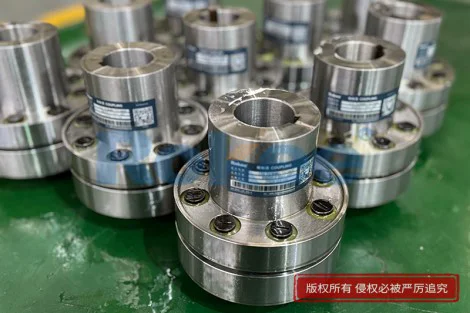
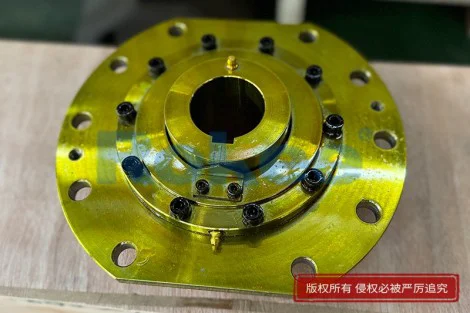
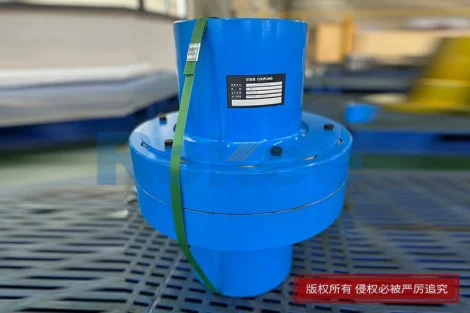
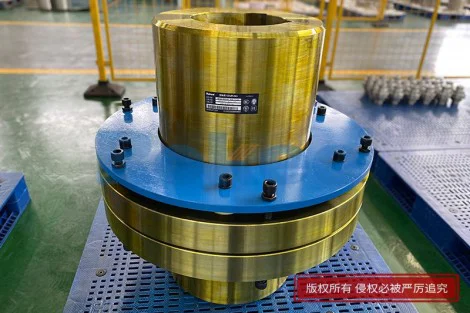
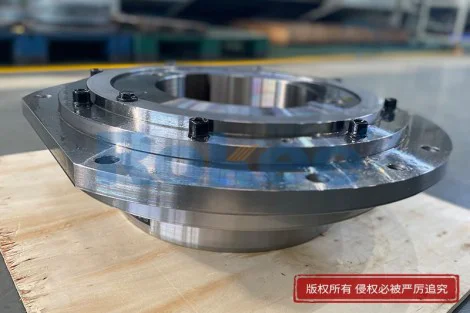
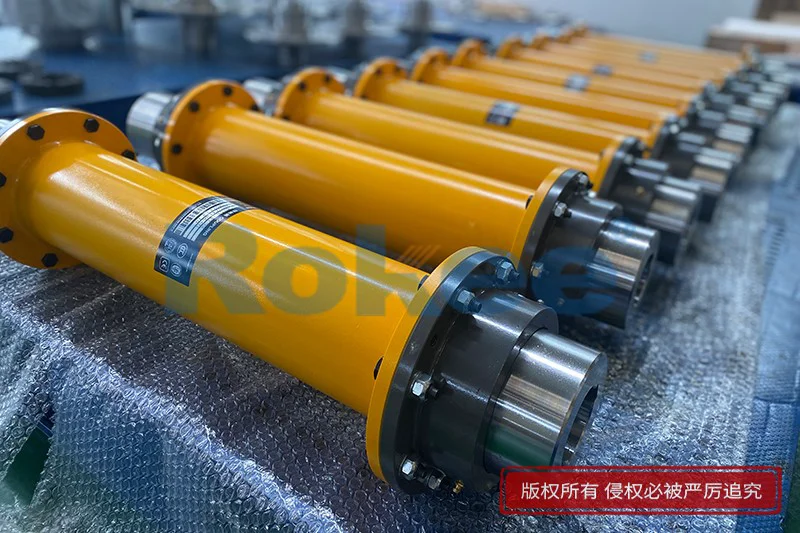
The basic structural composition of gear couplings for reducers is scientifically optimized to adapt to the operating characteristics of reducer equipment, achieving a perfect balance between high torque transmission and flexible compensation. The core structure mainly consists of two toothed half-couplings and a middle sleeve with matching gear teeth, forming a closed meshing transmission system. The inner teeth distributed on the middle sleeve mesh precisely with the outer teeth on the two half-couplings, and the tooth profile is usually processed with a special curved design to disperse contact pressure during operation. This structural design allows each gear tooth to bear load evenly during torque transmission, avoiding local stress concentration that easily causes tooth surface wear and damage. The overall structure features compact layout and high integration, which can adapt to the limited installation space of most industrial reducers without occupying excessive mechanical assembly space. Meanwhile, the modular structural form facilitates disassembly and assembly, making daily inspection and component replacement more convenient. All structural parts are processed with high-precision machining technology to ensure meshing accuracy, which lays a solid foundation for low-noise and low-loss power transmission of reducer systems in long-term continuous operation.
The core working principle of gear couplings centers on flexible meshing transmission and multi-dimensional displacement compensation, which fundamentally solves the transmission pain points of reducer equipment in complex working conditions. When the reducer is in operation, the torque output by the reducer shaft is transmitted to the half-coupling, and then stably transferred to the middle sleeve through gear meshing, finally driving the connected equipment to operate synchronously. The flexible fit gap reserved between meshing gear teeth provides adaptive space for various shaft displacements generated during equipment operation. Minor axial displacement caused by thermal expansion of the reducer shaft after long-time operation can be offset by the sliding fit between gear teeth, while radial and angular misalignment formed by installation errors and mechanical vibration can be compensated through the flexible deformation of the meshing structure. In addition, the gear meshing structure can effectively absorb instantaneous impact loads generated by sudden load changes of the reducer. When the equipment starts with heavy load or bears alternating load, the meshing gap buffers the instantaneous torque shock, preventing the sharp fluctuation of transmission force from directly acting on the reducer’s internal precision parts and avoiding gear tooth breakage and bearing damage caused by impact load.
Material selection directly determines the comprehensive performance and service life of gear couplings for reducers, and high-quality industrial materials are always the core guarantee of stable operation. Most qualified gear couplings adopt high-strength alloy steel as the base material, which has excellent mechanical properties such as high tensile strength, good toughness, and strong fatigue resistance. This material can withstand long-term high-torque transmission and frequent alternating load impacts without permanent deformation or structural damage. After forging and integral heat treatment, the material’s surface hardness and internal toughness are significantly improved, effectively resisting tooth surface wear, abrasion, and extrusion damage during continuous meshing operation. For special working environments such as high temperature, high humidity, and dusty industrial scenes, the surface of the coupling will be treated with anti-oxidation and anti-corrosion processes to avoid rust and corrosion that affect meshing accuracy. Reasonable material matching enables the coupling to maintain stable transmission performance in various harsh working conditions, reduce the frequency of component failure, and form a durable and reliable transmission matching state with the reducer.
Gear couplings have prominent performance advantages when matched with reducer systems, making them the preferred transmission component for most industrial reducer equipment. First of all, they have ultra-high torque transmission efficiency, with almost no power loss during the torque transmission process, which ensures that the power output by the reducer can be fully applied to the driven equipment and improves the overall energy utilization rate of the mechanical system. Secondly, their multi-dimensional misalignment compensation capability is far superior to many other types of couplings, which can adapt to the tiny displacement changes of the reducer shaft in long-term operation and avoid additional mechanical friction and vibration caused by shaft deviation. In terms of operational stability, the precise gear meshing structure can suppress high-frequency vibration generated during high-speed operation of the reducer, reduce equipment operating noise, and optimize the operating environment. Moreover, the structural wear resistance and impact resistance enable the coupling to adapt to frequent start-stop and variable load operation modes of industrial equipment, with stable performance and low failure rate, greatly reducing the maintenance cost and downtime loss of reducer supporting systems.
Gear couplings for reducers are widely applicable to diverse industrial mechanical scenarios, covering almost all equipment that relies on reducers for power transmission. In material handling machinery such as conveyors and mixers, they match with heavy-duty reducers to realize stable power transmission for long-distance and large-load material transportation, adapting to continuous and stable operation requirements. In mining and metallurgical equipment, they bear the high-torque and high-impact working conditions of reducer operation, ensuring the stable operation of large-scale crushing and smelting equipment. In building material and chemical machinery, they adapt to the harsh working environments of high dust and medium corrosion, maintaining long-term reliable transmission performance. In addition, they are also widely used in lifting machinery, water supply and drainage equipment, and energy power machinery, perfectly matching different types of reducers including cylindrical gear reducers, worm gear reducers, and planetary reducers. Their strong versatility and environmental adaptability make them a universal core accessory in industrial transmission systems.
Scientific installation and commissioning are key links to ensure the efficient and stable operation of gear couplings and extend their service life. Before installation, it is necessary to carefully check the machining accuracy and surface integrity of each component of the coupling, confirm that there is no damage, deformation or foreign matter on the gear tooth surface, and clean the matching parts of the reducer shaft and the coupling to ensure a clean and smooth assembly surface. During the installation process, the coaxiality of the two connected shafts must be strictly calibrated to control the installation misalignment within a reasonable range, avoiding excessive deviation that will cause abnormal wear of gear teeth after operation. The assembly tightness of the coupling components should be moderate to prevent loose connection causing transmission vibration or excessive tightening causing shaft deformation. After installation, manual rotation and no-load test operation are required to check whether the meshing is smooth and whether there is abnormal jamming and noise. Formal load operation can only be carried out after confirming that the transmission state is normal. Standardized installation and commissioning can effectively avoid early failure of the coupling and ensure the long-term coordinated operation of the coupling and the reducer.
Routine maintenance and fault prevention are essential to maintain the long-term stable performance of gear couplings supporting reducers and reduce equipment operation risks. Daily maintenance mainly includes regular lubrication inspection, as the meshing operation of gear teeth relies on high-quality lubricating grease to reduce friction and wear. It is necessary to regularly check the lubrication state inside the coupling, replenish or replace lubricating grease according to the operating cycle, and avoid dry friction operation that causes tooth surface damage. At the same time, regular visual inspection and vibration detection should be carried out to observe whether there is abnormal wear, tooth surface peeling, or component loosening. For the equipment operating in harsh environments, the dustproof and anti-corrosion protection of the coupling should be strengthened to prevent foreign matter from entering the meshing gap and affecting transmission accuracy. In terms of fault prevention, regular overall inspection and performance evaluation should be carried out according to the equipment operating intensity, and aging and worn components should be replaced in a timely manner. Perfect maintenance management can effectively eliminate potential faults in advance, ensure the continuous and efficient operation of the reducer transmission system, and reduce the comprehensive operating cost of industrial equipment.