Overhead Crane Drum Coupling

Overhead crane drum coupling serves as a pivotal mechanical connection component in the hoisting transmission system of overhead cranes, undertaking the core task of power and torque transmission between the reducer output shaft and the crane drum shaft. As a specialized flexible transmission part tailored for heavy-duty lifting scenarios, it effectively addresses common operational challenges including shaft misalignment, variable load impact, and mechanical vibration generated during frequent crane start-stop and lifting operations. Its unique structural design enables it to compensate for angular, parallel and axial deviations between connected shafts, while maintaining stable and efficient torque output under low-speed and high-torque working conditions. The working state of drum coupling directly determines the operating stability, lifting accuracy and overall service life of overhead cranes. Reasonable structural matching, stable operational performance and standardized maintenance management can effectively reduce mechanical failure rates, avoid abnormal vibration and noise during equipment operation, and ensure the safety and efficiency of industrial lifting and handling work in long-term continuous service.
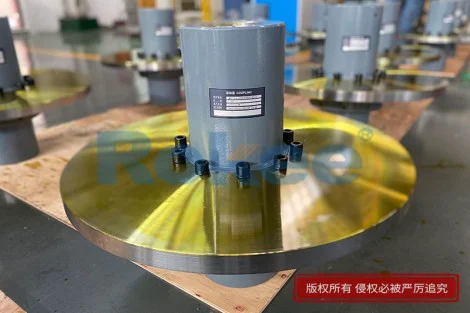
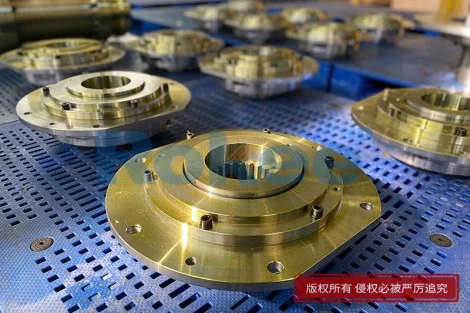
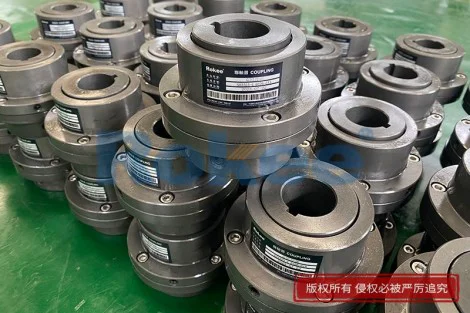
The fundamental structural composition of overhead crane drum coupling is scientifically optimized to adapt to the harsh working environment and complex load characteristics of crane operation, consisting of multiple core components that cooperate synergistically to realize complete transmission functions. The main structural parts include crowned tooth half-couplings, inner tooth sleeves, sealing assemblies, fastening parts and lubrication auxiliary components. Different from conventional straight-tooth couplings, the external teeth of the half-coupling adopt a barrel-shaped crowned design, which can form a flexible meshing structure with the inner tooth sleeve. This special tooth profile structure greatly improves the coupling’s tolerance to shaft misalignment, allowing it to adapt to tiny position deviations caused by equipment operation vibration and mechanical wear without generating additional mechanical stress. The internal matching gaps of the structure are precisely controlled to ensure near-loss-free torque transmission, while the external sealing components can effectively isolate external dust, moisture and industrial debris, preventing internal tooth surface abrasion and lubricant deterioration. All structural parts are manufactured with high-strength wear-resistant materials, which can withstand long-term heavy load friction and impact, maintaining structural integrity and dimensional stability in frequent start-stop and variable-load working cycles.
The working principle of overhead crane drum coupling revolves around flexible torque transmission and dynamic misalignment compensation, forming a stable power transmission logic suitable for crane hoisting mechanisms. During crane operation, the power generated by the driving motor is decelerated and torque-amplified by the reducer, and then transmitted to the drum shaft through the drum coupling to drive the steel rope drum to rotate and complete the lifting and lowering of heavy loads. When power is transmitted, the crowned external teeth and internal teeth sleeve form multi-point meshing contact, which disperses the concentrated torque on a single tooth surface and avoids local excessive stress and tooth surface wear. In the process of crane lifting, lowering and walking, the fuselage will produce slight shaking and displacement, leading to real-time tiny misalignment between the reducer shaft and the drum shaft. The flexible meshing structure of the coupling can automatically adapt to these dynamic deviations, offsetting radial, angular and axial displacements without affecting the continuity of power transmission. This dynamic compensation function eliminates rigid friction and extrusion between shafts, reduces the operating load of bearings and transmission components, and realizes smooth and buffer-type power transmission throughout the whole working process.
Overhead crane drum coupling possesses distinct performance advantages that make it irreplaceable in heavy-duty crane transmission systems compared with ordinary mechanical couplings. First of all, it has excellent high torque bearing capacity, which can stably transmit large torque required for heavy-load lifting under low-speed operating conditions, and is not prone to tooth surface slipping or transmission failure under instantaneous impact load. Secondly, its outstanding misalignment adaptability effectively solves the transmission instability problem caused by installation errors and equipment aging deformation, greatly reducing the failure probability of transmission systems. In addition, the coupling has superior vibration and noise reduction performance. The flexible meshing structure can absorb most of the mechanical vibration and impact energy generated during start-stop and load switching, avoiding resonance of the crane transmission mechanism and reducing operating noise. It also features strong environmental adaptability, capable of maintaining stable working performance in dusty, humid and high-intensity continuous working environments. Meanwhile, its integrated structural design simplifies the assembly structure of the crane hoisting system, reduces the number of auxiliary transmission parts, and lowers the overall failure points of the equipment.
The rational selection of overhead crane drum coupling is crucial to match the operating conditions and ensure long-term stable operation of crane equipment, requiring comprehensive consideration of multiple operational and structural factors. The primary selection basis is the actual operating torque of the crane hoisting mechanism, which needs to match the torque transmission range of the coupling to avoid long-term overload operation leading to accelerated wear and structural damage. It is also necessary to combine the crane’s working frequency and load characteristics. For cranes with frequent start-stop, repeated lifting and variable load operations, couplings with higher wear resistance and impact resistance should be prioritized. The installation space and shaft diameter specifications of the reducer and drum shaft must also be accurately matched to ensure the dimensional accuracy of assembly and avoid poor meshing caused by installation mismatch. In addition, the working environment is also a key selection factor. For harsh working scenarios with serious dust, moisture or corrosive substances, couplings with enhanced sealing performance and anti-corrosion treatment should be selected. Scientific type selection can maximize the service performance of the coupling, realize the optimal matching of transmission efficiency and service life, and reduce subsequent maintenance costs and equipment downtime.
Standardized installation and commissioning processes are essential to guarantee the working performance and service life of overhead crane drum coupling, and every operation link needs to follow refined technical specifications. Before installation, all component surfaces need to be thoroughly cleaned to remove rust, burrs and residual sundries, ensuring that the meshing tooth surfaces and assembly contact surfaces are smooth and flat to avoid assembly gaps caused by impurities. During the installation process, the coaxiality of the reducer shaft and drum shaft must be strictly calibrated to control the shaft deviation within a reasonable range, so as to reduce the compensation load of the coupling in subsequent operation. The fastening bolts need to be tightened in diagonal sequence with uniform force to ensure stable fitting of the connecting structure and prevent loose displacement under dynamic load. After installation, sufficient high-performance lubricating grease should be filled into the internal meshing gap, and the sealing device should be checked and installed in place to avoid lubricant leakage and external pollution. Post-installation commissioning requires no-load trial operation first to observe the rotation stability of the coupling, check for abnormal noise and vibration, and then conduct graded load test runs to confirm that the torque transmission is stable and the compensation function is effective before formal operation.
Daily maintenance and regular inspection are key links to maintain the stable performance of overhead crane drum coupling and extend its service life, forming a complete set of equipment protection mechanisms. In daily operation, operators need to pay real-time attention to the operating state of the coupling, observe whether there is abnormal vibration, irregular noise or local overheating during equipment operation, and stop the machine for inspection immediately once abnormal signs are found. Regular inspection work includes checking the tightness of fastening bolts to eliminate hidden dangers of loose parts caused by long-term vibration, detecting the wear degree of internal meshing tooth surfaces, and judging whether there are tooth surface peeling, abrasion or fatigue damage. It is also necessary to regularly check the sealing performance of the coupling, replace aging and damaged sealing parts in time to prevent dust and moisture from entering the interior and causing lubricant failure and tooth surface corrosion. Regular replacement and replenishment of professional lubricating grease are required to ensure sufficient lubrication of meshing parts and reduce friction and wear. Timely maintenance and inspection can effectively eliminate potential faults, avoid small damage evolving into major mechanical failures, and ensure the long-term safe and efficient operation of the crane transmission system.
Common faults and targeted troubleshooting of overhead crane drum coupling can effectively reduce equipment failure rate and improve operational reliability, mastering typical abnormal problems and solutions is essential for equipment management. The most common abnormal phenomenon is abnormal operating noise, which is mostly caused by insufficient internal lubrication, serious tooth surface wear or loose connecting parts, and can be solved by replenishing lubricant, repairing worn tooth surfaces and re-fastening bolts. Excessive vibration during operation is usually related to excessive shaft misalignment, improper installation coaxiality or fatigue deformation of coupling parts, which requires re-calibrating shaft coaxiality and replacing deformed components in time. Lubricant leakage and seal failure are frequent environmental adaptation faults, often resulting from aging sealing rings or damaged sealing structures, and can be eliminated by updating sealing accessories and reinforcing sealing protection. In addition, long-term overload operation may cause tooth surface meshing failure and torque transmission attenuation, leading to weak crane lifting power. Corresponding load limit management should be strengthened in daily use to avoid long-term overload operation. Timely diagnosis and scientific handling of various faults can restore the coupling’s working performance, ensure the stable operation of the overhead crane, and extend the overall service cycle of mechanical equipment.