Barrel Coupling For Winch

Winch systems serve as core power transmission and load lifting components in a wide range of industrial and engineering scenarios, undertaking heavy-duty traction, lifting, and winding operations under complex and variable working conditions. The stable operation of winch equipment largely depends on the reliability of its internal power transmission components, among which the barrel coupling stands out as a critical connecting unit that bridges the power input end and the winding drum of the winch. Unlike conventional transmission connectors, this type of coupling is structurally optimized to adapt to the unique operating characteristics of winches, featuring efficient torque transmission, flexible misalignment compensation, and strong resistance to impact loads, making it an indispensable part of modern winch drive systems. Its structural design and working mechanism are tailored to solve the common operational pain points of winch equipment, including shaft misalignment caused by long-term heavy load operation, instantaneous impact torque during start-stop processes, and structural wear induced by continuous reciprocating winding movements.
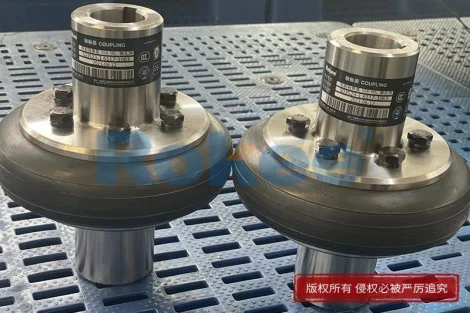
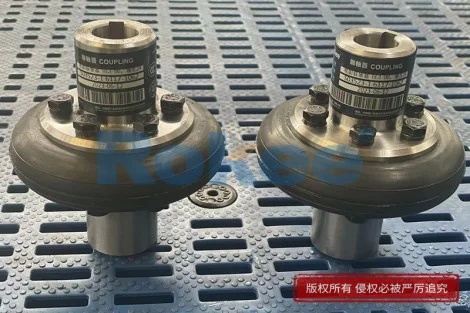
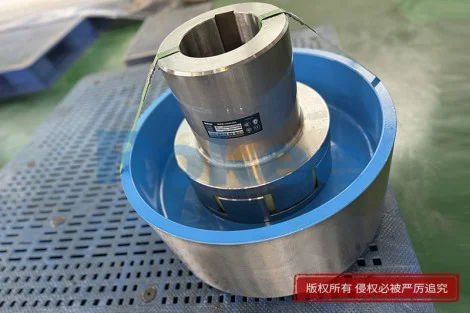
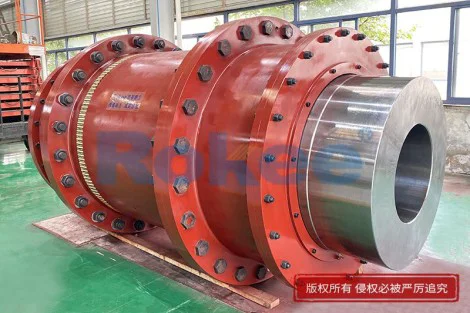
The basic structure of a barrel coupling for winch applications adopts a highly integrated and robust combination design, mainly composed of a toothed hub, an outer sleeve with precision processed inner teeth, high-hardness steel barrel rollers, and a fully enclosed sealing protection structure. Each component bears distinct functional responsibilities and achieves precise mechanical coordination to ensure stable and durable power transmission. The hub, as the core connecting component, is directly assembled with the power output shaft of the winch’s driving device, with uniformly distributed semicircular outer tooth grooves processed on its outer circumference through precision forging and finish machining. The matching outer sleeve is equipped with corresponding semicircular inner tooth grooves, forming a continuous circular accommodating cavity after assembly. Hardened steel barrel rollers are evenly arranged in the cavities formed by the meshing of inner and outer tooth grooves, serving as the direct force-bearing and torque-transmitting medium between the hub and the outer sleeve. This structural arrangement completely abandons the rigid meshing mode of traditional gear couplings and the simple elastic deformation transmission mode of flexible couplings, realizing surface contact force transmission through the curved surface of barrel rollers, which effectively disperses local stress and avoids concentrated pressure points during operation.
The working principle of the barrel coupling centers on rolling contact torque transmission and adaptive misalignment compensation, enabling it to adapt to the dynamic operating state of winch equipment in real time. When the winch starts to operate, the driving shaft drives the hub to rotate synchronously, and the rotational torque is evenly transmitted to the outer sleeve through the rolling friction and extrusion force of each barrel roller, further driving the winch drum to complete winding and unwinding movements. During this process, the cylindrical rollers can freely roll and fine-tune their positions in the tooth groove cavities, which endows the coupling with excellent adaptive adjustment capabilities. For the minor radial, axial, and angular misalignments that inevitably occur between the driving shaft and the drum shaft of the winch due to assembly errors, equipment aging, or long-term load deformation, the barrel rollers can automatically compensate for the deviation through micro rolling and position adjustment. This flexible compensation mechanism eliminates rigid friction and mechanical jamming caused by shaft misalignment, ensuring that the power transmission process remains smooth and continuous even when the equipment operating state deviates from the ideal assembly state.
In actual winch operation scenarios, equipment often faces harsh working conditions such as frequent start-stop cycles, sudden load changes, and continuous heavy-load operation, which put forward extremely high requirements on the impact resistance and fatigue resistance of transmission components. The barrel coupling shows unique performance advantages in adapting to these complex working conditions. Thanks to the surface contact transmission mode of barrel rollers, the instantaneous impact torque generated during the winch’s start, stop, and load mutation processes can be evenly distributed on the contact surfaces of multiple rollers, avoiding the local overload and rapid wear problems that are common in linear contact transmission structures. The overall structural rigidity of the coupling is fully guaranteed by high-strength integral processing technology, which can withstand the long-term alternating loads generated by reciprocating winding of steel ropes and effectively prevent structural deformation and transmission failure under continuous heavy-duty working states. Meanwhile, the reasonable tooth groove gap design reserves sufficient adjustment space for the rolling movement of the barrel rollers, which not only ensures the flexibility of misalignment compensation but also avoids tooth clamping and transmission stagnation caused by thermal expansion of components during long-time high-load operation.
The sealing and lubrication system of the barrel coupling is a key guarantee for its long-term stable operation in winch equipment, especially for winches applied in outdoor engineering, mining, and marine operation scenarios where dust, moisture, and corrosive media are prevalent. The coupling is equipped with fully enclosed sealing covers and multi-layer sealing components on both axial ends, which can effectively isolate external dust, sediment, and humid air from the internal transmission area. This closed structure prevents abrasive particles from entering the roller and tooth groove meshing gaps to cause abrasive wear, and also avoids component rust and lubricant deterioration caused by moisture invasion. The internal cavity of the coupling is filled with high-performance lubricating grease during assembly, and the closed environment can maintain the stability of the lubricating state for a long time, ensuring that the barrel rollers always maintain low-resistance rolling friction during operation. Good lubrication not only reduces mechanical wear and energy consumption of power transmission but also lowers the operating temperature of the coupling during high-load operation, delaying material fatigue and extending the overall service life of the component.
The adaptability of barrel couplings to different types of winch equipment further reflects their application value in industrial transmission systems. Whether it is a small light-duty winch for daily handling operations or a large heavy-duty winch for engineering hoisting and marine traction, the structural parameters of barrel couplings can be optimized and matched according to the equipment’s torque demand, shaft diameter specification, and operating frequency. For light and medium-duty winches that require frequent start-stop and flexible operation, the coupling’s sensitive misalignment compensation and low-resistance transmission characteristics can effectively reduce equipment operating resistance and improve winding accuracy. For heavy-duty winches that bear ultra-large traction loads, the multi-roller synchronous force-bearing structure can bear higher composite torque and ensure the stability of load transmission during long-distance and high-strength winding operations. In addition, the compact overall structure of the barrel coupling saves installation space for winch equipment, which is very suitable for the limited installation space of integrated winch devices and mobile engineering equipment, realizing compact and efficient layout of the drive system.
Reasonable daily maintenance and regular inspection are essential to maintain the long-term working performance of barrel couplings for winches, and standardized operation can effectively avoid premature failure and equipment downtime. In the daily operation process, it is necessary to regularly observe the operating state of the coupling, focusing on checking whether there is abnormal vibration, noise, or local overheating during the operation of the winch. Abnormal vibration often indicates excessive shaft misalignment or local lubrication failure, while abnormal noise may be caused by roller wear, foreign matter invasion, or sealing damage. Regular visual inspection of the coupling’s outer sealing structure is required to check for seal aging, cracking, or grease leakage, and damaged sealing components need to be replaced in a timely manner to ensure the tightness of the internal working environment. During periodic equipment maintenance, the internal lubrication state should be comprehensively inspected, and aged, deteriorated, or contaminated lubricating grease should be cleaned and replaced to maintain the low-friction operating state of the rolling components.
In terms of long-term service life management, regular detection of component wear is crucial for barrel couplings under continuous heavy-load operation. After a certain period of operation, the barrel rollers and tooth groove contact surfaces will produce slight wear due to long-term rolling and extrusion. Timely detection of wear degree can prevent excessive wear from causing increased transmission gap, reduced torque transmission efficiency, and aggravated equipment vibration. For worn rollers and tooth groove structures, targeted replacement and repair should be carried out according to the wear degree to restore the original transmission accuracy and stability of the coupling. It is also necessary to avoid long-term overload operation of the winch equipment in daily use, as sustained overload torque will exceed the design bearing range of the coupling, leading to accelerated fatigue wear of internal components and even permanent structural deformation, which seriously affects the safety and stability of the entire winch system.
Compared with other traditional coupling types applied in winch drive systems, barrel couplings show comprehensive advantages in structural stability, transmission efficiency, and environmental adaptability. Rigid couplings have simple structures but lack misalignment compensation capability, and slight shaft deviation will cause severe rigid friction and component wear, which is not suitable for winch equipment with frequent dynamic load changes. Ordinary elastic couplings rely on elastic component deformation to achieve buffering and compensation, but their elastic parts are prone to aging and fatigue damage under long-term alternating loads, with limited torque bearing capacity, making them unable to adapt to heavy-duty winch working conditions. Gear couplings have high transmission efficiency but poor flexibility in misalignment compensation, and tooth surface wear is obvious under impact loads. In contrast, barrel couplings combine high structural rigidity and flexible adaptive adjustment performance, achieving high-efficiency and high-stability torque transmission while solving the common problems of shaft misalignment compensation, impact load buffering, and anti-wear operation of winch equipment, making them more suitable for the complex and changeable working characteristics of winch systems.
With the continuous upgrading of industrial engineering equipment and the gradual improvement of winch operation precision and reliability requirements, the application prospect of barrel couplings in winch systems is becoming increasingly broad. Modern engineering operations put forward higher standards for the continuous working capacity, operation stability, and failure resistance of winch equipment, which further highlights the core advantages of barrel couplings in heavy-duty flexible transmission. The structural design of barrel couplings is constantly optimized with the progress of mechanical processing technology, and the application of high-strength wear-resistant materials further improves the component’s load-bearing capacity and service life, enabling them to adapt to more extreme working environments such as high dust, high humidity, and strong alternating loads. In the future, with the continuous development of intelligent and high-efficiency industrial transmission equipment, barrel couplings will continue to be optimized in structural integration, wear resistance, and maintenance convenience, providing more reliable core transmission support for various types of winch equipment and ensuring the stable and efficient operation of industrial winding and traction work.