High-precision Gear Coupling Improves Processing Accuracy Of PIR Sandwich Panel Production Line
In the modern construction and industrial manufacturing fields, the demand for materials that integrate safety, energy efficiency, durability and structural stability has been increasingly prominent. Among various building materials, PIR (Polyisocyanurate) sandwich panels have become a preferred choice for many large-scale projects due to their excellent comprehensive performance, including superior fire resistance, thermal insulation, corrosion resistance and lightweight characteristics. These panels are widely used in industrial workshops, warehouses, commercial buildings, cold storage facilities and other fields, playing an irreplaceable role in improving building energy efficiency and ensuring structural safety. The production of high-quality PIR sandwich panels relies heavily on advanced and sophisticated production lines, which integrate mechanical technology, chemical proportioning, electrical control and thermal management systems. Every link from raw material preparation to finished product packaging needs strict control to ensure the stability of product performance and the consistency of processing accuracy. However, in the long-term operation of traditional PIR sandwich panel production lines, many factors often lead to deviations in processing accuracy, such as unstable torque transmission, equipment vibration, shaft misalignment and component wear, which not only affect the quality of the final products but also reduce production efficiency and increase operating costs.
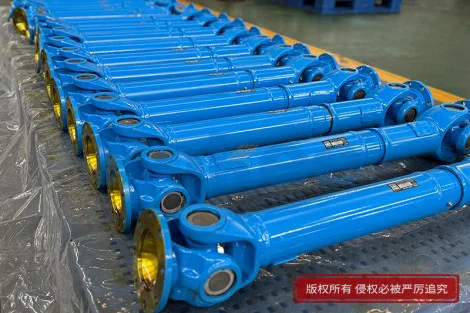
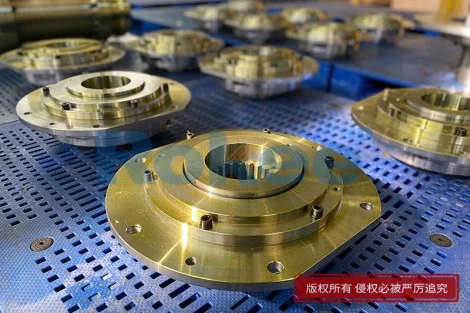
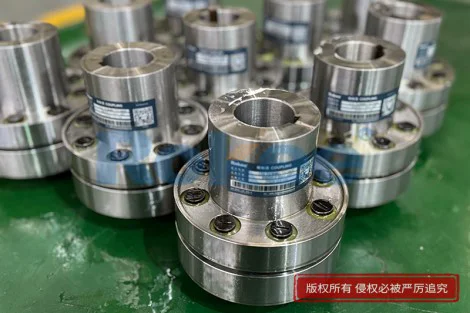
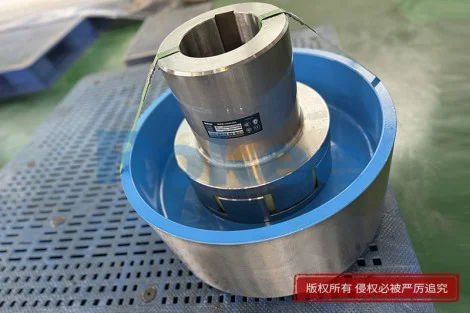
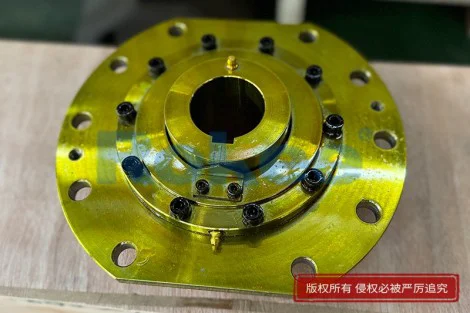
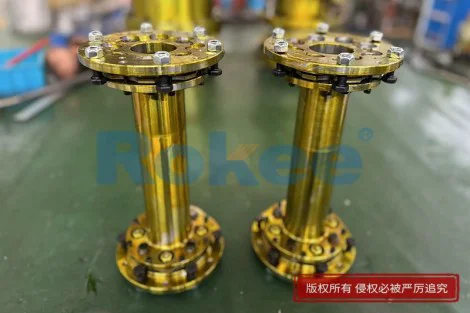
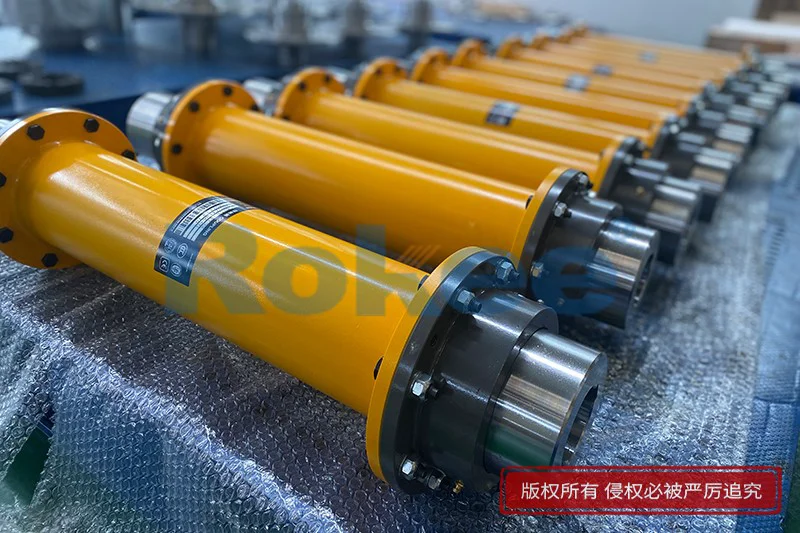
To understand how high-precision gear couplings improve the processing accuracy of PIR sandwich panel production lines, it is first necessary to clarify the core structure and working principle of these couplings, as well as the key links of the PIR sandwich panel production process that are closely related to processing accuracy. High-precision gear couplings are mechanical transmission components designed to connect two shafts and transmit torque while compensating for possible misalignments between the shafts. Unlike ordinary couplings, high-precision gear couplings adopt a sophisticated gear meshing design, usually consisting of two hubs with external gear teeth and a sleeve with internal gear teeth. The precise meshing between the internal and external gears ensures efficient and stable torque transmission, while the structural design of the gears allows the coupling to accommodate a certain degree of axial, radial and angular misalignments, which are common in industrial production lines due to equipment installation errors, thermal deformation during operation and vibration impacts. The gear teeth of high-precision gear couplings are usually processed through precision grinding technology, which ensures extremely high tooth profile accuracy and surface finish, reducing friction and wear during operation and improving the stability and service life of the coupling. In addition, high-precision gear couplings are usually made of high-strength alloy materials, which undergo strict heat treatment processes to enhance their mechanical properties, enabling them to withstand high torque and harsh working conditions, which is crucial for the continuous and stable operation of PIR sandwich panel production lines.
The production process of PIR sandwich panels is a complex and continuous automated process, which mainly includes raw material preparation, surface panel processing, core material foaming, composite forming, curing, cooling, cutting and stacking. Each of these links has strict requirements on processing accuracy, and any deviation in a single link may affect the overall quality of the finished panel. For example, in the surface panel processing link, the surface panels (usually color-coated steel plates, galvanized steel plates or aluminum plates) need to go through uncoiling, leveling and roll forming processes. The accuracy of the roll forming directly determines the flatness and profile consistency of the surface panels, which in turn affects the bonding effect between the surface panels and the core material. In the core material foaming link, the PIR foam is formed by the reaction of polyisocyanates and polyols, which requires precise control of the foaming temperature, pressure and material ratio. Any fluctuation in these parameters will lead to uneven density of the foam core, affecting the thermal insulation performance and structural strength of the panel. In the composite forming and cutting links, the stability of the transmission system directly determines the uniformity of the panel thickness and the accuracy of the cutting size. If the transmission system is unstable, it will cause deviations in the panel thickness, uneven cutting surfaces or incorrect dimensions, making the products unable to meet the application requirements. Traditional PIR sandwich panel production lines often use ordinary couplings, which have limitations in torque transmission accuracy and misalignment compensation capacity. During long-term operation, these couplings are prone to wear, vibration and other problems, leading to unstable transmission, which in turn affects the processing accuracy of each link.
The application of high-precision gear couplings can effectively solve the above problems by improving the stability and accuracy of the transmission system, thereby promoting the overall processing accuracy of the PIR sandwich panel production line. In the surface panel processing link, the uncoiling machine, leveling machine and roll forming machine are connected through high-precision gear couplings. The precise torque transmission of the couplings ensures that the speed of each equipment is synchronized, avoiding speed fluctuations caused by uneven torque transmission. For example, during the roll forming process, the roll forming machine needs to maintain a stable rotational speed to ensure that the profile of the surface panel is uniform. High-precision gear couplings can transmit torque without obvious loss, ensuring that the power output of the motor is accurately transmitted to the roll forming rolls, avoiding the occurrence of uneven profile or wrinkles caused by speed fluctuations. In addition, the misalignment compensation capacity of high-precision gear couplings can effectively offset the axial and radial deviations caused by the installation of the equipment or thermal deformation during operation, ensuring that the roll forming rolls are always in the correct position, thereby improving the flatness and dimensional accuracy of the surface panels. This is particularly important for the subsequent composite forming link, as the flatness of the surface panels directly affects the bonding tightness between the surface panels and the PIR core material, avoiding problems such as delamination or gaps in the finished panels.
In the core material foaming and composite forming links, the stability of the transmission system is crucial to the quality of the PIR core material and the composite effect. The high-pressure foaming system and the composite forming machine in the production line need to operate in a highly synchronized manner, which relies on the precise transmission of the coupling. High-precision gear couplings can ensure that the power of the motor is stably transmitted to the foaming pump and the composite forming conveyor belt, making the foaming pressure and the speed of the conveyor belt maintain a stable ratio. This ensures that the PIR foam mixture is evenly injected between the two surface panels, and the composite forming process is carried out under stable pressure and speed conditions, avoiding uneven foam density caused by fluctuations in foaming pressure or conveyor speed. In addition, the low vibration performance of high-precision gear couplings can reduce the impact of equipment vibration on the foaming process. Vibration in the traditional production line often leads to uneven distribution of the foam mixture, resulting in local voids or uneven density in the core material, which affects the thermal insulation and structural performance of the panel. High-precision gear couplings reduce vibration during transmission through precise gear meshing and high structural rigidity, creating a stable working environment for the foaming and composite forming links, thereby improving the uniformity and quality of the PIR core material.
The cutting link is another key link that affects the processing accuracy of PIR sandwich panels, as the accuracy of the cutting size directly determines whether the panel can be smoothly installed in actual applications. The cutting machine in the production line is usually driven by a motor through a coupling, and the accuracy of the coupling directly affects the cutting precision. High-precision gear couplings can ensure that the rotational speed of the cutting blade is stable and consistent, avoiding cutting errors caused by speed fluctuations. For example, in the fixed-length cutting process, the cutting machine needs to complete the cutting action at a specific speed and position. If the coupling has poor transmission accuracy, it will lead to deviations in the cutting position, resulting in inconsistent lengths of the finished panels. High-precision gear couplings can transmit torque with high accuracy, ensuring that the cutting blade rotates at a constant speed, and the cutting action is synchronized with the movement of the panel, thereby improving the accuracy of the cutting size. In addition, the wear resistance of high-precision gear couplings ensures long-term stable transmission performance, avoiding cutting errors caused by coupling wear during long-term operation, which is crucial for maintaining the consistency of product quality in mass production.
Apart from improving the processing accuracy of each link, high-precision gear couplings also play a positive role in reducing equipment wear, extending the service life of the production line and improving production efficiency. In traditional production lines, ordinary couplings are prone to wear and damage due to poor transmission stability and insufficient misalignment compensation capacity, which requires frequent maintenance and replacement, increasing the operating cost and reducing production efficiency. High-precision gear couplings are made of high-strength materials and processed through precision technology, which have excellent wear resistance and fatigue resistance. Their precise gear meshing design reduces friction during operation, reducing wear of the coupling itself and the connected equipment components, such as motors, reducers and bearings. This not only extends the service life of the coupling but also reduces the maintenance frequency and cost of the entire production line. In addition, the stable transmission performance of high-precision gear couplings reduces the failure rate of the production line, ensuring continuous and stable production, which is particularly important for mass production of PIR sandwich panels. The reduction in equipment failures and maintenance time directly improves production efficiency, enabling enterprises to complete production tasks more quickly and meet market demand.
To fully exert the role of high-precision gear couplings in improving the processing accuracy of PIR sandwich panel production line, reasonable selection, installation and maintenance are essential. In the selection process, it is necessary to comprehensively consider the torque requirements, rotational speed, misalignment range and working environment of the production line, and select the appropriate model and specification of high-precision gear couplings. For example, in the high-torque links such as the foaming system and cutting machine, it is necessary to select couplings with high torque-bearing capacity, while in the links with large misalignment possibilities such as the uncoiling and leveling system, it is necessary to select couplings with strong misalignment compensation capacity. In the installation process, it is necessary to ensure the accurate alignment of the coupling and the connected shafts, avoid excessive installation errors, and ensure that the coupling can work under optimal conditions. At the same time, appropriate lubrication measures should be taken to reduce friction and wear between the gear teeth, improve the transmission efficiency and service life of the coupling. In the daily maintenance process, it is necessary to regularly inspect the wear status of the gear teeth, the tightness of the connection and the lubrication situation, and timely replace worn components and supplement lubricating oil, so as to ensure that the high-precision gear couplings can maintain stable performance for a long time.
With the continuous development of the construction material industry, the requirements for the quality and processing accuracy of PIR sandwich panels are constantly improving, which puts forward higher requirements for the performance of the production line. High-precision gear couplings, as key transmission components, have become an important part of improving the processing accuracy and production efficiency of PIR sandwich panel production lines. Their precise torque transmission, excellent misalignment compensation capacity and good wear resistance can effectively solve the problems of unstable transmission and low processing accuracy in traditional production lines, ensuring the production of high-quality PIR sandwich panels. In the future, with the continuous advancement of material science and precision processing technology, high-precision gear couplings will be further optimized in terms of structure, performance and material, and their application in PIR sandwich panel production lines will be more extensive and in-depth. At the same time, with the integration of intelligent technology into industrial production, high-precision gear couplings may be combined with intelligent monitoring systems to realize real-time monitoring of their operating status, timely early warning of potential faults, and further improve the stability and reliability of the production line, promoting the sustainable development of the PIR sandwich panel industry.
It is worth noting that the improvement of the processing accuracy of PIR sandwich panel production lines is a systematic project, and the application of high-precision gear couplings is only one of the important measures. To achieve higher processing accuracy, it is also necessary to optimize the overall design of the production line, improve the precision of equipment components, strengthen the control of production parameters and improve the quality of raw materials. However, high-precision gear couplings play a pivotal role in this system, as they are the core of the transmission system, and the stability and accuracy of the transmission directly affect the performance of each equipment and the processing accuracy of each link. In practical applications, many enterprises have verified through practice that the application of high-precision gear couplings can significantly reduce the processing deviation of PIR sandwich panels, improve the consistency of product quality, reduce the rejection rate, and bring considerable economic benefits to enterprises. For example, in a large-scale PIR sandwich panel production enterprise, after replacing the ordinary couplings with high-precision gear couplings, the deviation of the panel thickness was reduced by more than 30%, the cutting size accuracy was improved by nearly 40%, and the rejection rate was reduced by 25%, while the maintenance frequency of the production line was reduced by half, effectively improving production efficiency and reducing operating costs. This fully shows that high-precision gear couplings have important practical value and application prospects in improving the processing accuracy of PIR sandwich panel production lines.
In conclusion, high-precision gear couplings, with their unique structural advantages and excellent performance, play an important role in improving the processing accuracy of PIR sandwich panel production lines. They can effectively improve the stability of the transmission system, compensate for shaft misalignments, reduce equipment vibration and wear, ensure the accuracy of each production link, and thus produce high-quality PIR sandwich panels that meet the market demand. With the continuous progress of technology and the increasing demand for product quality, high-precision gear couplings will become an indispensable key component in the PIR sandwich panel production industry, promoting the continuous development and upgrading of the industry towards higher precision, higher efficiency and more stability.