High Torque Cardan Driveshaft
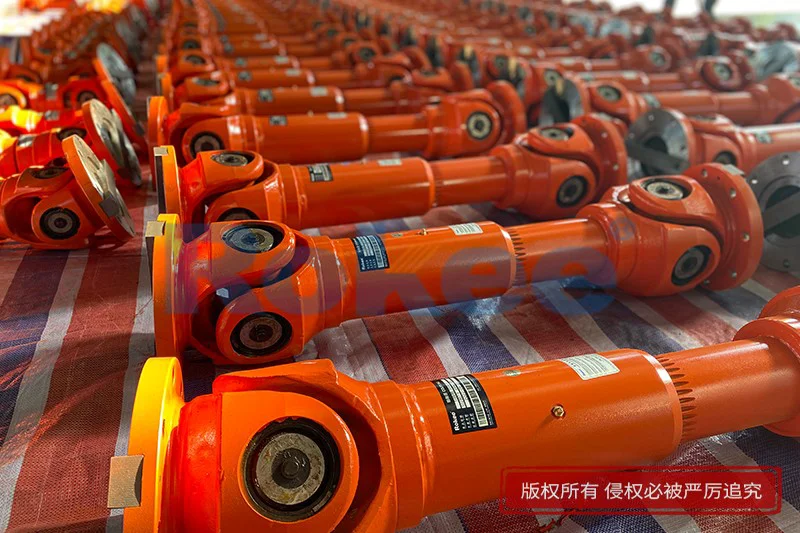
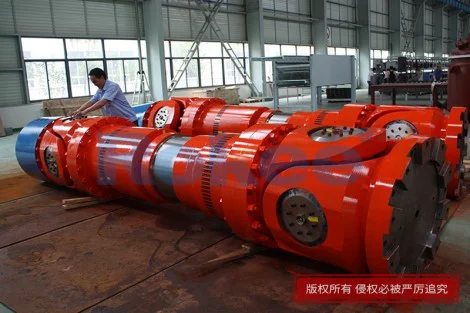
High torque cardan driveshafts are essential mechanical transmission components designed to deliver stable and powerful rotational torque across misaligned, dynamically moving mechanical systems. Built on the classic universal joint transmission mechanism, these driveshafts stand out from ordinary transmission shafts with their enhanced load-bearing capacity, structural robustness, and adaptive flexibility, making them indispensable in heavy-duty mechanical operation scenarios. They primarily serve to transfer high-power rotational force between driving and driven shafts that feature angular deviation, axial displacement, and positional offset, effectively solving the power transmission challenges of complex mechanical motion. Optimized structural designs and high-strength material configurations enable these driveshafts to withstand extreme torsional stress, maintain consistent transmission efficiency under heavy loads, and adapt to harsh working conditions including vibration, variable loads, and frequent start-stop operations. Their reliable performance ensures the continuous and stable operation of various heavy mechanical equipment, laying a solid foundation for industrial and mobile mechanical power transmission.
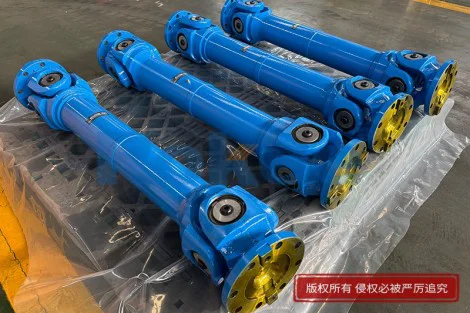
The core working principle of high torque cardan driveshafts centers on the flexible transmission characteristics of universal joints, also known as Hooke hinge transmission logic, which enables efficient torque transfer between non-collinear and dynamically offset shafts. The basic structural composition includes cross spiders, joint yokes, intermediate shaft bodies, and precision bearing assemblies, with each component working in coordination to achieve adaptive power transmission. When the driving end rotates, the driving joint yoke drives the cross spider to perform multi-directional rotational deflection, which further transmits rotational power to the driven joint yoke and the connected driven shaft. This unique mechanical structure allows the driveshaft to automatically compensate for angular misalignment and tiny axial displacement generated during equipment operation, eliminating transmission jams and power loss caused by shaft position deviation. Unlike ordinary cardan shafts, high torque models adopt an optimized cross spider and bearing structure to increase the contact area of force transmission, effectively dispersing torsional pressure and avoiding local stress concentration. This structural optimization ensures that even under continuous high-load rotation, the transmission motion remains smooth and synchronous, maintaining stable torque output without obvious speed fluctuation or mechanical jitter.
Material selection is the core factor that determines the high torque performance and service life of cardan driveshafts, with all key load-bearing components adopting high-strength, wear-resistant, and fatigue-resistant metal materials. The intermediate shaft body, which bears the main torsional load, is forged from high-grade alloy steel with excellent tensile strength and torsional rigidity, effectively resisting deformation and fracture under long-term high-torque operation. The cross spider, as the key force transmission and movable component, undergoes precise forging and heat treatment processes to improve surface hardness and internal toughness, enhancing its resistance to wear, impact, and fatigue damage. The built-in precision bearings are made of high-purity bearing steel, with optimized structural tolerance to reduce friction resistance during rotation and improve the flexibility of angular deflection. All connecting parts are processed with anti-corrosion and wear-resistant treatments to adapt to complex working environments with dust, moisture, and variable temperature. The scientific material matching and processing technology enable the driveshaft to maintain structural stability under extreme torque conditions, avoid premature aging and damage of components, and achieve long-term stable operation in heavy-duty mechanical systems.
High torque cardan driveshafts possess multiple distinctive performance advantages that make them superior to conventional transmission shafts in heavy-load working scenarios. First and foremost, their outstanding torque bearing capacity allows them to handle ultra-high rotational torsional force, meeting the power transmission demands of large-scale heavy machinery that ordinary driveshafts cannot support. Secondly, they feature excellent misalignment adaptability, being able to operate stably within a large angular deflection range and compensate for dynamic shaft position changes caused by equipment vibration, mechanical deformation, or working stroke changes. In addition, these driveshafts maintain high transmission efficiency under full-load and variable-load conditions, with minimal power loss during torque transmission, effectively converting mechanical power into effective driving force. Their integrated structural design improves overall rigidity and stability, reducing vibration and noise during high-speed and heavy-load operation. Moreover, the modular component structure facilitates daily inspection, maintenance, and partial replacement, avoiding integral scrapping caused by single component damage. These comprehensive performance advantages make them highly adaptable and reliable in complex and harsh mechanical working environments.
The application scope of high torque cardan driveshafts covers a wide range of heavy industrial equipment and mobile engineering machinery, becoming a core transmission component in multiple mechanical fields. In engineering machinery, they are widely applied in loaders, excavators, cranes, and bulldozers, undertaking the power transmission task between engines, gearboxes, and walking or working mechanisms to adapt to the violent vibration and variable load changes of engineering operations. In industrial manufacturing, they serve large-scale production equipment such as metallurgical machinery, mining machinery, and cement processing equipment, stably transmitting high power to support continuous and high-intensity industrial production. In the field of special transportation and heavy vehicles, these driveshafts are used in heavy-duty transport vehicles and off-road machinery, adapting to the uneven road conditions and dynamic axle position changes to ensure stable power output. They also play a key role in agricultural heavy machinery and port handling equipment, solving the power transmission problems of large machinery under complex working conditions. The versatile and high-performance characteristics enable them to meet the differentiated power transmission needs of various heavy mechanical scenarios.
Rational installation and standardized daily maintenance are crucial to maximizing the service performance and service life of high torque cardan driveshafts. During installation, it is necessary to ensure the coaxiality and mounting accuracy of the driving and driven ends, avoid excessive angular deviation and axial tension caused by improper installation, and reserve a reasonable movable stroke for the telescopic structure. The installation process requires strict calibration of component connection tightness to prevent loose connection or eccentric assembly that may cause local overload and abnormal wear. In daily use, regular lubrication maintenance is essential, with professional high-temperature and wear-resistant lubricating grease filled into the universal joint and bearing parts to reduce friction loss and prevent dry wear of movable components. It is necessary to regularly check the surface wear of cross spiders, bearings, and joint yokes, as well as the deformation and tightness of the shaft body, and replace worn aging components in a timely manner. In addition, avoiding long-term overload operation and frequent violent start-stop can effectively reduce mechanical fatigue damage. Standardized operation and maintenance can effectively maintain the transmission accuracy and torque stability of the driveshaft, reducing failure rates and extending overall service life.
Common operational failures of high torque cardan driveshafts mostly stem from abnormal wear, improper use, and insufficient maintenance, with targeted troubleshooting effectively ensuring stable equipment operation. The most frequent failure is abnormal vibration and noise during operation, usually caused by worn bearings, loose connecting parts, or excessive angular misalignment, which can be solved by replacing worn components and recalibrating installation accuracy. Insufficient torque output and reduced transmission efficiency are mainly attributed to dry friction of movable parts, aging lubricants, or slight deformation of the shaft body, requiring timely lubricant replacement and component inspection and correction. Local heating of components often occurs due to long-term overload operation and excessive friction, which needs load adjustment and enhanced lubrication maintenance to avoid component burnout and failure. Fatigue cracks and deformation of the shaft body are mostly caused by long-term extreme load impact, requiring regular appearance inspection and timely replacement of damaged shaft bodies. Timely detection and resolution of minor faults can prevent fault expansion, ensure the continuous and efficient operation of the driveshaft, and reduce mechanical downtime and maintenance costs.
With the continuous upgrading of modern heavy machinery towards large-scale, high-power, and high-efficiency development, the technical iteration and performance optimization of high torque cardan driveshafts are constantly advancing. Current optimization directions mainly focus on lightweight high-strength structural design, low-friction and high-wear-resistant component upgrading, and adaptive dynamic compensation performance improvement. New forging and heat treatment technologies are applied to further improve the torsional rigidity and fatigue resistance of the shaft body while reducing overall self-weight, realizing the balance of high performance and energy saving. The optimized universal joint structure enhances the dynamic compensation ability for angular and axial deviation, adapting to more complex and variable mechanical operation states. In addition, the upgrade of sealing and anti-corrosion structures enables the driveshaft to adapt to more extreme working environments such as high dust, high humidity, and low temperature. In the future, with the integration of intelligent monitoring technology, high torque cardan driveshafts will realize real-time monitoring of operating status, torque load, and component wear, further improving operational reliability and intelligent maintenance level, and providing more reliable power transmission support for modern heavy mechanical equipment.