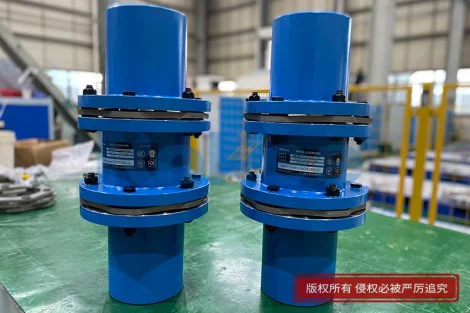
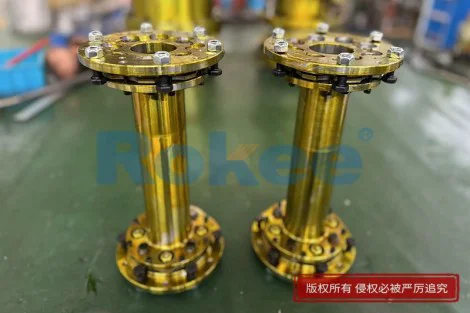
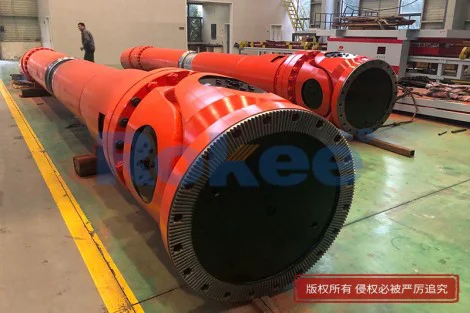
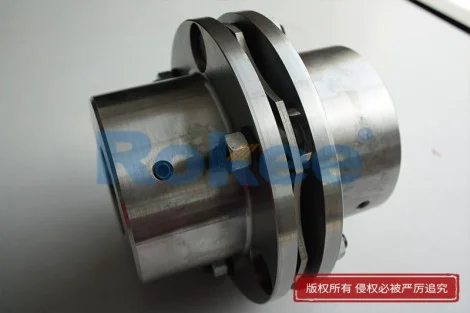
Cardan Coupling for PUF Panel Production Line High Quality Material Durable
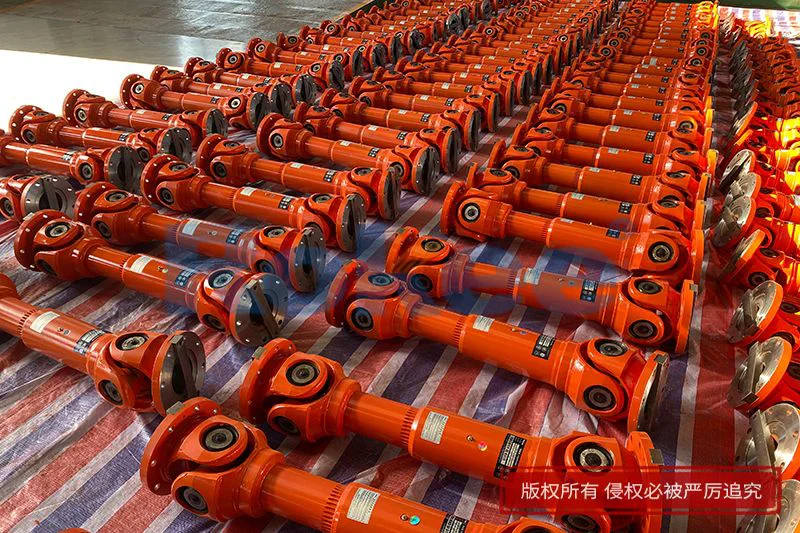
In the realm of modern industrial manufacturing, the production of PUF (Polyurethane Foam) panels relies heavily on a complex and integrated system of machinery, where every component plays a critical role in ensuring consistent product quality, operational efficiency, and long-term reliability. Among these essential components, the cardan coupling—also commonly referred to as the universal joint coupling—stands out as a cornerstone of the power transmission system, particularly in PUF panel production lines. Designed to address the unique challenges of power transfer in such specialized manufacturing environments, the cardan coupling’s performance is directly tied to the overall productivity and durability of the entire production line. What sets high-quality cardan couplings apart is their construction from premium materials, which not only enhances their durability but also ensures they can withstand the rigorous demands of continuous, high-load operation inherent in PUF panel manufacturing.
PUF panels are widely used in various industries, including construction, automotive, and aerospace, due to their excellent thermal insulation, lightweight properties, and structural strength. The production of these panels involves a series of interconnected processes, including uncoiling of facing materials, roll forming, preheating, PU foaming, lamination, curing, and cutting. Each of these processes requires precise and stable power transmission to ensure that every stage of production operates in synchronization, as even minor fluctuations in power delivery can compromise the quality of the final product. For instance, in the foaming and lamination stages, consistent torque and rotational speed are essential to maintain the uniform density of the PU foam core and the strong bonding between the core and the facing materials. Any deviation in power transmission can lead to uneven foam distribution, poor adhesion, or irregular panel thickness, resulting in defective products and increased production costs. This is where the cardan coupling proves indispensable: it serves as the critical link between the power source (such as motors or gearboxes) and the various executing components of the production line, ensuring that power is transmitted efficiently and reliably even when the shafts of connected machinery are not perfectly aligned.
The unique operational requirements of PUF panel production lines present specific challenges for power transmission components. Unlike many other manufacturing processes, PUF panel production is a continuous, high-volume operation that runs for extended periods, often 24 hours a day, seven days a week. This means that the cardan couplings used in these lines must be able to withstand constant use without experiencing premature wear or failure. Additionally, the production line’s layout often requires that different subsystems—such as the uncoiling system, roll forming system, and cutting system—are positioned in ways that result in misalignment between the driving and driven shafts. This misalignment can be angular, parallel, or axial, and it is caused by factors such as equipment installation constraints, thermal expansion during operation, and vibration generated by moving parts. A high-quality cardan coupling must be able to accommodate these misalignments without sacrificing power transmission efficiency or creating excessive stress on other components, such as bearings or shafts.
The key to meeting these challenges lies in the selection of high-quality materials for the construction of cardan couplings. The materials used directly impact the coupling’s strength, wear resistance, corrosion resistance, and overall durability. In contrast to low-quality couplings that use inferior materials and are prone to premature failure, high-quality cardan couplings for PUF panel production lines are crafted from carefully selected metals and alloys that offer superior mechanical properties. One of the most commonly used materials for the core components of cardan couplings is carbon steel, which is valued for its high tensile strength, excellent toughness, and good wear resistance. Carbon steel is particularly well-suited for applications that involve high torque and heavy loads, as it can withstand the stresses generated during power transmission without deforming or breaking. To further enhance its performance, carbon steel is often subjected to heat treatment processes, such as quenching and tempering, which increase its hardness and durability, making it more resistant to wear and fatigue.
In addition to carbon steel, alloy steel is another popular material choice for high-quality cardan couplings. Alloy steel is created by adding elements such as chromium, nickel, and molybdenum to carbon steel, which significantly improves its mechanical properties. Chromium, for example, enhances corrosion resistance, making the coupling suitable for use in environments where it may be exposed to moisture, chemicals, or dust—common conditions in PUF panel production facilities. Nickel increases the material’s toughness and ductility, allowing it to absorb shock loads and vibrations without sustaining damage. Molybdenum, on the other hand, improves the material’s high-temperature strength, which is critical in PUF panel production lines where machinery can generate significant heat during continuous operation. By combining these alloying elements, manufacturers can create cardan couplings that are not only strong and durable but also resistant to the harsh conditions of industrial manufacturing.
The components of a cardan coupling, including the yokes, cross shafts, and bearings, each require materials that are tailored to their specific function. The yokes, which connect the coupling to the driving and driven shafts, are typically made from high-strength carbon steel or alloy steel to ensure they can transmit high torque without bending or cracking. The cross shaft, which is the central component that allows for angular misalignment, is often crafted from hardened alloy steel to withstand the rotational forces and wear that occur during operation. The bearings, which reduce friction between the cross shaft and the yokes, are made from materials such as chrome steel or stainless steel, which offer excellent wear resistance and smooth operation. In some cases, the bearings may also be coated with a lubricant or a specialized coating to further reduce friction and extend their service life.
Another important aspect of high-quality cardan couplings is the precision of their manufacturing. Even the best materials will not result in a durable coupling if the manufacturing process is flawed. High-quality cardan couplings are produced using advanced machining techniques, such as CNC turning and milling, which ensure that each component is manufactured to exact specifications. This precision ensures that the coupling fits perfectly with the connected machinery, reducing the risk of misalignment and excessive wear. Additionally, the components are carefully inspected and tested to ensure they meet strict quality standards before they are assembled into the final product. This attention to detail during manufacturing ensures that the cardan coupling operates smoothly, efficiently, and reliably for an extended period.
Durability is a critical factor for cardan couplings in PUF panel production lines, as downtime due to coupling failure can result in significant financial losses. A durable cardan coupling is one that can withstand the rigors of continuous operation, including high torque, frequent start-stop cycles, vibration, and exposure to harsh environmental conditions, without requiring frequent maintenance or replacement. The use of high-quality materials is the foundation of durability, but other factors also contribute to the coupling’s long service life. One such factor is the design of the coupling, which must be optimized to distribute stress evenly across all components. A well-designed cardan coupling will have a robust structure that minimizes stress concentrations, reducing the risk of fatigue and failure. For example, the yokes may be designed with rounded edges to prevent stress from building up in specific areas, while the cross shaft may be engineered to distribute torque evenly to all four arms.
Vibration damping is another important feature that contributes to the durability of cardan couplings in PUF panel production lines. The continuous operation of machinery in these lines generates significant vibration, which can cause wear and tear on the coupling and other components over time. High-quality cardan couplings are designed to absorb and dampen these vibrations, reducing the stress on the coupling and extending its service life. This can be achieved through the use of flexible materials in certain components, such as the bearings, or through the incorporation of vibration-damping features in the coupling’s design. By reducing vibration, the coupling not only lasts longer but also helps to protect other components of the production line, such as motors and gearboxes, from damage.
Corrosion resistance is also a key factor in the durability of cardan couplings, particularly in PUF panel production facilities where the coupling may be exposed to moisture, chemicals, or dust. Moisture can cause rust and corrosion in metal components, weakening their structure and leading to premature failure. High-quality cardan couplings are treated with anti-corrosion coatings, such as galvanization or powder coating, which provide a protective barrier against moisture and other corrosive elements. Additionally, the use of corrosion-resistant materials, such as stainless steel or alloy steel with chromium, further enhances the coupling’s ability to withstand harsh environmental conditions. This corrosion resistance ensures that the coupling remains in good condition even after years of exposure to the elements, reducing the need for frequent maintenance and replacement.
The performance of a PUF panel production line is directly influenced by the reliability of its cardan couplings. A high-quality, durable cardan coupling ensures that power is transmitted efficiently and consistently, allowing all components of the production line to operate in synchronization. This not only improves the quality of the PUF panels but also increases production efficiency by reducing downtime and minimizing the number of defective products. For example, a coupling that can accommodate misalignment without losing power transmission efficiency ensures that the foaming and lamination processes remain consistent, resulting in PUF panels with uniform density and strong bonding. Additionally, a durable coupling reduces the need for maintenance, which saves time and resources that can be allocated to other aspects of production.
In contrast, low-quality cardan couplings made from inferior materials are prone to premature wear, deformation, and failure. These couplings may not be able to withstand the high torque and continuous operation of PUF panel production lines, leading to frequent breakdowns. Downtime due to coupling failure can be costly, as it disrupts the entire production process, resulting in lost productivity and increased labor costs. Additionally, low-quality couplings may cause vibrations and misalignment in the production line, leading to damage to other components, such as motors, gearboxes, and bearings. This can result in even more significant repair costs and extended downtime, further impacting the profitability of the production facility.
To ensure the long-term performance and durability of cardan couplings in PUF panel production line, proper maintenance is essential. While high-quality couplings are designed to be low-maintenance, regular inspection and care can further extend their service life. This includes checking the coupling for signs of wear, such as cracks, corrosion, or excessive play, and replacing any worn components promptly. Additionally, lubricating the bearings and other moving parts at regular intervals can reduce friction and wear, ensuring smooth operation. It is also important to ensure that the coupling is properly aligned with the connected machinery, as misalignment can increase stress on the coupling and other components, leading to premature failure. By following a regular maintenance schedule, production facilities can maximize the lifespan of their cardan couplings and minimize the risk of unexpected breakdowns.
The role of cardan couplings in PUF panel production lines is often underappreciated, but their impact on the overall efficiency and quality of the production process cannot be overstated. These couplings serve as the critical link between the power source and the various components of the production line, ensuring that power is transmitted efficiently and reliably even in the face of misalignment and harsh operating conditions. High-quality cardan couplings, constructed from premium materials and designed for durability, are essential for maintaining the continuous operation of PUF panel production lines, reducing downtime, and ensuring the production of high-quality PUF panels.
As the demand for PUF panels continues to grow, the importance of high-quality, durable cardan couplings will only increase. Manufacturers of PUF panel production lines are increasingly recognizing the value of investing in high-quality power transmission components, as they contribute to improved productivity, reduced costs, and enhanced product quality. By choosing cardan couplings made from high-quality materials, such as carbon steel and alloy steel, and designed for durability, production facilities can ensure that their operations run smoothly and efficiently for years to come.
In conclusion, the cardan coupling is an essential component of PUF panel production lines, playing a critical role in power transmission and ensuring the smooth operation of the entire manufacturing process. The use of high-quality materials in the construction of these couplings is the key to their durability, allowing them to withstand the rigorous demands of continuous, high-load operation. From carbon steel and alloy steel to precision manufacturing and corrosion-resistant treatments, every aspect of a high-quality cardan coupling is designed to optimize performance and extend service life. By investing in high-quality, durable cardan couplings, PUF panel manufacturers can improve production efficiency, reduce downtime, and ensure the consistent quality of their products, ultimately enhancing their competitiveness in the global market. As industrial manufacturing continues to evolve, the importance of reliable, durable power transmission components like cardan couplings will remain a cornerstone of efficient and productive operations.