Industrial Steel Laminae Couplings Help Improve Quality And Efficiency Of Rockwool Sandwich Panel Production Line

The continuous upgrading of modern building material manufacturing technology has put forward higher requirements for the operational stability and production precision of rockwool sandwich panel production lines. As a core connecting and transmission component in automated production systems, industrial steel laminae couplings play an irreplaceable role in optimizing the overall operating state of the production line, standardizing product processing procedures, and reducing production fluctuations. Rockwool sandwich panels, as mainstream thermal insulation, fireproof and sound insulation building materials, are widely used in industrial plant enclosures, commercial building exterior walls, and clean space decoration projects. Their product performance is highly dependent on the precise coordination of each production link, from steel plate unwinding, rockwool core material laying, glue coating and compounding to rolling shaping and fixed-length cutting. Any slight deviation in mechanical transmission and operation synchronization will lead to uneven product specifications, unstable bonding performance and increased defective rates. Industrial steel laminae couplings solve many common pain points in traditional production line operation through their unique structural design and excellent mechanical properties, effectively boosting the overall production quality and operational efficiency of rockwool sandwich panel production lines.
In the automated production process of rockwool sandwich panels, the linkage operation of multiple mechanical units is the core premise of continuous and standardized production. Traditional production lines often use ordinary connecting components to connect transmission shafts, rolling equipment and feeding devices. These conventional components are prone to elastic deformation, axial deviation and angular displacement during long-term high-speed operation and frequent load switching. Such subtle mechanical deviations will be amplified in the continuous streamlined production process, resulting in asynchronous operation between the front and rear equipment modules. For rockwool sandwich panel production, the synchronization of steel plate feeding speed and rockwool core material laying speed directly determines the uniformity of the panel internal structure. When transmission lag or speed mismatch occurs, the rockwool core material will be unevenly distributed, with local thinning, stacking or voids, while the composite gap between the steel plate and the core material will be inconsistent. These problems not only reduce the overall flatness and structural compactness of finished panels, but also cause hidden dangers such as insufficient bonding strength and local thermal insulation performance attenuation in subsequent use.
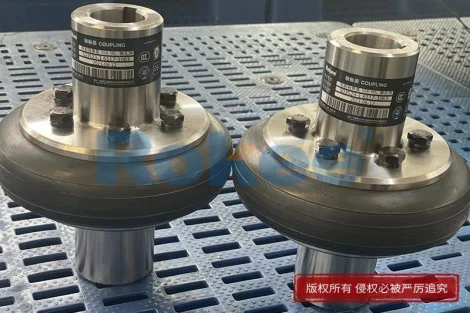
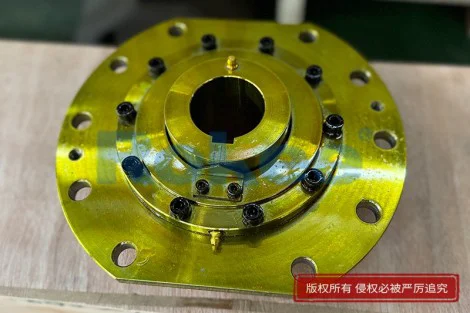
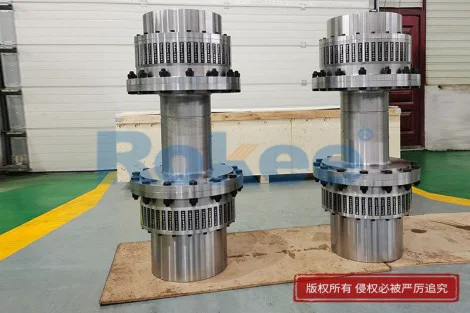
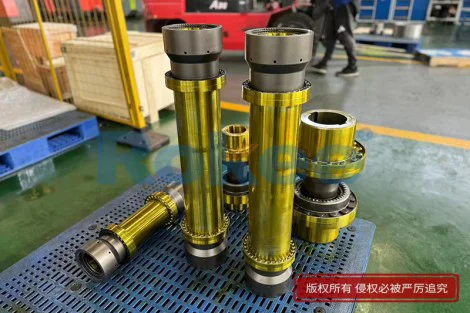
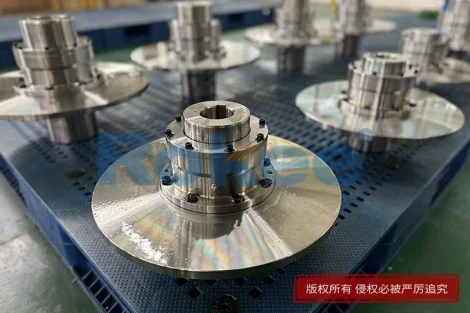
Industrial steel laminae couplings are designed with high-precision laminated steel structures, which integrate excellent toughness, rigidity and anti-deformation performance. Different from ordinary coupling parts, the laminated steel layer structure can effectively buffer the instantaneous vibration and impact force generated during equipment start-up, shutdown and load change, and automatically compensate for tiny axial, radial and angular deviations in the transmission process. This precise compensation capability ensures that all functional units of the rockwool sandwich panel production line maintain a highly synchronized operating state at all times. In the steel plate unwinding and leveling stage, the stable transmission output ensures constant tension of the steel plate, avoiding plate deviation and wrinkling caused by unstable transmission. In the rockwool core material paving stage, the synchronous operation of the feeding roller and paving equipment ensures uniform and continuous laying of rockwool fibers, making the core material density of each panel consistent in the length and width direction. In the glue coating composite link, the stable operating speed eliminates the problem of uneven glue amount caused by equipment speed jitter, realizing uniform coverage of adhesive between the steel plate and rockwool core material, and laying a solid foundation for improving the bonding firmness and overall structural stability of finished products.
Production stability is the key to batch consistency of rockwool sandwich panel quality, and also an important factor restricting long-term production efficiency of the production line. Traditional transmission connecting parts are prone to wear, loosening and fatigue aging after long-term continuous operation, which will gradually increase the operating error of the equipment. Frequent equipment debugging, maintenance and part replacement are required in daily production, which not only interrupts continuous production rhythm and reduces effective production time, but also leads to large quality differences between different production batches due to repeated equipment debugging. Industrial steel laminae couplings adopt integrated high-strength steel processing technology, with strong fatigue resistance and wear resistance, and can maintain stable mechanical transmission performance under long-term high-speed operation and continuous load working conditions. The compact structural design avoids loosening and displacement failures caused by long-term vibration, greatly reducing the failure rate of transmission connection parts of the production line.
The reduction of equipment failure rate directly improves the continuous operation capacity of the rockwool sandwich panel production line. In industrial mass production scenarios, the downtime caused by mechanical failure is far more than the loss of parts and maintenance costs, including production schedule delay, waste of raw materials in the production process, and quality inconsistency of semi-finished products before and after equipment shutdown. The reliable performance of steel laminae couplings minimizes unplanned downtime of the production line, realizes long-term uninterrupted streamlined operation, and significantly improves the hourly output and daily production capacity of the production line. At the same time, the stable transmission state avoids parameter drift of production equipment, so that the processing specifications, composite pressure and operating speed of each link can be maintained within a fixed standard range for a long time, ensuring that the thickness, flatness, structural compactness and other core indicators of each batch of rockwool sandwich panels remain highly consistent, effectively reducing the defective rate caused by mechanical instability.
In addition to improving operational stability and product consistency, industrial steel laminae couplings also optimize the material utilization rate and refined production level of rockwool sandwich panel production line. In the traditional production mode, equipment transmission deviation and speed jitter often lead to irregular cutting of plates, excessive edge trimming allowance and waste of rockwool core materials and adhesives. The precise transmission control realized by steel laminae couplings makes the positioning and cutting of fixed-length panels more accurate, reduces the trimming width of finished plates, and maximizes the utilization rate of steel plates and rockwool core materials. Meanwhile, the uniform composite pressure and stable feeding state make the adhesive exert the best bonding effect, avoiding quality defects such as degumming and hollowing caused by insufficient local pressure, and reducing the rework rate of defective products in the later stage. The reduction of rework and waste not only improves the economic benefits of production, but also optimizes the overall production process, making the production line more adaptable to standardized and large-scale modern building material production requirements.
The adaptability of industrial steel laminae couplings to complex production working conditions further expands the efficient production space of rockwool sandwich panel production lines. In actual industrial production, the production line will face environmental temperature changes, continuous load fluctuation and other complex working conditions. ordinary coupling parts are easy to have performance attenuation under temperature change and alternating load, which affects transmission accuracy. Steel laminae couplings have excellent temperature adaptability and structural stability, and their mechanical properties will not fluctuate significantly in conventional production temperature ranges, ensuring that the production line maintains high-precision operation in different production environments. For multi-specification and multi-thickness rockwool sandwich panel production, the good deformation coordination ability of laminated steel structures can adapt to the slight load changes brought by different product specifications, realizing flexible switching of production parameters without repeated equipment debugging, greatly improving the production flexibility of the production line, and enabling manufacturers to efficiently complete the production tasks of diversified product specifications.
From the perspective of long-term production operation and maintenance, the application of industrial steel laminae couplings also reduces the comprehensive operation cost of the production line and improves the sustainable production efficiency. The long service life and low failure rate of the couplings reduce the frequency of parts replacement and daily maintenance workload, saving a lot of manual maintenance time and spare part consumption. Traditional production lines need regular inspection, debugging and replacement of transmission connection parts every month, which consumes a lot of human resources and delays production progress. After adopting steel laminae couplings, the maintenance cycle of the production line is greatly extended, and the daily maintenance work is simplified, enabling production personnel to focus more on production process optimization and quality inspection, further improving the overall operational efficiency of the production line. At the same time, the stable operation of the equipment reduces the mechanical loss of other matching parts of the production line, prolongs the overall service life of the production equipment, and creates a more stable and durable production foundation for long-term batch production.
In the context of the continuous intelligent and automated upgrading of the building material manufacturing industry, the fine optimization of mechanical transmission components has become an important breakthrough to improve the core competitiveness of production lines. Rockwool sandwich panel production is a typical continuous composite processing process, and the precision and stability of transmission links determine the upper limit of product quality and production efficiency. Industrial steel laminae couplings, as high-precision and high-stability transmission connecting components, solve the inherent defects of traditional transmission structures in synchronous operation, anti-vibration and anti-deformation. They not only realize the overall stability and high-efficiency operation of the rockwool sandwich panel production line from the mechanical level, but also promote the standardized, refined and large-scale development of the production process. With the increasing market demand for high-performance and high-consistency building thermal insulation materials, the application value of industrial steel laminae couplings in rockwool sandwich panel production lines will be further highlighted, providing reliable mechanical guarantee for manufacturers to produce high-quality products, improve production capacity and reduce production costs, and boosting the high-quality development of the whole building material processing industry.