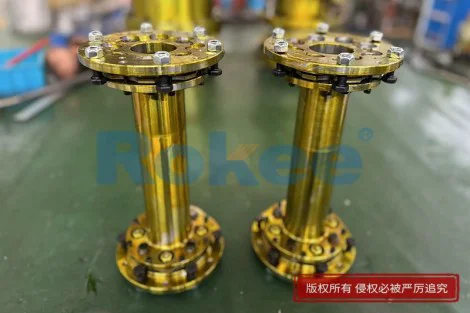
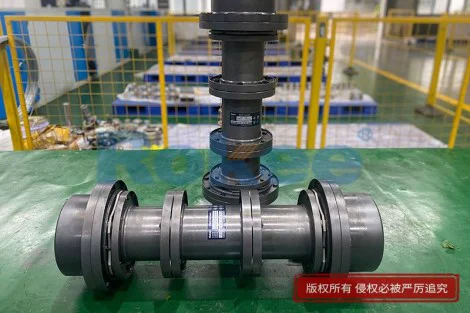
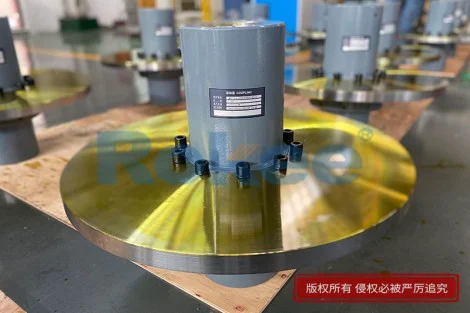
Drum Barrel Coupling
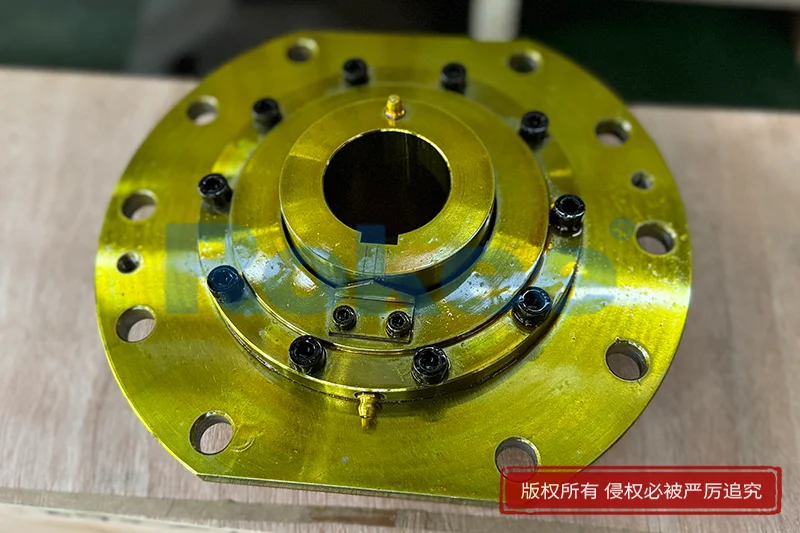
As a core flexible transmission component in modern mechanical systems, drum barrel coupling occupies an irreplaceable position in industrial power transmission and mechanical connection fields. Different from traditional rigid connection parts and ordinary flexible couplings, this specialized coupling integrates optimized gear meshing structure and flexible displacement compensation performance, perfectly balancing high-efficiency torque transmission and adaptive fault tolerance of mechanical operation deviations. It is widely embedded in various heavy-duty, continuous and variable-load mechanical equipment, effectively solving the common operational problems of shaft misalignment, impact load vibration and stress concentration in mechanical transmission systems, and becoming a key guarantee for the long-term stable and reliable operation of industrial mechanical equipment. With the continuous upgrading of industrial manufacturing and the increasing complexity of mechanical working conditions, the structural advantages and application value of drum barrel coupling have been further highlighted, making it an indispensable basic component in heavy machinery, energy equipment, transportation machinery and other core industrial fields.
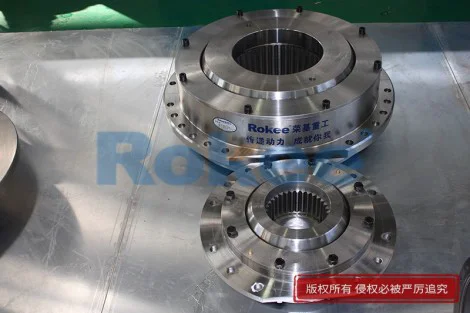
The working principle of drum coupling is based on the precise meshing transmission of drum-shaped gear pairs and the flexible coordination of spherical matching structures, realizing the dual core functions of efficient torque transmission and automatic compensation of shaft system deviations. In the actual operation of mechanical equipment, there are inevitably various installation and operation deviations between the driving shaft and the driven shaft, including angular deviation, axial displacement and radial offset. These deviations will cause additional bending stress and friction loss in the transmission system, seriously affecting the operation stability and service life of the equipment. When the drum barrel coupling works, the drum-shaped gear teeth can produce flexible adaptive sliding and meshing adjustment within a certain range according to the shaft system deviation. The spherical contact surface can always maintain a stable meshing state under different displacement deviations, ensuring continuous and uniform torque transmission. At the same time, the relative sliding between gear teeth can absorb the vibration and impact generated during equipment start-up, braking and load switching, effectively buffering the instantaneous impact load of the transmission system and reducing the dynamic load of the shaft system and bearings.
One of the most prominent performance advantages of drum barrel coupling is its excellent load-bearing capacity and stable torque transmission performance. Benefiting from the uniform stress bearing mode of drum-shaped gear meshing, the coupling can stably transmit large torque for a long time and withstand instantaneous impact load and short-term overload conditions that frequently occur in the operation cycle of mechanical equipment. In the start-up stage of high-power mechanical equipment, the instantaneous torque often far exceeds the rated operating torque, and traditional couplings are prone to tooth surface wear, tooth body fracture or meshing failure under such sudden load impact. In contrast, the drum barrel coupling can disperse instantaneous impact stress through the multi-tooth uniform meshing structure and spherical contact buffer effect, avoiding concentrated damage to local structures. In the continuous operation state of heavy load, it can maintain consistent meshing accuracy and torque transmission efficiency, without power attenuation caused by tooth surface wear or meshing clearance changes, ensuring the continuous and efficient operation of the mechanical transmission system.
Strong displacement compensation capability is another key performance feature of drum barrel coupling, which makes it highly adaptable to complex and variable working conditions. Compared with traditional straight-tooth couplings that can only bear tiny displacement deviations and are prone to meshing jamming under slight shaft misalignment, drum barrel coupling has a large angular displacement compensation range and excellent axial and radial displacement adaptation performance. In the actual industrial production environment, mechanical equipment will produce subtle shaft position changes due to foundation settlement, equipment vibration, temperature thermal expansion and component wear after long-term operation. These cumulative deviations will gradually affect the coaxiality of the transmission shaft system. The drum-shaped tooth profile design allows the coupling to automatically adjust the meshing angle and contact position according to the real-time shaft deviation, effectively compensating for various displacement errors generated during equipment installation and operation. This adaptive compensation performance greatly reduces the installation accuracy requirements of equipment, lowers the assembly difficulty and later maintenance cost, and avoids equipment failure and component wear caused by shaft system misalignment.
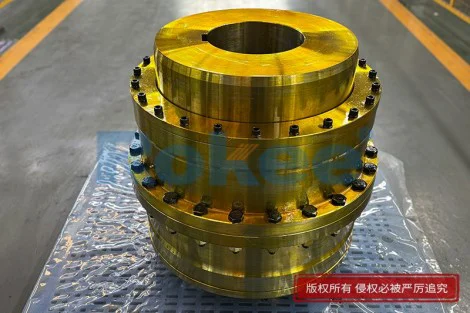
The optimized sealing and lubrication structure of drum barrel coupling ensures its long-term reliable operation in various harsh working environments. The external matching sealing cover and special sealing accessories form a fully closed internal working space, which can effectively isolate external dust, moisture, corrosive gas and particulate impurities. In industrial scenarios such as metallurgical production, mining operation and outdoor mechanical operation, the equipment is often exposed to dusty, humid and corrosive environments, and ordinary open transmission couplings are easy to have internal dust accumulation and corrosion, resulting in accelerated gear wear and reduced transmission accuracy. The fully closed sealing structure of drum barrel coupling completely avoids the invasion of external pollutants, while preventing the overflow of internal lubricating grease, maintaining a stable internal lubrication environment for a long time. The internal lubrication system can form a uniform oil film on the gear meshing surface, reducing the friction coefficient of relative movement between gear teeth, lowering friction heat generation and mechanical wear, and significantly extending the service life of the coupling and the matching transmission components.
Drum barrel coupling shows extremely high application adaptability in diverse industrial scenarios, covering almost all mechanical transmission occasions that require high torque transmission, vibration buffering and deviation compensation. In heavy lifting machinery, it is used to connect the reducer output shaft and the winding drum, bearing large traction torque and frequent start-stop impact loads, and stabilizing the power transmission of the lifting mechanism. In metallurgical and rolling equipment, which runs continuously for a long time with variable load and high vibration, the coupling can adapt to the thermal deformation and shaft deviation generated by high-temperature operation, ensuring the continuous and stable operation of the rolling transmission system. In wind power, marine engineering and energy equipment, it copes with the complex dynamic load and environmental vibration interference of equipment operation, improving the anti-fatigue performance and operational stability of the transmission system. In addition, it also plays a stable and reliable role in mining machinery, cement equipment, chemical transmission machinery and other fields, solving various transmission problems caused by complex working conditions and improving the overall operational efficiency of mechanical equipment.
In terms of operational stability and safety, drum barrel coupling has obvious advantages over other types of flexible couplings. Its torsionally rigid structural design ensures no torsional deformation during torque transmission, maintaining high-precision power transmission and synchronous operation of the shaft system. At the same time, the flexible meshing mode can effectively filter the vibration and shock generated by the equipment during operation, reduce the vibration noise of the mechanical system, and optimize the operating environment of the equipment. For mechanical equipment that operates continuously for 24 hours, the stable and fault-tolerant performance of the coupling can effectively reduce the frequency of sudden equipment shutdowns caused by transmission component failure, improve the overall operating rate of production equipment, and reduce production losses caused by equipment failure. Moreover, the structural wear resistance and corrosion resistance of the coupling make it less prone to performance attenuation in long-term service, maintaining consistent transmission accuracy and load-bearing capacity throughout the whole service cycle.
The installation and maintenance characteristics of drum barrel coupling also make it more suitable for industrial large-scale application and promotion. The compact and integrated structural design simplifies the overall installation process, with no complicated assembly procedures, and the positioning and connection between components are precise and reliable, which can effectively shorten the equipment assembly cycle. In the daily maintenance process, the fully closed sealing structure reduces the frequency of lubricating grease replacement and internal cleaning, and the wear-resistant gear structure avoids frequent component replacement. When minor faults such as slight meshing wear occur, the adaptive adjustment ability of the drum-shaped tooth profile can still ensure the normal operation of the equipment, leaving sufficient time for equipment maintenance and overhaul. This low-maintenance operating characteristic greatly reduces the daily operation and maintenance cost of industrial equipment, improves the economic benefits of equipment operation, and is very suitable for large-scale industrial production scenarios that pursue high efficiency and low consumption.
With the continuous progress of industrial mechanical technology, the performance optimization and structural upgrading of drum barrel coupling are also ongoing. Modern manufacturing processes further optimize the tooth profile precision and surface smoothness of drum-shaped gears, making the meshing transmission more precise and smooth, and further reducing friction loss and vibration noise. At the same time, the optimization of material selection improves the structural strength, wear resistance and high-temperature resistance of the coupling, enabling it to adapt to more extreme working conditions such as high temperature, low temperature and strong corrosion. The lightweight and compact structural optimization design further reduces the self-weight of the coupling on the premise of ensuring load-bearing performance, reduces the inertial resistance of equipment operation, and improves the dynamic response efficiency of the mechanical transmission system. These technological upgrades continuously expand the application boundary of drum barrel coupling and make its performance more adaptable to the development needs of modern high-efficiency, high-precision and high-reliability industrial equipment.
In the whole mechanical transmission system, drum barrel coupling undertakes the important functions of power transmission, operation buffering and fault tolerance protection, and is a key component connecting various mechanical power units and execution units. Its excellent comprehensive performance effectively makes up for the performance defects of traditional couplings in load bearing, deviation compensation and environmental adaptability, and provides a reliable guarantee for the stable operation of complex mechanical systems. In the context of the continuous development of industrial automation and intelligent manufacturing, the stability and reliability of basic mechanical components directly determine the overall operation level of production equipment. As a high-performance flexible transmission component, drum barrel coupling will continue to play an irreplaceable core role in various industrial fields, support the stable and efficient operation of various mechanical equipment, and provide solid basic support for the high-quality development of modern industrial manufacturing industry.