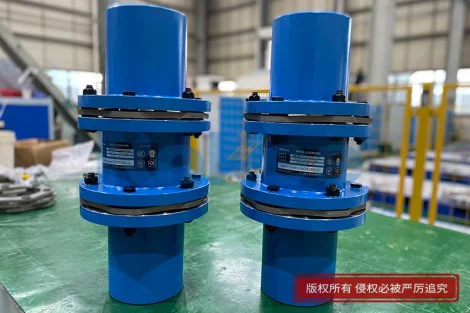
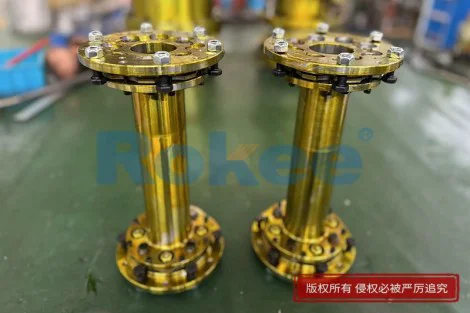
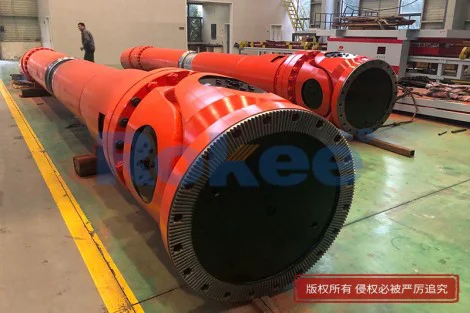
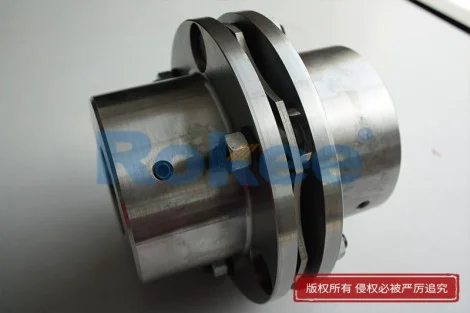
Barrel Coupling For Rolling Mill
In the complex and high-load operating environment of modern metallurgical rolling production, the stability and reliability of shaft transmission components directly determine the continuous operation efficiency of rolling mill equipment and the overall quality of rolled products. As a core heavy-duty transmission component specially optimized for rolling mill working conditions, barrel coupling has become an indispensable key part of the rolling mill power transmission system by virtue of its unique structural design, excellent torque transmission performance and superior misalignment compensation capability. Different from conventional gear couplings and pin couplings used in general industrial equipment, barrel coupling is tailored to the harsh working characteristics of rolling mills, including heavy load impact, frequent start-stop operation, thermal deformation of shafting and continuous high-speed cyclic operation, solving many common transmission failure problems in long-term rolling production.
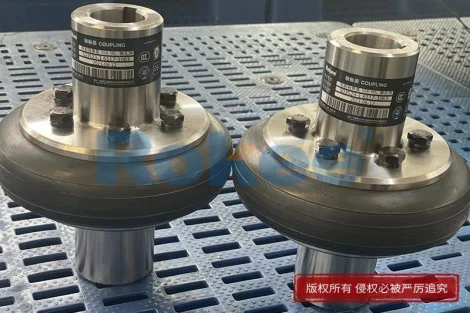
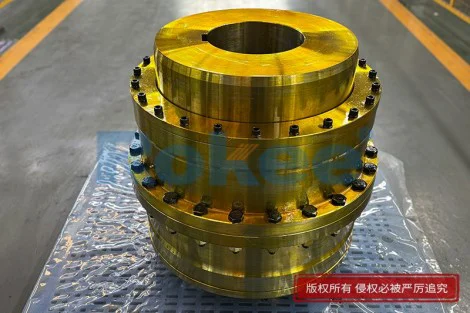
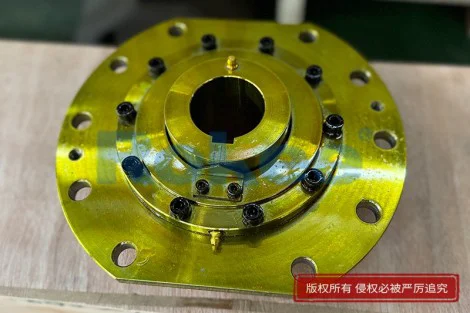
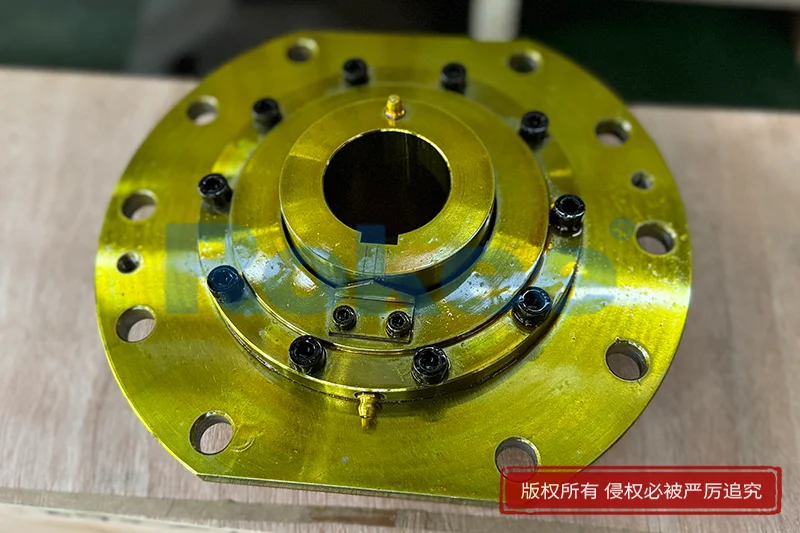
The basic structural composition of barrel coupling for rolling mill follows a modular integrated design concept, which is mainly composed of outer sleeve, inner half coupling, hardened steel barrel rollers, precision sealing components and limit positioning structures. All matching parts adopt high-precision machining and overall heat treatment processes, ensuring high structural rigidity and surface hardness while maintaining flexible coordination between components. The core transmission structure abandons the traditional line contact or point contact transmission mode of ordinary couplings, and adopts curved surface contact matching between barrel-shaped rollers and the inner wall of the sleeve and the groove of the half coupling. This structural innovation enables the contact stress generated during torque transmission to be evenly distributed on the curved surface of the barrel elements, effectively avoiding local stress concentration and microscopic fatigue damage that are prone to occur in conventional straight-tooth and straight-pin transmission structures. The spherical center of the barrel-shaped transmission elements coincides with the central axis of the coupling, and the reserved matching gap is reasonably optimized, which lays a solid structural foundation for the coupling to adapt to multi-dimensional shaft misalignment in rolling mill operation.
The working principle of barrel coupling in rolling mill transmission systems is based on positive torque transmission and flexible displacement compensation. During the operation of the rolling mill, the driving force output by the motor and reducer is transmitted to the driving half coupling of the barrel coupling, and the rotational torque is evenly transmitted to the outer sleeve through the tightly fitted barrel rollers, and then stably transferred to the driven half coupling and the connected rolling mill shafting. In this process, the hardened steel barrel rollers do not produce rigid sliding friction, but perform slight rolling displacement in the matching groove, which greatly reduces the friction loss and wear degree of transmission components. More importantly, the unique curved matching structure allows the coupling to automatically compensate for axial displacement, radial deviation and angular deflection of the rolling mill shafting within a certain range. In actual rolling production, the rolling mill shafting will inevitably produce thermal expansion and contraction displacement due to long-term high-temperature operation of hot rolling processes, and will also generate slight shaft position deviation due to equipment vibration, foundation settlement and long-term mechanical fatigue. Ordinary rigid couplings cannot adapt to these subtle displacements, which will lead to additional bending stress and shear stress on the shafting, resulting in shaft body wear, bearing damage and even equipment vibration and shutdown failures. The barrel coupling can effectively absorb and offset these misalignments through the flexible rolling fit of internal components, ensuring that the torque transmission process is always stable and uniform, and protecting the safety and integrity of the entire rolling mill transmission shafting.
The superior performance of barrel coupling is highly compatible with the extreme working conditions of rolling mill production. Rolling mill equipment needs to bear instantaneous heavy load impact in the process of biting steel, rolling and discharging steel, especially in heavy plate rolling, section steel rolling and high-speed wire rod rolling processes. The instantaneous torque impact borne by the transmission system will increase exponentially compared with the stable operation state. The barrel coupling has ultra-high torque bearing capacity by virtue of the large-area curved surface contact structure, which can withstand frequent instantaneous load impacts without plastic deformation or structural damage of internal transmission components. Compared with ordinary gear couplings, its effective torque transmission area is increased significantly, and the unit contact pressure is reduced greatly, which effectively improves the fatigue resistance and impact resistance of the coupling. In addition, the rolling production process has the characteristics of long-term continuous operation and no frequent shutdown, which puts forward high requirements for the durability and stability of transmission components. The overall heat treatment process of barrel coupling parts improves the surface wear resistance and core toughness of the components, enabling them to maintain stable transmission performance in long-term cyclic operation and avoid performance attenuation caused by long-term mechanical wear.
Harsh on-site environmental adaptability is another important advantage of barrel coupling applied to rolling mills. Metallurgical rolling workshops are usually accompanied by harsh environmental factors such as high temperature, high humidity, rolling oxide scale, dust and cooling water splashing. These impurities are easy to invade the interior of traditional couplings, causing abrasion of matching surfaces, blockage of movable gaps, corrosion of metal components and lubricant deterioration, which seriously affect the service life and operation stability of the couplings. The barrel coupling for rolling mill is equipped with a multi-layer integrated sealing structure, which can effectively isolate external dust, oxide scale, cooling water and other pollutants from entering the internal transmission area. The internal closed lubrication environment ensures that the lubricating grease can maintain stable lubricating performance for a long time, avoiding dry friction and abnormal wear of barrel rollers and matching surfaces. At the same time, the metal materials selected for the coupling have good high-temperature resistance and corrosion resistance, and will not produce structural oxidation, deformation or performance degradation in the high-temperature working environment of the rolling mill, maintaining consistent transmission accuracy and structural stability for a long time.
In terms of equipment operation and production efficiency optimization, barrel coupling brings significant practical value to rolling mill production. The stable torque transmission characteristic ensures uniform and consistent rotational speed of the rolling mill shafting, avoiding rotational speed fluctuation and transmission jitter caused by unstable coupling operation. This stable operating state directly improves the dimensional accuracy and surface finish of rolled products, reduces the product defects such as thickness deviation, surface scratch and shape distortion caused by transmission vibration, and effectively improves the qualified rate of rolled products. In the high-speed continuous rolling production line, the precise displacement compensation capability of barrel coupling eliminates the additional load of shafting misalignment on bearings, reducers and motors, reduces the operating load and wear loss of auxiliary equipment, and extends the overall service life of the rolling mill transmission system. At the same time, the structural design of the barrel coupling avoids the tooth surface jamming and transmission lag problems that often occur in gear couplings during frequent positive and negative rotation of the rolling mill, ensuring sensitive and accurate power response of the equipment during start-stop, speed regulation and steering switching, and improving the overall operation efficiency of the production line.
The assembly and maintenance advantages of barrel coupling also make it more suitable for industrialized rolling production scenarios. The modular integrated structure simplifies the overall assembly process, and the internal components are positioned accurately without complex debugging procedures during installation. The reserved reasonable matching gap and standardized component size enable the coupling to achieve quick assembly and disassembly, which greatly shortens the equipment maintenance time. In the daily operation and maintenance of rolling mills, the wearing parts of barrel coupling are mainly barrel rollers with strong wear resistance and long service cycle. Routine maintenance only needs to check the sealing state and lubrication condition regularly, and replace individual worn parts when necessary, without overall disassembly and replacement of the coupling. This low-maintenance characteristic effectively reduces the downtime loss caused by equipment maintenance, improves the continuous operation rate of the rolling mill production line, and reduces the daily operation and maintenance cost of the equipment. Compared with other types of heavy-duty couplings, the barrel coupling has lower failure rate in long-term rolling production, and can effectively reduce unexpected equipment shutdown accidents caused by transmission component failure, ensuring the continuity and stability of industrial rolling production.
In different types of rolling mill production processes, barrel coupling can show excellent adaptive performance, covering hot rolling, cold rolling, profile rolling and other mainstream rolling production fields. In hot rolling production with high temperature and heavy load impact, its high-temperature resistance and impact resistance can cope with the harsh working environment of high-temperature steel billet rolling and frequent load changes; in cold rolling production focusing on high precision and stable operation, its stable transmission accuracy and vibration damping performance can meet the high-precision processing requirements of thin plate and strip products; in profile rolling production with complex load changes, its strong torque bearing capacity and misalignment compensation capability can adapt to the irregular load impact generated by special-shaped steel rolling. Whether it is a small and medium-sized rolling mill for conventional production or a large-scale heavy-duty rolling mill for industrial mass production, barrel coupling can match the operating parameters of the equipment and provide reliable power transmission guarantee for the rolling system.
With the continuous upgrading of modern rolling production towards high speed, high precision and high efficiency, the performance requirements for rolling mill transmission components are constantly improving. The traditional transmission couplings are gradually unable to meet the production demands of new-type rolling mills due to their limited torque transmission capacity, poor misalignment compensation effect and short service life. The structural advantages and comprehensive performance of barrel coupling make it the mainstream upgrading choice for rolling mill transmission systems. The optimized curved surface contact structure further reduces transmission vibration and noise, realizes low-noise and stable operation of the rolling mill, and improves the on-site production environment. The durable structural design reduces the frequency of equipment replacement and maintenance, and provides strong support for the long-term stable and efficient operation of the rolling mill production line. In the future development of metallurgical rolling industry, with the continuous innovation of coupling structure design and material technology, the comprehensive performance of barrel coupling will be further improved, which can adapt to more extreme rolling working conditions and more precise production requirements, and play a more important role in promoting the high-quality development of rolling production industry.