Barrel Coupling For Heavy Machinery
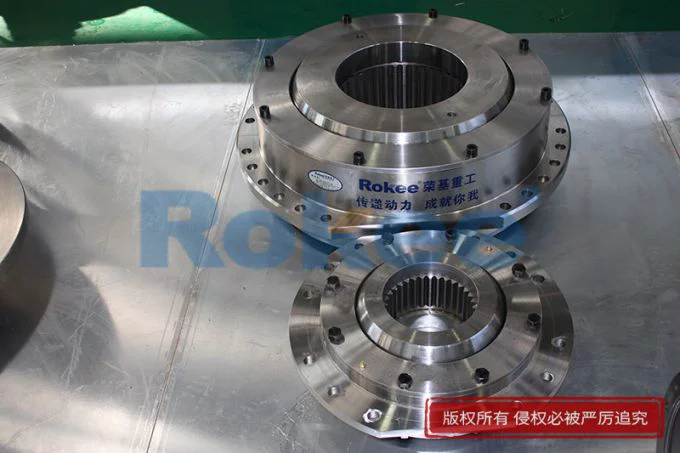
Barrel couplings serve as indispensable flexible transmission components specially optimized for heavy machinery operating under extreme and high-load industrial conditions. Unlike conventional rigid couplings that lack deformation tolerance and ordinary elastic couplings with limited load-bearing capacity, this specialized mechanical part integrates high-efficiency torque transmission, multi-dimensional misalignment compensation, and exceptional impact resistance into a single compact structure. Primarily designed to connect drive shafts and driven shafts in heavy-duty equipment, it effectively buffers instantaneous impact loads, offsets axial, radial, and angular shaft deviations generated during long-term mechanical operation, and stabilizes the overall transmission system. Widely adapted to lifting, mining, metallurgy, and bulk material handling machinery, barrel couplings address the core pain points of traditional transmission accessories, including rapid wear, frequent failure, and unstable power output under heavy loads. Their robust structural design and reliable operational performance make them a foundational guarantee for the continuous, safe, and efficient operation of large-scale heavy industrial machinery in complex working environments.
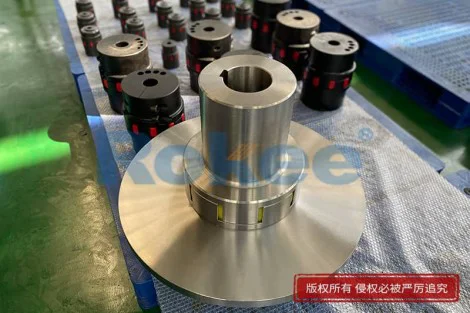
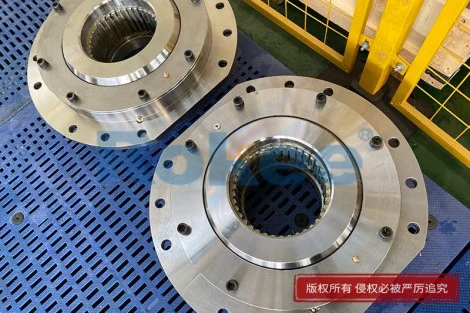
The unique structural configuration of barrel couplings lays the core foundation for their superior performance in heavy machinery applications. Constructed with a curved barrel-shaped contact structure and optimized rolling-slipping composite motion mechanism between internal pins and bushings, the component abandons the rigid point-to-point or line-to-line contact mode adopted by traditional couplings. Instead, it achieves uniform surface contact during power transmission, which dramatically increases the effective load-bearing area and enhances overall structural rigidity. This innovative design boosts the load-bearing capacity of the coupling several times compared with ordinary coupling products of the same specification, enabling it to withstand the long-term high-torque operation requirements of heavy machinery. In addition, the integrated structural layout avoids loose assembly gaps and structural deformation that commonly occur in split coupling structures. The internal matching precision is finely controlled to ensure stable meshing and operation, while the overall compact size saves valuable installation space for heavy equipment with dense structural layouts. The streamlined external structure also effectively resists external mechanical extrusion and structural damage, adapting to the harsh physical stress environment of heavy industrial operation scenarios.
Superior torque transmission efficiency and misalignment compensation capability are the most prominent functional advantages of barrel couplings for heavy machinery. In the operation of large-scale heavy equipment, long-term mechanical vibration, equipment settlement, and component wear inevitably cause slight misalignment between connected shafts, which easily leads to eccentric wear, torque loss, and even transmission system failure if not compensated. Barrel couplings excel in resolving this problem with their flexible structural characteristics, which can automatically and stably compensate for axial displacement, radial deviation, and angular deflection generated during equipment operation. This real-time compensation function eliminates additional mechanical stress on the shaft, bearings, and other core components, ensuring consistent and efficient torque transmission without power attenuation. Meanwhile, the rolling-slipping composite motion mode between internal parts reduces friction resistance during operation, maintaining high transmission efficiency even under continuous heavy-load and low-speed working conditions. Compared with rigid couplings that are prone to stress concentration and elastic couplings that are easy to deform under heavy loads, barrel couplings balance transmission accuracy and structural flexibility perfectly, fully meeting the precise and stable power transmission needs of heavy machinery in long-cycle industrial production.
Barrel couplings exhibit outstanding adaptability to harsh working conditions, making them highly suitable for the complex operating environments of heavy machinery. Most heavy industrial equipment operates in environments filled with dust, mud, moisture, and variable temperature changes, which pose severe challenges to the durability and stability of mechanical transmission components. The optimized structural design of barrel couplings effectively isolates external pollutants from internal transmission moving parts, reducing the adhesion of dust and impurities that may cause abrasive wear and operational jamming. Their excellent structural toughness enables them to resist frequent impact loads, reverse loads, and inertial shocks generated during equipment startup, shutdown, and load switching. Unlike ordinary couplings that are prone to fatigue cracks and structural damage under intermittent impact forces, barrel couplings maintain stable structural performance after long-term repeated stress. Additionally, the special contact structure disperses local mechanical pressure, avoiding localized overheating and component aging caused by concentrated friction, thus adapting to continuous uninterrupted operation requirements in high-intensity industrial production scenarios and greatly reducing the risk of sudden equipment shutdowns caused by coupling failure.
The application scope of barrel couplings covers almost all core fields of heavy machinery manufacturing and industrial operation, becoming a standard matching component for high-load transmission equipment. In lifting and hoisting machinery, they are widely used to connect gearbox output shafts and wire rope drums, stably transmitting high torque while bearing large radial forces to ensure the safe and stable lifting operation of cranes and hoists. In mining and mineral processing industries, barrel couplings are configured on conveyor systems, crushing equipment, and grinding machinery, adapting to the heavy-load operation and harsh underground working environment of mining equipment to maintain continuous material transportation and processing efficiency. In metallurgical and steel production, they match with rolling equipment and material handling machinery, resisting high-temperature environmental impacts and frequent variable-load operation to guarantee the stable operation of high-precision production lines. Moreover, they are also applied in port stacking and reclaiming equipment, heavy-duty winches, and bulk material conveying machinery, providing reliable transmission support for various large-scale equipment that requires long-term, high-intensity, and high-load operation.
Excellent wear resistance and long service life are key economic advantages of barrel couplings in heavy machinery operation. The surface contact transmission structure fundamentally avoids local excessive friction and concentrated wear that plague traditional couplings, evenly distributing mechanical friction and stress on the entire contact surface. This rolling-slipping composite friction mode greatly reduces the overall wear rate of internal components, effectively delaying the aging and failure process of core parts. Manufactured with high-strength and wear-resistant materials, the coupling body maintains stable mechanical properties under long-term friction, impact, and variable load conditions, resisting surface abrasion, deformation, and fatigue damage. In actual industrial operation, barrel couplings can maintain stable working performance for a long time without frequent replacement, even in high-frequency and heavy-load working scenarios. The reduction of component wear not only extends the service life of the coupling itself but also avoids secondary damage to matching shafts, bearings, and other equipment caused by coupling wear and failure, effectively reducing the overall wear loss of the entire mechanical transmission system.
Barrel couplings feature simple and efficient maintenance characteristics, which greatly reduce the operational and maintenance costs of heavy machinery. The integrated and modular structural design enables quick disassembly and assembly without complex professional tools or tedious operational procedures. When routine inspection and maintenance are required, staff can directly check the wear status of internal contact parts and clean external pollutants, realizing rapid daily maintenance. The stable structural performance of qualified barrel couplings eliminates the need for frequent debugging and parameter calibration after installation, maintaining long-term operational stability without regular adjustment. In the event of partial component wear, targeted replacement of individual accessories can be realized without replacing the entire coupling assembly, which significantly saves maintenance time and spare part costs. For industrial enterprises with large-scale heavy machinery equipment, the low-maintenance and high-stability characteristics of barrel couplings effectively reduce equipment downtime caused by maintenance, improve the overall operating rate of production equipment, and bring significant operational efficiency benefits to industrial production.
With the continuous upgrading of heavy machinery toward large-scale, high-load, and high-efficiency operation, barrel couplings have become an essential core component to promote the optimization and upgrading of modern industrial transmission systems. Traditional transmission components can no longer meet the increasingly stringent requirements of heavy machinery for load-bearing capacity, operational stability, and environmental adaptability, while barrel couplings perfectly adapt to the development trend of heavy industrial equipment with their superior comprehensive performance. Their unique structural advantages solve many long-standing technical problems in the field of heavy-load power transmission, including unstable torque transmission, easy wear and failure, and poor misalignment compensation. By ensuring the safe, stable, and efficient operation of heavy machinery, barrel couplings indirectly improve the overall production efficiency of industrial lines and reduce equipment failure rates and operational risks. As a reliable and high-performance transmission component, it will continue to be widely applied and continuously optimized in the field of heavy machinery manufacturing, providing solid technical support for the stable operation and performance upgrading of modern heavy industrial equipment.