Barrel Coupling For Lifting Equipment

In the complex and high-load operating environment of lifting equipment, the stability and reliability of power transmission components directly determine the overall operational safety and service life of mechanical systems. As a core transmission component specially optimized for heavy-duty drum drive and lifting operation scenarios, barrel coupling has become an indispensable key part of modern lifting machinery due to its unique structural design, excellent torque transmission performance and strong misalignment compensation capability. Unlike traditional coupling structures that rely on linear or point contact for force transmission, barrel coupling adopts curved surface contact transmission logic, which perfectly adapts to the frequent start-stop, variable load and slight shaft displacement characteristics of lifting equipment, effectively solving the common problems of stress concentration, rapid wear and transmission failure in traditional transmission structures during long-term heavy-load operation.
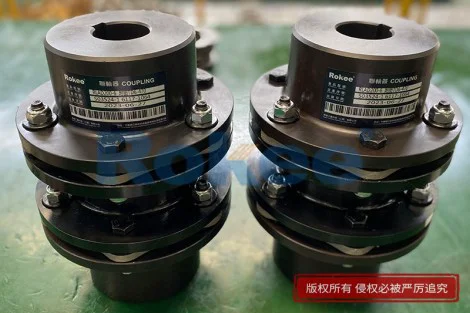
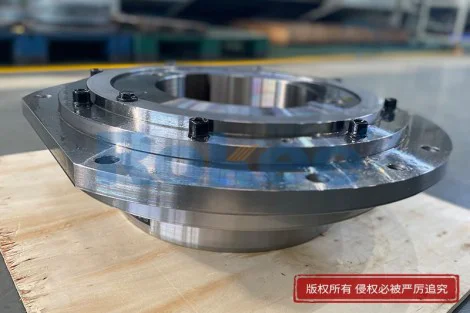
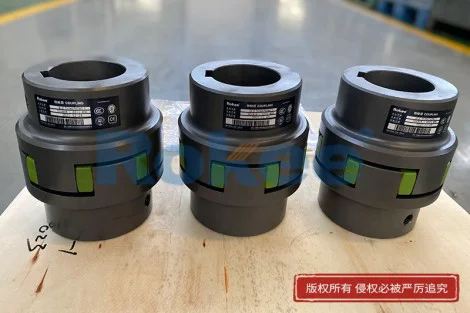
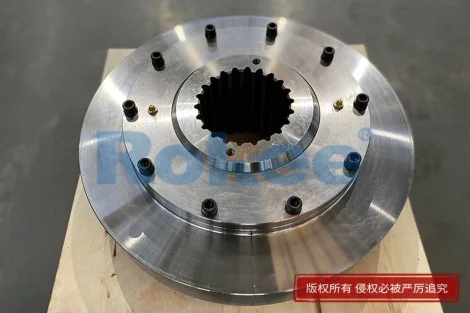
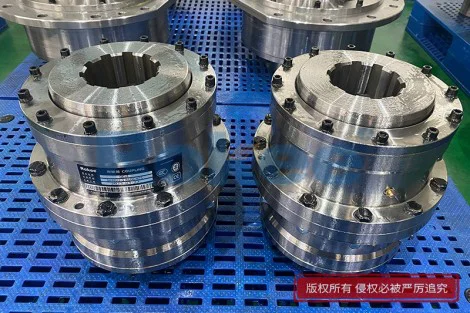
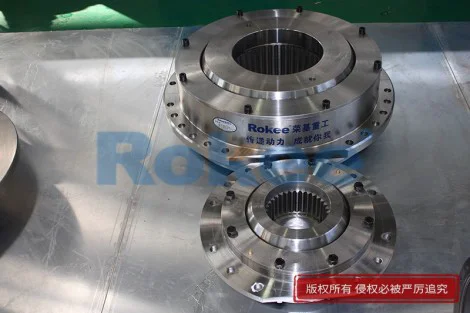
The overall structure of barrel coupling follows a modular integrated design concept, with a compact and reasonable layout that avoids redundant structural parts while ensuring structural rigidity. The main components include precision-machined outer sleeve, matching inner hub, hardened steel barrel rollers and integrated sealing limit components. All structural parts are processed with high-precision machining technology to ensure the fitting accuracy between components. The outer sleeve is stably connected with the drum main body of lifting equipment through fastening structures, while the inner hub is tightly sleeved on the output shaft of the reduction drive device. The semicircular curved grooves processed on the inner wall of the outer sleeve and the outer wall of the inner hub form a closed accommodating space after assembly, where multiple barrel-shaped steel rollers are evenly arranged as the core torque transmission medium. This assembly mode enables the coupling to form an integrated force transmission structure, eliminating the structural instability caused by excessive scattered parts.
The working principle of barrel coupling is based on the curved surface contact torque transmission and flexible misalignment compensation mechanism. When the lifting equipment starts to operate, the driving shaft drives the inner hub to rotate synchronously, and the rotational torque is evenly transmitted to the outer sleeve through the close contact between the hub grooves and the barrel rollers. Subsequently, the outer sleeve drives the equipment drum to complete rotational operation, realizing the power transmission from the driving end to the driven end. Different from straight pin couplings and gear couplings, the barrel-shaped structure of the transmission rollers achieves full curved surface contact with the matching grooves. This contact mode disperses the concentrated load generated during torque transmission over a larger contact area, greatly reducing unit pressure and avoiding local fatigue damage caused by excessive stress concentration. In the process of power transmission, the rollers can perform slight adaptive rotation and displacement in the grooves, which provides stable compensation for the tiny axial displacement, angular deviation and radial deflection of the shaft system caused by equipment operation vibration, load fluctuation and mechanical wear.
The inherent performance advantages of barrel coupling make it highly compatible with the extreme operating conditions of lifting equipment. Lifting machinery often faces intermittent working conditions such as frequent starting, braking, forward and reverse rotation, and instantaneous load impact, which puts forward extremely high requirements on the fatigue resistance and impact resistance of transmission components. The hardened steel barrel rollers adopted by the coupling have high surface hardness and structural toughness, which can withstand frequent alternating load impacts without plastic deformation or surface peeling. The curved surface contact structure avoids the clamping and jamming phenomenon easily occurring in traditional straight tooth transmission during reverse rotation, ensuring smooth and continuous power transmission in forward and reverse working states. Meanwhile, the integral torsionally rigid structure enables the coupling to maintain high transmission accuracy under heavy load, effectively avoiding torque loss and transmission lag, and ensuring the precise execution of lifting, lowering and positioning actions of the equipment.
In terms of environmental adaptability, barrel coupling shows strong tolerance to complex working sites of lifting equipment. Most lifting machinery operates in open-air workshops, construction sites and port terminals, where the working environment is accompanied by dust, sediment, humid air and occasional splashing impurities. The coupling is equipped with integrated sealing and protective structures on both axial sides. The matching sealing components can effectively block external dust, debris and moisture from entering the internal transmission gap, preventing abrasive wear and electrochemical corrosion of the barrel rollers and groove contact surfaces. This reliable sealing performance maintains the stability of the internal lubrication environment for a long time, avoids lubricant leakage and failure caused by external pollution, and enables the coupling to maintain stable working performance in harsh environments for a long time.
The application value of barrel coupling in lifting equipment is mainly reflected in the optimization of system operation stability and later maintenance cost control. In the drum drive system of cranes, gantry cranes, port lifting machines and other equipment, the connection between the reducer output shaft and the drum is the most stressed link in the power transmission chain. Slight shaft misalignment caused by equipment assembly errors, long-term operation vibration and structural deformation will cause additional bending stress and friction loss in the transmission system. Barrel coupling can automatically compensate for various tiny misalignments generated during operation, eliminate additional mechanical stress of the shaft system, reduce the running friction of bearings and other matching components, and significantly reduce the overall vibration and noise of the equipment during operation. This adaptive adjustment capability effectively prolongs the service life of the entire drive system including bearings, reducers and drums, and reduces the probability of sudden equipment failure caused by transmission system abnormalities.
The assembly and disassembly process of barrel coupling is simple and efficient, which greatly facilitates the daily maintenance and overhaul of lifting equipment. Benefiting from the modular design, all components are positioned and assembled through precise matching structures without complex connecting parts and auxiliary positioning tools. During installation, workers only need to complete the positioning and fastening of the hub and sleeve according to the assembly benchmark, and the internal barrel rollers can be automatically positioned through the groove structure, realizing quick assembly and positioning. In the daily equipment inspection and maintenance process, the coupling can be disassembled axially as a whole, which is convenient for staff to check the wear state of internal rollers, the tightness of sealing structures and the lubrication condition. The simple assembly and disassembly logic shortens the equipment downtime caused by maintenance, improves the overall operation efficiency of lifting equipment, and adapts to the high-frequency and continuous operation needs of industrial lifting scenarios.
Lubrication management is a key link to maintain the long-term stable operation of barrel coupling, and its structural design also takes the long-term lubrication demand into full consideration. The closed internal cavity formed by the sleeve and hub can store a certain amount of lubricating medium. During the operation of the coupling, the adaptive rotation of the barrel rollers can drive the lubricant to form a uniform oil film on the entire curved contact surface. The oil film can effectively reduce the friction coefficient between the contact surfaces, avoid dry friction wear of metal parts, and at the same time play a certain buffering role in instantaneous load impact. Reasonable lubrication can not only reduce the operating power consumption of the equipment, but also avoid surface scratch, ablation and fatigue crack damage of the transmission parts caused by long-term high-load friction, ensuring the continuous and efficient operation of the coupling.
Compared with other common couplings used in lifting equipment, barrel coupling has obvious comprehensive performance advantages in heavy-load and frequent working conditions. Traditional gear couplings are prone to tooth surface wear and meshing clearance increase after long-term operation, resulting in transmission impact and positioning deviation. Elastic couplings have limited load-bearing capacity and are easy to age and deform under long-term heavy load, which cannot adapt to the high-strength operation needs of lifting machinery. In contrast, the curved surface contact transmission mode of barrel coupling realizes uniform load distribution, with lower wear rate and longer stable service cycle. Its torsionally rigid structure ensures no deformation under large torque, and the flexible compensation function solves the shaft system deviation problem that cannot be completely avoided in mechanical operation, achieving a perfect balance between transmission rigidity and operation flexibility.
In the actual operation of lifting equipment, the performance stability of barrel coupling directly affects the operation accuracy and safety of equipment. In the precision lifting operation of heavy materials, the equipment needs to complete stable lifting, slow translation and accurate positioning. The high-precision transmission performance of barrel coupling ensures that the torque output is stable and consistent, there is no jitter and pause in the rotation process of the drum, and the lifting speed and force output are uniform and stable, effectively avoiding the material shaking and positioning deviation caused by unstable power transmission. In the heavy-load lifting scenario, the strong torque bearing capacity of the coupling can cope with the peak torque generated by equipment starting and heavy-load lifting, ensuring that the power transmission system does not slip or fail, and providing reliable mechanical guarantee for the safe operation of lifting equipment.
With the continuous upgrading of modern lifting equipment towards large-scale, high-frequency and intelligent operation, the performance requirements for supporting transmission components are also constantly improving. Barrel coupling, with its mature and optimized structural design, is constantly adapting to the new development needs of the lifting industry. Its compact structure saves the installation space of the equipment, which is conducive to the lightweight and integrated design of large lifting machinery. Its excellent wear resistance and stability reduce the frequency of component replacement and equipment maintenance, effectively reducing the comprehensive operation cost of lifting equipment. Its strong environmental adaptability expands the applicable scenarios of lifting equipment, enabling mechanical equipment to maintain stable operation in various complex working sites.
In conclusion, barrel coupling, as a professional transmission component for lifting equipment, integrates the advantages of high torque bearing capacity, flexible misalignment compensation, low wear loss and convenient maintenance. It solves many pain points in the power transmission process of traditional lifting equipment, effectively improves the operational stability, safety and service life of mechanical systems, and reduces the comprehensive operating and maintenance costs of equipment. In the field of industrial lifting, port handling, engineering construction and other lifting scenarios, barrel coupling has become a reliable core transmission component. With the continuous progress of mechanical manufacturing technology, the structural design and process performance of barrel coupling will be further optimized, providing more stable and efficient power transmission support for the high-quality operation of modern lifting equipment.