Application Advantages Of Diaphragm Couplings In Mineral Wool Panel Production Line Transmission Systems

Mineral wool panel production is a continuous and high-intensity industrial manufacturing process that involves multiple interconnected mechanical units operating in tandem to complete raw material melting, fiber spinning, cotton laying, pressing, curing, and finished product cutting. The entire production line relies on stable and efficient transmission systems to ensure synchronous operation of various equipment, where the performance of transmission connecting components directly determines the operational stability, product consistency, and long-term service efficiency of the whole production line. In the complex working environment of mineral wool panel manufacturing, traditional transmission connection components often face multiple challenges including vibration impact, shaft misalignment, harsh environmental interference, and frequent load fluctuations, which easily cause transmission failure, equipment wear, and production interruption. As a high-performance flexible transmission component, diaphragm couplings have gradually become the core matching part of mineral wool panel production line transmission systems by virtue of their unique mechanical structure and excellent comprehensive performance, effectively solving many pain points in the operation of traditional transmission structures and bringing significant technical and operational advantages to industrial production.
The working conditions of mineral wool panel production line are inherently complex and demanding, putting forward strict requirements for the comprehensive performance of supporting transmission couplings. First of all, the production process features continuous cyclic operation with almost no downtime in long-term industrial production, which means the transmission system needs to maintain stable operation under long-duration, high-load working states. Secondly, the equipment in the production line will inevitably produce mechanical vibration and axial, radial and angular shaft misalignment during installation and long-term operation. The vibration generated by high-speed fiber spinning equipment and reciprocating pressing equipment will be transmitted along the transmission shaft, causing alternating load impact on the connecting parts. In addition, the production workshop environment contains tiny mineral wool fiber dust and certain temperature fluctuations, which will produce continuous erosion and interference on exposed mechanical transmission components. Traditional rigid couplings and ordinary flexible couplings are difficult to adapt to such comprehensive working conditions: rigid couplings cannot compensate for shaft misalignment, resulting in excessive local stress and accelerated bearing and shaft body wear; elastic couplings with rubber or polymer vulnerable parts are prone to aging, deformation and failure under long-term vibration, high temperature and dust erosion, requiring frequent replacement and maintenance, which seriously affects the continuity of production.
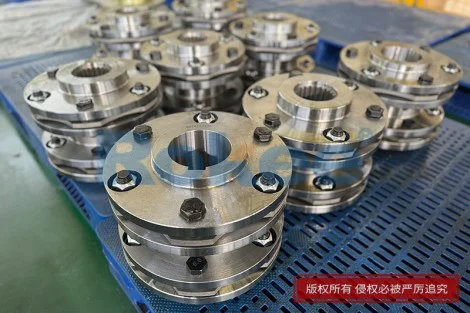
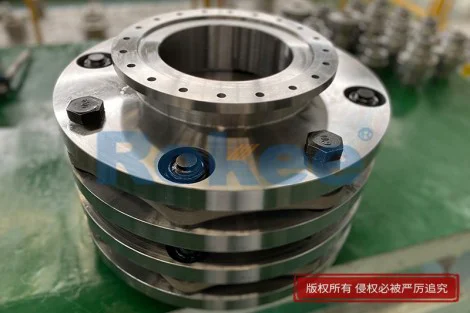
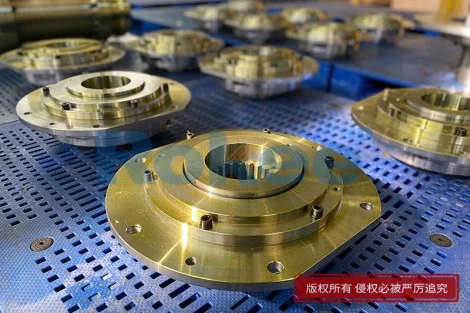
Diaphragm couplings adopt an all-metal elastic structure composed of metal diaphragm groups, flanges and connecting bolts, abandoning the vulnerable non-metal elastic materials used in traditional flexible couplings, which lays a solid structural foundation for their reliable operation in mineral wool production environments. The core structural feature of this type of coupling is that the multi-group metal diaphragms can produce micro elastic deformation during operation, which can effectively compensate for axial displacement, radial deviation and angular deflection between the driving shaft and driven shaft of the production line equipment. In the installation and long-term operation of mineral wool panel production equipment, the assembly error of transmission shafts, thermal deformation of equipment caused by long-term operation, and foundation slight settlement will all lead to different degrees of shaft misalignment. If these deviations cannot be effectively compensated, they will be converted into additional load on the transmission system, causing equipment vibration, shaft torsion and bearing abrasion. Diaphragm couplings can absorb and offset these misalignments in real time through the flexible deformation of metal diaphragms, without generating additional reaction force on the transmission shaft and supporting bearings, thus significantly reducing the operating load of the entire transmission system and avoiding abnormal wear and structural fatigue of core equipment components.
Excellent vibration damping and impact resistance is another key advantage of diaphragm couplings applied in mineral wool sandwich panel production line. The production process of mineral wool panels involves multiple impact and variable load working links: the feeding and rolling of raw materials will produce instantaneous load fluctuations, the high-speed rotation of fiber spinning equipment will generate periodic vibration, and the pressing and shaping process will bring intermittent impact load to the transmission system. These complex dynamic loads are easy to cause torsional vibration and resonance of the transmission shaft system, leading to unstable equipment operation and even loose connection of structural parts. The metal diaphragm group of diaphragm couplings has stable torsional stiffness and good flexible buffering performance, which can effectively absorb and attenuate the vibration energy generated in the transmission process and buffer the instantaneous impact load in variable load operation. Different from ordinary elastic couplings that rely on material elasticity for single buffering, the structural design of multi-layer diaphragms enables uniform stress distribution during deformation, avoiding local stress concentration and elastic fatigue failure. This stable vibration damping performance ensures the synchronous and stable operation of multi-unit equipment in the mineral wool production line, effectively reduces the vibration amplitude of the transmission system, and improves the overall operation precision of the production equipment, which is crucial to guaranteeing the uniform thickness and stable quality of mineral wool finished panels.
Long-term maintenance-free operation and high environmental adaptability make diaphragm couplings highly suitable for the continuous production mode of mineral wool panel industry. Most traditional flexible couplings require regular lubrication, rubber part inspection and replacement, and bolt fastening maintenance during operation. However, the mineral wool production workshop is filled with floating fine fiber dust, which is easy to adhere to the lubrication parts of couplings, causing lubricant deterioration and failure, and accelerating the wear of transmission components. Diaphragm couplings adopt a fully enclosed metal structure without any lubrication requirements in the whole service cycle, completely avoiding the production faults caused by lubricant failure and dust pollution. Meanwhile, the metal diaphragm materials have excellent corrosion resistance, high temperature resistance and aging resistance, and can maintain stable mechanical properties in the temperature fluctuation range and dusty working environment of mineral wool production workshops, without deformation, aging or performance attenuation due to environmental changes. This maintenance-free feature greatly reduces the daily maintenance workload of production equipment, eliminates the production downtime caused by coupling maintenance and replacement, and significantly improves the continuous operation rate and production efficiency of the mineral wool panel production line.
High transmission precision and zero backlash performance provide accurate power transmission guarantee for the precision processing links of mineral wool panels. In the cotton laying, continuous pressing and fixed-length cutting links of mineral wool panel production, the transmission synchronization and positioning accuracy of equipment directly affect the dimensional accuracy and surface flatness of finished products. Slight transmission backlash and speed fluctuation will lead to uneven cotton laying density and inconsistent panel thickness, resulting in unqualified products. Diaphragm couplings realize rigid torsion transmission through the metal diaphragm structure, achieving completely zero backlash power transmission, with no idle stroke or speed delay in the power transmission process. In addition, the coupling has high dynamic balance performance, which can maintain stable rotational accuracy under high-speed operation conditions, effectively avoiding transmission jitter and speed fluctuation. This high-precision transmission characteristic ensures that all transmission units in the production line maintain consistent operating speed and synchronous action, realizes precise control of the mineral wool fiber laying process and panel pressing forming process, and greatly improves the yield and quality stability of finished mineral wool panels.
The fail-safe structural design and long service life further enhance the operational reliability of mineral wool production lines. The multi-diaphragm combined structure of diaphragm couplings has inherent fail-safe characteristics. When individual diaphragms produce fatigue deformation or local damage after long-term operation, the overall structural strength of the coupling will not fail instantly, and it can still maintain basic transmission function to support the equipment to complete safe shutdown or continuous low-load operation, avoiding sudden transmission failure and equipment shutdown accidents. Compared with traditional couplings that are prone to sudden fracture and failure after component aging, this structural advantage greatly improves the safety and stability of equipment operation. Moreover, the metal diaphragm adopts optimized stress design and surface treatment process, with uniform internal stress distribution and strong fatigue resistance, which can withstand long-term alternating load and vibration impact. In the continuous operation scenario of mineral wool production lines, the service life of diaphragm couplings is far longer than that of traditional elastic couplings and gear couplings, reducing the frequency of equipment parts replacement and the comprehensive operating cost of the production line.
In terms of dynamic performance adaptation, diaphragm couplings can well match the variable speed and variable load operation characteristics of mineral wool panel production lines. The production load of mineral wool panels will change with raw material feeding speed, production process adjustment and product specification switching, and the equipment often needs to adjust the operating speed and output torque in real time. Diaphragm couplings have stable torsional stiffness and flexible bending performance, and their elastic characteristics will not change with load and speed changes, maintaining consistent transmission performance under different working conditions. Different from gear couplings that are prone to meshing wear and impact at variable speeds and elastic couplings that are prone to stiffness attenuation under variable loads, diaphragm couplings can always maintain efficient and stable power transmission during frequent speed regulation and load switching of production equipment, ensuring that the production line can flexibly adapt to different production process requirements and product production specifications.
In practical industrial application, the application of diaphragm couplings in mineral wool sandwich panel production line transmission systems has brought comprehensive optimization effects for production operation. It effectively reduces the vibration and noise of equipment operation, improves the working environment of the production workshop, and reduces the mechanical loss and fault rate of transmission equipment. The stable transmission state avoids product quality fluctuations caused by unstable equipment operation, reduces the rate of defective products in the production process, and improves the overall production benefit. At the same time, the maintenance-free and long-life characteristics of diaphragm couplings reduce the manpower and material resource investment in equipment maintenance, avoid production interruption caused by equipment maintenance, and greatly improve the continuous production capacity and operational efficiency of the production line. With the continuous upgrading of mineral wool panel production technology towards high efficiency, precision and automation, the requirements for the stability and precision of production line transmission systems are constantly improving, and diaphragm couplings will become more widely used in the mineral wool industry with their superior comprehensive performance.
In conclusion, diaphragm couplings have irreplaceable application advantages in mineral wool panel production line transmission systems. Their excellent misalignment compensation ability, stable vibration damping and impact resistance, high-precision zero-backlash transmission performance, strong environmental adaptability and long-term maintenance-free characteristics perfectly fit the complex working conditions and continuous production requirements of mineral wool panel manufacturing. They solve many technical bottlenecks of traditional transmission components in industrial production, effectively improve the operational stability and production efficiency of mineral wool production lines, optimize product quality, and reduce comprehensive production and operation costs. As a high-performance transmission connecting component, diaphragm couplings provide a reliable technical guarantee for the stable, efficient and high-quality operation of modern mineral wool panel production equipment, and have important practical application value and broad development prospects in the field of building thermal insulation material production.