Ball Cage Cardan Shaft Coupling Precise Transmission Adaptation for PUF Sandwich Panel Production Equipment
In the modern construction and industrial manufacturing fields, PUF (Polyurethane Foam) sandwich panels have become indispensable core materials due to their excellent comprehensive performance, including lightweight properties, superior thermal insulation, sound insulation, structural stability, and corrosion resistance. These panels are widely used in various scenarios such as industrial warehouses, cold storage facilities, commercial buildings, and modular constructions, driving the continuous upgrading and intelligent development of PUF sandwich panel production equipment. The production process of PUF sandwich panels is a complex and continuous integrated system that involves multiple sequential links, including uncoiling of facing materials, roll forming, preheating, PUF foaming, lamination, curing, and cutting. Each link requires precise, stable, and synchronous power transmission to ensure the consistency of product quality and the efficiency of the entire production process. Among the numerous components that constitute the transmission system of PUF sandwich panel production equipment, the ball cage cardan shaft coupling stands out as a key core component, whose unique structural design and excellent transmission performance perfectly adapt to the special working requirements of PUF sandwich panel production, providing reliable technical support for the high-precision and high-efficiency operation of the equipment.
To understand the precise transmission adaptation of ball cage cardan shaft couplings in PUF sandwich panel production equipment, it is first necessary to clarify the working characteristics of the production equipment and the core challenges faced by its transmission system. A modern PUF sandwich panel production line is a highly automated integrated system that integrates mechanical, electrical, hydraulic, and chemical reaction technologies, requiring the coordinated operation of multiple subsystems, such as the uncoiling system, roll forming system, foaming system, double-belt lamination system, cutting system, and conveying system. Each subsystem is driven by an independent power source, and the power needs to be accurately and stably transmitted to various executive components to ensure that the entire production line operates in a synchronized manner. The transmission system of PUF sandwich panel production equipment is faced with several key challenges that directly affect the production quality and efficiency. Firstly, due to the limitations of the production process and the overall structural layout of the equipment, the installation positions of each subsystem are often not on the same axis, resulting in angular deviations between the driving shaft and the driven shaft. Secondly, during the long-term continuous operation of the equipment, mechanical vibration and thermal expansion will occur, leading to changes in the relative position of the connected shafts, which requires the transmission component to have a certain compensation capacity for misalignment. Thirdly, the production process of PUF sandwich panels has extremely strict requirements on the stability and uniformity of power transmission. Especially in the foaming and lamination links, even slight fluctuations in transmission speed or torque will affect the density of the PUF foam core, the uniformity of the foam distribution, and the bonding effect between the foam core and the facing materials, thereby reducing the structural strength, thermal insulation performance, and appearance quality of the finished panels. Fourthly, the production equipment needs to adapt to the production of PUF sandwich panels of different specifications and thicknesses, which involves adjusting the speed and torque of each subsystem. This requires the transmission component to have good flexibility and adaptability to meet the diverse production needs.
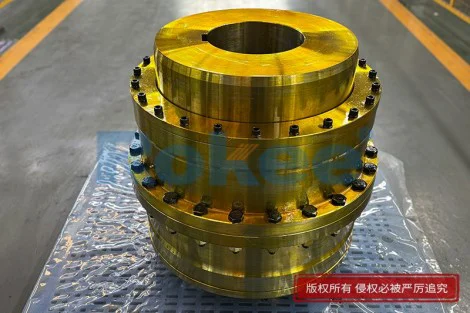
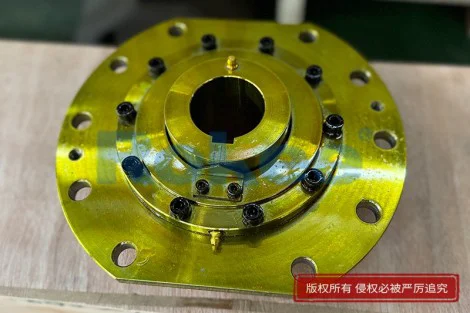
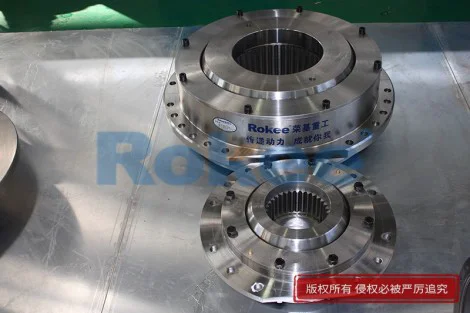
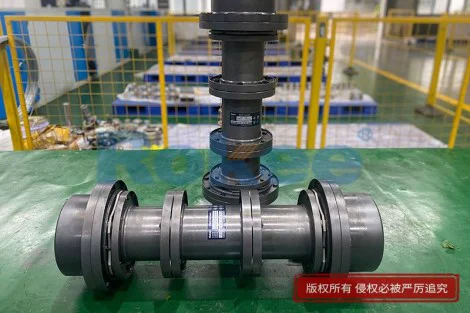
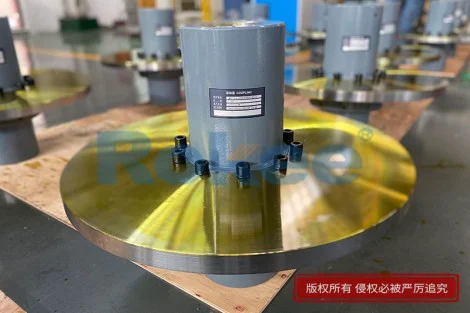
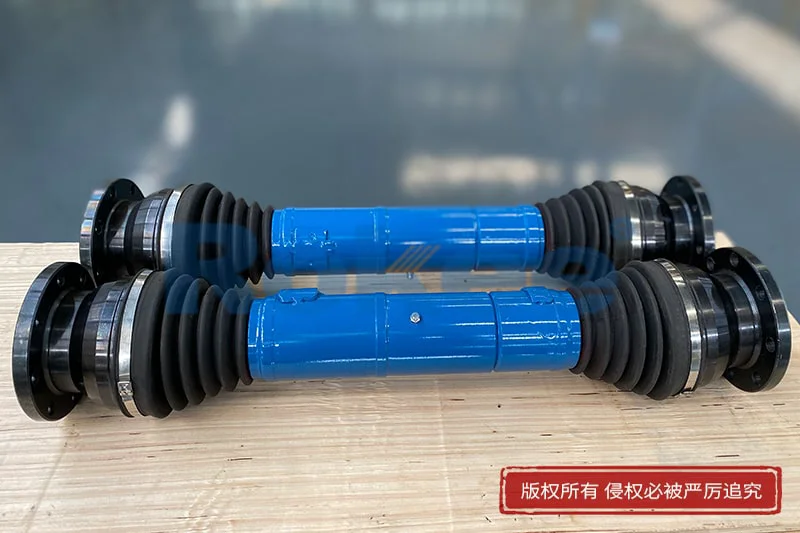
Compared with ordinary couplings, the ball cage cardan shaft coupling has unique structural advantages and transmission performance, which can perfectly solve the core challenges faced by the transmission system of PUF sandwich panel production equipment. The ball cage cardan shaft coupling, also known as the constant velocity joint coupling, is a mechanical component specially designed to transmit rotational power between two shafts with angular misalignment. Its core structure consists of a spherical outer ring, a star-shaped inner ring, a cage, and force-transmitting steel balls. The spherical outer ring is equipped with a circular arc raceway, and the star-shaped inner ring is also provided with a corresponding raceway. The steel balls are evenly arranged in the raceways of the inner and outer rings through the cage, and the centers of all steel balls are always located on the bisector of the angle between the two axes of the driving and driven shafts. This precise structural design enables the ball cage cardan shaft coupling to achieve true constant velocity transmission, fundamentally solving the problem of speed fluctuations that exist in ordinary cross-shaft cardan couplings during transmission. When the driving shaft rotates at a constant speed, the steel balls drive the driven shaft to rotate synchronously through the raceways, ensuring that the rotational speed of the driven shaft remains consistent regardless of the angular deviation between the two shafts, thus providing stable and uniform power transmission for the PUF sandwich panel production equipment.
The angular compensation capacity of the ball cage cardan shaft coupling is another key advantage that adapts to the working needs of PUF sandwich panel production equipment. In the actual installation and operation process of PUF sandwich panel production lines, due to the spatial layout limitations of each subsystem (such as the uncoiling system and roll forming system being arranged in different positions), the driving shaft and driven shaft of the transmission system often have a certain angular misalignment, which may range from a few degrees to tens of degrees. Ordinary rigid couplings require perfect coaxial alignment between the two shafts, otherwise, they will cause severe vibration, wear, and even damage to the equipment. In contrast, the ball cage cardan shaft coupling can flexibly compensate for angular misalignment within a certain range. According to the structural design, the allowable angular deviation of most ball cage cardan shaft couplings can reach 5° to 45°, and some special models can even achieve an angular compensation of up to 50°, which can fully adapt to the installation misalignment caused by the structural layout of PUF sandwich panel production equipment. This angular compensation capacity not only reduces the difficulty of equipment installation and debugging but also avoids the stress concentration caused by shaft misalignment on the bearings, shafts, and other components, effectively extending the service life of the production equipment.
In addition to constant velocity transmission and angular compensation capacity, the ball cage cardan shaft coupling also has excellent stability and load-bearing capacity, which are crucial for the continuous and high-load operation of PUF sandwich panel production equipment. The production process of PUF sandwich panels is usually continuous, and the production equipment needs to operate stably for a long time without interruption. This puts high requirements on the durability and reliability of the transmission components. The ball cage cardan shaft coupling is usually made of high-strength alloy steel or heat-treated steel, which has good mechanical properties such as high strength, wear resistance, and impact resistance. After precision machining and surface treatment, the components of the coupling have high dimensional accuracy and surface finish, reducing friction and wear between the steel balls and the raceways during operation. At the same time, the closed structural design of the ball cage can effectively prevent dust, debris, and other impurities in the production environment from entering the internal raceways, avoiding the occurrence of jamming, wear, and other faults, ensuring the stable operation of the coupling for a long time. In terms of load-bearing capacity, the ball cage cardan shaft coupling can transmit large torques while maintaining stable operation, which can meet the power transmission needs of different subsystems of PUF sandwich panel production equipment. For example, in the roll forming system and double-belt lamination system, which require large torque transmission, the ball cage cardan shaft coupling can stably transmit power without deformation or failure, ensuring the smooth progress of the production process.
The precise transmission performance of the ball cage cardan shaft coupling is particularly reflected in its ability to reduce vibration and noise, which plays an important role in improving the production quality of PUF sandwich panels and the working environment of the workshop. During the operation of PUF sandwich panel production equipment, mechanical vibration is an inevitable phenomenon, which not only affects the stability of the transmission system but also may cause uneven foaming of the PUF core, uneven thickness of the panels, and other quality problems. The ball cage cardan shaft coupling adopts a flexible transmission mode. The steel balls roll in the raceways, which can effectively absorb the vibration generated during the operation of the equipment, reduce the transmission of vibration between the shafts, and thus reduce the overall vibration of the equipment. At the same time, the smooth rolling of the steel balls and the precise fit between the components can also reduce the noise generated during transmission, creating a quieter working environment for the workshop. This not only improves the comfort of the operators but also avoids the impact of vibration and noise on the precision of the production equipment and the quality of the finished panels.
The adaptability of the ball cage cardan shaft coupling to the working environment of PUF sandwich panel production equipment is also worthy of attention. The production process of PUF sandwich panels may involve the use of foaming agents, adhesives, and other chemical substances, and the workshop environment may have a certain degree of humidity and dust. The ball cage cardan shaft coupling can be designed with a sealed structure according to the actual working environment, which can effectively prevent the erosion of chemical substances and the entry of dust and moisture, ensuring the normal operation of the coupling in harsh environments. In addition, the ball cage cardan shaft coupling has good high and low-temperature resistance, which can adapt to the temperature changes in the production process. For example, in the preheating link of the production line, the temperature of the equipment surface may rise, and the ball cage cardan shaft coupling can still maintain stable transmission performance without being affected by high temperatures. In cold storage or low-temperature production environments, the coupling will not become brittle or lose its transmission capacity due to low temperatures, which fully meets the working requirements of PUF sandwich panel production equipment under different environmental conditions.
The application of ball cage cardan shaft coupling in PUF sandwich panel production equipment also brings significant economic benefits and production efficiency improvements. Due to its high reliability and long service life, the ball cage cardan shaft coupling can reduce the frequency of component replacement and maintenance, reducing the downtime of the production line and the maintenance cost. At the same time, the precise and stable transmission performance of the coupling ensures the consistency of product quality, reduces the rate of defective products, and improves the qualification rate of finished PUF sandwich panels. In addition, the ball cage cardan shaft coupling has good flexibility and adaptability, which can quickly adapt to the adjustment of production parameters when the production line switches between different specifications of panels, reducing the adjustment time and improving the production efficiency. For example, when the production line needs to produce panels of different thicknesses, the speed and torque of the subsystems need to be adjusted. The ball cage cardan shaft coupling can smoothly adapt to the changes in speed and torque, ensuring the stable operation of the production line during the adjustment process.
In the actual application process, the selection and installation of ball cage cardan shaft couplings in PUF sandwich panel production equipment also need to be carried out according to the specific working conditions to ensure the optimal transmission effect. Firstly, it is necessary to determine the required torque, speed, and angular misalignment range according to the power parameters of the production equipment and the layout of the transmission system, so as to select the appropriate model and specification of the ball cage cardan shaft coupling. If the selected coupling is too small, it may not meet the load-bearing requirements and cause early failure; if it is too large, it will increase the cost and occupy more installation space. Secondly, during the installation process, it is necessary to ensure the correct alignment of the coupling and the shafts, and adjust the angular deviation within the allowable range of the coupling to avoid excessive misalignment leading to increased wear and vibration. At the same time, it is necessary to use appropriate lubricants to ensure the smooth operation of the steel balls and raceways, reduce friction and wear, and extend the service life of the coupling. In addition, regular inspection and maintenance of the ball cage cardan shaft coupling are also necessary, including checking the wear of the steel balls and raceways, the tightness of the seal, and the amount of lubricant, so as to find and solve potential faults in a timely manner, ensuring the long-term stable operation of the transmission system.
With the continuous development of PUF sandwich panel production technology, the requirements for the precision, efficiency, and intelligence of production equipment are getting higher and higher, which also puts forward new requirements for the transmission components. The ball cage cardan shaft coupling, with its unique structural advantages and excellent transmission performance, has become an indispensable core component in the transmission system of PUF sandwich panel production equipment. It not only solves the problems of angular misalignment, speed fluctuation, and vibration in the transmission process but also ensures the precise, stable, and efficient operation of the production line, providing a reliable guarantee for the production of high-quality PUF sandwich panels. In the future, with the continuous advancement of material science and precision machining technology, the ball cage cardan shaft coupling will be further optimized in terms of structure, material, and performance, such as adopting lighter and higher-strength materials to reduce the weight of the coupling, improving the precision of the raceways to enhance the transmission accuracy, and adding intelligent monitoring functions to realize real-time monitoring of the operation status of the coupling. These improvements will further improve the adaptability and reliability of the ball cage cardan shaft coupling in PUF sandwich panel production equipment, promote the continuous upgrading of PUF sandwich panel production technology, and meet the growing market demand for high-quality PUF sandwich panels.
In conclusion, the ball cage cardan shaft coupling plays an irreplaceable role in the precise transmission of PUF sandwich panel production equipment. Its constant velocity transmission, excellent angular compensation capacity, stable load-bearing performance, and good environmental adaptability perfectly match the working characteristics and transmission requirements of PUF sandwich panel production equipment. By effectively solving the core challenges faced by the transmission system, the ball cage cardan shaft coupling ensures the consistency of product quality, improves production efficiency, reduces maintenance costs, and brings significant economic and social benefits to the PUF sandwich panel production industry. As the production technology of PUF sandwich panels continues to develop, the ball cage cardan shaft coupling will continue to play a key role in the transmission system, promoting the sustainable development of the industry towards a more precise, efficient, and intelligent direction.