Universal Shaft Coupling Helps PU Sandwich Panel Line Improve Production Efficiency
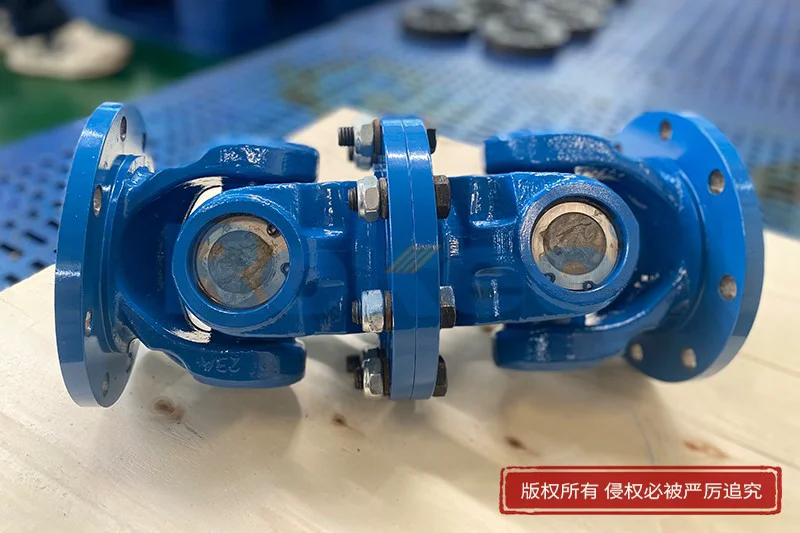
In the modern construction and industrial manufacturing industry, polyurethane (PU) sandwich panels have become an indispensable building material due to their excellent thermal insulation, structural stability, light weight, and corrosion resistance. These panels, composed of two outer facing materials and a rigid PU foam core, are widely used in external walls, roofs, cold storage facilities, prefabricated buildings, and industrial workshops, driving the continuous development and upgrading of their production technology. The PU sandwich panel production line is a complex integrated system that involves multiple sequential processes, including uncoiling of facing materials, roll forming, preheating, PU foaming, lamination, curing, cutting, and stacking. Each link requires precise and stable power transmission to ensure the consistency of product quality and the smooth operation of the entire production process. Among the numerous components that make up the transmission system of the production line, the universal shaft coupling, also known as the universal joint coupling, stands out as a key core component. Its unique structural design and excellent transmission performance have significantly promoted the improvement of production efficiency of PU sandwich panel lines, solving many pain points in power transmission and becoming an indispensable part of modern automated production lines.
To understand the important role of universal shaft couplings in improving the production efficiency of PU sandwich panel lines, it is first necessary to clarify the working characteristics of the production line and the core challenges faced by its transmission system. A modern PU sandwich panel production line is a continuous and automated production system that integrates mechanical, electrical, hydraulic, and chemical reaction technologies. It requires the coordinated operation of multiple subsystems, such as the uncoiling system, roll forming system, foaming system, double-belt lamination system, cutting system, and conveying system. Each subsystem is driven by a separate power source, and the power needs to be transmitted to various executing components accurately and stably to ensure that the entire production line operates in a synchronized manner. The transmission system of the production line is faced with several key challenges: first, the installation and layout of each subsystem are often not on the same axis due to the limitations of the production process and the overall structure of the equipment, resulting in angular deviations, radial displacements, and even axial expansions between the driving shaft and the driven shaft; second, during the long-term continuous operation of the production line, the equipment will generate vibration and thermal expansion due to factors such as friction and material reaction, leading to changes in the relative position of the shafts, which requires the transmission component to have a certain compensation capacity; third, the production process of PU sandwich panels requires stable and uniform power transmission, especially in the foaming and lamination links, where even slight fluctuations in transmission speed can affect the mixing ratio of PU raw materials and the bonding effect between the core and the facing materials, thereby reducing product quality and increasing waste; fourth, the production line often needs to adjust the production speed and product specifications according to actual needs, which requires the transmission system to have good adaptability and flexibility to avoid frequent shutdowns and adjustments.
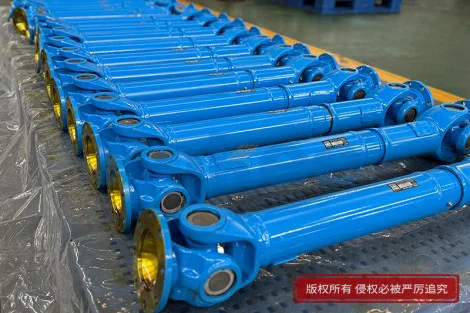
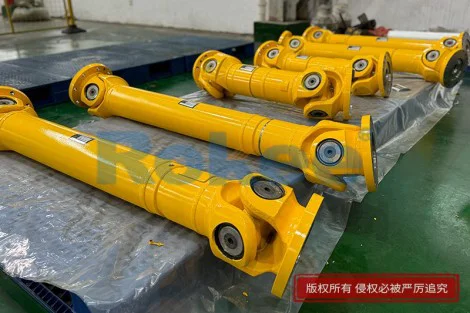
The universal shaft coupling effectively solves these challenges through its unique structural design and excellent performance, providing a reliable guarantee for the efficient operation of PU sandwich panel lines. A universal shaft coupling is a mechanical component used to connect two shafts that are not on the same axis or have relative displacement, which can realize continuous rotation of the connected shafts and reliably transmit torque and motion. Its core structure usually consists of two fork-shaped joints (connected to the driving shaft and the driven shaft respectively) and a cross shaft, and the cross shaft is hinged to the fork-shaped joints through bearings to form a multi-directional rotating joint structure. Some advanced models may adopt spherical raceway and cage designs to further improve transmission accuracy and stability. The most prominent advantage of this structure is its strong compensation capacity, which can simultaneously compensate for angular deviations, radial displacements, and axial expansions between the two shafts. Generally, the angular compensation range of universal shaft couplings can reach 5° to 45° depending on the structural type, which is particularly suitable for the transmission needs of PU sandwich panel lines where each subsystem is not coaxial due to layout limitations.
In the uncoiling and roll forming links of PU sandwich panel line, the role of universal shaft couplings is particularly critical. The uncoiling system is responsible for stably unwinding the coiled facing materials (such as color steel plates, aluminum sheets, or fiber-reinforced panels) and transporting them to the roll forming system. The roll forming system processes the facing materials into the required shape through a series of forming rollers. Both systems require stable power transmission to ensure that the unwinding speed and forming speed are synchronized. Due to the installation position of the uncoiling machine and the roll forming machine, there is often a certain angular deviation between their driving shafts. If a rigid coupling is used, it will not only fail to compensate for this deviation but also cause excessive vibration, leading to wear of the rollers and the shaft, and even damage to the equipment. The universal shaft coupling can effectively compensate for this angular deviation, ensuring that the power is transmitted smoothly and stably, so that the unwinding speed and forming speed are kept consistent. This not only reduces the wear of equipment components but also avoids wrinkles, deviations, or even breakage of the facing materials during the transmission process, reducing material waste and improving the qualification rate of semi-finished products. In addition, when the production line needs to replace different specifications of facing materials, the universal shaft coupling can adapt to the adjustment of the equipment position, avoiding the need for complex disassembly and assembly work, thereby saving adjustment time and improving production efficiency.
The foaming and lamination links are the core links of the PU sandwich panel production line, and the stability of power transmission directly affects the quality of the final product and production efficiency. The foaming system is responsible for mixing polyol, isocyanate, blowing agents, and other raw materials in a precise ratio and injecting them evenly between the upper and lower facing materials. The lamination system presses the facing materials and the foaming core together through double belts, ensuring that the core and the facing materials are closely bonded during the curing process. Both the foaming system and the lamination system require high-precision and stable power transmission. The mixing head of the foaming system needs to rotate at a constant speed to ensure the uniform mixing of raw materials, and the conveying belt of the lamination system needs to run at a stable speed to ensure the uniform thickness and bonding quality of the panels. The universal shaft coupling can transmit power with high efficiency and stability, reducing the fluctuation of transmission speed. Its excellent shock absorption performance can also reduce the impact of equipment vibration on the foaming and lamination processes, avoiding uneven mixing of raw materials, uneven thickness of the foam core, or poor bonding between the core and the facing materials. This not only improves the quality of PU sandwich panels but also reduces the number of unqualified products that need to be reworked or scrapped, thereby improving production efficiency and reducing production costs. At the same time, the universal shaft coupling can adapt to the adjustment of the production speed of the foaming and lamination systems. When the production line needs to increase or decrease the production speed according to market demand, the universal shaft coupling can quickly adapt to the speed change without affecting the stability of power transmission, ensuring the continuity of production.
In the cutting and stacking links of PU sandwich panel lines, the universal shaft coupling also plays an important role in improving production efficiency. The cutting system is responsible for cutting the cured continuous PU sandwich panels into finished products of specified lengths, and the stacking system is responsible for automatically stacking the cut finished products. Both systems require precise coordination with the main production line to ensure that the cutting speed and stacking speed are consistent with the production speed of the main line. Due to the different installation positions of the cutting machine and the stacking machine from the main line, there is often a certain displacement between their shafts. The universal shaft coupling can compensate for this displacement, ensuring that the power is transmitted accurately, so that the cutting machine and the stacking machine can operate in synchronization with the main line. This avoids the situation where the cutting length is inaccurate due to inconsistent speed or the stacking is chaotic due to unsynchronized operation, reducing the workload of manual correction and improving the efficiency of the cutting and stacking links. In addition, the universal shaft coupling has a compact structure and small space occupation, which is suitable for the limited installation space of the cutting and stacking systems, making the overall layout of the production line more reasonable and compact, and further improving the space utilization rate of the production workshop.
The high transmission efficiency and long service life of universal shaft couplings also provide important support for improving the production efficiency of PU sandwich panel lines. The transmission efficiency of high-quality universal shaft couplings can reach more than 98%, which means that most of the power output by the motor can be transmitted to the executing components, reducing energy loss. This not only saves energy consumption but also reduces the load of the motor, extending the service life of the motor. At the same time, the universal shaft coupling has a simple structure, strong wear resistance, and is not easy to fail under normal use and maintenance conditions. Its service life is much longer than that of some other types of couplings, reducing the frequency of component replacement and maintenance. For PU sandwich panel lines that need to operate continuously for a long time, reducing the frequency of maintenance and replacement can effectively reduce unplanned downtime, ensure the continuity of production, and thus improve overall production efficiency. According to practical application data, the use of universal shaft couplings can reduce the unplanned downtime of PU sandwich panel lines by 30% to 50%, significantly improving the utilization rate of the production line.
Proper maintenance of universal shaft couplings is also an important link to ensure their long-term stable operation and continuous improvement of production efficiency. Although universal shaft couplings have strong durability, regular maintenance is still necessary to prevent premature failure. The key maintenance measures include regular lubrication, inspection of wear and damage, alignment calibration, and tightening of fasteners. For the lubrication of universal shaft couplings, appropriate lubricating grease or lubricating oil (such as lithium-based grease or molybdenum disulfide) should be selected according to the working conditions. Under normal working conditions, lubrication should be carried out every 300 to 500 hours or every 3 months; under harsh conditions such as high temperature, heavy load, or high dust, the lubrication cycle should be shortened to 100 to 200 hours or once a month. When lubricating, the old grease should be squeezed out by injecting new grease through the oil injection nozzle to avoid blockage caused by the accumulation of old grease. Regular inspection of the cross shaft, bearings, spline pairs, and other components should be carried out to check for rust, cracks, wear, or excessive clearance. If any abnormal wear is found, it should be replaced in time to avoid affecting the transmission performance. In addition, the alignment of the shafts should be checked regularly (every 6 months or during equipment overhaul) to ensure that the angular deviation does not exceed 1° and the radial deviation does not exceed 0.1mm/m. The fasteners such as bolts should be checked and retightened regularly to prevent loosening during operation, which may cause equipment failure. By establishing a systematic maintenance plan and keeping detailed maintenance records, the failure rate of universal shaft couplings can be significantly reduced, and their service life can be extended, providing a long-term and stable guarantee for the efficient operation of PU sandwich panel lines.
In addition to the above advantages, the universal shaft coupling also has good adaptability to the working environment of PU sandwich panel lines. The production process of PU sandwich panels may involve certain chemical raw materials and high-temperature environments (such as the curing link of the foam core), which have certain corrosion and high-temperature impacts on the transmission components. The universal shaft coupling can be made of corrosion-resistant and high-temperature-resistant materials according to the working environment, such as stainless steel or special alloy materials, to ensure that it can work stably in harsh environments. This adaptability not only ensures the reliability of power transmission but also reduces the impact of the environment on the service life of the coupling, further improving the stability and efficiency of the production line.
With the continuous development of automation and intelligence in the manufacturing industry, the PU sandwich panel production line is also moving towards higher speed, higher precision, and more intelligence. The role of universal shaft couplings in this process will become more prominent. In the future, with the continuous improvement of coupling technology, the universal shaft coupling will have higher transmission accuracy, stronger compensation capacity, and better energy-saving performance, which can better meet the needs of high-efficiency and high-quality production of PU sandwich panel lines. For example, the application of new materials and new structures will further reduce the weight and volume of the coupling while improving its bearing capacity and service life; the integration of intelligent monitoring technology can realize real-time monitoring of the operation status of the coupling, predict potential failures in advance, and realize predictive maintenance, which will further reduce unplanned downtime and improve production efficiency.
In conclusion, the universal shaft coupling, as a key power transmission component, plays an irreplaceable role in improving the production efficiency of PU sandwich panel lines. It solves the pain points of power transmission in the production line through its strong compensation capacity, high transmission efficiency, stable operation performance, and good adaptability, ensuring the synchronization and stability of each link of the production line, reducing equipment failure rate and material waste, and extending the service life of the equipment. In the process of continuous upgrading of PU sandwich panel production technology, the universal shaft coupling will continue to play a key role, helping the production line achieve higher efficiency, better quality, and more stable operation, and promoting the sustainable development of the PU sandwich panel manufacturing industry. Whether it is a continuous production line with a production speed of up to 15 meters per minute or a discontinuous production line suitable for small-batch and multi-specification production, the universal shaft coupling can adapt to its transmission needs, becoming an indispensable core component in the production process. Its wide application and excellent performance have fully proved that it is an important guarantee for improving the production efficiency of PU sandwich panel lines, bringing significant economic benefits and development space for manufacturers.