Drum Coupling Specification

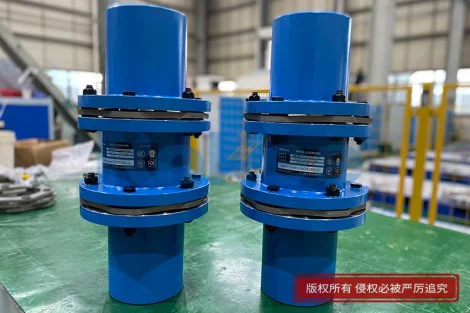
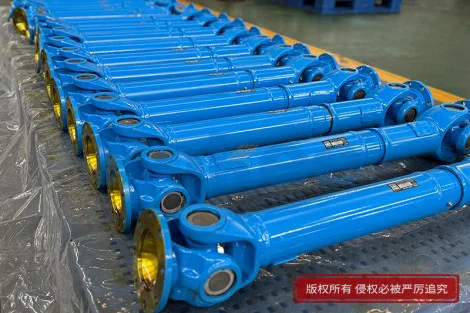
Drum coupling is a high-performance flexible transmission component widely adopted in heavy-duty mechanical transmission systems, serving as a critical connecting medium between rotating shafts of industrial equipment. Primarily designed to transmit rotational torque stably and efficiently, this mechanical part also delivers outstanding compensation performance for various shaft misalignment conditions generated during equipment operation. Different from conventional straight-tooth couplings, it features a unique drum-shaped gear tooth structure that optimizes gear meshing states and reduces mechanical friction and stress concentration during power transmission. It is extensively applied in low-speed, heavy-load mechanical scenarios that demand stable operation and strong impact resistance, including material handling equipment, mining machinery, and industrial transmission devices. With excellent structural stability, fatigue resistance and adaptive capacity to complex working conditions, drum coupling ensures the synchronous operation of connected shafts, buffers mechanical vibration and impact, and effectively extends the overall service life of mechanical transmission systems.
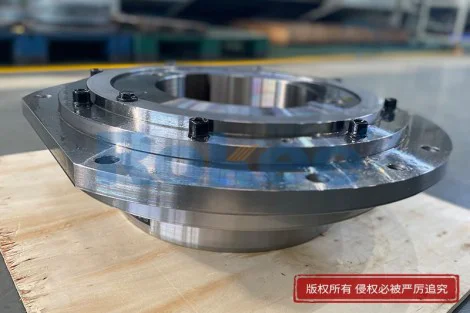
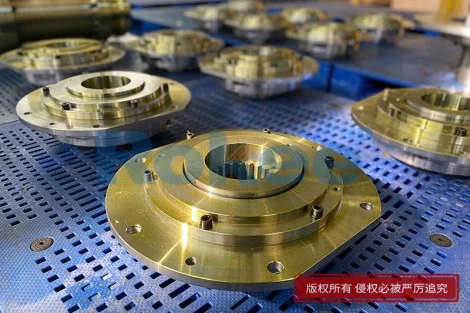
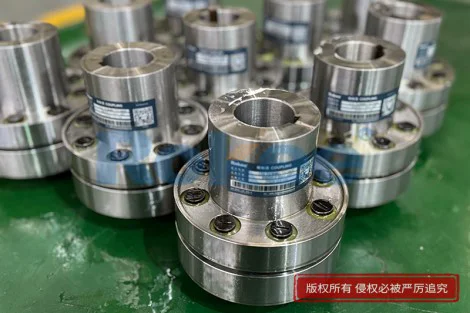
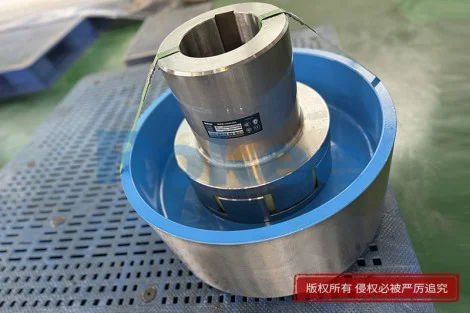
The overall structural design of drum coupling follows a compact and reliable mechanical logic, with its core composition consisting of paired outer tooth half-couplings, an intermediate inner tooth sleeve and matched fastening and locking components. The most distinctive structural feature lies in the precision-processed drum-shaped arc outer teeth on the half-couplings, which forms a flexible meshing pair with the straight or slightly curved inner teeth of the intermediate sleeve. This special tooth profile abandons the rigid edge contact of traditional gear couplings and realizes uniform surface contact during meshing, which fundamentally improves the stress distribution state of gear teeth. All structural components adopt integrated mechanical processing technology, with precise dimensional tolerance control to ensure the fitting accuracy between parts. The internal assembly structure does not require complex auxiliary transmission parts, and the overall layout is compact, which effectively saves installation space for mechanical equipment. Meanwhile, the symmetrical structural design enables the coupling to bear bidirectional torque transmission, adapting to forward and reverse rotation working conditions of various mechanical equipment without reducing transmission efficiency or structural stability.
The working principle of drum coupling centers on flexible gear meshing transmission and automatic misalignment compensation, enabling stable power transmission under complex operating states. During equipment operation, the torque output by the driving shaft is transmitted to the driven shaft through the meshing of drum-shaped outer teeth and inner tooth sleeves. The unique arc tooth profile allows the gear meshing point to adjust adaptively in real time according to the offset state of the two connected shafts. When the mechanical system produces axial displacement, angular deflection or radial deviation due to operational vibration, equipment wear or installation errors, the drum-shaped tooth structure can flexibly adapt to these misalignment changes. This adaptive adjustment avoids rigid extrusion and friction between gear teeth, eliminates transmission jitter and power loss caused by shaft misalignment, and maintains continuous and stable torque output. In addition, the surface contact meshing mode can evenly disperse transmission pressure, prevent local overloading of individual gear teeth, and ensure the consistency and reliability of power transmission in long-term continuous operation.
Drum coupling possesses prominent mechanical performance advantages that make it superior to ordinary transmission couplings in heavy-duty industrial scenarios. Its optimized drum tooth structure greatly enhances the load-bearing capacity of the gear meshing part, enabling it to withstand long-term high-torque transmission and frequent mechanical impact loads that are common in industrial production. The flexible compensation function effectively buffers vibration and shock generated during equipment start-stop, load switching and operational rotation, reducing the vibration amplitude of the entire transmission system and lowering mechanical noise. Compared with rigid couplings, it has lower wear rate of transmission parts, and the uniform stress distribution avoids premature fatigue damage of gear teeth. Moreover, this coupling features high transmission accuracy and small rotational backlash, which can maintain precise synchronous rotation of dual shafts and avoid power hysteresis or position deviation during transmission. Its excellent temperature adaptability allows stable operation in variable temperature environments, without performance attenuation caused by conventional thermal expansion and contraction of mechanical parts.
The installation and debugging process of drum coupling follows standardized mechanical operation specifications, focusing on precision alignment and structural fastening to guarantee long-term stable operation. Before installation, all component surfaces need to be cleaned thoroughly to remove processing impurities, rust and dust, so as to avoid foreign matter affecting meshing accuracy and causing abnormal wear. The coaxiality of the driving shaft and driven shaft must be strictly calibrated, and the installation deviation should be controlled within a reasonable adaptive range of the coupling to prevent excessive misalignment from increasing gear wear. During assembly, the outer tooth half-couplings are fixed on the two shafts respectively, and the intermediate inner tooth sleeve is sleeved on the outer teeth to ensure full and uniform meshing of tooth surfaces. Fastening components need to be locked symmetrically and evenly to avoid eccentric stress caused by uneven fastening force. After installation, manual rotation debugging is required to check for jamming, abnormal friction and unsmooth rotation, and no-load trial operation is conducted to confirm that the coupling operates stably without abnormal noise or vibration before putting it into formal load operation.
Scientific daily maintenance and regular inspection are essential to extend the service life and maintain stable performance of drum coupling. In daily operation, regular visual inspection should be carried out to check for abnormal vibration, noise and local heating of the coupling during equipment operation, which are typical signs of abnormal meshing or component wear. The internal lubrication state is the core of maintenance work; high-performance lubricating materials suitable for gear meshing transmission should be selected, and regular lubricant replacement and supplementation should be conducted to ensure a complete lubricating oil film on the tooth surface. The lubricating oil film can reduce meshing friction, alleviate tooth surface wear, and play a certain role in heat dissipation and vibration reduction. Regular disassembly and inspection are needed for long-term operating equipment to check the wear degree of drum-shaped teeth, fastening tightness of locking parts and integrity of structural components. Worn or deformed parts should be replaced in a timely manner, and loose fasteners should be tightened to prevent structural failure caused by long-term operational vibration.
Drum coupling is widely applied in diverse heavy-load industrial mechanical systems by virtue of its stable performance and strong adaptability, covering multiple core industrial fields. In material handling machinery, it serves as a key transmission component for lifting and conveying equipment, undertaking high-torque power transmission during material lifting and transportation, and adapting to frequent start-stop and variable-load working conditions. In mining and metallurgical machinery, it matches with large-scale crushing, grinding and rolling equipment, stably transmitting power under harsh working conditions such as heavy load and strong vibration. In building material and chemical industrial equipment, it adapts to long-term continuous operation of rotating machinery, ensuring the continuity and stability of production operation. Besides heavy-load equipment, it is also applicable to various low-speed, high-torque general mechanical transmission scenarios, providing reliable connection and transmission support for different types of mechanical equipment.
The performance optimization and service life improvement of drum coupling depend on reasonable type matching and standardized operation management in practical application. In equipment design and selection, the matching coupling specification should be determined according to the actual working conditions such as equipment operating load, rotation speed and working environment, to avoid performance mismatch caused by blind selection. Excessive overload operation and long-term extreme misalignment operation should be avoided in daily use, which can effectively prevent accelerated wear and structural fatigue damage of gear teeth. With the continuous upgrading of industrial mechanical equipment, the structural design and processing technology of drum coupling are also constantly optimized. Modern precision processing and surface strengthening technologies further improve the wear resistance, fatigue resistance and corrosion resistance of the coupling, enabling it to adapt to more complex and diversified industrial working conditions and provide more durable and efficient transmission guarantees for modern industrial mechanical systems.