Barrel Coupling Catalog

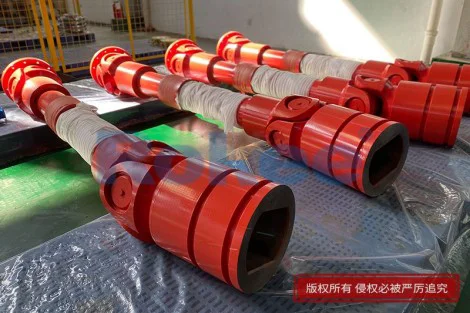
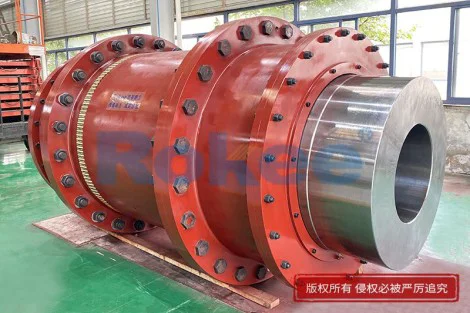
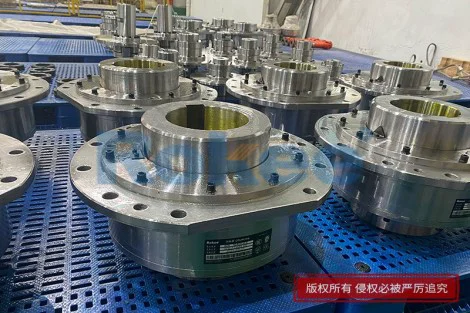
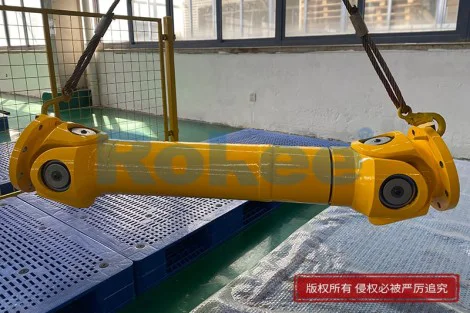
Barrel couplings are robust, flexible mechanical transmission components widely utilized in industrial power transmission systems to connect rotating shafts and deliver stable torque output. Differing from traditional rigid and elastic couplings that rely on linear contact or elastic deformation for power transmission, this type of coupling adopts a unique curved surface contact structure with hardened steel barrel rollers as the core force-transmitting elements. Its ingenious structural design enables it to effectively compensate for various shaft misalignments generated during equipment operation, including angular deviation, axial displacement and radial offset, which are common in mechanical operation due to installation errors, equipment vibration and thermal expansion of components. Featuring compact structure, strong overload resistance and low operating wear, barrel couplings can maintain consistent transmission efficiency under high-load and continuous operating conditions. They adapt to diverse complex working environments, reduce mechanical operation failures caused by shaft misalignment, and extend the overall service life of transmission equipment.
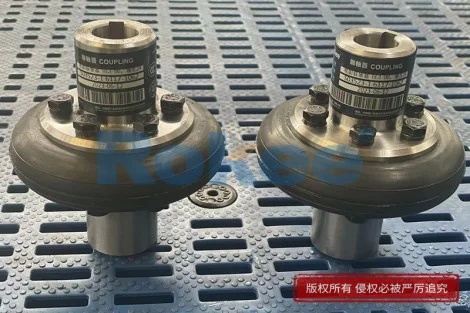
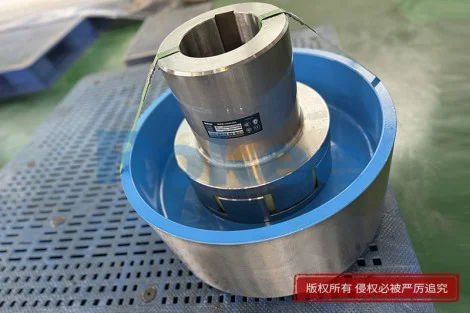
The basic structural composition of barrel couplings is simple and precise, with every component designed to optimize transmission stability and misalignment compensation capability. The core assembly mainly includes an outer sleeve, an inner hub, multiple hardened steel barrel rollers and sealing protection accessories. The inner wall of the outer sleeve and the outer wall of the inner hub are both processed with matching semicircular arc grooves, which form closed accommodating spaces when the two parts are assembled. The cylindrical barrel rollers are evenly installed in these grooves, serving as the key medium for torque transmission between the hub and the sleeve. All barrel rollers are made of high-hardness alloy steel through integral quenching and precision grinding, which effectively improves surface wear resistance and pressure bearing capacity. The supporting sealing components adopt embedded sealing structures, which can tightly wrap the internal transmission structure. This design effectively isolates external dust, moisture and abrasive impurities from entering the interior, avoiding abrasive wear of the contact surfaces between rollers and grooves. The overall integrated structure abandons redundant auxiliary parts, realizing a compact and lightweight layout while ensuring structural rigidity, which makes it suitable for installation in equipment with limited assembly space and effectively simplifies the overall structural design of mechanical transmission systems.
The working principle of barrel couplings is based on uniform curved surface contact force transmission and flexible displacement compensation, realizing efficient and stable power transmission in rotating machinery. During equipment operation, the driving shaft drives the inner hub to rotate synchronously, and the arc grooves on the hub apply uniform and stable thrust to the installed barrel rollers. Driven by rotational power, the barrel rollers closely fit and press against the arc grooves of the outer sleeve, converting the rotational torque of the hub into the driving force of the sleeve through continuous compressive contact. This surface contact transmission mode disperses the unit pressure of force-bearing points, completely avoiding the stress concentration problem of point or linear contact in traditional coupling structures. When the connected dual shafts produce misalignment deviation due to installation or operation changes, the curved profiling design of the barrel rollers and the reserved gap between the matching grooves allow the rollers to produce slight floating displacement and angular swing in the grooves. This flexible adjustment characteristic can automatically offset angular deviation, axial stretching and radial offset of the shafts, ensuring that the torque transmission process remains smooth and continuous without additional mechanical friction and impact, thus maintaining long-term stable operation of the transmission system.
Barrel couplings possess prominent comprehensive performance advantages compared with other types of industrial couplings, making them stand out in heavy-duty and continuous transmission scenarios. First of all, they have excellent load-bearing and overload resistance. The multi-point curved surface contact structure enables multiple barrel rollers to bear load simultaneously, which greatly improves the overall torque transmission capacity and can withstand instantaneous impact loads generated by equipment start-stop and load fluctuation. Secondly, their flexible compensation performance is far superior to rigid couplings, with a wide adaptive range for various shaft misalignments, which can effectively eliminate additional mechanical stress and vibration caused by shaft position deviation. In terms of operation stability, the precise matching between rollers and grooves ensures smooth rotation without jitter and noise, realizing low-noise and low-vibration operation. In addition, the overall structural rigidity is strong, and the wear resistance of core components is excellent, which can adapt to long-term continuous operation in high-speed and heavy-load working conditions. Unlike elastic couplings that are prone to aging and deformation, barrel couplings have no vulnerable elastic parts, with stable long-term performance and no need for frequent performance calibration, greatly improving the reliability and continuity of industrial production equipment operation.
The installation and debugging process of barrel couplings is convenient and efficient, with low operation difficulty and strong on-site adaptability, which effectively reduces the assembly cycle and technical threshold of mechanical equipment. Before installation, workers only need to check the flatness of the shaft end and the cleanliness of the matching grooves and rollers to ensure no foreign impurities and obvious wear on the contact surfaces. The integral split-free structure allows the coupling to be directly sleeved on the driving and driven shafts, and the coaxiality of the dual shafts can be quickly adjusted through simple calibration tools. Thanks to the good misalignment tolerance of the product, the installation does not require ultra-high-precision shaft alignment, which greatly reduces the time consumption of fine debugging. In the assembly process, the reserved flexible gap of the internal structure can automatically adapt to the tiny position deviation generated during installation, avoiding assembly jamming caused by minor errors. After installation, the sealing accessories can be quickly fixed to form a closed protective structure. The whole installation process does not need professional complex tools and complicated processes, and ordinary maintenance and assembly personnel can complete the operation efficiently. Meanwhile, the standardized structural design realizes universal matching with most conventional shaft diameters, improving the compatibility and practicability of on-site installation.
Daily maintenance and upkeep of barrel couplings is simple and economical, with low later operation cost and long service cycle, which is an important advantage for large-scale industrial application. The core wear parts of the coupling are barrel rollers and arc groove contact surfaces, and the high-precision hardening treatment of these components endows them with excellent anti-wear and anti-fatigue properties, avoiding rapid wear and failure in long-term operation. Daily maintenance only needs regular visual inspection and lubrication maintenance. It is necessary to regularly check the tightness of the sealing structure to prevent lubricant leakage and external impurity infiltration, and replenish special lubricant for the internal contact parts according to the operating cycle. Good lubrication can effectively reduce friction loss between rollers and grooves, avoid dry wear and metal fatigue, and maintain stable transmission efficiency. In terms of fault inspection, the operating state of the coupling can be judged through equipment vibration and noise changes. Once slight abnormal wear occurs, individual rollers can be replaced separately without disassembling the whole coupling, which greatly reduces maintenance cost and equipment downtime. With scientific and standardized daily maintenance, the service life of barrel couplings can be effectively extended, and the long-term stable operation of the transmission system can be guaranteed.
Barrel couplings have extremely wide industrial application scenarios, covering almost all mechanical equipment fields that require stable torque transmission and misalignment compensation. In the material handling industry, they are widely used in conveyor equipment, hoists and stacking machinery, stably transmitting power in continuous material transportation operation and adapting to the vibration and shaft deviation generated by frequent start-stop of equipment. In the manufacturing and processing industry, they serve mixing equipment, extrusion machinery and precision machine tools, ensuring uniform and stable power output, avoiding processing errors caused by transmission jitter, and improving product processing accuracy. In the energy and power industry, barrel couplings are applied to various power generation and power transmission equipment, providing reliable transmission guarantee for high-power and long-term operating equipment. In the mining and heavy industry, they adapt to harsh working conditions such as heavy load, dust and frequent impact, resisting instantaneous load impact and mechanical vibration to ensure the safe operation of mining transmission equipment. Their strong environmental adaptability and performance stability make them indispensable core connecting components in modern industrial mechanical transmission systems.
With the continuous upgrading of modern industrial manufacturing technology and the increasing demand for high-efficiency and high-reliability mechanical transmission, barrel coupling products are also undergoing continuous optimization and innovation in structural design and process manufacturing. At present, the mainstream optimization direction focuses on material upgrading and structural fine-tuning. New high-strength alloy materials and surface strengthening processes are gradually applied to core components, further improving wear resistance, pressure resistance and fatigue resistance of the product, and adapting to higher-load and higher-speed operating conditions. In terms of structural design, the optimized arc profiling and gap matching technology further improves the misalignment compensation accuracy and force uniformity, reducing transmission loss and mechanical vibration. Meanwhile, the integrated sealing and lubrication structure is continuously optimized to enhance the equipment's adaptability to extreme working environments such as high temperature, low temperature and heavy dust. In the future, with the development of intelligent industrial equipment, barrel couplings will also combine with intelligent monitoring technology to realize real-time monitoring of operating state, wear degree and lubrication condition, further improving the intelligent operation and maintenance level of industrial transmission systems.