Guide For Core Transmission Diaphragm Couplings Of Mineral Wool Sandwich Panel Production Line
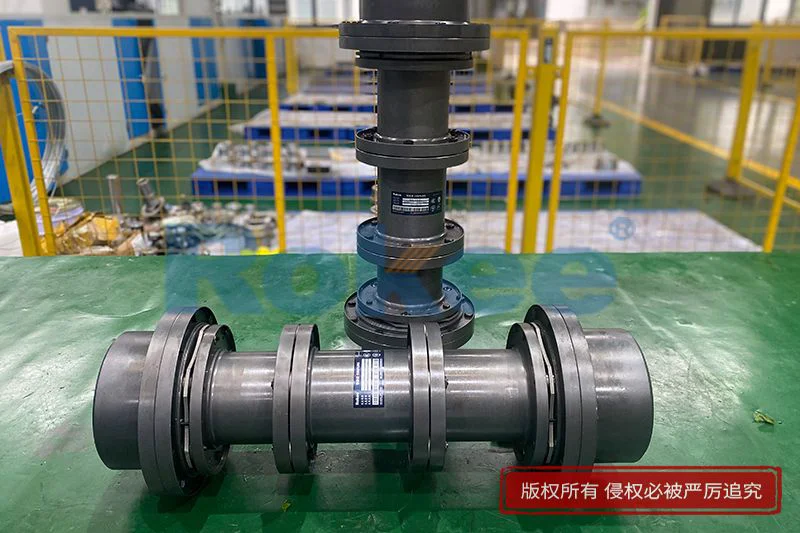
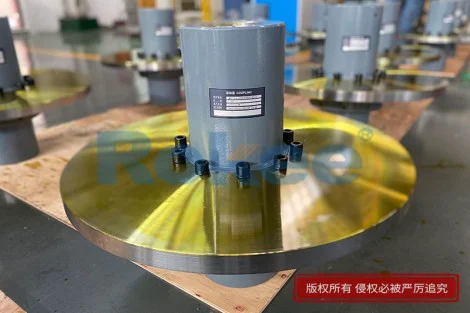
In the continuous and high-efficiency operation of mineral wool sandwich panel production lines, the stability of core transmission systems directly determines product consistency, production continuity and overall operational efficiency. As a key flexible transmission component, diaphragm couplings undertake the critical task of connecting driving and driven shafts in core equipment, coordinating power output and ensuring synchronous operation of various processing units throughout the production line. Different from traditional coupling structures, diaphragm couplings rely on the elastic deformation characteristics of metal thin-plate components to realize torque transmission and automatic misalignment compensation, which perfectly adapts to the continuous working characteristics and complex operating conditions of mineral wool sandwich panel production. This article elaborates on the functional mechanism, application advantages, operational specifications, maintenance strategies and practical application values of core transmission diaphragm couplings in mineral wool sandwich panel production lines, providing systematic technical guidance for stable production and equipment optimization.
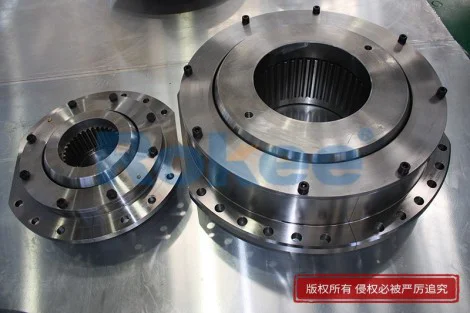
The basic working mechanism of diaphragm couplings is based on the elastic deformation principle of metal diaphragm components, achieving organic integration of rigid torque transmission and flexible deviation compensation. In the full-operation state of mineral wool sandwich panel production lines, mechanical vibration, shaft position deviation caused by long-term equipment operation, and tiny displacement generated by thermal expansion and contraction of equipment components are unavoidable objective phenomena. When the production line is running, the driving end transmits rotational torque to the coupling hub, which further transfers power to the metal diaphragm group. Under the action of torque, the diaphragm produces controllable and reversible elastic deformation, which not only stably transmits rotational power to the driven shaft to drive the continuous operation of rolling, pressing, cutting and other core processes of mineral wool sandwich panels, but also automatically compensates for axial displacement, angular deviation and radial offset between the connected shafts. This unique working mode eliminates the rigid friction and mechanical impact existing in traditional rigid transmission structures, avoids additional load pressure on equipment bearings and transmission components, and effectively reduces the vibration and noise generated during the operation of the production line.
The structural characteristics of diaphragm couplings make them highly compatible with the special operating environment and process requirements of mineral wool sandwich panel production line. The production process of mineral wool sandwich panels involves multiple continuous links including raw material feeding, mineral wool paving, plate body pressing, glue compounding, fixed-size cutting and finished product conveying. All links require precise and synchronous transmission to ensure the uniform thickness of sandwich panels, firm compounding of core materials and panels, and consistent overall dimensional accuracy. Diaphragm couplings adopt an integrated metal elastic structure without sliding friction parts and lubrication accessories, which fundamentally avoids the failure problems such as lubricant deterioration, component wear and loose fit that are prone to occur in traditional couplings during long-term continuous operation. In the production workshop environment with certain dust and tiny fiber debris generated by mineral wool processing, the closed and compact structural form of diaphragm couplings can effectively resist the invasion of external impurities, prevent dust accumulation from affecting transmission accuracy, and maintain long-term stable transmission performance.
Compared with rubber elastic couplings and gear couplings commonly used in traditional industrial transmission systems, core transmission diaphragm couplings show more prominent application advantages in mineral wool sandwich panel production lines. Rubber elastic couplings are prone to aging, deformation and fatigue damage under long-term continuous operation and slight high-temperature environment generated by production equipment operation, which will lead to reduced transmission accuracy and shortened service life, and frequent replacement will affect the continuous production rhythm. Gear couplings rely on meshing transmission, which will produce continuous mechanical wear and backlash during operation, resulting in unstable transmission torque, easy vibration of production equipment, and deviation in the pressing and forming accuracy of mineral wool sandwich panels. In contrast, diaphragm couplings have ultra-high torsional stiffness and zero backlash transmission characteristics, which can maintain precise torque output and synchronous rotation accuracy in long-term high-speed and continuous operation. The metal diaphragm material has excellent temperature resistance and fatigue resistance, which can adapt to the temperature fluctuation range of the production line workshop and the cyclic load of long-term operation, and will not produce elastic fatigue or structural deformation in a short period.
In the actual operation of mineral wool sandwich panel production lines, the stable performance of diaphragm couplings directly affects product quality and production stability. The pressing and compounding process is the core link determining the bonding firmness and flatness of mineral wool sandwich panels. The transmission system of the pressing equipment needs to maintain uniform and stable torque output. If the transmission coupling has deviation compensation failure or unstable torque transmission, it will lead to inconsistent pressing force on the plate surface, resulting in problems such as uneven plate thickness, local hollowing and inconsistent bonding strength between the core material and the outer plate. The fixed-size cutting process puts forward high requirements on the synchronous operation accuracy of the conveying system and the cutting system. The precise transmission performance of diaphragm couplings ensures that the conveying speed and cutting action are highly synchronized, effectively avoiding dimensional errors of finished products and improving the yield rate of sandwich panels. In the continuous feeding and paving links of mineral wool raw materials, the flexible compensation capability of diaphragm couplings can absorb the tiny vibration and shaft misalignment generated by the start-stop and variable-speed operation of the equipment, ensure the uniform and continuous paving of mineral wool materials, and lay a foundation for the overall structural uniformity of finished sandwich panels.
Reasonable installation and commissioning are the prerequisites for giving full play to the performance of core transmission diaphragm couplings in mineral wool sandwich panel production lines. During the equipment assembly and daily replacement of couplings, the coaxiality of the driving shaft and driven shaft must be strictly calibrated to control the shaft deviation within the allowable compensation range of the diaphragm structure. Excessive initial misalignment will cause the diaphragm to bear excessive elastic deformation load during operation, accelerate fatigue loss of metal materials, and reduce the service life of the coupling. In the installation process, the fastening bolts of the coupling hub and diaphragm group need to be tightened symmetrically and evenly to avoid uneven stress caused by unilateral over-tightening or loose fastening, which will affect the stability of torque transmission. After installation, no-load trial operation and load debugging must be carried out. The operating vibration, noise and rotation synchronism of the coupling under no-load state should be checked first, and then the gradual load test should be carried out to confirm that the coupling can adapt to the torque demand of normal production operation without abnormal deformation and vibration.
Scientific daily maintenance and regular inspection can effectively extend the service life of diaphragm couplings and ensure the long-term stable operation of the production line. Although diaphragm couplings have maintenance-free advantages in conventional operation, regular systematic inspection is still required for industrial continuous production scenarios. In daily production inspections, operators need to observe the operating state of the coupling, check for abnormal vibration, abnormal noise and local temperature rise during equipment operation, and judge whether the diaphragm group is fatigued or the fastening structure is loose. Regular disassembly and inspection should be carried out according to the operating cycle of the production line to check the elastic state of the metal diaphragm, observe whether there are tiny cracks, deformation and fatigue wear on the diaphragm surface, and check the fastening state of connecting bolts and the matching tightness of the hub. For couplings operating in high-load and long-cycle working conditions, regular stress detection and performance evaluation should be carried out to eliminate potential failure risks in advance. It is worth noting that during maintenance and inspection, impurities such as mineral wool dust and debris attached to the coupling surface should be cleaned in time to avoid long-term accumulation of dirt affecting the flexible deformation accuracy of the diaphragm and the stability of transmission operation.
The failure forms and troubleshooting of diaphragm couplings in mineral wool sandwich panel production lines have obvious industrial scenario characteristics. The common abnormal problems in operation mainly include excessive vibration of the transmission system, unstable torque output and abnormal noise during operation. Excessive vibration is mostly caused by excessive shaft misalignment beyond the compensation range, loose fastening bolts or fatigue deformation of individual diaphragms. At this time, the equipment should be stopped in time to recalibrate the shaft coaxiality, re-fasten the structural bolts, and replace the fatigued and deformed diaphragm components. Unstable torque output is usually related to uneven stress of the diaphragm group or local structural damage, which will lead to fluctuating transmission power and affect the stable operation of the pressing and conveying system. Abnormal noise is generally caused by tiny friction between loose matching parts or residual impurities in the structural gap, which can be eliminated by cleaning the components and re-calibrating the assembly gap. Timely troubleshooting of coupling abnormalities can not only avoid equipment jamming and shutdown accidents, but also prevent batch quality problems of sandwich panels caused by unstable transmission.
With the continuous upgrading of mineral wool sandwich panel production technology towards high-speed, automated and intelligent continuous production, the application value of high-performance diaphragm couplings in core transmission systems is becoming increasingly prominent. Modern sandwich panel production lines pursue higher production efficiency and more stable product quality, which puts forward stricter requirements on the accuracy, stability and durability of transmission components. Diaphragm couplings, with their high-precision transmission, strong misalignment compensation capability, excellent fatigue resistance and maintenance-friendly characteristics, can fully meet the operation needs of high-efficiency automated production lines. In the long-term production operation, the stable performance of diaphragm couplings can effectively reduce equipment failure rate and downtime loss, improve the continuous operation efficiency of the production line, and reduce the comprehensive operation and maintenance cost of equipment. At the same time, the precise and stable transmission effect helps to continuously improve the dimensional accuracy, structural uniformity and appearance quality of mineral wool sandwich panels, and provides reliable mechanical transmission support for the standardized and high-quality production of sandwich panel products.
In conclusion, core transmission diaphragm couplings are indispensable key core components in mineral wool sandwich panel production lines, and their performance stability directly affects the production efficiency, equipment operation state and finished product quality of the entire production line. Relying on unique elastic deformation transmission mechanism and flexible compensation performance, diaphragm couplings adapt to the complex and continuous working conditions of sandwich panel production, solve many transmission pain points of traditional coupling structures, and have significant advantages in transmission accuracy, operational stability, service life and environmental adaptability. In actual production and equipment management, standardizing the installation and commissioning process, establishing a scientific daily maintenance and inspection mechanism, and timely handling abnormal operating conditions can maximize the working performance of diaphragm couplings, ensure the long-term stable and efficient operation of the core transmission system of the production line, and provide solid technical support for the high-quality and high-yield production of mineral wool sandwich panels. With the continuous optimization of industrial transmission technology, diaphragm couplings will further adapt to the upgrading and development of sandwich panel production equipment and play a more important role in the field of building thermal insulation material production.