Drum Coupling Torque

Torque transmission serves as the core functional logic of all mechanical coupling devices, and drum coupling stands out among various transmission components due to its unique tooth profile structure and excellent load-bearing performance. In complex mechanical transmission systems that require stable power output and misalignment compensation, the torque characteristics of drum coupling directly determine the operational reliability, service life and working efficiency of the entire mechanical equipment. Different from conventional straight-tooth couplings, the specially designed curved tooth surface of drum coupling optimizes the stress distribution during torque transmission, enabling it to withstand higher torque loads while adapting to multiple forms of axis displacement.
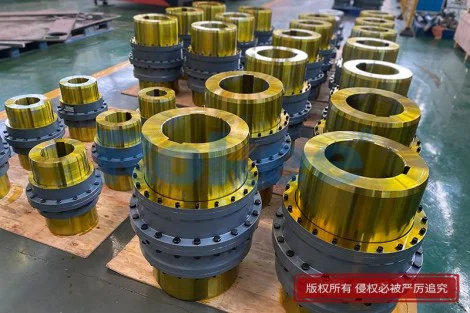
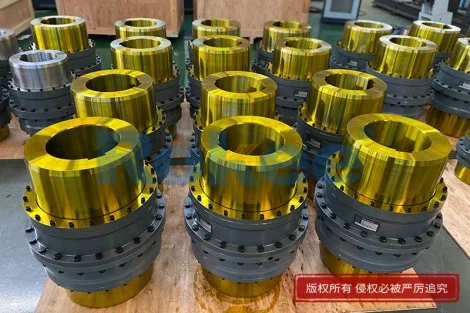
The basic structural composition of drum coupling lays a physical foundation for its torque transmission function. The core structure consists of inner gear sleeves and outer gear rings with drum-shaped teeth, where the curved outline of the outer teeth is the most critical structural feature distinguishing it from ordinary gear couplings. In the assembly state, the inner gear and outer gear mesh with each other to form a stable transmission pair. When the driving shaft rotates, the rotational power is transmitted to the driven shaft through the meshing contact between gear teeth, and torque is transferred synchronously in this mechanical interaction process. The arc-shaped tooth surface of drum teeth enlarges the effective contact area between meshing teeth compared with straight teeth. Under the same external dimension constraint, the contact area of drum tooth surfaces can increase by twenty-five to thirty percent, which disperses the unit contact pressure generated during torque transmission. This structural advantage fundamentally reduces local stress concentration on the tooth surface and enhances the overall torque bearing limit of the coupling.
The torque transmission mechanism of drum coupling follows the basic principles of mechanical kinematics and material mechanics. In the steady rotation state, each meshing tooth pair bears uniform tangential force, and the combined force of these tangential forces forms the rated torque transmitted by the coupling. In actual operating scenarios, mechanical equipment inevitably produces axis deviation due to installation errors, mechanical vibration and structural deformation. The flexible meshing state formed by the drum-shaped tooth profile allows relative sliding between inner and outer gear teeth in the axial and angular directions. This sliding characteristic can effectively compensate for radial displacement, axial displacement and angular deflection between the driving shaft and the driven shaft. When axis misalignment occurs, the contact position between gear teeth changes adaptively, and the curved tooth surface can maintain a stable meshing state without sharp friction or local overload. This adaptive adjustment capability ensures continuous and stable torque transmission even under non-ideal alignment conditions, avoiding torque fluctuation caused by axis offset.
Multiple internal and external factors jointly affect the torque bearing performance of drum coupling. Material properties are the primary internal factor determining torque resistance capacity. High-strength alloy materials with good hardness and toughness are commonly used to manufacture drum coupling components, as they can resist shear force and extrusion force generated by high torque loads. Materials with insufficient hardness are prone to tooth surface plastic deformation under high torque, while materials with poor toughness may produce brittle cracks during instantaneous torque impact. Besides materials, machining accuracy of tooth profiles also exerts a significant impact on torque performance. Smooth tooth surface finish and accurate curvature processing ensure uniform contact of each meshing tooth pair; low machining precision will lead to uneven tooth gap distribution, causing partial teeth to bear excessive torque load and accelerating local wear and damage.
External working conditions are indispensable influencing factors for torque stability. Operating rotation speed changes the dynamic load characteristics of drum coupling. Under low-speed and heavy-load working conditions, the coupling bears static torque for a long time, and the main failure form is tooth surface fatigue wear caused by sustained pressure. Under medium and high-speed operating conditions, centrifugal force and dynamic vibration will generate additional alternating torque, which puts higher requirements on the structural stability and dynamic balance of the coupling. Environmental conditions also cannot be ignored. Dust, moisture and corrosive media in the working environment will erode the tooth meshing surface, increase friction resistance during torque transmission, and reduce the effective torque transmission efficiency. In addition, the installation accuracy of the coupling directly affects its torque bearing state. Excessive installation deviation will expand the meshing friction between gear teeth, produce additional friction torque, and consume part of the transmission power in the form of heat energy.
Torque loss is an inevitable physical phenomenon during the operation of drum coupling, and reducing invalid torque loss is an important way to improve mechanical transmission efficiency. The main source of torque loss comes from sliding friction between meshing gear teeth. When the coupling compensates for axis misalignment, relative axial sliding occurs between inner and outer gear teeth, and dry friction without effective lubrication will generate huge friction resistance, resulting in torque attenuation. High-quality lubrication measures can form a uniform oil film on the tooth contact surface, reduce the friction coefficient between metal surfaces, and minimize friction torque loss. Sealing structures matched with lubrication systems can prevent lubricant leakage and external impurity infiltration, maintaining long-term stable lubrication effects. Relevant mechanical test data shows that optimized lubrication and sealing designs can control the torque loss rate of drum coupling within a low range, and the transmission efficiency can remain above ninety-nine percent in stable operating state.
Instantaneous impact torque is a key assessment indicator for the operational durability of drum coupling. In the start-up, shutdown and load switching stages of mechanical equipment, the transmission system will generate instantaneous impact torque far exceeding the rated torque. The drum-shaped curved tooth structure has excellent buffering performance. When impact torque is applied, the arc tooth surface can gradually disperse instantaneous pressure, avoiding sudden stress concentration on individual gear teeth. This characteristic enables drum coupling to withstand frequent impact loads, which is particularly suitable for intermittent working mechanical systems. In contrast, straight-tooth couplings are prone to tooth edge collision under impact torque, resulting in tooth surface chipping and permanent structural damage. The reasonable tooth gap design of drum coupling further enhances its impact resistance, reserving a tiny movable space for gear teeth during torque mutation to relieve instantaneous mechanical stress.
The torque adaptation characteristics of drum coupling make it widely applicable in multiple industrial fields, especially in low-speed and heavy-load transmission scenarios. In metallurgical rolling equipment, continuous high torque is required to drive rolling rollers to process metal raw materials. Drum coupling maintains stable torque output under long-term heavy-load operation, reducing vibration and deviation during equipment operation. In heavy lifting machinery, the coupling needs to bear alternating torque generated by frequent start and stop. Its excellent impact resistance ensures the safety and stability of power transmission. In mining and building material processing equipment, harsh working environments put forward high requirements on the anti-interference ability of transmission components. The strong torque bearing capacity and environmental adaptability of drum coupling can cope with complex working conditions such as dust and variable loads.
To further optimize the torque performance of drum coupling, targeted improvement measures can be carried out from the aspects of structural design, processing technology and daily maintenance. In terms of structural optimization, reasonably increasing the tooth width can expand the stress area of gear teeth and improve the allowable torque of the coupling; optimizing the curvature of drum teeth can balance the misalignment compensation ability and torque bearing capacity, avoiding excessive curvature leading to reduced structural rigidity. In terms of processing technology, advanced heat treatment processes such as carburizing and quenching can improve the surface hardness and internal toughness of gear teeth, enhancing fatigue resistance under long-term torque load. In daily maintenance, regular replacement of lubricants and inspection of gear tooth wear can prevent excessive friction and structural aging, ensuring that the coupling maintains stable torque transmission performance throughout the service cycle.
In the long-term operation process, the torque aging failure of drum coupling follows a certain mechanical law. Early failure is mostly caused by poor lubrication and installation deviation, which manifests as increased friction torque, abnormal vibration and noise. With the accumulation of operating time, long-term alternating torque load will produce fatigue cracks on the tooth surface, and continuous wear will thin the tooth body, reducing the effective torque bearing area. In the later stage of failure, the meshing gap of gear teeth increases abnormally, resulting in obvious torque fluctuation and power transmission delay. Regular torque detection and mechanical vibration monitoring can effectively judge the operating state of the coupling. By adjusting the installation precision and updating the lubrication system in a timely manner, the aging rate of torque performance can be delayed, and the service life of the coupling can be prolonged.
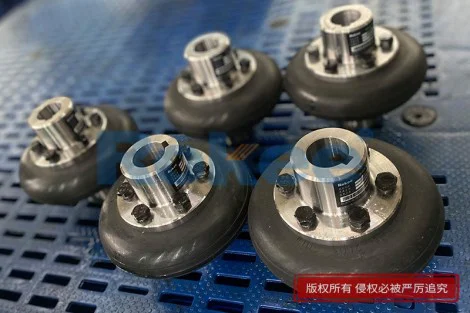
Compared with other common coupling types, drum coupling has unique comprehensive advantages in torque performance. Sleeve couplings have simple structures but limited torque bearing capacity, making them only suitable for light-load and low-precision transmission occasions. Clamp shell couplings rely on friction for torque transmission, with poor dynamic balance performance and obvious torque loss at high speeds. Elastic couplings have good vibration reduction effects but cannot withstand ultra-high torque loads. Although drum coupling has a relatively complex structure, it takes into account high torque bearing capacity, misalignment compensation performance and stable transmission efficiency. It can maintain excellent working performance under harsh working conditions such as heavy load, variable load and slight vibration, achieving a balance between torque carrying capacity and environmental adaptability.
With the continuous upgrading of modern mechanical equipment towards large-scale and high-efficiency, the performance requirements for transmission components are constantly improving, and the torque optimization research of drum coupling is also advancing. Modern mechanical simulation technology can establish accurate torque stress models of drum coupling, simulate the stress distribution and deformation state of gear teeth under different torque loads, and provide data support for structural parameter optimization. New high-strength wear-resistant materials are gradually applied to the production of drum couplings, which can further improve the rated torque limit and reduce wear consumption during torque transmission. In the future, with the integration of intelligent monitoring technology, real-time monitoring of torque changes, tooth surface wear and operating temperature of drum coupling will be realized, making the torque management of mechanical transmission systems more precise and intelligent.
In conclusion, torque is the core performance parameter that defines the application value of drum coupling. Its unique drum-shaped tooth structure is the fundamental reason for excellent torque transmission performance, realizing efficient and stable power transmission under multiple complex working conditions through reasonable stress distribution and flexible meshing characteristics. Material selection, processing accuracy, lubrication state and installation quality jointly determine the torque bearing limit and transmission efficiency of the coupling. Through structural optimization, technological improvement and standardized maintenance, the torque performance of drum coupling can be continuously optimized to adapt to increasingly complex industrial transmission needs. As an important basic transmission component in the mechanical industry, drum coupling will continue to play an irreplaceable role in heavy-duty mechanical equipment, providing reliable torque guarantee for the stable operation of various industrial production systems.