Cardan Driveshaft and PIR Sandwich Panel Line Precise Adaptation to Increase Capacity

In the modern industrial production landscape, the efficiency and stability of production lines directly determine the competitiveness of enterprises, especially in the field of building insulation materials where PIR sandwich panels are widely used. PIR sandwich panels, known for their excellent fire resistance, thermal insulation performance, and structural stability, have become an indispensable material in construction projects such as steel structure factories, cold chain logistics, and medical purification facilities. The production of high-quality PIR sandwich panels relies heavily on the stable operation of automated production lines, which integrate multiple processes including metal sheet uncoiling, roll forming, preheating, PIR foam injection, lamination, curing, and cutting. Each link requires precise power transmission to ensure consistent product quality and production efficiency. Among the numerous components that make up the transmission system of PIR sandwich panel lines, the cardan driveshaft plays a crucial role. Its unique structural design and excellent transmission performance enable it to adapt to the complex working conditions of the production line, and precise adaptation between the cardan driveshaft and the PIR sandwich panel line has become a key means to improve production capacity, reduce energy consumption, and optimize product quality.
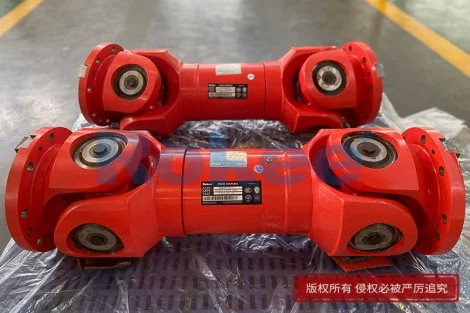
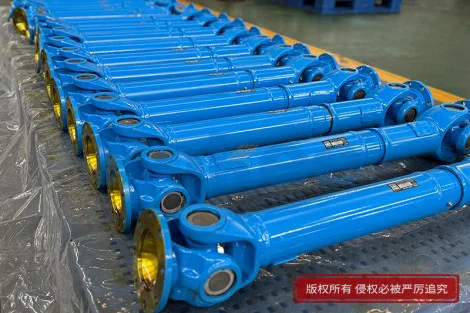
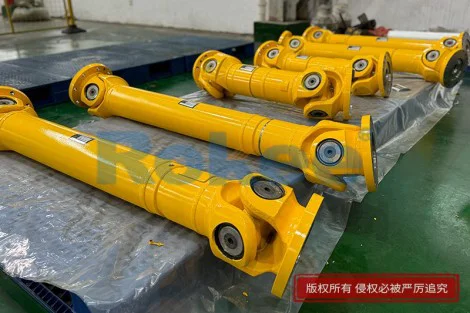
To understand the significance of precise adaptation between cardan driveshafts and PIR sandwich panel line, it is first necessary to clarify the working characteristics of both and the core challenges faced by the transmission system of the production line. A cardan driveshaft, also known as a universal joint driveshaft, is a mechanical component designed to transmit rotational motion and torque between two shafts that are not in a straight line or have angular misalignment. Its core structure consists of universal joints at both ends and an intermediate shaft, with cross bearings connecting the flanges at both ends to realize torque transmission at different angles. The angular compensation capacity of a cardan driveshaft can reach more than 25 degrees, and the spline connection design allows it to compensate for large-distance axial displacement, making it highly adaptable to the installation and layout requirements of complex industrial equipment. In addition, cardan driveshafts have the advantages of high load-bearing capacity, excellent transmission efficiency, and strong durability, which can meet the long-term continuous operation needs of industrial production lines. These characteristics make cardan driveshafts an ideal choice for power transmission in PIR sandwich panel lines, where multiple subsystems are often not aligned due to process limitations and equipment layout constraints.
The PIR sandwich panel production line is a highly integrated and automated system that involves the coordination of multiple subsystems, each with different power requirements and operating speeds. The uncoiling system needs to stably transmit power to the decoiler to ensure uniform feeding of metal sheets; the roll forming system requires precise torque transmission to shape the metal sheets into the required cross-sectional shape; the foaming system relies on stable power to drive the mixing and injection equipment, ensuring uniform filling of PIR foam; the lamination and curing system needs synchronized power transmission to maintain consistent pressure and temperature, ensuring firm bonding between the metal sheets and the foam core; and the cutting system requires accurate power control to achieve precise cutting of the finished panels. The transmission system of the production line faces several key challenges: first, the installation positions of each subsystem are often not on the same axis, resulting in angular deviations between the driving shaft and the driven shaft; second, long-term continuous operation will cause equipment vibration and thermal expansion, leading to changes in the relative position of the shafts; third, the production process of PIR sandwich panels requires stable and uniform power transmission, and even slight fluctuations in speed or torque will affect product quality; fourth, the production line needs to adapt to the production of panels of different specifications, requiring the transmission components to have good flexibility and adjustability. The cardan driveshaft, with its unique structural advantages, can effectively solve these challenges through precise adaptation, ensuring the stable and efficient operation of the entire production line.
The precise adaptation between cardan driveshafts and PIR sandwich panel lines involves multiple aspects, including structural matching, parameter calibration, and dynamic adjustment, which together form a complete adaptation system to maximize the performance of both and achieve the goal of increasing production capacity. Structural matching is the foundation of precise adaptation, which requires the cardan driveshaft to be designed according to the specific structure and layout of the PIR sandwich panel line. The length of the intermediate shaft, the type of universal joints, and the size of the flanges need to be strictly matched with the installation space and power transmission requirements of each subsystem of the production line. For example, in the roll forming subsystem, where the installation space is limited and there is a certain angular misalignment between the driving shaft and the driven shaft, a compact cardan driveshaft with a small axial length and large angular compensation capacity should be selected to ensure that it can be installed smoothly while realizing efficient torque transmission. In the foaming and lamination subsystems, which require high transmission stability, a cardan driveshaft with double universal joints should be adopted to eliminate the velocity fluctuation caused by single universal joints, ensuring that the driven shaft rotates at a uniform speed and maintaining the stability of the foaming and lamination processes. In addition, the connection between the cardan driveshaft and the motors, reducers, and other components of the production line should be firm and reliable, using appropriate connection methods such as flange connection and spline connection to avoid power loss and vibration caused by loose connections.
Parameter calibration is another key link in precise adaptation, which involves adjusting the parameters of the cardan driveshaft and the production line to achieve optimal coordination. The torque and speed of the cardan driveshaft need to be accurately matched with the power requirements of each subsystem of the production line. If the torque of the cardan driveshaft is too large, it will cause unnecessary energy consumption and increase the wear of the components; if the torque is too small, it will fail to meet the power demand, resulting in insufficient production capacity and even equipment failure. The speed of the cardan driveshaft should be synchronized with the operating speed of the production line to ensure that each process is coordinated. For example, in the continuous production process of PIR sandwich panels, the speed of the cardan driveshaft driving the roll forming system should be consistent with the speed of the uncoiling system and the foaming system to avoid material accumulation or insufficient processing. In addition, the angular compensation angle of the cardan driveshaft should be calibrated according to the actual misalignment between the shafts of the production line to ensure that it can effectively compensate for the angular deviation and maintain stable power transmission. The calibration process can be realized through professional testing equipment, which measures the torque, speed, and angular deviation of the cardan driveshaft in real time and adjusts the parameters according to the test results to achieve precise matching.
Dynamic adjustment is an important guarantee for the long-term stable operation of the precise adaptation system, which can timely respond to changes in the working conditions of the production line and adjust the state of the cardan driveshaft. The PIR sandwich panel production line may encounter various changes during operation, such as changes in raw material properties, adjustments in product specifications, and equipment wear, which will affect the power transmission requirements and the working state of the cardan driveshaft. Through the installation of sensors and intelligent control systems, the operating parameters of the cardan driveshaft and the production line can be monitored in real time, including torque, speed, vibration, temperature, and other indicators. When abnormal changes are detected, the control system will automatically adjust the parameters of the cardan driveshaft, such as adjusting the angular compensation angle, optimizing the torque transmission, or发出 early warning signals to remind operators to perform maintenance. For example, if the vibration of the cardan driveshaft exceeds the normal range, it may indicate that there is a misalignment between the shafts or wear of the universal joints. The intelligent control system can adjust the position of the cardan driveshaft or prompt the operator to check and replace the worn components to avoid equipment failure and production interruption. Dynamic adjustment not only ensures the stability of the precise adaptation system but also extends the service life of the cardan driveshaft and the production line components.
The precise adaptation between cardan driveshafts and PIR sandwich panel lines has a significant impact on increasing production capacity, which is reflected in multiple aspects of the production process. First, precise adaptation ensures the synchronization and stability of each subsystem of the production line, reducing production defects caused by unsynchronized operation. Common production defects in PIR sandwich panel lines, such as uneven panel thickness, surface waviness, weak adhesion between metal sheets and foam core, and incorrect cutting length, are often related to unstable power transmission and unsynchronized operation of each subsystem. By ensuring precise power transmission through the cardan driveshaft, the speed and torque of each subsystem can be kept consistent, effectively reducing these production defects. For example, stable power transmission in the foaming system ensures uniform injection of PIR foam, avoiding foam overflow or insufficient filling; synchronized operation of the roll forming and lamination systems ensures uniform thickness and flat surface of the panels. The reduction of production defects not only improves product quality but also reduces material waste and rework time, indirectly increasing production capacity.
Second, precise adaptation improves the transmission efficiency of the production line, reducing energy consumption and increasing production speed. The cardan driveshaft has high transmission efficiency, and through precise structural matching and parameter calibration, the power loss during transmission can be minimized. Compared with traditional transmission methods such as chain transmission and belt transmission, cardan driveshafts have less friction and vibration, reducing energy waste caused by friction and vibration. In addition, the stable power transmission ensures that the production line can operate at the optimal speed without being limited by power transmission problems. For example, the PIR sandwich panel production line with precise adaptation of cardan driveshafts can achieve a production speed of 3-25 meters per minute, which is significantly higher than that of production lines with unstable transmission systems. The increase in production speed directly improves the daily output of the production line, achieving the goal of increasing production capacity. At the same time, the reduction in energy consumption reduces the production cost of enterprises, improving their economic benefits.
Third, precise adaptation enhances the flexibility and adaptability of the production line, enabling it to adapt to the production of different specifications of PIR sandwich panels. With the continuous development of the construction industry, the demand for PIR sandwich panels of different thicknesses, widths, and performance indicators is increasing. The precise adaptation system of cardan driveshafts and production lines allows for quick adjustment of the production line parameters, such as changing the speed and torque of the cardan driveshaft to adapt to the production of panels of different specifications. For example, when producing thicker PIR sandwich panels, the torque of the cardan driveshaft can be increased to ensure sufficient power for the lamination and curing processes; when producing panels of different widths, the speed of the uncoiling and cutting systems can be adjusted through the cardan driveshaft to ensure consistent production rhythm. The strong adaptability of the production line enables enterprises to quickly respond to market changes, expand product categories, and further increase production capacity and market share.
In addition to increasing production capacity, the precise adaptation between cardan driveshafts and PIR sandwich panel lines also improves the reliability and service life of the production line. The cardan driveshaft has strong durability and can withstand long-term high-load operation. Through precise adaptation, the wear and tear of the cardan driveshaft and other components of the production line can be reduced, avoiding frequent equipment failures and production interruptions. For example, the double universal joint design of the cardan driveshaft eliminates velocity fluctuation, reducing the stress on the shafts and bearings of the production line, and extending their service life. The reduction in equipment failures reduces maintenance time and maintenance costs, ensuring the continuous operation of the production line, which is crucial for maintaining stable production capacity. At the same time, the stable operation of the production line also improves the safety of the production process, reducing the risk of accidents caused by equipment failure.
To ensure the effect of precise adaptation between cardan driveshafts and PIR sandwich panel lines, it is necessary to pay attention to daily maintenance and management. Regular inspection of the cardan driveshaft, including checking the wear of universal joints, cross bearings, and splines, ensuring the tightness of connections, and lubricating the moving components, can effectively prevent equipment failures. For example, regular lubrication of the universal joints and bearings can reduce friction and wear, ensuring the smooth operation of the cardan driveshaft. In addition, the intelligent control system should be regularly calibrated and maintained to ensure the accuracy of real-time monitoring and dynamic adjustment. Operators should be trained to master the working principle and operation method of the cardan driveshaft and the precise adaptation system, so that they can timely detect and handle abnormal situations during operation. Regular maintenance and management not only ensure the long-term stable operation of the precise adaptation system but also extend the service life of the cardan driveshaft and the production line, creating better economic benefits for enterprises.
In the context of the continuous development of industrial automation and intelligent manufacturing, the precise adaptation between cardan driveshafts and PIR sandwich panel lines will become more intelligent and refined. With the application of digital twin technology, enterprises can build a virtual mapping of the cardan driveshaft and the production line, simulate the working process of the precise adaptation system through real-time data interaction, predict potential failures, and optimize the adaptation parameters. For example, through digital twin technology, engineers can simulate the torque and speed changes of the cardan driveshaft under different working conditions, optimize the structural design and parameter settings of the cardan driveshaft, and improve the adaptation effect. In addition, the integration of Internet of Things technology and artificial intelligence technology will enable the precise adaptation system to realize self-diagnosis, self-adjustment, and self-optimization, further improving the efficiency and stability of the production line, and promoting the continuous improvement of production capacity.
In conclusion, the precise adaptation between cardan driveshafts and PIR sandwich panel lines is a key factor in improving the production capacity, product quality, and economic benefits of enterprises. Through scientific structural matching, accurate parameter calibration, and dynamic adjustment, the cardan driveshaft can effectively meet the power transmission needs of the PIR sandwich panel production line, ensuring the stable, efficient, and continuous operation of the production line. The precise adaptation not only reduces production defects and energy consumption but also enhances the flexibility and adaptability of the production line, enabling enterprises to better adapt to market changes. With the continuous advancement of technology, the precise adaptation system will become more intelligent, bringing new opportunities for the development of the PIR sandwich panel industry. Enterprises should pay full attention to the importance of precise adaptation, strengthen the research and application of related technologies, and continuously optimize the adaptation effect to gain a competitive advantage in the fierce market competition.