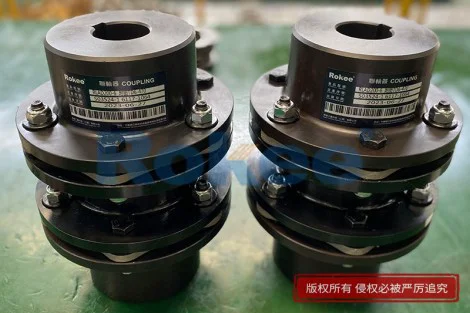
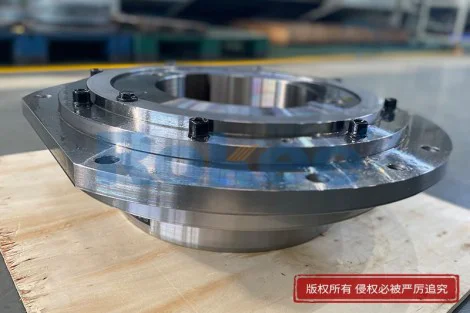
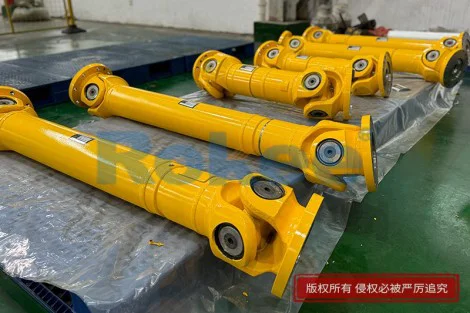
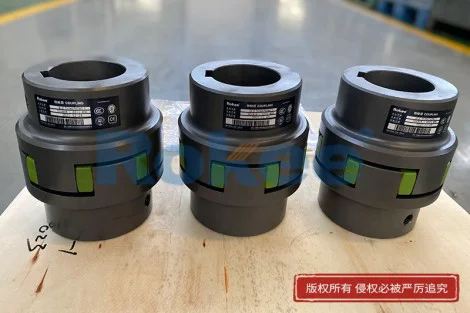
Universal Coupling for Sandwich Panel Production Line Custom Solution
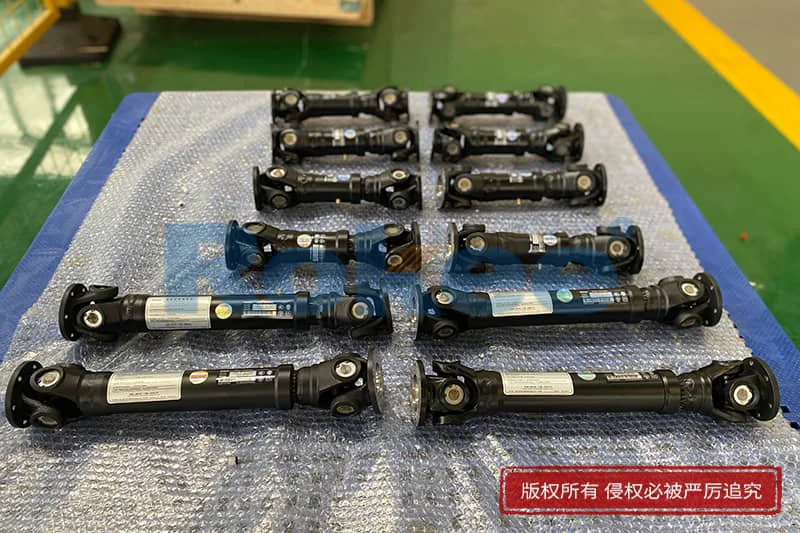
In the modern construction and manufacturing industry, sandwich panels have become indispensable materials due to their excellent thermal insulation, structural stability, sound absorption, and fire resistance. These panels, composed of two surface layers and a core material such as polyurethane, rock wool, phenolic, or glass wool, are widely used in prefabricated buildings, industrial warehouses, cold storage facilities, and commercial structures. The mass production of high-quality sandwich panels relies heavily on efficient and stable production lines, where every component plays a crucial role in ensuring continuous operation and consistent product quality. Among these components, universal couplings serve as the "flexible link" in the transmission system, connecting different mechanical units and ensuring the smooth transfer of power even when there are angular, axial, or radial deviations between shafts. Given the diverse specifications of sandwich panel production lines and the varying working conditions, a one-size-fits-all universal coupling can no longer meet the precise transmission needs of different production scenarios. Custom solutions for universal couplings have thus become a key factor in optimizing production efficiency, reducing equipment wear, and extending the service life of the entire production line.
The core function of a universal coupling in a sandwich panel production line is to transmit torque between non-collinear shafts while compensating for misalignments that may occur due to installation errors, thermal expansion during operation, or structural limitations of the production line. Unlike standard couplings, custom universal couplings are designed and manufactured based on the specific parameters of the production line, including the type of sandwich panel being produced, the speed and torque requirements of each mechanical unit, the working environment, and the spatial layout of the equipment. This personalized design ensures that the coupling not only matches the transmission needs perfectly but also adapts to the unique challenges of the sandwich panel production process, such as high-speed operation, continuous load-bearing, and exposure to dust or temperature variations.
To develop an effective custom solution for universal couplings in sandwich panel production lines, it is first necessary to conduct a comprehensive analysis of the production line's working characteristics and transmission requirements. Different types of sandwich panel production lines have distinct operational demands: for example, polyurethane sandwich panel production lines require precise control of the foaming process, which involves high-speed mixing and continuous conveying, while rock wool sandwich panel production lines focus on the stable feeding and lamination of rigid core materials. These differences directly affect the torque, speed, and misalignment compensation requirements of the universal coupling. For instance, a production line with a high-speed lamination unit will require a coupling with high transmission accuracy and low backlash to ensure the surface layers and core material are bonded evenly, while a production line handling heavy core materials will need a coupling with strong load-bearing capacity and wear resistance.
Material selection is a critical aspect of custom universal coupling solutions, as it directly determines the coupling's performance, durability, and adaptability to the working environment. In sandwich panel production lines, the coupling may be exposed to various harsh conditions, such as high temperatures from the foaming or curing process, dust from the core material processing, or even corrosive substances in some special production scenarios. Therefore, the choice of materials must be tailored to these conditions. Carbon structural steel, such as 45# steel, is a common choice for general-purpose scenarios where the load is moderate and the environment is relatively clean; it offers good comprehensive mechanical properties after quenching and tempering, with a hardness of HRC28-32 and a tensile strength of not less than 600MPa, ensuring reliable torque transmission at medium speeds. For production lines with high dynamic loads, such as those handling thick or heavy sandwich panels, alloy structural steel like 40Cr or 35CrMo is preferred; the addition of chromium and molybdenum elements improves the steel's hardenability by more than 30%, with a high-temperature strength of up to 800MPa and excellent fatigue resistance, making it suitable for long-term heavy-load operation.
In production lines with corrosive environments, such as those using chemical adhesives or operating in humid areas, stainless steel materials are ideal. Austenitic stainless steel, such as 304 or 316L, offers strong corrosion resistance; 316L, in particular, contains 2-3% molybdenum, which enhances its pitting corrosion resistance in chloride environments by more than five times compared to 304 and maintains toughness even at -196℃. For production lines that require lightweight and high-precision transmission, such as those producing thin or customized sandwich panels, high-strength aluminum alloy like 7075-T6 is a suitable option. With a density of one-third that of steel and a specific strength of 156MPa/(g/cm³), it not only reduces the overall weight of the transmission system but also provides better corrosion resistance than carbon steel, making it suitable for high-speed and precision-driven units. In some cases where vibration reduction and noise reduction are required, such as in precision lamination or cutting units, engineering plastics like POM or PA66 can be used; these materials have a low friction coefficient of 0.1-0.3, a temperature resistance range of -40℃ to 150℃, and excellent electrical insulation, effectively reducing vibration and noise during operation.
The structural design of the universal coupling is another key element of the custom solution, as it directly affects the coupling's misalignment compensation capacity, transmission efficiency, and stability. The most common structures used in sandwich panel production lines are cross-shaft universal couplings and ball cage universal couplings, each with its own advantages and applicable scenarios. Cross-shaft universal couplings are widely used in general transmission scenarios due to their compact structure, high torque-bearing capacity, and ability to compensate for angular misalignments between 5° and 45°. They consist of yokes, a cross shaft, needle bearings, and seals; the cross shaft serves as the core rotating component, with four mutually perpendicular journals connected to the yokes via needle bearings, allowing for multi-directional swing to adapt to shaft misalignments. However, a single cross-shaft universal coupling may cause periodic fluctuations in the angular velocity of the driven shaft when the driving shaft rotates at a constant speed, which can lead to vibration in the transmission system. To address this issue, custom solutions often adopt a double cross-shaft structure, where two universal couplings are connected via an intermediate shaft, and the yokes at both ends are kept in the same plane to offset the angular velocity fluctuations, ensuring constant-speed transmission.
Ball cage universal couplings, on the other hand, are more suitable for high-speed and high-precision transmission scenarios, such as the cutting and lamination units of sandwich panel production lines. Their structure includes an outer spherical ring, an inner star-shaped ring, force-transmitting steel balls, and a cage; the outer and inner rings are processed with precision arc raceways, and the steel balls are evenly distributed in the cage's windows, positioned on the bisecting plane of the angle between the two shafts. This design ensures that the angular velocities of the driving and driven shafts remain consistent, eliminating speed fluctuations and reducing energy loss. Ball cage universal couplings can also accommodate larger angular misalignments, up to 45° in some cases, and their rolling friction design reduces wear, improving transmission efficiency and service life. For custom solutions, the structure of the coupling can be further optimized based on the specific needs of the production line: for example, adding elastic components to absorb instantaneous impact loads, or designing a modular structure to facilitate maintenance and component replacement.
In addition to material and structural design, the custom solution for universal couplings must also consider the installation and maintenance requirements of the sandwich panel production line. Installation space is often limited in production lines, especially in modular designs where multiple mechanical units are closely arranged. Therefore, custom couplings can be designed with a compact structure to fit into narrow spaces, while also ensuring easy installation and alignment. For example, flanged connections can be adopted to simplify the installation process, or a split-type design can be used to allow on-site assembly without disassembling the entire transmission system. Maintenance is another important factor; sandwich panel production lines often operate continuously for long periods, so the coupling should be designed with easy maintenance in mind, such as integrated lubrication systems with grease nipples for regular lubrication, and sealed structures to prevent dust and debris from entering the internal components, reducing wear and extending the maintenance cycle.
The performance testing of custom universal couplings is also an integral part of the solution to ensure that the coupling meets the designed specifications and can operate stably in the production line. Testing items include torque transmission capacity, misalignment compensation range, transmission accuracy, noise level, and fatigue life. Torque testing ensures that the coupling can withstand the maximum torque of the production line without deformation or failure; misalignment testing verifies the coupling's ability to compensate for angular, axial, and radial deviations while maintaining stable transmission; transmission accuracy testing measures the backlash and speed fluctuation to ensure that the coupling does not affect the precision of the production process. Fatigue life testing simulates long-term continuous operation to assess the coupling's durability and service life, ensuring that it can meet the production line's operational requirements without frequent replacement.
The application of custom universal coupling solutions in sandwich panel production lines has been proven to significantly improve production efficiency and product quality. For example, in a polyurethane sandwich panel production line, a custom ball cage universal coupling was designed to match the high-speed foaming and lamination units. The coupling was made of high-strength alloy steel to withstand high torque and high speed, and its ball cage structure ensured constant-speed transmission, reducing vibration and improving the uniformity of the foam core. As a result, the production line's operating speed increased by 15%, and the qualified rate of finished panels improved by 8%, while the maintenance frequency of the transmission system decreased by 20%. In another case, a rock wool sandwich panel production line with harsh dust environments adopted a custom cross-shaft universal coupling made of 316L stainless steel, with a sealed structure to prevent dust intrusion. This coupling maintained stable operation for more than 20,000 hours without major failures, significantly reducing downtime and maintenance costs.
As the demand for customized sandwich panels continues to grow, the production lines are becoming more complex and diverse, placing higher requirements on the performance of universal couplings. Custom solutions must keep pace with these changes, integrating advanced design concepts and materials to meet the evolving needs of the industry. For example, the integration of intelligent monitoring systems into custom couplings can provide real-time data on torque, temperature, and vibration, allowing operators to detect potential failures in advance and perform predictive maintenance, further improving the reliability and efficiency of the production line. Additionally, the development of lightweight and high-strength materials, such as carbon fiber composites, is opening up new possibilities for custom universal couplings, enabling even higher transmission efficiency and durability in extreme working conditions.
In conclusion, universal couplings are essential components in sandwich panel production lines, and custom solutions are the key to ensuring their optimal performance. By conducting a comprehensive analysis of the production line's requirements, selecting appropriate materials and structures, and optimizing installation and maintenance designs, custom universal couplings can effectively solve the transmission challenges posed by non-collinear shafts, misalignments, and harsh working environments. These solutions not only improve the efficiency and stability of the production line but also reduce operational costs and extend the service life of the equipment. As the sandwich panel industry continues to develop, the role of custom universal coupling solutions will become even more important, driving the innovation and upgrading of production technology and contributing to the production of high-quality, efficient, and sustainable sandwich panels.