Tyre Flexible Coupling
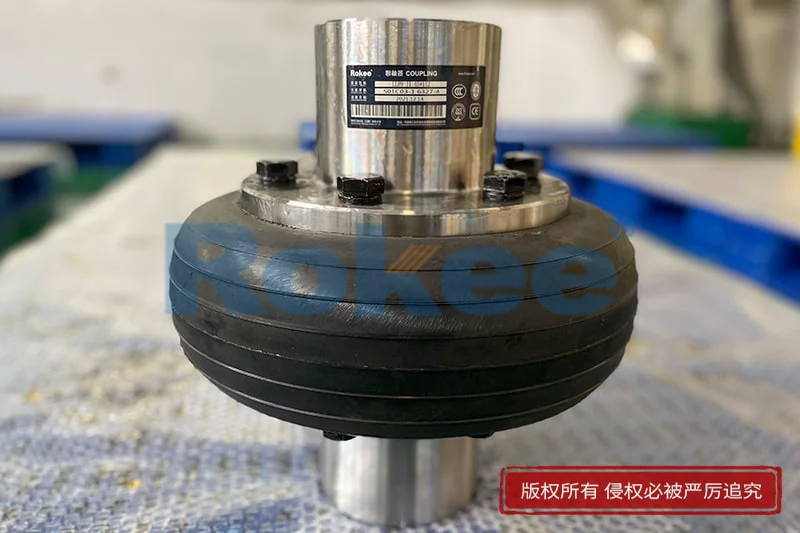
Tyre flexible coupling is a widely adopted elastic transmission component in modern mechanical systems, designed primarily to connect driving and driven shafts for stable torque transmission while integrating multiple practical functional advantages. Structured with a rubber tyre elastic core and matched metal hubs, this coupling relies on the elastic deformation of rubber materials to achieve core mechanical functions, differing significantly from rigid and other flexible coupling types. Its most prominent features include excellent multi-directional misalignment compensation, superior vibration damping and shock absorption performance, and low torsional rigidity, which effectively resolve common operational problems in mechanical transmission such as shaft position deviation, equipment vibration, and instantaneous impact loads. Suitable for various medium and low-speed transmission scenarios with frequent startup, variable load, and continuous operation, it can effectively reduce mechanical wear, lower operational noise, and extend the service life of supporting equipment. With simple structural composition, convenient installation and maintenance, and strong operational stability, it has become an indispensable basic component in industrial transmission machinery, covering a wide range of civilian and industrial mechanical equipment fields.
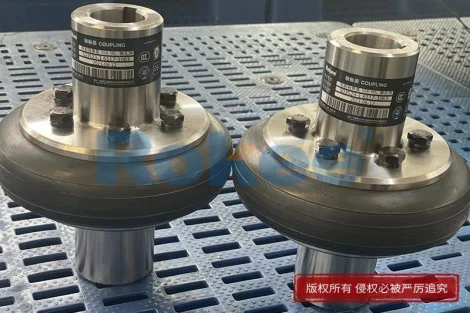
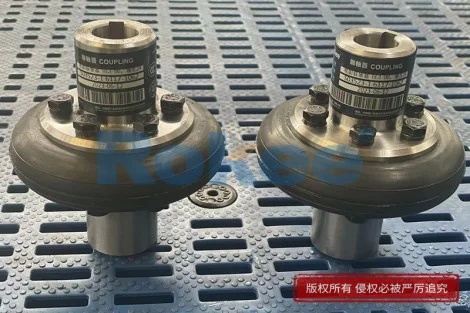
The basic structural composition of tyre flexible coupling is simple and scientific, forming a complete transmission assembly with coordinated functions of elastic and rigid parts. The core functional part is the integral rubber tyre elastic element, which is usually reinforced with high-performance fiber layers inside to enhance structural toughness and load-bearing capacity while maintaining excellent elastic deformability. The two ends of the rubber tyre are stably connected with independent metal hubs through fastening structures, and the hubs are precisely matched with the shaft ends of driving and driven equipment to ensure accurate power input and output. Different from split-type elastic couplings, the integrated tyre structure has no assembly gaps, avoiding local stress concentration and abnormal friction during operation. The overall structure abandons complex auxiliary parts, realizing an integrated design of torque transmission, displacement compensation and vibration buffering. This streamlined structure not only reduces the failure rate of parts operation but also simplifies the overall assembly process, enabling workers to complete installation, disassembly and debugging efficiently without complex professional tools, laying a solid foundation for stable and long-term operation of mechanical equipment.
The working principle of tyre flexible coupling is based on the elastic deformation characteristics of rubber materials, realizing efficient and stable mechanical power transmission. During equipment operation, the torque generated by the driving shaft is transmitted to the metal hub on the driving side first, and the hub drives the rubber tyre element to produce mild elastic shear and compression deformation. Relying on the uniform deformation of the integral tyre structure, the torque is stably transferred to the driven-side hub and finally transmitted to the driven shaft, completing the power transmission process. When the connected two shafts produce angular deflection, radial offset or axial displacement due to installation errors or operational vibration, the flexible rubber tyre can adaptively deform in multiple directions to offset the misalignment error, avoiding rigid extrusion and friction between shafts. In addition, when the equipment is started, stopped or subjected to sudden load changes, the rubber tyre can absorb instantaneous impact energy through elastic deformation, buffer torque fluctuation, and eliminate torsional vibration generated in the transmission process, ensuring the whole mechanical transmission system runs smoothly and continuously without jitter or stuck phenomena.
Tyre flexible coupling possesses unique and comprehensive performance advantages that make it stand out among various flexible coupling products. First of all, it has ultra-high multi-dimensional displacement compensation capability, which can adapt to various complex shaft misalignment states that are difficult to accommodate by ordinary couplings, effectively solving the transmission failure and part wear problems caused by shaft position deviation. Secondly, its excellent damping and noise reduction performance is far superior to traditional couplings; the rubber elastic element can effectively isolate mechanical vibration and eliminate resonance noise generated during equipment operation, creating a stable and low-noise working environment for mechanical systems. In terms of load adaptability, it has low torsional rigidity and good flexibility, which can well cope with frequent startup, forward and reverse rotation and variable load operation conditions, and will not produce rigid torque impact on equipment parts. Moreover, the integral tyre structure has uniform stress distribution, strong fatigue resistance, no easy aging and damage under long-term cyclic operation, and maintains stable transmission performance for a long time, greatly reducing the frequency of equipment maintenance and replacement.
Tyre flexible coupling is widely applied in various industrial and civilian mechanical equipment scenarios that require stable transmission and vibration reduction. In fluid conveying equipment, it is commonly used in supporting connection of water pumps, fans and blowers that run continuously for a long time, effectively offsetting the shaft vibration and displacement generated by high-speed operation of such equipment and ensuring long-term stable operation of fluid transmission systems. In material handling machinery, it is applied to conveyor equipment, stackers and other facilities, buffering the impact load generated by material transportation and mechanical operation, avoiding transmission part damage caused by uneven load. In general industrial processing machinery, it matches with motors, reducers and transmission shafts of various processing equipment, solving the vibration problem in mechanical operation and improving the processing accuracy and operational stability of equipment. In addition, it also has good application performance in light industrial machinery, agricultural machinery and other fields, adapting to different working environments and load conditions, and providing reliable transmission guarantee for various mechanical equipment.
Compared with gear couplings, sleeve couplings and other common transmission couplings, tyre flexible coupling shows obvious comprehensive advantages in practical application. Rigid couplings have almost no deformation capacity, cannot compensate for shaft misalignment, and are extremely prone to severe wear of shafts and bearings when there is installation deviation or operational vibration, with poor adaptability to variable load working conditions. Other elastic couplings with split structures often have local stress concentration, uneven force bearing and easy aging of local parts, resulting in shortened overall service life and unstable transmission performance. In contrast, tyre flexible coupling has an integrated seamless structure with uniform internal force distribution, no local wear and abnormal noise during operation, and more durable performance. Its multi-directional compensation range is wider than most flexible couplings, and the vibration damping and shock absorption effect is more prominent. Meanwhile, it avoids the defects of complex maintenance and easy failure of traditional couplings, with lower later operational cost and higher comprehensive cost performance in long-term industrial application.
Daily maintenance and reasonable use methods are crucial to prolonging the service life and maintaining the stable performance of tyre flexible coupling. In the daily operation cycle, regular visual inspection should be carried out to check whether the rubber tyre element has aging cracks, local deformation, wear damage or peeling phenomena, and timely replace damaged parts to avoid transmission failure caused by elastic element failure. It is necessary to regularly check the fastening state of connecting parts to ensure that the connecting structure between the hub and the rubber tyre is firm, preventing displacement and slippage during operation. In the use process, excessive overload operation should be avoided for a long time; long-term overload will cause irreversible plastic deformation of the rubber tyre, reduce elastic compensation capacity and vibration damping performance, and even lead to structural damage. In addition, avoid long-term exposure to high temperature, humid or corrosive environments, as harsh environments will accelerate rubber aging and reduce the overall mechanical performance of the coupling. Standardized installation and scientific maintenance can maximize the operational efficiency and service life of the coupling.
With the continuous upgrading of modern industrial mechanical equipment towards high efficiency, stability and low energy consumption, the application value and development potential of tyre flexible coupling are constantly highlighted. Modern mechanical transmission systems put forward higher requirements for the stability, anti-vibration performance and environmental adaptability of basic transmission parts, and the comprehensive performance of tyre flexible coupling can well meet the development needs of the industry. At present, with the continuous innovation of rubber material technology and structural optimization design, the high temperature resistance, wear resistance and aging resistance of tyre flexible coupling are continuously improved, and it can adapt to more complex and harsh industrial working environments. Its simple structure, reliable performance and low maintenance cost make it more adaptable to the popularization and application of standardized and large-scale industrial equipment. In the future, with the continuous development of intelligent manufacturing and industrial automation, tyre flexible coupling will be further optimized in structural design and material performance, and its application scope in high-end mechanical equipment fields will be further expanded, becoming a more core basic transmission component in modern mechanical systems.