Flange Universal Coupling
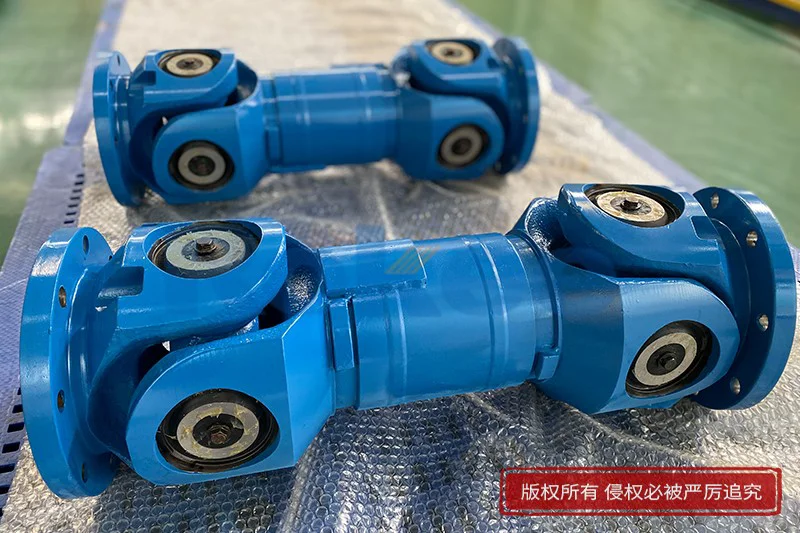
Flange universal coupling is a pivotal flexible transmission component widely adopted in modern mechanical drive systems, integrating the structural stability of flange connection and the angular compensation flexibility of universal joint structures. Unlike rigid couplings that demand precise shaft coaxiality, this mechanical part enables stable torque and power transmission between two shafts with angular, axial and radial deviations, effectively adapting to dynamic operating conditions of mechanical equipment. Its unique composite structure overcomes the limitations of traditional connecting parts, which are prone to stress concentration and transmission jitter under misalignment conditions. With excellent load-bearing capacity, vibration damping performance and environmental adaptability, it serves as a core connecting unit for various heavy-duty, high-speed and dynamic mechanical transmission scenarios. It effectively buffers mechanical vibration generated during equipment operation, offsets installation errors and thermal deformation displacement of components, and significantly improves the overall operational stability and service life of mechanical transmission systems.
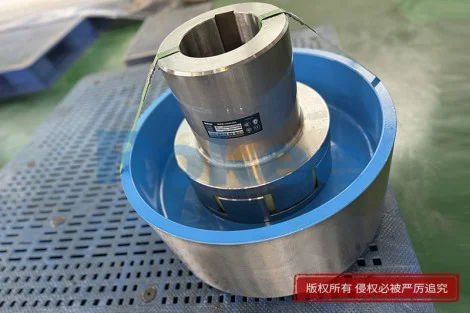
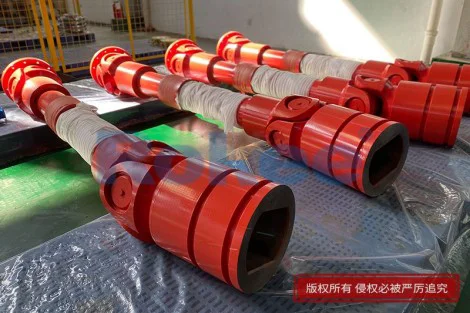
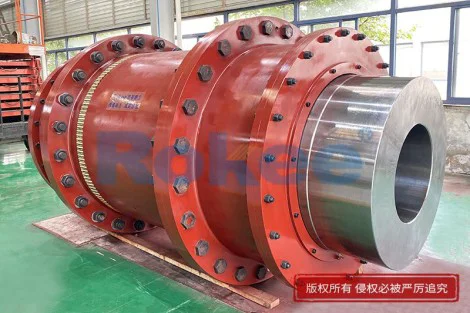
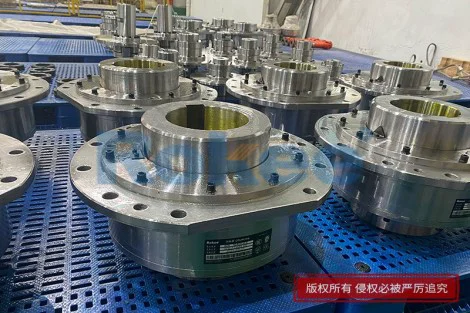
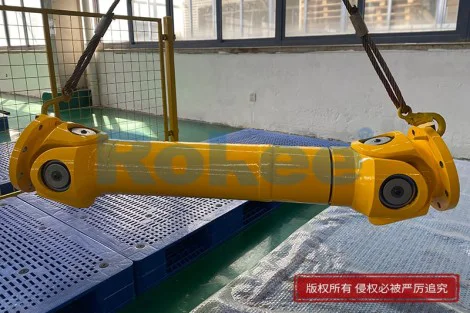
The structural composition of flange universal coupling is sophisticated and scientific, with each component undertaking independent and coordinated transmission functions to ensure efficient and stable mechanical operation. The whole structure mainly includes bilateral flange yokes, a central cross shaft, precision bearing assemblies and fastening connecting parts. The flange yokes at both ends are the basic connecting structures, featuring integrated forging molding to ensure overall structural rigidity, and they can be closely fixed with the shaft ends of driving and driven equipment through uniform bolt holes, realizing reliable connection and torque input and output. The cross shaft is the core force-bearing and deflection adjusting component, with four mutually perpendicular shaft necks distributed symmetrically, which can realize multi-directional flexible rotation and swing. Each shaft neck is equipped with high-precision rolling bearings, which reduce friction resistance during relative movement and avoid rigid friction wear between metal structures. All matching parts adopt optimized dimensional tolerance design, ensuring seamless coordination during operation. The overall compact and reasonable structural layout not only guarantees high structural strength under heavy load conditions, but also reserves sufficient movement space for shaft misalignment compensation, laying a solid structural foundation for its flexible transmission performance.
The working principle of flange universal coupling relies on the spatial deflection coordination of the cross shaft and bearing assembly to realize continuous and stable power transmission under non-coaxial shaft conditions. In the operating state, the driving equipment drives the unilateral flange yoke to rotate synchronously, and the torque is uniformly transmitted to the central cross shaft through the bearing assembly. The cross shaft converts the unidirectional rotational power of the driving end into multi-directional flexible driving force, and then transmits the power to the driven-end flange yoke and the connected driven shaft, realizing synchronous rotation of the whole transmission system. When the driving shaft and driven shaft produce angular deviation, axial displacement or radial offset due to installation errors, equipment vibration or thermal expansion of parts, the cross shaft can swing adaptively in multiple angles, and the internal bearings can rotate flexibly to offset the displacement difference between the two shafts. This working mode completely avoids the rigid extrusion and stress concentration caused by shaft misalignment in traditional rigid transmission structures. It maintains consistent torque transmission efficiency in dynamic working environments, ensures no power interruption or transmission jitter during equipment operation, and realizes long-term stable mechanical power transmission.
Flange universal coupling boasts outstanding comprehensive performance advantages, making it far more adaptable than traditional coupling products in complex industrial working conditions. First of all, it has excellent misalignment compensation capability, which can adapt to a certain range of angular deflection, axial stretching and radial offset of the transmission shaft, effectively solving the transmission failure problems caused by installation deviation and equipment operation deformation. Secondly, it features high torque transmission efficiency and stable load-bearing performance. The high-strength integral structure can bear large instantaneous impact load and long-term heavy-load operation, with low power loss during transmission, meeting the power demand of high-power mechanical equipment. In addition, the built-in bearing friction reduction structure greatly reduces operating friction and mechanical noise, realizing low-noise and smooth operation. It also has remarkable vibration damping and buffering effects, which can absorb the vibration impact generated by mechanical operation, reduce the vibration transmission between equipment components, and protect the whole transmission system and related precision parts from impact damage. Moreover, its overall structure has strong corrosion resistance and fatigue resistance, adapting to long-term continuous operation in various harsh working environments.
Material selection is the key factor determining the service performance and service life of flange universal coupling, and high-quality industrial materials are adopted for all core components to adapt to complex working conditions. The main body of flange yoke and cross shaft is mostly made of high-strength alloy forged materials, which undergo strict heat treatment processes such as quenching and tempering to improve overall structural rigidity, surface hardness and impact resistance. This material processing method effectively avoids structural deformation, fracture and fatigue damage under long-term heavy-load and impact working conditions, and improves the overall structural stability of the coupling. The internal precision bearings are made of high wear-resistant alloy materials with excellent self-lubricating and anti-wear properties, which can keep low friction operation for a long time and reduce component wear failure. The fastening bolts and sealing auxiliary parts adopt anti-rust and anti-corrosion materials, which can resist the erosion of moisture, dust and industrial corrosive substances in the working environment. The scientific material matching design enables the coupling to maintain stable mechanical performance in high-temperature, low-temperature, dusty and humid working environments, and greatly extends the service cycle of the equipment.
Flange universal coupling has a wide range of industrial application scenarios, covering almost all mechanical fields that require flexible power transmission and shaft misalignment compensation. In heavy machinery industry, it is widely used in mining machinery, engineering machinery and metallurgical equipment, adapting to the heavy-load and high-vibration operation characteristics of large mechanical equipment, ensuring stable power transmission of crushing, conveying and rolling equipment. In power transmission equipment, it is applied to the connection of power generation equipment and transmission devices, offsetting the shaft displacement caused by thermal expansion of equipment during operation and maintaining the stable operation of power transmission systems. In transportation machinery, it serves as an important connecting component of transmission systems for various heavy-duty vehicles and special mechanical transportation equipment, adapting to the complex vibration and displacement changes during vehicle operation. In addition, it is also commonly used in industrial automation production equipment, chemical machinery and port handling machinery, providing reliable flexible transmission support for various mechanical equipment with dynamic operation changes and complex working conditions.
The installation and maintenance of flange universal coupling follow standardized and scientific operation norms, which can effectively ensure its optimal operating performance and long-term stable operation. During installation, it is necessary to ensure that the connecting surfaces of the flange and the shaft end are clean and flat to avoid sundry gaps affecting the connection tightness. The fastening bolts need to be tightened symmetrically and evenly to ensure uniform stress on the flange connection surface and prevent loose connection or local stress concentration. After installation, it is necessary to check the rotation flexibility of the coupling to ensure no jitter, friction and abnormal noise during idle operation. In daily maintenance, regular inspection of bolt tightness is required to eliminate hidden dangers of loose connection caused by long-term vibration. It is also necessary to regularly check the wear degree of internal bearings and cross shaft components, and replace worn parts in time to avoid increased friction and reduced transmission efficiency. Regular cleaning of dust and dirt on the surface and inside of the coupling and proper lubrication maintenance can effectively reduce component wear, delay fatigue aging of parts, and ensure that the coupling always maintains efficient and stable transmission performance during long-term operation.
With the continuous upgrading of modern industrial mechanical equipment towards high precision, high load and high efficiency, the technical optimization and development potential of flange universal coupling are increasingly prominent. At present, the continuous innovation of material processing technology and structural design concepts further improves the comprehensive performance of the product. The optimized lightweight structural design reduces the overall weight of the coupling on the premise of ensuring structural strength, reduces the self-load of mechanical equipment, and improves the energy-saving effect of transmission operation. The upgraded wear-resistant and corrosion-resistant coating technology further enhances the environmental adaptability of the coupling, enabling it to adapt to more extreme industrial working conditions. In addition, the integrated and modular design trend simplifies the installation, disassembly and maintenance process of the coupling, improves the convenience of equipment maintenance and replacement. In the future, with the continuous development of intelligent mechanical transmission technology, flange universal coupling will realize more precise misalignment compensation and intelligent operation monitoring functions, and will be more widely used in high-end intelligent manufacturing, new energy equipment and high-precision mechanical transmission fields, providing more reliable support for the upgrading of modern industrial mechanical systems.