Core Role Of Drum Gear Coupling In PUF Sandwich Panel Production Line
In the modern construction and manufacturing industries, polyurethane foam (PUF) sandwich panels have become essential materials due to their excellent combination of thermal insulation, structural strength, lightweight properties, and durability. These versatile panels are widely used in industrial warehouses, cold storage facilities, commercial buildings, and modular constructions, bringing significant improvements to energy efficiency and structural safety. Behind the mass production of high-quality PUF sandwich panels lies a sophisticated and continuous automated production line, which integrates multiple sequential processes such as uncoiling, forming, preheating, foaming, curing, cutting, and stacking. Each link in this production line relies on stable power transmission to ensure consistent operation, and among the numerous components that support this transmission system, the drum gear coupling plays an irreplaceable core role. As a high-performance flexible-rigid coupling device, it undertakes the key tasks of transmitting torque, compensating for shaft deviations, reducing vibration, and protecting key equipment, directly affecting the production efficiency, product quality, and operational stability of the entire PUF sandwich panel production line.
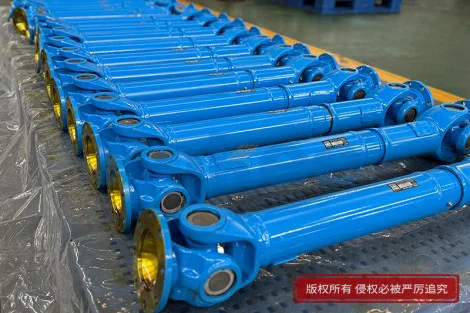
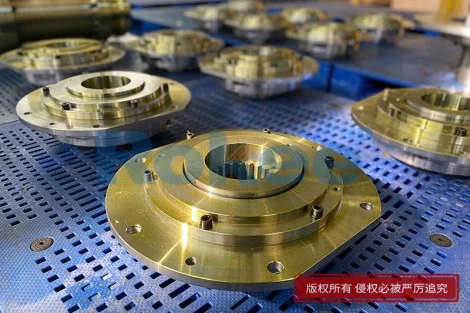
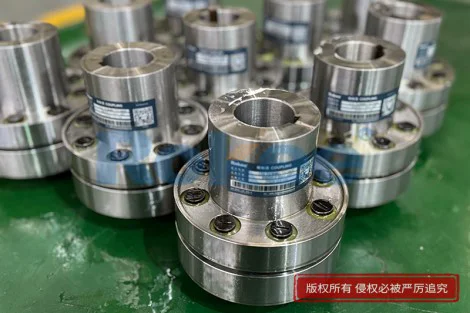
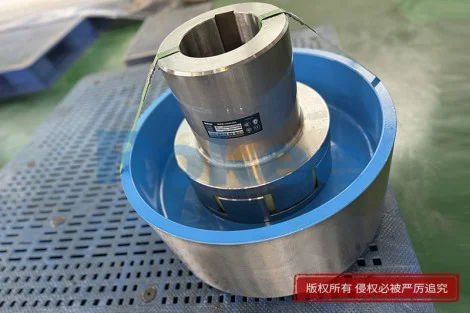
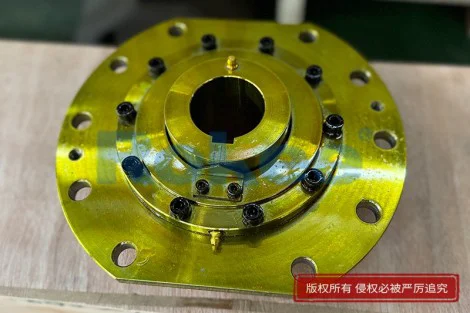
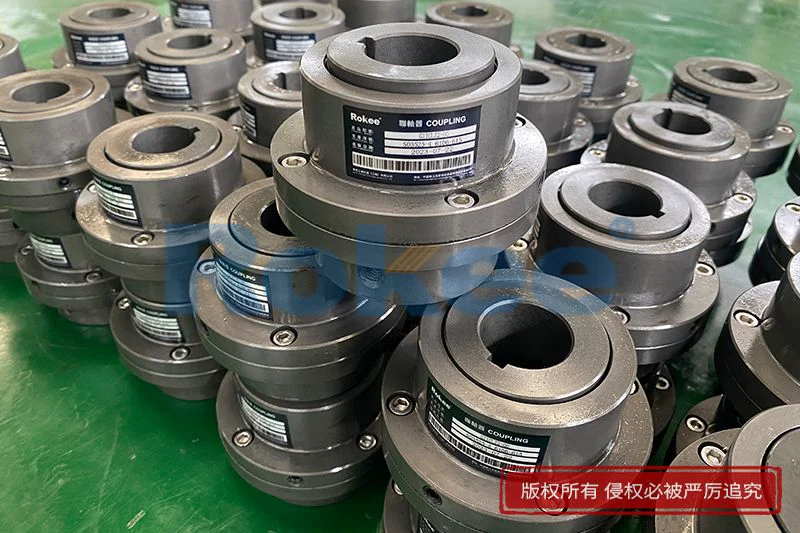
To fully understand the core role of drum gear couplings in PUF sandwich panel production lines, it is first necessary to clarify the basic structure and performance characteristics of drum gear couplings, as well as the operational principles and transmission requirements of PUF sandwich panel production lines. A drum gear coupling is mainly composed of an inner gear ring with the same number of teeth and a flange half-coupling with external teeth, and its most prominent feature is the arc-shaped spherical design of the tooth top and tooth surface of the external gear sleeve. Unlike ordinary straight-tooth gear couplings, the external teeth of the drum gear coupling are processed into a drum shape, with the center of the sphere located on the gear axis, and the tooth clearance is slightly larger than that of ordinary products. This unique structural design endows the drum gear coupling with a series of excellent performance characteristics that are highly compatible with the working conditions of PUF sandwich panel production lines. It can transmit greater torque, allow larger angular displacement, and has the advantages of compact structure, small turning radius, high transmission efficiency, low noise, and long maintenance cycle. These characteristics make it particularly suitable for the low-speed, heavy-duty, and continuous operation environment of PUF sandwich panel production lines, where stable and efficient power transmission is crucial.
The PUF sandwich panel production line is a complex automated system that integrates mechanical, chemical, electrical control, hydraulic, pneumatic, and temperature control technologies. Its entire production process is a closely coordinated sequence of steps, and each link has strict requirements for power transmission. From the uncoiling of metal coils to the final stacking of finished panels, every piece of equipment needs to receive stable and precise power support to ensure the smooth progress of the production process. The uncoiling system, forming system, foaming system, curing system, cutting system, and stacking system in the production line are connected through the transmission system, and the drum gear coupling is installed between the motor, reducer, and various working mechanisms, acting as a "bridge" for power transmission. It not only needs to transmit the torque generated by the motor to the working equipment stably but also needs to adapt to the subtle changes in the working conditions of each link, ensuring that the speed and torque of each equipment are kept within the set range, thereby guaranteeing the consistency and stability of product quality.
In the uncoiling link of the PUF sandwich panel production line, the metal coils (usually color steel, stainless steel, or aluminum coils) need to be uncoiled smoothly and fed into the subsequent forming system at a constant speed. The uncoiling system is equipped with an uncoiler, tension control device, and guiding device, all of which rely on power transmission to operate. The drum gear coupling installed between the motor and the uncoiler plays a key role in this process. The uncoiling process requires stable torque transmission to avoid uneven uncoiling speed, which would cause wrinkles or stretching of the metal sheet, affecting the subsequent forming quality. The drum gear coupling has excellent torque transmission capacity, and its reasonable tooth profile design ensures a large contact area between the tooth surfaces, enabling it to transmit large torque stably without power loss. At the same time, due to the inevitable slight deviation in the installation of the motor and the uncoiler, the drum gear coupling can effectively compensate for radial, axial, and angular deviations between the two shafts through its drum-shaped tooth design. This compensation capacity avoids the additional load caused by shaft misalignment, reduces the wear of the uncoiler and the motor bearing, and ensures that the metal coil is uncoiled at a constant speed, laying a solid foundation for the subsequent forming process.
The forming link is another key part of the PUF sandwich panel production line, where the uncoiled metal sheets are processed into the desired profile through a series of rolling stands. The forming system requires precise control of the rolling speed and pressure to ensure that the metal sheets have consistent shape and size, which directly affects the flatness and structural strength of the final PUF sandwich panels. The drum gear coupling installed between the reducer and the forming roller plays a crucial role in realizing precise power transmission. The forming roller needs to maintain a stable speed and torque during operation, and any fluctuation in power transmission will lead to inconsistent forming of the metal sheet, resulting in unqualified products. The drum gear coupling has high transmission accuracy and can transmit the torque and rotational motion from the reducer to the forming roller stably and accurately, ensuring that the rolling speed and pressure are kept within the set range. In addition, during the forming process, the forming roller will generate a certain amount of vibration due to the interaction with the metal sheet, and the drum gear coupling can effectively absorb part of the vibration through its flexible structure, reducing the impact of vibration on the forming equipment and the production line, thereby improving the stability of the forming process and the quality of the formed metal sheet.
After the forming process, the metal sheets enter the preheating and foaming links, which are critical to the bonding quality between the PUF core and the metal facings. The preheating system needs to heat the metal sheets to a specific temperature to ensure that the PUF raw materials can fully react and bond with the metal sheets. The foaming system injects the proportioned PUF raw materials (usually composed of polyols and isocyanates) between the upper and lower metal sheets, and the raw materials undergo a chemical reaction to form a uniform and dense foam core. Both the preheating system and the foaming system rely on stable power transmission to ensure the accuracy of temperature control and material injection. The drum gear coupling installed in the power transmission system of these two links ensures the stable operation of the heating device and the foaming pump. The preheating device requires a stable rotation speed to ensure uniform heating of the metal sheet, and the foaming pump needs a stable torque to ensure the accurate proportion and uniform injection of the PUF raw materials. The drum gear coupling's high transmission efficiency and stable performance can meet these requirements, avoiding the problems of uneven heating of the metal sheet or uneven injection of the foaming material caused by unstable power transmission, which would affect the bonding strength and thermal insulation performance of the PUF sandwich panel.
The curing link is an important link to ensure the structural stability and performance of the PUF sandwich panel. After the foaming is completed, the composite panel enters the curing tunnel, where it is cured under set temperature and pressure conditions to form a solid and integral structure. The curing tunnel is equipped with a conveying device, heating device, and pressure control device, all of which need stable power support. The drum gear coupling installed between the motor and the conveying roller of the curing tunnel ensures the stable operation of the conveying device. The conveying roller needs to maintain a constant speed to ensure that the composite panel stays in the curing tunnel for the specified time, so as to achieve complete curing. The drum gear coupling can transmit torque stably, avoid the fluctuation of the conveying speed, and ensure that each part of the composite panel is cured uniformly. At the same time, the curing tunnel will generate a certain amount of heat during operation, which may cause thermal expansion of the equipment and lead to shaft deviation. The drum gear coupling's ability to compensate for shaft deviation can effectively adapt to this thermal expansion, avoid the damage of the transmission system caused by thermal stress, and ensure the continuous and stable operation of the curing link.
After the curing process, the composite panel enters the cutting and stacking links. The cutting system uses a flying saw or cutter to cut the cured panel into fixed lengths according to the required specifications, and the stacking system stacks the cut finished panels in a standardized manner. Both the cutting system and the stacking system have high requirements for the accuracy and stability of power transmission. The cutting process requires the cutting tool to have a stable rotation speed and precise cutting timing to ensure the accuracy of the cutting length and the flatness of the cutting surface. The stacking system requires the stacking mechanism to move stably and accurately to avoid damage to the finished panels. The drum gear coupling installed in the power transmission system of these two links can provide stable and precise power support. Its high transmission accuracy ensures that the cutting tool and the stacking mechanism operate according to the set parameters, avoiding cutting errors or stacking irregularities caused by unstable power transmission. In addition, the cutting and stacking links are in a continuous operation state for a long time, and the drum gear coupling has a long service life and low maintenance requirements, which can reduce the downtime caused by equipment maintenance and improve the overall production efficiency of the production line.
In addition to playing a key role in each link of the PUF sandwich panel production line, the drum gear coupling also has a significant impact on the service life of the entire production line equipment and the reduction of operational costs. The PUF sandwich panel production line operates continuously for a long time, and the transmission system is under heavy load for a long time, which is prone to wear, fatigue, and damage. The drum gear coupling has a compact structure and excellent wear resistance. Its drum-shaped tooth design optimizes the contact conditions between the inner and outer teeth, effectively avoiding the edge extrusion and stress concentration problems of straight-tooth couplings under angular displacement conditions, thereby reducing tooth surface wear and extending the service life of the coupling itself. At the same time, the drum gear coupling can effectively absorb vibration and reduce the impact of vibration on the motor, reducer, and other key equipment, reducing the wear and failure rate of these equipment, and thus extending the service life of the entire production line equipment. In terms of maintenance, the drum gear coupling has a simple structure and is easy to install and disassemble. Regular maintenance only needs to check the tooth surface wear, add lubricating grease, and tighten fasteners, which can reduce maintenance costs and downtime, ensuring the continuous and stable operation of the production line.
Lubrication and sealing are key factors to ensure the normal operation of the drum gear coupling in the PUF sandwich panel production line. Due to the relative sliding between the tooth surfaces during the operation of the coupling, wear and power loss are inevitable, so good lubrication and sealing conditions are essential. In the PUF sandwich panel production line, the drum gear coupling is usually lubricated with extreme pressure grease, and the lubrication cycle is shortened under heavy load or high temperature conditions to prevent dry friction and oil leakage. At the same time, the coupling is equipped with a sealing device, which can effectively prevent dust, foam raw material residues, and other impurities from entering the interior of the coupling, ensuring the clean operation of the tooth surface and avoiding wear caused by impurities. Regular inspection of the lubrication and sealing status of the coupling can further extend its service life and ensure its stable performance in the production line.
With the continuous development of the PUF sandwich panel industry, the requirements for production efficiency, product quality, and operational stability of the production line are constantly improving, which also puts higher requirements on the performance of the drum gear coupling. In response to the increasingly complex working conditions of the production line, the drum gear coupling is constantly optimized and improved in terms of structural design, material selection, and processing technology. For example, the use of high-strength alloy steel materials improves the load-bearing capacity and wear resistance of the coupling; the optimization of the tooth profile design further improves the transmission efficiency and displacement compensation capacity; the improvement of the sealing structure enhances the adaptability of the coupling to harsh working environments. These improvements enable the drum gear coupling to better meet the needs of the PUF sandwich panel production line, providing more reliable power transmission support for the production of high-quality PUF sandwich panels.
In conclusion, the drum gear coupling is an indispensable core component in the PUF sandwich panel production line, and its role runs through every key link of the production line from uncoiling to stacking. It undertakes the important tasks of transmitting torque, compensating for shaft deviations, reducing vibration, and protecting equipment, which directly determines the production efficiency, product quality, and operational stability of the production line. Its unique structural design and excellent performance characteristics make it highly compatible with the working conditions of the PUF sandwich panel production line, and it plays an irreplaceable role in ensuring the continuous and stable operation of the production line, improving product quality, and reducing operational costs. With the continuous progress of industrial technology, the drum gear coupling will be further optimized and upgraded, and its core role in the PUF sandwich panel production line will become more prominent, providing stronger support for the sustainable development of the PUF sandwich panel industry.