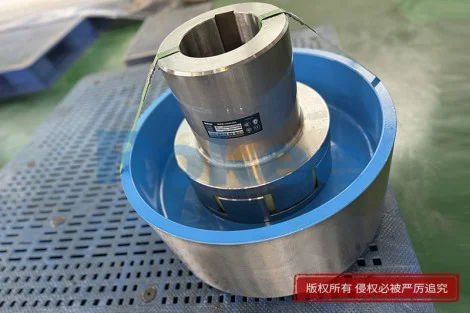
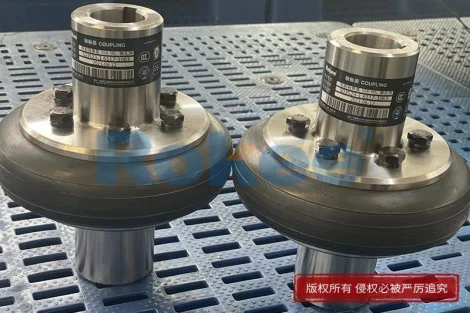
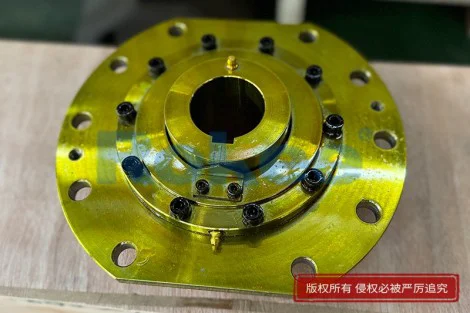
Cardan Shaft Coupling Adapts to Sandwich Panel Production Line to Improve Transmission Stability

In the modern construction and industrial fields, sandwich panels have become an indispensable material due to their excellent thermal insulation, structural stability, flame retardancy and environmental friendliness. These panels, composed of two outer facing materials and a core layer (such as polyurethane, rock wool, glass wool, etc.), are widely used in external walls, roofs, cold storage facilities, prefabricated buildings and other scenarios, driving the continuous development and upgrading of sandwich panel production technology. The sandwich panel production line is a complex integrated system that involves multiple continuous processes, including uncoiling of facing materials, roll forming, preheating, core material foaming or filling, lamination, curing, and cutting. Each link requires precise and stable power transmission to ensure the consistency of product quality and the efficiency of the entire production process. Among the numerous components that make up the transmission system of the production line, the cardan shaft coupling, also known as the universal joint coupling, plays an irreplaceable role. Its unique structural design and excellent transmission performance enable it to adapt to the special working conditions of the sandwich panel production line, effectively solve the transmission problems caused by installation deviations and working condition changes, and further improve the stability and reliability of the production line operation.
To understand the important role of cardan shaft couplings in sandwich panel production line, it is first necessary to clarify the working characteristics of the production line and the core challenges faced by its transmission system. A modern sandwich panel production line is a highly automated continuous production system that integrates mechanical, electrical, hydraulic and chemical reaction technologies. It requires the coordinated operation of multiple subsystems, such as the uncoiling system, roll forming system, core material processing system, double-belt lamination system, curing system, cutting system and conveying system. Each subsystem is driven by an independent power source, and the power needs to be accurately and stably transmitted to various executive components to ensure that the entire production line operates in a synchronized and coordinated manner. However, due to the limitations of the production process and the overall structure of the equipment, the installation and layout of each subsystem in the production line are often not on the same axis, resulting in angular deviations, radial displacements and even axial displacements between the driving shaft and the driven shaft of different subsystems. In addition, during the long-term continuous operation of the production line, the equipment will generate vibration and thermal expansion due to factors such as mechanical friction and material reaction, which will further change the relative position of the shafts. At the same time, the production line needs to adapt to the production of sandwich panels of different specifications and thicknesses, which will lead to changes in the load of the transmission system. These factors put forward high requirements for the transmission components, requiring them to have good deviation compensation capacity, load-bearing capacity and stability.
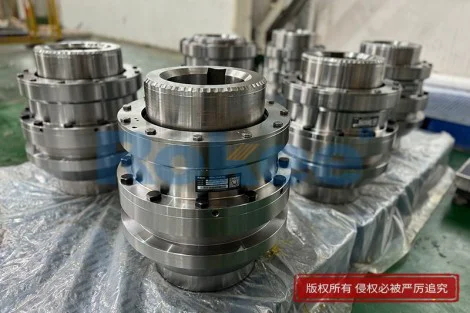
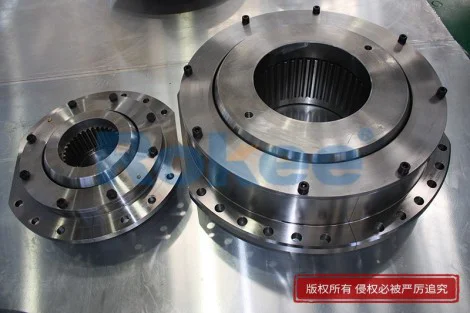
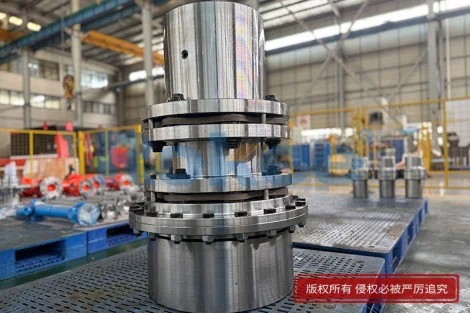
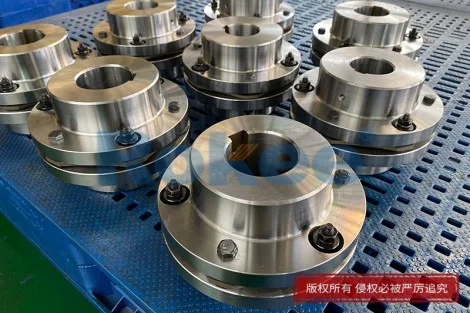
The cardan shaft coupling can perfectly adapt to the above working conditions of the sandwich panel production line due to its unique structural characteristics. The core structure of the cardan shaft coupling is composed of a cross shaft, universal joint forks and bearings. The two universal joint forks are respectively connected to the driving shaft and the driven shaft, and the cross shaft connects the two universal joint forks, forming a flexible articulated structure. This structure allows the two shafts connected by the coupling to deflect within a certain angle range (usually 5° to 45°) while maintaining the continuity of rotational motion and torque transmission, which can effectively compensate for the angular deviation between the shafts caused by the unreasonable installation layout of the production line subsystems. In addition, the spline connection design adopted by many cardan shaft couplings can also compensate for the axial displacement between the shafts, which is particularly important for the sandwich panel production line. Because during the production process, the thermal expansion of the equipment will cause the axial movement of the shafts, and the spline connection can absorb this displacement, avoiding the occurrence of transmission jamming or component damage.
The material selection of cardan shaft couplings also plays a key role in adapting to the sandwich panel production line. Different working environments and load requirements require couplings made of different materials to ensure their service life and transmission performance. In the common sandwich panel production lines, the main materials used for cardan shaft couplings include carbon structural steel, alloy structural steel, stainless steel and other metals. Carbon structural steel (such as 45# steel) has good comprehensive mechanical properties after quenching and tempering treatment, with a hardness of HRC28-32 and a tensile strength of not less than 600MPa. It is suitable for the transmission scenarios of medium and low speed and medium load in the production line, and has excellent cost performance. Alloy structural steel (such as 40Cr, 35CrMo) has higher hardenability and high-temperature strength due to the addition of elements such as chromium and molybdenum. Its high-temperature strength can reach 800MPa, and it has outstanding fatigue resistance, which is suitable for the heavy-load and high-dynamic-load transmission links in the production line, such as the roll forming system and the double-belt lamination system. For production lines in corrosive environments (such as those producing sandwich panels with chemical core materials), stainless steel (such as 304, 316L) is often used to make cardan shaft couplings. 316L stainless steel contains 2-3% molybdenum, which has strong pitting corrosion resistance in chloride environments, and can maintain good toughness even at -196℃, ensuring the stable operation of the coupling in harsh environments. In addition, some lightweight cardan shaft couplings made of high-strength aluminum alloy (such as 7075-T6) are also used in some high-precision transmission links of the production line. This material has a density of 1/3 that of steel, excellent specific strength and corrosion resistance, which can reduce the overall weight of the transmission system and improve the response speed of the equipment.
In the actual application process of the sandwich panel production line, the cardan shaft coupling is widely used in various key transmission links, and its role in improving transmission stability is reflected in multiple aspects. In the uncoiling system of the production line, the coiled facing material (such as color steel plate, aluminum plate) needs to be stably unfolded and conveyed to the next process. The uncoiling shaft and the driving motor are often not on the same axis due to the layout of the equipment. The cardan shaft coupling can connect the two shafts, compensate for the angular deviation between them, and ensure that the uncoiling speed is stable and uniform, avoiding the occurrence of material wrinkling or tearing caused by uneven transmission. In the roll forming system, the roll needs to apply a certain pressure to the facing material to form it into the required shape. This process requires the transmission system to provide stable and continuous torque. The cardan shaft coupling can bear large torque and has good impact resistance, which can adapt to the load changes during the roll forming process, ensure that the roll rotates stably, and improve the forming precision of the facing material. In the core material processing system, such as the polyurethane foaming system, the high-pressure foaming pump needs to stably convey the foaming raw materials to the mixing head. The cardan shaft coupling can connect the pump shaft and the motor shaft, compensate for the installation deviation between them, and ensure the stable operation of the foaming pump, so that the foaming raw materials can be mixed uniformly and the foam structure is delicate, which lays a foundation for the thermal insulation performance of the sandwich panel.
The double-belt lamination system is a key link in the sandwich panel production line, which is responsible for bonding the facing material and the core material into an integral structure. The two conveyor belts of this system need to operate synchronously, and the speed and tension must be kept consistent. The transmission shafts of the two conveyor belts are often installed with a certain angular deviation due to the structural design. The cardan shaft coupling can effectively compensate for this deviation, ensure that the two conveyor belts operate at the same speed, avoid the occurrence of core material displacement or panel delamination caused by inconsistent speed. In the curing system, the sandwich panel needs to be heated and cured at a certain temperature. The transmission system of the curing oven needs to work stably in a high-temperature environment. The cardan shaft coupling made of high-temperature resistant materials can maintain good transmission performance in high-temperature environments, avoid component deformation or failure caused by high temperature, and ensure the continuous operation of the curing process. In the cutting system, the cutting knife needs to cut the continuous sandwich panel into fixed-length products according to the requirements. The transmission of the cutting knife requires high precision and stability. The cardan shaft coupling can ensure that the cutting knife rotates stably and the cutting speed is uniform, which improves the cutting precision and reduces the waste of materials.
The adaptability of the cardan shaft coupling to the sandwich panel production line is not only reflected in its structural design and material selection, but also in its adjustable and maintainable performance. Different types of sandwich panel production lines have different requirements for the transmission torque, speed and deviation compensation capacity of the coupling. The cardan shaft coupling can be designed and adjusted according to the actual needs of the production line, such as adjusting the length of the coupling, changing the type of bearings, or selecting different connection methods (such as flange connection, keyway connection) to meet the specific transmission requirements of the production line. In addition, the cardan shaft coupling has a simple structure and convenient maintenance, which is very suitable for the long-term continuous operation of the sandwich panel production line. During the daily operation of the production line, the staff only need to regularly check the wear of the cross shaft, bearings and other components, add lubricating oil in time, and replace the worn components to ensure the stable operation of the coupling. The lubrication of the cardan shaft coupling is particularly important. For ordinary working conditions, lithium-based grease can be used for lubrication; for high-temperature, heavy-load or corrosive environments, high-temperature resistant lubricating grease (such as composite calcium sulfonate-based grease, with a temperature resistance range of -40℃ to 180℃) or anti-corrosion lubricating grease should be selected. The lubrication cycle should be adjusted according to the working conditions. For ordinary working conditions, lubrication should be carried out every 300-500 hours or every 3 months; for harsh working conditions, the cycle should be shortened to 100-200 hours or every month. When lubricating, the lubricating oil should be injected through the oil injection nozzle until the old oil is squeezed out, ensuring that the new oil fully fills the friction parts.
Compared with other types of couplings (such as rigid couplings, elastic couplings), the cardan shaft coupling has obvious advantages in adapting to the sandwich panel production line. Rigid couplings have no deviation compensation capacity, and are only suitable for the transmission links where the driving shaft and the driven shaft are strictly coaxial, which cannot meet the installation and working condition requirements of the sandwich panel production line. Elastic couplings have a certain deviation compensation capacity and shock absorption performance, but their load-bearing capacity is limited, and they are easy to age and deform in long-term heavy-load operation, which affects the stability of the transmission system. The cardan shaft coupling combines the advantages of strong load-bearing capacity and good deviation compensation capacity, can adapt to the complex and changeable working conditions of the sandwich panel production line, and can maintain stable transmission performance in long-term continuous operation, which is an ideal transmission component for the sandwich panel production line.
In the process of applying the cardan shaft coupling to the sandwich panel production line, there are also some key points that need to be paid attention to to ensure its transmission effect and service life. First of all, during the installation process, the coaxiality of the driving shaft and the driven shaft should be adjusted as much as possible, and the angular deviation between the shafts should be controlled within the allowable range of the coupling. Although the cardan shaft coupling can compensate for the angular deviation, excessive deviation will increase the wear of the cross shaft and bearings, reduce the service life of the coupling, and even cause vibration and noise of the transmission system. It is recommended to use laser alignment instruments for alignment calibration during installation. For ordinary working conditions, the angular deviation should be ≤1° and the radial deviation should be ≤0.1mm/m; for high-speed or heavy-load working conditions, the requirements are higher, and the angular deviation should be ≤0.05° and the radial deviation should be ≤0.1mm/m. If there is unevenness on the installation surface, stainless steel alignment gaskets can be added for compensation. Secondly, the selection of the cardan shaft coupling should be based on the actual working conditions of the production line, such as the transmission torque, speed, deviation range and environmental temperature, to select the appropriate model and material of the coupling. If the selected coupling is too small, it will be overloaded and damaged; if it is too large, it will increase the cost and occupy more installation space. Thirdly, regular maintenance and inspection should be carried out. During the operation of the production line, the staff should regularly check the operation status of the cardan shaft coupling, such as whether there is abnormal vibration, noise or oil leakage, and check the tightness of the connecting bolts. If any abnormality is found, the machine should be shut down in time for inspection and treatment. The key components such as the cross shaft and bearings should be checked every 3-6 months. When the wear of the cross shaft exceeds 2%-3% of the diameter, or the backlash of the spline exceeds 1.5 times the initial value, the components should be replaced in time. Even if there is no obvious damage, it is recommended to replace the components preventively every 3-5 years or after 20000 hours of operation. In addition, the cardan shaft coupling should be stored in a dry and ventilated environment during transportation and storage, avoiding exposure to sunlight and rain, and preventing corrosion and damage of components.
With the continuous development of the sandwich panel industry, the production line is developing towards higher automation, higher efficiency and higher precision, which puts forward higher requirements for the transmission system. The cardan shaft coupling, as a key transmission component, will continue to play an important role in the sandwich panel production line. In the future, with the progress of material science and manufacturing technology, the cardan shaft coupling will be further optimized in terms of structure, material and performance. For example, the use of new composite materials can further improve the strength, corrosion resistance and service life of the coupling; the optimization of the structural design can improve the deviation compensation capacity and transmission efficiency of the coupling; the integration of intelligent monitoring technology can realize real-time monitoring of the operation status of the coupling, timely find potential faults, and reduce the maintenance cost of the production line. These improvements will make the cardan shaft coupling more adaptable to the development needs of the sandwich panel production line, further improve the transmission stability and production efficiency of the production line, and promote the high-quality development of the sandwich panel industry.
In conclusion, the cardan shaft coupling has excellent adaptability to the sandwich panel production line due to its unique structural design, reasonable material selection and good performance. It can effectively solve the transmission problems caused by installation deviations, load changes and environmental factors in the production line, improve the stability and reliability of the transmission system, and further ensure the product quality and production efficiency of the sandwich panel production line. In the actual application process, by selecting the appropriate coupling model, standardizing the installation and maintenance operations, the cardan shaft coupling can give full play to its transmission advantages, provide strong support for the stable operation of the sandwich panel production line, and become an indispensable core component in the sandwich panel production process. As the sandwich panel industry continues to develop, the application of cardan shaft couplings will become more extensive and in-depth, making greater contributions to the development of the industry.